Eminent Jews
David Denby talks about Mel, Lenny, Betty, and Norman
It’s not surprising that David Denby’s new book, “Eminent Jews,” is clearly and elegantly written. Mr. Denby’s been a film critic and essayist for decades — he’s 82 now, so there have been many decades — first for New York magazine and then for the New Yorker, which does not allow a single sentence to show up, in its very specific typeface, on its visually unmistakable page, until it is perfect.
But it’s deeply and surprisingly Jewish.
In fact, it would be easy for a reader not to realize that Mr. Denby is Jewish. Certainly his family name doesn’t give it away. (It had been Dembosky until his father and uncle changed it in late 1929, worried that the stock market crash would be blamed on the Jews.)
But now, Mr. Denby has given us a book that couldn’t be more Jewish (or more readable) had he tried. “Eminent Jews” looks at four hugely visible, culture-changing Jews who were born between the two world wars and flourished in the mid to late 20th century. (He’ll talk about that book at the Kaplen JCC in Tenafly on November 20 — see box.)
“I wanted to ask how American Jews would behave when they had greater liberty, greater freedom, than Jews had ever had before, anywhere,” Mr. Denby said. “Yes, there were periods in Spain, or in England, where Jews were able to attain some freedom, but they were there on sufferance. They always could be thrown out.” Eventually, they were thrown out of both countries.
“Even in the 19th century, in Budapest, in Vienna, in London, in Paris, you could attain a kind of middle-class professional life if you were Jewish, but you had to obey all sorts of rules. It was very precarious, and as we know all those situations ended disastrously. It was only in Israel and the United States that Jews could live without feeling that they were there on borrowed time.” And even then, that was most true only after World War II ended; by then many Jewish families had been in the United States for at least a generation, and Americans were starting to learn a little about the horrors that European Jews had endured.
When he decided who to include in his book, “I wanted to take a number of figures who not only were very gifted, but took advantage of newly developing mass media — television in 1948, the long-playing record also in 1948, and mass market paperbacks a couple of years later,” Mr. Denby said.
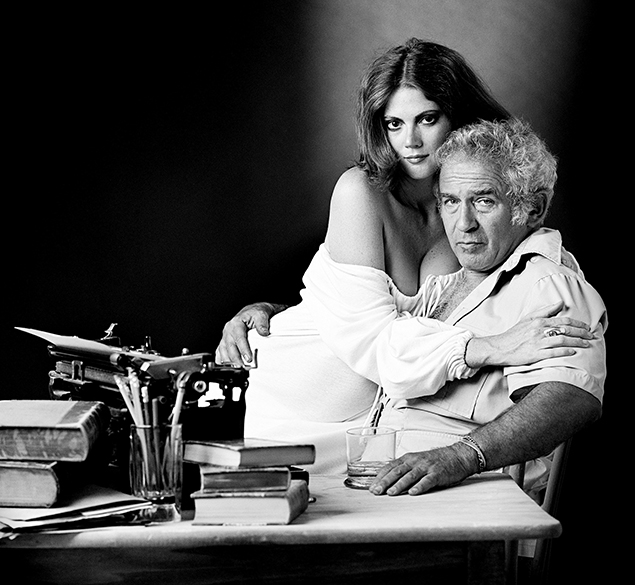
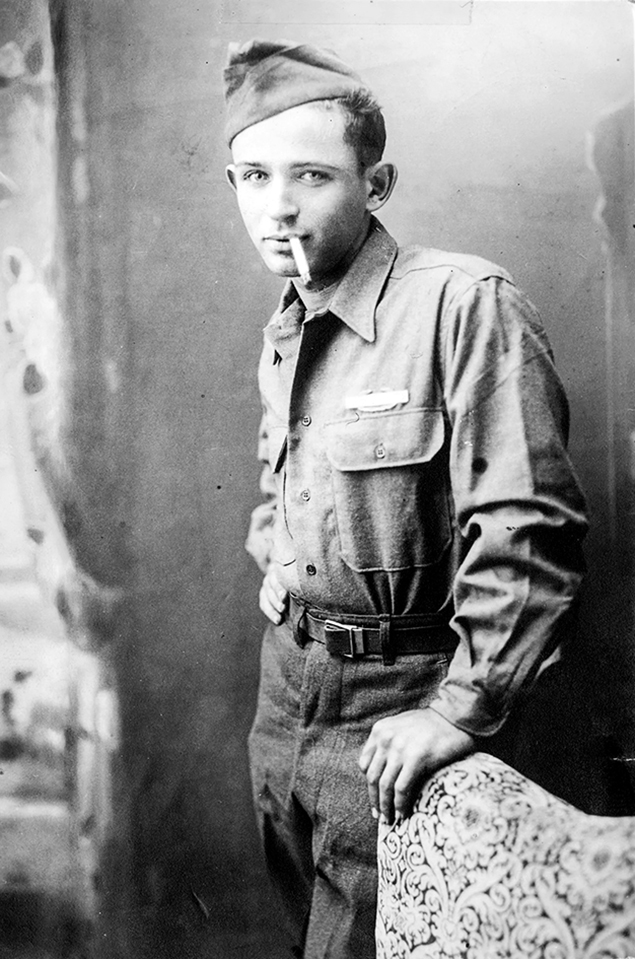
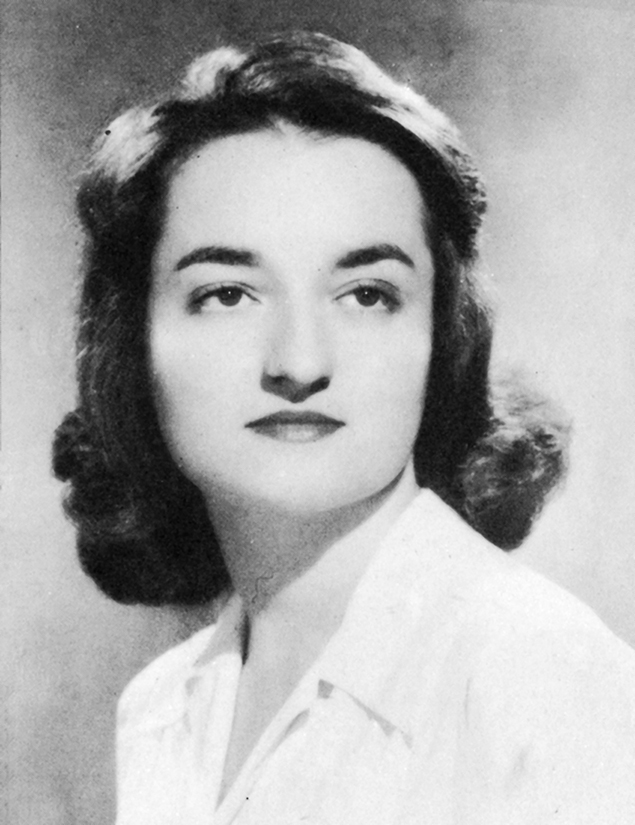
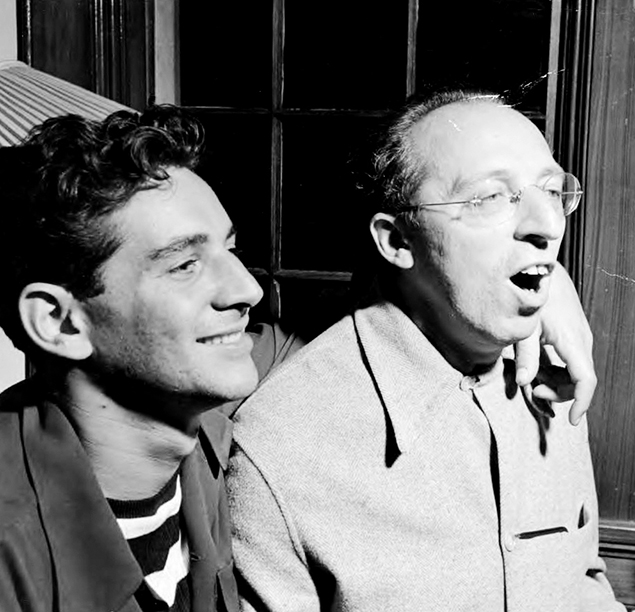
His four people — Mel Brooks, Betty Friedan, Norman Mailer, and Leonard Bernstein — all wildly gifted, each in a different field, didn’t know each other, “except to clink glasses at parties — there was much glass-clinking because there was a lot of drinking at many cocktail parties during this time,” Mr. Denby said.
He chose them — a comedian, a feminist, an author, a musician — although “people said, ‘Why don’t you use Saul Bellow?’ Well, he was older. Or ‘Why not Philip Roth?’ Well, he was younger. So I stuck with these four. My idea was that they had certain temperamental affinities — extreme ambition, an absolute fearlessness, and a slightly revolutionary attitude toward the culture of their parents.
“They were all the children of immigrant families, and immigrant families exercise a certain caution.
“Philip Roth said that American Jews had done so well because they went to bed sober every night. That’s an enormous generalization, of course, but I know what he means. My parents, who were very gentle people in general, were very contemptuous of shickers.” Alcoholics, that is. Drunkards.
“My parents had nothing against alcohol per se,” Mr. Denby continued. “They would come home and pour themselves a double Scotch after work every night.” They defined a shicker not simply as an alcoholic, but as an alcoholic who could not support his family. “And not supporting your family was an ultimate taboo” among Jewish families. There also was a certain sexual reticence, and they generally loathed violence. They saw Jews as subject to violence.”
It’s not as if none of his four subjects ever chafed against those strictures, and the next generation of Jews, in general, “felt the freedom to change a lot of these assumptions. Norman Mailer did drink, at times pretty heavily, Mr. Denby said. “He was brought up as a good Jewish boy, and he invented the bad Jewish boy. He was violent. He drank.” He also was a contrarian. “The previous generation loved Miami. He hated Miami. You could go through a whole series of opposites.”
Betty Friedan — born Bettye Naomi Goldstein — basically invented second-wave feminism. “Betty saw what her mother had given up when she got married, how miserable she was, and in ‘The Feminine Mystique’ she set about providing the means for women to get out of the house and work and use their brains.
“But it has to be noted that she absolutely believed in marriage and heterosexuality and in having children. Those were some of the beliefs that ended her leadership of the feminist movement by the 1960s. Some women were straight, and some were gay. Some wanted children, but others didn’t.
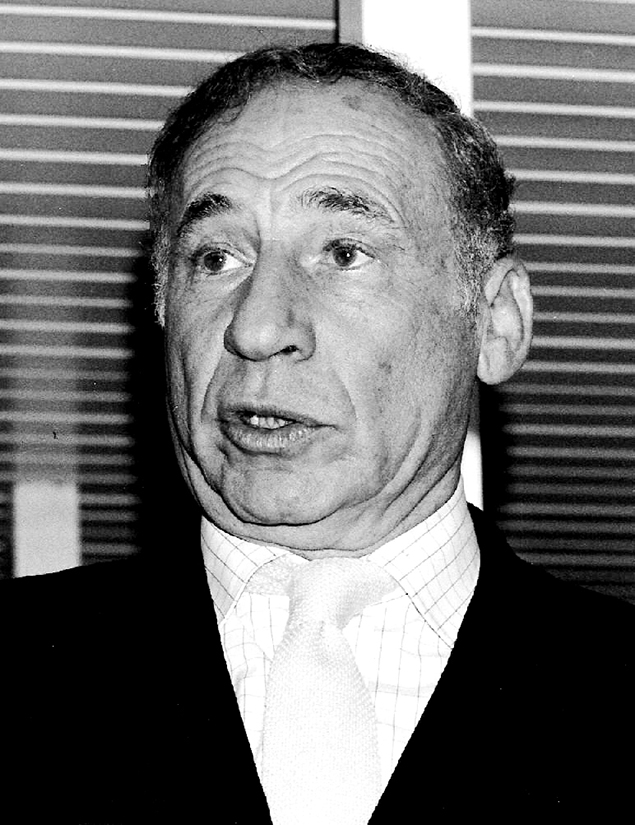
“Mel’s explosion of the body comes out of roughhouse comedy, travesty, burlesque,” although in the book, Mr. Denby also discusses the highly intellectual comedy of Carl Reiner on Sid Caesar’s “Your Show of Shows,” for which Mr. Brooks wrote, and out of which the two men’s unstoppable, untoppable 2,000-year-old man routines grew.
“And Lenny Bernstein recognized no distinction between what he thought and felt and what he could express with his body, his free-form conducting. No, not free form — it was disciplined but expressive. It used his back, his eyebrows, his pelvis. It alarmed a lot of people.
“He was a completely physicalized human being. He also was an intellectual who could communicate in about five different ways. His problem was that he did so many things well that he drove himself and everyone else crazy.
“Bradley Cooper got some of that in his film ‘Maestro,’” Mr. Denby added.
“So in different ways, all four of them were all breaking with the past at the same time that they were honoring certain things that you’d have to call Jewish character formations.
“They certainly all believed in hard work. They certainly all believed in education. Norman Mailer, who had six wives and nine children — for all his philandering, he was very much like other middle-class Jewish parents
“They had to study hard. They couldn’t do dope until after graduation.
“I’ve met six out of Mailer’s nine kids, and they’re all okay, and that’s very good,” Mr. Denby continued. “I don’t know how many children of Hollywood marriages can say that. Many of them are wrecks. But Mailer’s children are okay. They feel happiness and unhappiness, but it’s all within normal range.
“They’re all very soulful. And that was Norman. He was soulful. For all the head-butting and brawling, he was a very earnest guy who wanted to understand people when he met them. By the time I met him, he was completely tame, but he was that way in the early days too. It’s not as if he erupted all the time. He could be exquisitely polite. He wanted to see what people were made of, and if he could understand them.
“He was a novelist.” That was part of his job.
Beyond that, the need to understand other people was central to all of Mr. Denby’s subjects. Mr. Brooks wanted to make them laugh; “and not only to laugh but to take over their bodies” with laughter. For him, success was making people laugh so hard that they levitated out of their seats and floated over the room. He often was successful.”
“I write about how Mel feels the Holocaust very strongly, and I try to interpret ‘Springtime for Hitler’ and also the Inquisition scene from ‘History of the World: Part I.’ I questioned him about it, and I finally got him to acknowledge that by turning Nazism into a joke, by turning the Inquisition into a joke, it reduces its emotional power over the Jews. If you laugh” — at the Nazis, at the Spanish Inquisition, if you poke fun at them — “you can reduce their power over you.
“You can’t change history, but you can change yourself. You can stop murdering yourself.
“Of course, since October 7, he may have changed his mind. I don’t want to put words in his mouth; I talked to him before October 7.”
“Eminent Jews” is not a small book describing Mr. Denby’s opinions of his subjects. They are genuine if smallish-scale biographies, based on research, much of it done in person, not only online but also in archives, which he quotes and cites. He also is old enough to have remembered the four of them in each of their primes, and that informs his writing as well. His warmth for the four Jews is both clear and clear-eyed.
Then there’s the title of his book. Like his four subjects — probably even more than his four subjects — Mr. Denby is formidably well-read. One of his books, “Great Books: My Adventures With Homer, Rousseau, Woolf, and Other Indestructible Writers of the Western World,” published in 1996, chronicled his middle-aged return to his alma mater, Columbia, to retake two of its core classes on the classics of world literature.
So it’s not surprising that he based the title of his book on “Eminent Victorians,” Lytton Strachey’s look at four famous figures — one woman and three men, although none of them were Jewish. But that book was “a study of hypocrisy. These were four powerful people in midcentury Victorian England who were ostensibly working for the good but really working for personal power. They were hypocrites.
“My four were not hypocrites. There is no distinction between what they said and what they did. They were sincere. They didn’t hide their ambition; it was absolutely out in the open. They wanted to set the world on fire — and they said so.” And then they did it.
Mr. Denby added a preface to his book, which came out in the summer of 2024, acknowledging the horrors of October 7 and the antisemitism it unleashed here. He suggests that as we deal with it, we might learn from Bernstein, Brooks, Friedan, and Mailer, who all were fearless.
We no longer live in their world — ours seems less sunlit — but certainly we can learn from it.
Who: David Denby
What: Will talk about his most recent book, “Eminent Jews”
Where: At the Kaplen JCC on the Palisades in Tenafly
When: On Thursday, November 20, from 11 to noon
How much: $20 members; $24 guests
For more information or to register: Go to jccotp.org click on Arts, then on Lectures and Learning, then scroll down. Or call (201) 569-7900