Finding the Old World online
Touro University’s Project Zikaron helps us remember what we never knew
We all come from somewhere.
All of us have backstories. But many of us don’t know them. Memories go back only so far, particularly when they’ve been interrupted by the trauma of war, or even the minor (but still major!) trauma of moving across an ocean, changing languages, losing specific places.
At the same time, more and more information is being digitized. Documents — books, images, diaries, ledgers, yizkor books, census records, ships’ manifests, medical records — increasingly are available online — if you know how to look for them, and how to interpret them.
That’s a big if.
Now, Touro University’s Project Zikaron — Project Memory — is making finding those backstories — our own family histories — much easier.
The just-launched project includes 1.2 million pages of information that tell stories from more than 16,000 Jewish communities; those number tick upward as more documents from more communities are added. Many of them focus on Eastern and Central Europe, but there is at least one document from all seven continents, the program’s creator and leader, Michoel Rotenfeld, the associate director of Manhattan-based Touro University Libraries, said.
The project is based on “three pillars,” Mr. Rotenfeld added: “Jewish heritage, deep historical context, and universal accessibility.”
Universal accessibility means that it’s all online, free, at zikaron.tourolib.org. To go to the website is to be offered so many choices that it’s hard to decide where to click and keep clicking first. You can click on the list of countries — it ranges from Afghanistan, with 21 entries from seven towns, to Zimbabwe, with 14 entries from three areas. Some Eastern European countries seem to have thousands. And yes, there is one from Antarctica. (It’s from the B’nai B’rith Messenger, dated July 4, 1930, and called “Talith and Tephilim on South Pole Expedition: Jewish Member of Byrd Flight Takes Praying Material With Him.” The town named in the exploration base is called Little America.)
You can enter the name of a country, or a city, or a shtetl; although its name has changed over time and across shifting borders, you can try any of its variations; you can approximate the tricky, often consonant-heavy spelling. It all will work.
Or you can click on the map, which takes you around the world. You can change the settings — for example, you can look at countries as they were defined in different historical periods. You can choose the kinds of documents you want to see listed — yizkor books, autobiographies, or communal histories, to start at the top of the list. It’s a map that you can get lost in. You can read online, or you can download a document and print it out.
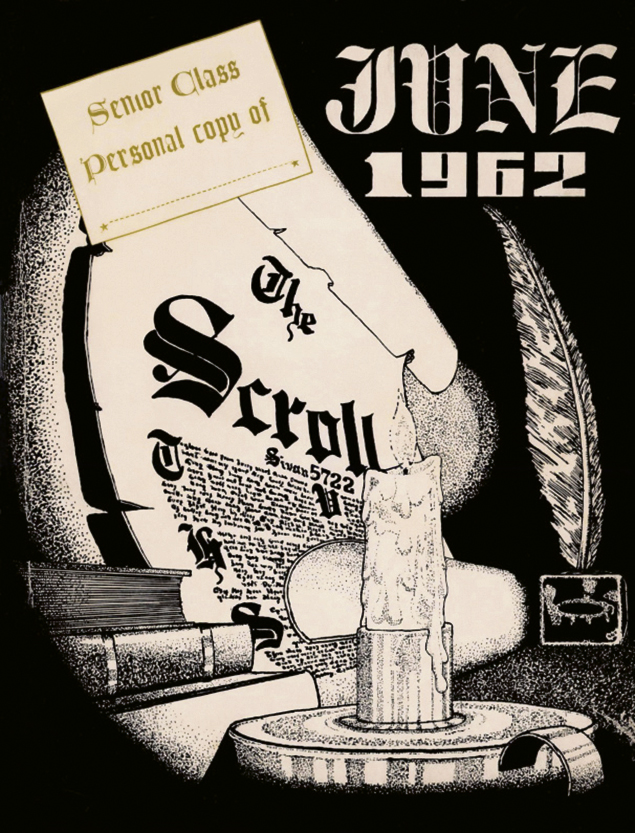
Project Zikaron — which Mr. Rotenfeld pronounces in the Askhenazi way, with slightly different vowel sounds than the more by-now-standard Sephardi, and the emphasis on the middle syllable — “contains materials in more than 30 languages, including Hebrew, Yiddish, English, and Ladino, as well as Judeo-Arabic, Arabic, and Persian,” he said. The materials also are written in many alphabets — Hebrew, Roman, and Cyrillic, among others. (They are not translated, though.) The database is “searchable in all European languages. Its collection ranges from local histories and memoirs to music, cookbooks, and cemetery records, offering glimpses of daily life across generations.”
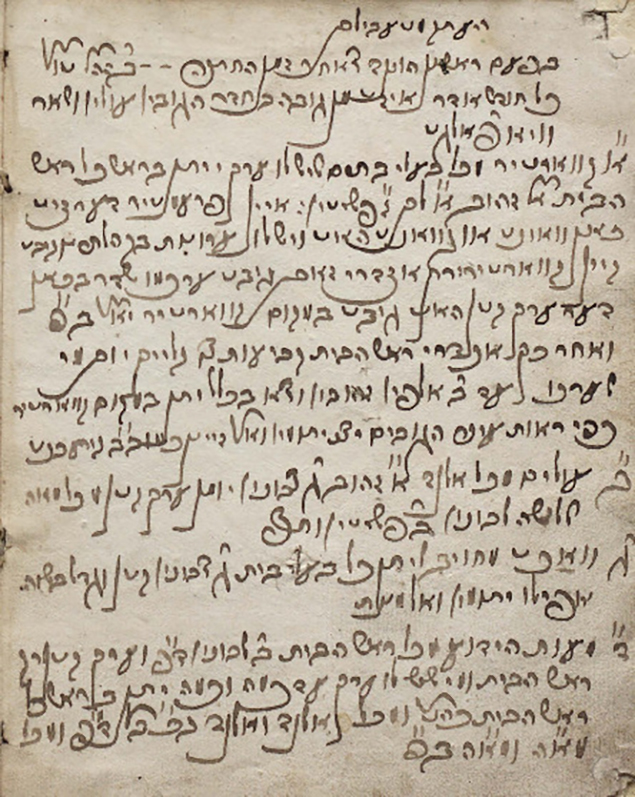
It also includes birth records, death records, pinkasim — records kept by and for the Jewish community about daily life inside the community, “records that no outside authorities required Jews to keep, but records that Jews themselves felt were important” — and prenumerantn, lists of subscribers to books before they were published, and so in effect early fund-raising records. Soon, Mr. Rotenfeld said, it will include not only written music, which it has now, but actual recordings. Audio.
All of this fleshes out what Jewish daily life actually was like.
“Traditional Jewish life is all about community,” Mr. Rotenfeld said. “It’s hard for some Americans to get their arms around that.”
The genesis for Project Zikaron happened about 16 years ago, when Mr. Rotenfeld and his staff digitized the 19-volume “Encyclopedia of the Founders and Builders of Israel” and put it online. “It was a big success,” he said. So he started thinking about what to do next; at the same time, the internet continued to grow, and its ability to present more and more information to more and more information-seekers also grew.
He also got the idea to digitize and index as much information about Jewish life as he could. He and his staff have worked with governments, NGOs, and other groups around the world; they’ve gotten documents from former Soviet republics, countries in the Muslim world, and private collections.
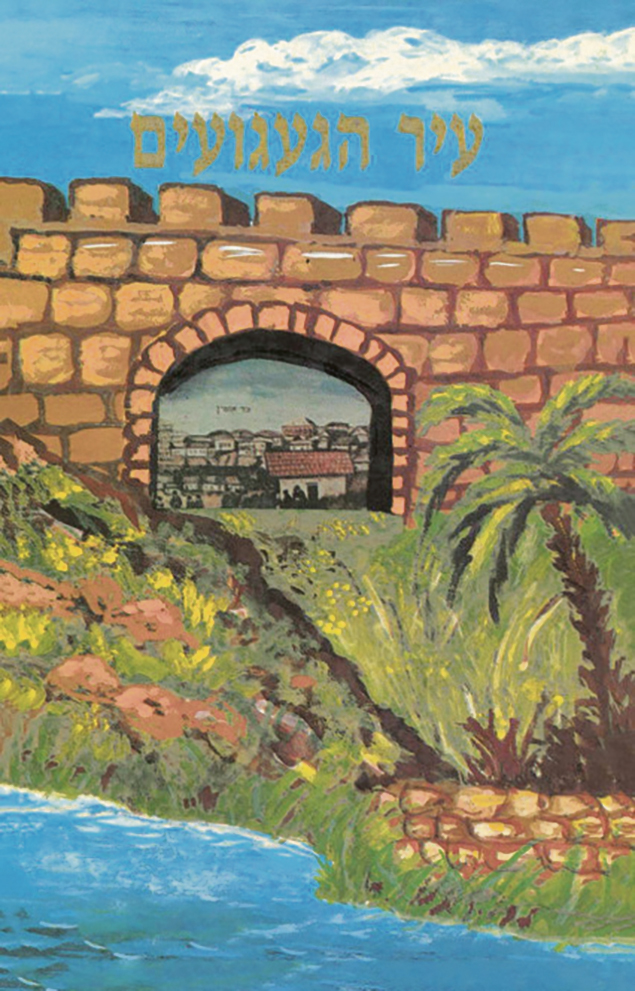
“We have over 13,000 yizkor books,” Mr. Rotenfeld said. Those are the immediately postwar town-wide memorials to prewar, pre-Holocaust life in Europe, that can include stories and memories of life as it used to be, narratives about the murders that decimated the towns, and lists of the dead. He gets the yizkor books from all over; some the library buys, some he borrows. He finds them “basically through detective work and connections.” By now, he has a lot of connections.
It’s delicate work, and it can be expensive; Project Zikaron has gotten funding from both the Claims Conference — to be formal, the Conference on Jewish Material Claims Against Germany — and Cross River, a financial investor. Both of those very different institutions believe strongly in preserving Jewish history and memory, and using technology as one of the tools to accomplish that end.
Mr. Rotenfeld’s background, in Jewish life and thought and in library science, seem both unusual and perfect for the work he does. He’s Lubavitch, from Crown Heights, is yeshiva-educated, and after college earned a master’s degree in library science from Pratt. He loves not only libraries themselves but the science of libraries, the evolving technology that keeps them going. He’s worked at Touro for 26 years.
He has published a two-volume book, “The Shochet — A Memoir of Jewish Life in Ukraine and Crimea.” He discovered, translated, and annotated the book, the first-person story of Pinkhes-Dov Goldenshteyn, who had an extraordinary, difficult, history-filled life. By all online accounts — there are many — the book is honest, gritty, not at all sentimental. It presents a life that few if any readers would like to have led, but who will be enriched by learning about. It’s not about what a shochet does — slaughter animals — but about the life this shochet lived, and the refusal to live it as anything but a committed, full-time observant Jew. “And he had a good sense of humor,” Mr. Rotenfeld said. “No other book like it exists.
“I love Jewish autobiography,” he added. “I read them in Yiddish. When I looked this one up, it was unlike anything else I had read.”
Artificial intelligence will change some of the work that Mr. Rotenfeld and his staff do for Project Zikaron. “We are adding all sorts of AI features in the coming months,” he said. “It will make all sorts of indexing easier. It will make everything more transparent and easier to find.”
Mr. Rotenfeld brings that passion to his work for Project Zikaron. “My desire to do this always has been there,” he said. “Now, the technology has enabled me to do it. My supervisors and deans have been very supportive in allowing me to create my dream.”
What is that dream? “The Jewish people are called the people of the book,” he said. “My dream is to make the bounty of the Jewish people accessible.”
And we can all use that bounty to trace our histories and learn more about the worlds where our families once lived.