Ghosts of greatness
Jerry Izenberg brings the legends of the Negro Leagues to life
In 1969, I attended a pivotal Jets-Kansas City Chiefs game at Shea Stadium.
That was not unusual in and of itself, but my companions that day were three gents who bobbed in and out of my professional life for years as both icons and influencers.
One was Hy Goldberg, then in the home stretch of a distinguished career as sports columnist for the Newark News, which would cease publication a mere three years later. The second was Jerry Izenberg, Hy’s counterpart at The Star-Ledger, the paper I joined after leaving the News two years before. In 1969, I was its copy desk chief. And the third was the Ledger’s top investigative reporter, Herb Jaffe.
I felt pretty chipper being in such heady company. After we drove over to Queens from Jersey, Herb and I peeled off to our seats in the stands as Hy and Jerry made their way to the press box to cover the game. It played out as a brutal defensive affair in frigid weather, which Kansas City won; the Chiefs then went on in the following weeks to beat Oakland in the AFC championship game and the Minnesota Vikings in the Super Bowl.
More notably, the game represented the beginning of the Jets ongoing slide to dysfunction. Just a year after they won the Super Bowl against the Baltimore Colts, Joe Willie Namath’s team and Namath himself lost both dominance and relevance, something the Jets are still laboring to recover today.
(Be patient dear readers and sports fans. I know it’s the cusp of baseball season and this article will get there presently.)
After the game, Herb and I rejoined Jerry and Hy in the press room, where they were batting out their columns. Both typed furiously while the moments and memories of the afternoon were still fresh in their minds. (Yet each, if asked, could reach back 20 years or beyond and recall a specific moment in any sport and do an extended riff on it.)
A bit later, Hy and Jerry gave their copy to the teletype operators and rejoined us for the drive back to Jersey and a nonstop discussion of sports in general and the game in particular. Here were two consummate pros with such different styles; one a product of sentimental old school coverage flourishing from the 1920s that manufactured heroes, shielded their indiscretions, and often traveled on the team’s dime; the other a more acerbic and socially conscious scribe, coming of age and being informed by the civil rights movement, the Vietnam war, and the new forces of women’s lib and gay rights.
I devoured Hy’s columns when I was growing up, burying my head in the News’ sports pages and time-traveling with him to places like Fenway Park in Boston, Soldier Field in Chicago, and the Rose Bowl in Pasadena. While at the News early in my career, I had the pleasure of working alongside him as he patiently supervised and encouraged those who staffed up the sports department on Saturdays to write squibs on high school results.
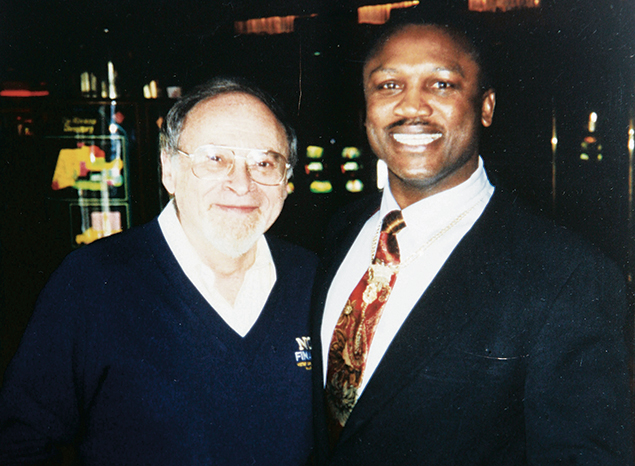
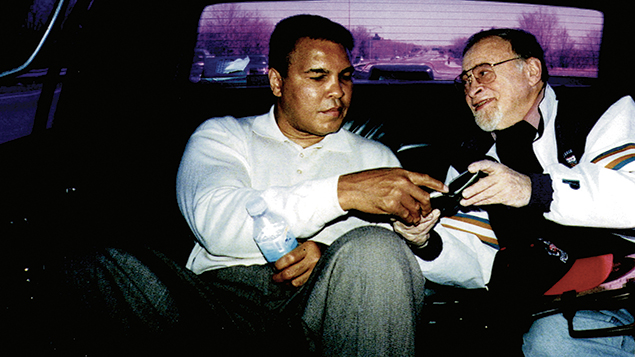
By now I felt like a nearly fully-fledged colleague of Jerry and Herb, two journalists producing groundbreaking coverage in their areas of expertise; Herb tackling the difficult and detailed subjects of judicial and insurance reform, Jerry analyzing the exploits of Muhammad Ali, DiMaggio and Mantle, Vince Lombardi, Jackie Robinson, Sandy Koufax, Y.A. Tittle, Willis Reed, Billie Jean King, Willie Mays, Jack Nicklaus, and four-legged Triple Crown winners, and doing so while chronicling and giving context to the weightier issues of soaring salaries, free agency, strikes, drugs, off-field bad behavior, and, in Ali’s case, prosecution by the government as a draft resistor.
The sports world sprinted through change, reflecting society at large as it morphed from gentler national pastimes to a more cultish, cruder and corporate universe populated by ego-driven players, clownish mic and studio jocks, and manipulative owners. Prices for food, beer, and merch at stadiums went ballistic. Tickets for nosebleed seats in arenas rivaled those formerly charged for courtside. Digital sports betting surged as bookies waited, just a tap on the cell phone away.
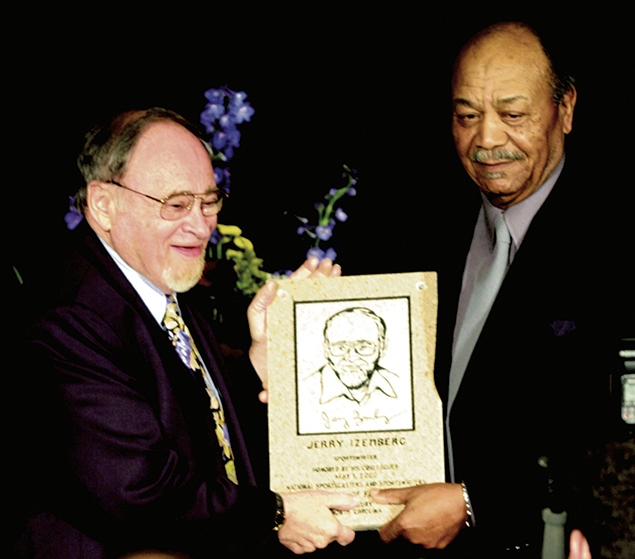
Jerry captured the kinetic energy and raw drama of the spectacle through incisive, irreverent, sometimes impish but always socially relevant columns. He also became a familiar figure and lively analyst on TV, radio, and, of late, podcasts. Despite a grueling schedule and extensive travel, he found time to write 16 books during a career that is now in its 75th year.
But percolating just beneath all this activity was a story Jerry had been aching to develop for years, one in fictional form, no less, and featuring ghosts and the supernatural. The focus would be on the now-extinct Negro Leagues and the superstars who supercharged the games. Although he devoted many columns to the bittersweet experience of segregated baseball, he felt a definitive account was needed for future generations before all the players, journalists, and fans who participated in this unique piece of Americana faded from the scene. And several Negro League stars, Monte Irvin foremost among them, urged him to undertake the project.
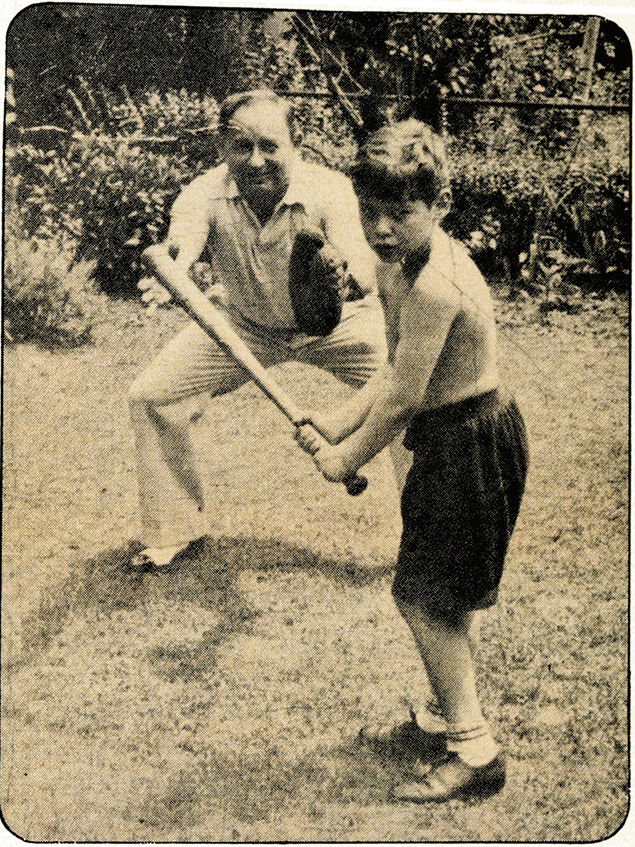
Happily, as a result, we now have Jerry’s latest book, the provocatively titled “Damn You, Josh Gibson: A Ghost Story.” Released just after the Super Bowl, the plot and characters probably began to take root from the moment Jerry’s father, Harry Izenberg, an immigrant, World War I vet, semi-pro player, and fur dyer by trade, introduced him to baseball and its nuances by taking him to Newark Bears games at Ruppert Stadium, deep in the Ironbound.
The Bears were the Yankees’ top farm team and stocked with enough talent to compete in the majors. Jerry loved the spectacle immediately and took his curiosity to the next level by playing hooky and sneaking into Ruppert to watch its other tenant, the Newark Eagles, take on Negro League rivals such as the Homestead Grays, Kansas City Monarchs, Pittsburgh Crawfords, Baltimore Elite Giants, New York Cubans, Chicago American Giants, and Birmingham Barons.
These franchises were often financially shaky and frequently owned by a dodgy assortment of characters who proved equally as adept in stiffing creditors as they were in paying meager salaries. The tens of thousands of African American fans who flocked to the games were as boisterous, opinionated, and devoted as those at Ebbets Field. And the Black press covered the competition in tenacious fashion, using prose either adoringly effusive or unsparingly critical.
Jerry became determined to capture and preserve this unique atmosphere and celebrate the league’s constellation of stars denied their due by a Jim Crow society and a baseball hierarchy working tirelessly to keep the major leagues lily white. Some of the names are familiar, others not so much: Josh Gibson, Ray Dandridge, Cool Poppa Bell, Leon Day, Max Manning, Satchel Paige, Biz Mackey, Turkey Stearnes, Buck O’Neil, and Mule Suttles There are dozens more, and 36 are now enshrined in Cooperstown, having been granted belated Hall of Fame entry by special committee beginning in 1970.
In “Damn You, Josh Gibson,” the doppelgangers of these greats are animated through the conversations, imagination, and flashbacks of a fictional grandfather, Jeffrey Jefferson Jr., known in his playing heyday as Jeff the Jet. The old man has nursed a lifelong grudge against Gibson, who he feels shattered both his leg and his career with an unnecessarily rough cutoff play.at the plate. When he takes his doting grandson Jeffy to a now decrepit and shuttered Ruppert Stadium, supernatural sensibilities come into play.
By “ghosting” his subjects, Jerry has only made them burn brighter, contrary to the current meaning of the term. Suddenly, the ancient Eagles team bus materializes and Jet and Jeffy’s tour guide into yesteryear is none other than a spectral Josh Gibson. The slugger-catcher has often been called the Black Babe Ruth, but Jerry, who saw him clout a ball clear out of the old Yankee Stadium, belongs to the school who believes Ruth might have been nicknamed the white Josh Gibson.w
Regardless, his admiration is both clear-eyed and starry-eyed. And so are the stories, revelations, and anecdotes at the heart of “Damn You, Josh Gibson.” They are at one and the same time heartbreaking and inspiring, shame-inducing and resilient. Of particular interest is the additional light Jerry sheds on the reservation some Negro League players voiced about Jackie Robinson being chosen as the one to break the major league color barrier. And there is the jaw-dropping scene of Paterson’s Larry Doby, the second Black player in the majors, being shunned in the locker room by his new Cleveland teammates.w
Today, thousands of columns and articles later, Jerry lives in Henderson, Nevada, just outside Las Vegas, with his wife of 46 years, Aileen. The sports world’s rock of ages will be 96 in September and continues as columnist emeritus of the Star-Ledger through nj.com, the paper’s online platform and sole outlet since the print edition ceased publication early last year. His writing is still peppered with references both biblical and salty, and his literary conscience still calls out for social justice.
Just before the Ledger’s demise, I shared a Zoomcast with Jerry and retired reporter Guy Sterling sponsored by the Newark public library. We discussed the paper’s 85-year history and its transformation from a crime and gossip sheet to its glory days as New Jersey’s preeminent daily under the guidance of editor Mort Pye. As usual, Jerry’s humor, institutional memory, and sense of irony carried the day.
The two biggest concessions he’s made to aging have been giving up in-person coverage of the Super Bowl and the Kentucky Derby. But after 53 consecutive years of attending the former, and 54 the latter, he works the phones and networks from home with one of the most extensive rosters of contacts in the business. Jerry’s mantra, borrowed from his mother, proclaims, “If it happened, I was there.” And his huge following of readers are grateful he was.
Jonathan E. Lazarus, a retired Star-Ledger editor and copy editor for the Jewish Standard/New Jersey Jewish News, has given his season’s Giants tickets to his two sons, a decision he will probably come to regret as new coach John Harbaugh returns the team to glory. Jerry will certainly write about it.
comments