Going back to Poland
Jeremy Lentz explores a country full of the absence of Jews
It’s not as if Jeremy Lentz of Teaneck didn’t know about the bleak terror of the Holocaust.
When he was growing up in New City, he was greatly influenced by both of his sets of grandparents. He was born in 1980; he’s old enough to have grown up with survivors.
His father’s parents, Ronne and Nathan Lentz, were native New Yorkers, with the Brooklyn-tinged brash self-confident Jewishness of their generation. (Yes, that’s a stereotype, but there’s truth in it.)
His mother’s parents, though, were survivors. Fiszel (later Phil) Rosenkrantz lived through Buchenwald; Chana (later Anna) Blumenfeld made it through two slave labor camps in Poland. They met in a DP camp, married, and eventually got to Brooklyn, where their baby, Mr. Lentz’s mother, Toby Rosenkrantz Lentz, was born.
Mr. Rosenkrantz died when Mr. Lentz was a baby, but he knew Ms. Rosenkrantz very well. He’d spend summers in the Catskill with her, in a bungalow colony, surrounded by other survivors. “They’d make a fuss over me, and I’d sit with them, and largely the summer would revolve around stories of the Holocaust,” he told me in a profile I wrote about him in 2022. He went to South Fallsburg every summer for years not because he had to — his sister, Gena, didn’t want to spend her summers there, so she didn’t — but because he wanted to. “Being with that community gave me a strong sense of self,” he said.
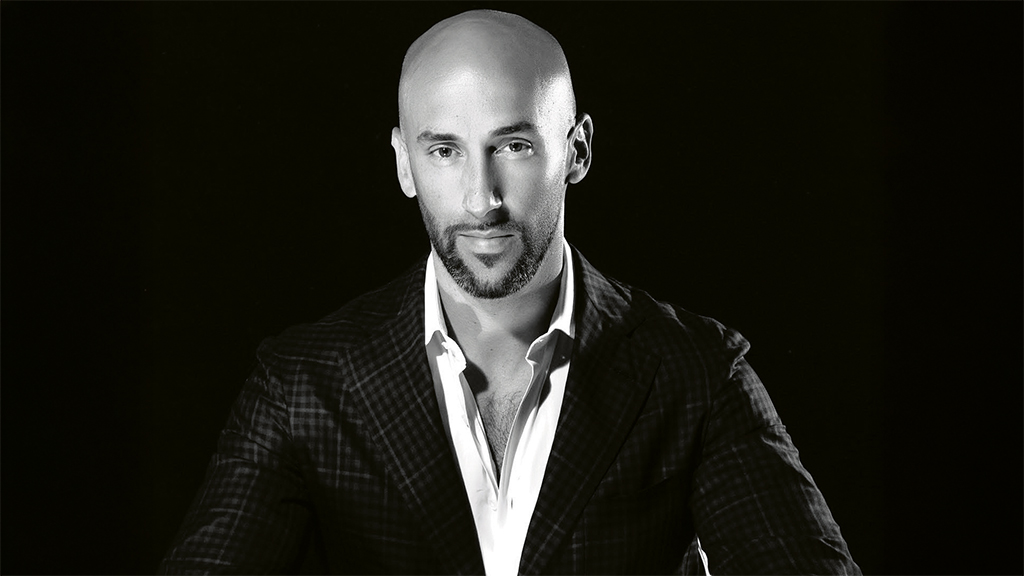
But despite that background — or more likely because of it — Mr. Lentz wondered what life had been like in Poland before the Holocaust. How had his grandmother and her friends become the people they were? What had formed them before the nightmare started? Where did their sense of humor come from? How had that survived? How did their love of life — of eating, of talking, of dancing, of swimming, of going to the movies every Saturday night after Shabbat, as he and his grandmother did — come from? Was it all in reaction to the horror? What had come before it?
Mr. Lentz now has many full-time jobs. He’s the executive director of the Teaneck International Film Festival and the director of special projects for the Puffin Foundation. (The film festival will run from November 6-13 this year.) He also runs the college prep business that his father, Jonathan Lentz, started.
But like all of us, he also needs the occasional break, so this summer he and a friend went to Poland.
And he went as a Polish citizen.
That was its own adventure.
It started about two years ago, as the political situation here at home started turning sour. It made Mr. Lentz uncomfortable; his background — not only is he Jewish, the son of Holocaust survivors, he’s also gay — has refined his nerve endings. He knows that things change.
“I had a feeling — it really was a shot in the dark,” Mr. Lentz said. Like other American Jews descended from Holocaust victims, he thought that he might be able to get citizenship to a European Union country. It’s a very Jewish thing, really, knowing that you can escape if you have to. Mr. Lentz was in Italy on vacation then, talking about exploring possible citizenship, when “an ad for a law firm literally came up on my phone, asking if I’d like Polish citizenship, or to explore if I would be eligible for it.”
That brings up a whole other topic — how our phones listen to us — that should be explored at some other time and place. But Mr. Lentz was confronted with this ad, “so I did some research, and it was positive, so I reached out, and they responded right away. The process seemed to be thorough, and the price seemed to be reasonable, so I thought, what do I have to lose? At the most, a couple of thousand dollars. So I decided to take a crack at it.
“I went into it not overly optimistic. I figured that they wouldn’t be able to find stuff” — the documentation necessary for the process – “or there would be some other barrier.
“But they were able to find both my grandmother’s and my grandfather’s birth certificates, and all other different kinds of records, in the archives of either their local towns or the cities nearby.” His grandmother came from Opatów — probably better known to Jews as Apt, home to the Apter rebbe — and his grandfather from Grabow, a tiny town near Lodz. “I got an email saying that so far I was successful, but I would have to go through the rest of the process.
“When I found out that I had a path to citizenship, I called my sister; she has a 2 1/2-year-old daughter. The first thing my sister said to me is, ‘I am not moving to Europe.’ And I said, ‘It’s not really about moving to Europe. I don’t expect you to do that.’”
To be clear, he doesn’t expect to do that either, unless things here change radically.
“But it’s that we are reclaiming something that was taken from us. And it’s also about having options for the future, and even more for your daughter than for you. Just think of what having a European Union passport could open.
“It’s not just about Poland. A Polish passport is an EU passport, and an EU passport means that you can travel freely.
“So she decided to do it with me, and particularly for the baby. You never know what might happen. Knowing our history as people who have come from countries where we have been persecuted, knowing that things can change overnight — for me, having written my grandmother’s Holocaust narrative, having spoken at the International Conference of Genocide Scholars, on a panel called ‘Forgiveness and Reconciliation in the Aftermath of the Holocaust’ — well, it’s almost innate. They say that generational trauma is passed down. And remember, I grew up in a world of survivors.
“I grew up thinking that everybody’s grandparents were Holocaust survivors. I grew up sheltered, and deeply Jewish, and this world” — the European world of his grandparents — “was very familiar to me from childhood.
“So we went through this process, my sister and me. It took maybe another year. We needed our parents’ birth certificates, and we had to prove that when our grandfather came here, he didn’t serve in the U.S. Army.” That would have made his grandchildren ineligible for Polish citizenship. “I had to contact the U.S. military and provide a letter where they said that they didn’t have any record of anyone of my grandfather’s name having been in active service.
“And then one day I got an email saying ‘Congratulations! You are officially a Polish citizen.’ They scanned the papers, and they emailed me the originals from Poland, and they told me that I could go to the consulate in New York to set up an appointment to apply for a passport.”
Of course he did.
This summer, Mr. Lentz went to Poland. He traveled with “my best friend, Oussama Bouaboura, who is Tunisian. His father was a diplomat, so he grew up all over the world and he still has family in Tunisia.” The two met in college, in McGill, in Montreal. “He knew my grandmother, and they adored each other,” Mr. Lentz said. “We have a whole group of friends who are Jewish and live in Tunisia” — Mr. Bouaboura isn’t Jewish and he lives in Montreal — “and we talk every day.”
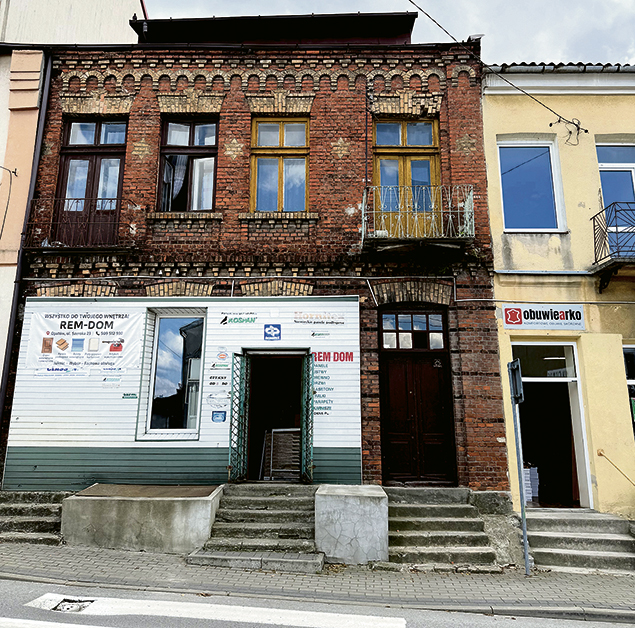
So Mr. Bouaboura, with his own history of not quite fitting in but being at home everywhere, was a perfect traveling companion.
“We hired a young woman to be our translator,” Mr. Lentz said; Mr. Bouaboura is fluent in German, English, and Arabic, but not in Polish.
When they got to Krakow, “I met with one of the attorneys who had worked on my case,” Mr. Lentz said. “He told me that the firm is inundated with cases like mine. Particularly from Israel, because Israelis are trying to flee to Europe, and many of them are of Polish descent.”
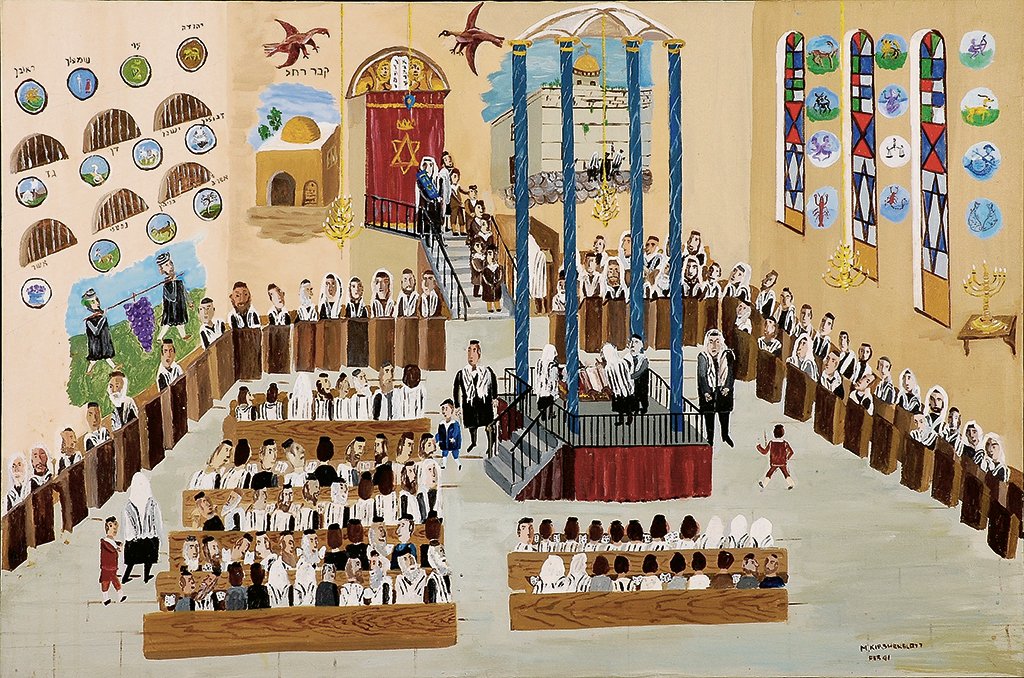
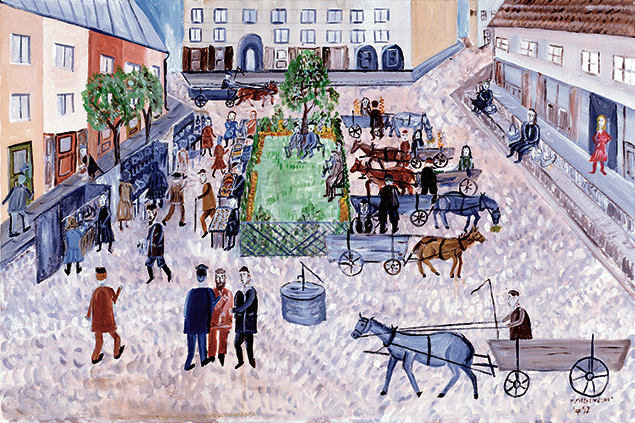
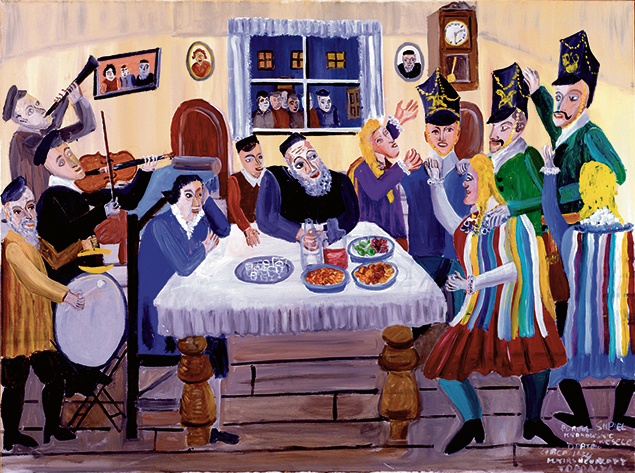
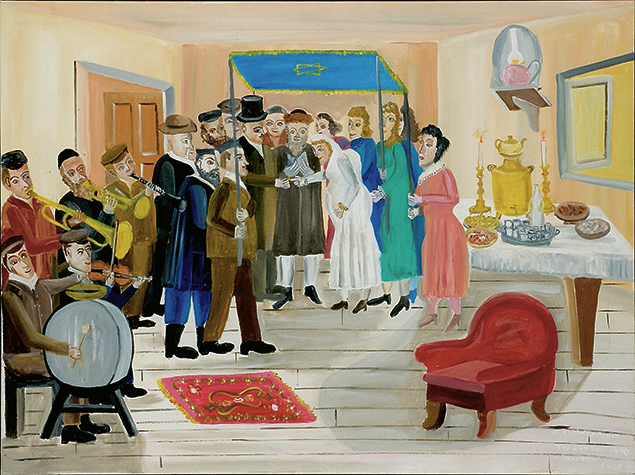
Through his friend Deborah Veach of Teaneck, Mr. Lentz met Barbara Kirshenblatt-Gimblett, a formidably accomplished woman who is both — among many other things — professor emerita of performance studies at NYU and the chief curator at the Polin Museum of the History of Polish Jews in Warsaw. Her father, Meyer Kirshenblatt, came from Opatów but left it in the 1930s and re-established his life in Toronto. He started painting when he was in his 70s. His work, drawn from his memories of life in Opatów, are full of vibrant color. It can be startling to those of us who tend to imagine life in pre-Holocaust eastern Europe as led in black and white, featuring girls with braids, boys with kippot, and everyone with huge, preemptively sad eyes.
Mr. Lentz has a book of Mr. Kirshenblatt’s art that Dr. Kirshenblatt-Gimblett assembled and narrated.
Opatów was a market town, and some of Mr. Kirshenblatt’s paintings are of the “circus that came to town” on those days — not a literal circus, but life, happening all over, brightly.
“This book” — “They Called Me Mayer July: Painted Memories of a Jewish Childhood in Poland before the Holocaust” — “documents the history and the robustness of the town,” Mr. Lentz said.
When he went to Opatów, he was struck by how much of what he found there mirrored what he saw in the book. “Everyone I spoke to who came from this town or had a connection to it before the war was happy,” he said.
What most struck him, that is, is that it was a real place where real people had real lives. They weren’t all happy — but they weren’t all tragic, either. “This was a place where people grew up. Jews didn’t live in eastern Europe for 600 years because of persecution. They lived there because, yes, there was persecution, there were pogroms, many instances of that, but for the most part they were there because they had good lives.
“There were Yiddish theater groups in Opatów, and there was cinema, and dozens of Jewish newspapers. Sixty percent of the town was Jewish.”
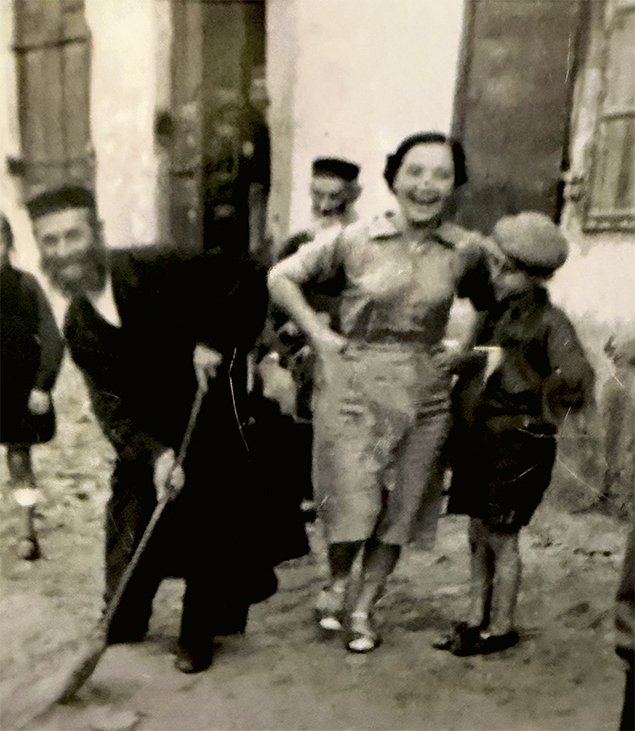
All that ended when the Nazis invaded. “Just like they did in other Polish towns, they came in very quickly and established the ghettos. Opatów had its own ghetto. Signs warned that anyone who tried to leave the ghetto would be killed.
“It was established in 1939, and in 1942 it was liquidated. There’s a marker in the town; on October 22, 1942, 6,500 Jews were taken to the train station by foot. Anyone who stumbled on the way there was shot, and everyone else went to Treblinka. Everyone who got on the cattle car was gassed immediately, as soon as they got there. One person survived the transport.”
Mr. Lentz’s grandmother “was one of only about 300 survivors from that community of about 7,000 Jews. She lived in the ghetto, but she was not on the transport. The Nazis were bringing in Jews from other towns, and from Austria, and they were just crowding into the ghetto. There was typhoid and dysentery in the camps. She told me that things were getting really bad.
“She had an older brother who lived maybe in another part of the ghetto, and she thought that it would be safer for her there. So she walked there, and the Germans picked her up when she got there. She made a very big scene. She was screaming. Her brother came out, and said maybe it’s for the best; they needed Jews for the German work camps. They needed the laborers. So in the summer of 1942 she was one of the very few women who they took out of the ghetto and sent to a labor camp. It was almost all men. But that ultimately saved her life.
“Her entire family died.”
Before Mr. Lentz went to Poland, he kept hearing that “there are people in Opatów who work to preserve the memory of the Jewish community. They connected me to a woman named Maria Borzecka. She is engaged in preserving Jewish history. She doesn’t speak English.” That, among many other places, is where Mr. Lentz’s translator, Katarzyna Iskra — or, more simply, Kasia — came in.
They met on Zoom, and Mr. Lentz told Ms. Borzecka “that I wanted to go to Opatów for the day, and if you are willing, would you take me on a tour? Is there a way that you could show me where my grandmother lived?”
Ms. Borzecka “probably is in her 60s, so she was born after the war,” Mr. Lentz said. “But her parents lived through it. She said that she’d research it in the archives for me.
“Before we hung up, she said that she’d be meeting me that day. She’d block it off on her calendar. She wasn’t paid, and she wasn’t asking for money. I asked her why she would use her own time to go to the archives to research my family, and to take a day out of her life to go to Opatów with me. She said, ‘Because your history is my history, and this is part of me.’”
Mr. Lentz and Mr. Bouaboura went to Opatów, but they didn’t feel particularly sanguine about it, Mr. Lentz reported. “My mother told me that my grandfather did go back after the war. Things were very different then, and he was not welcomed back.
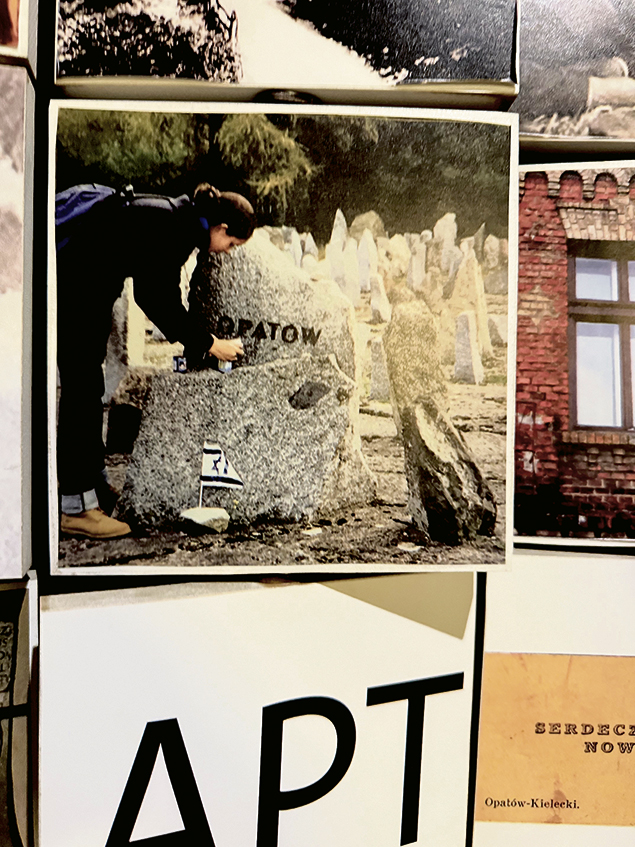
“But things are very different now.”
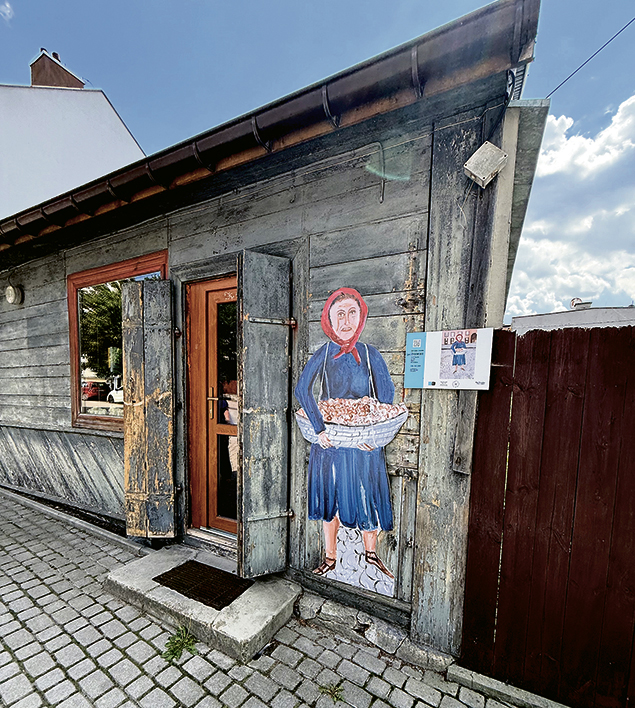
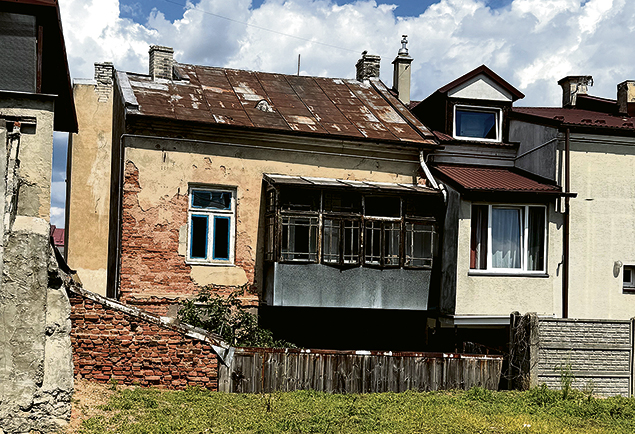
As they drove to Opatów, “we go through fields of flowers and hills and trees,” Mr. Lentz said. “It was this summer, July. I hadn’t realized that the town was so beautiful. It still has a big market square, a lovely restaurant, a couple of stores and a foundation and trees.
“It’s one of the oldest recognized cities in Poland. It’s over 1,000 years old.
“We arrived in the square, and we meet Maria, who brought two other folks from Opatów who are part of this preservation community, another woman also named Kasia and a gentleman named Adam who moved there from Krakow during the pandemic.
“Maria hands me a folder of documents in Yiddish. They start with my great-grandfather, Izrael Avraham Blumenfield, and the name of his first wife and four children. That wife had two boys and two girls, and she died in childbirth with the fourth child. Then, on the next line, he marries a second wife, Tova Zoberman, who is my great-grandmother. The first child they have, in 1923, is my grandmother, Chana Matla. She had three siblings.
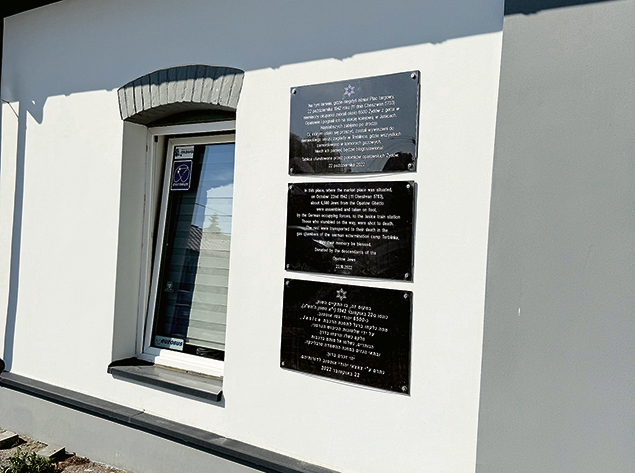
“And then Maria gives me another document. It’s the death certificate of my great-grandmother, Tova Zoberman, who died of kidney disease in 1931.
“In 1933, my great-grandfather marries for the third time, to Pesla. They didn’t have any children.
“And then Maria gives me another document, the eldest half sister, who married in the very early 1930s and went to Buenos Aires with her husband. She was the one surviving sibling of all eight. My grandmother kept in touch with her.
“And Maria also gives me a document that says that my grandmother was one of 62 Jewish survivors who returned to Opatów after the war. They came back on foot and lived there for a few weeks. They documented it. They documented every single Jew who came back after the war.
“The Jews couldn’t stay in any of the post-Holocaust shtetl towns. It was too dangerous. Polish bandits killed a lot of survivors.
“A lot of the survivors in the Jewish community went to Lodz, which had well over 30,000 Jews in the DP camps. They had to leave Opatów quickly because of the Iron Curtain. They had to get over to the American side.
“My grandmother meets my grandfather in Loza, and they marry there. My grandfather also is reunited with his brother, who survived the war in Russia, working in Bukhara.
“My great-uncle’s story is insane. He fled Poland on foot, went to Russia, and got caught. The Russians thought he was a spy, so they sent him by train to a Siberian work camp. That was when the Hitler/Stalin pact held. When it dissolved, the political prisoners were sent south. They were told that they could join the Polish underground. But he ends up in Uzbekistan, and he’s told that he has to fight for the Poles.
“But some guy who sees him in uniform and recognizes him as Jewish starts speaking Yiddish to him. Asks him, ‘Why are you fighting for the Poles? They’re killing all our people. Come see me, and I will help you get out of your uniform.’
“So he gives him civilian clothes and falsified papers and a job working in the bazaar in Bukhara, Uzbekistan, making shoes. That was my great-uncle Shmuel.”
Shmuel later contributed to the repopulation of the Jewish world by having a child in Poland and others, more than his family realized, in America. His family didn’t know that until DNA tests unearthed the story.
His grandfather had to live with nightmare tragedy. He’d been married before the war, and had a two-year-old son who the Germans shot in front of him. They shot his wife too. “He begged the Nazi to kill him too, but the Nazi laughed,” Mr. Lentz said. “They said, ‘No, you are strong. We will send you to work.’
“My poor mother,” Mr. Lentz said. “Her father was never right after the war.”
The point of all these stories, aside from the need to honor the victims by remembering them and telling them, is to say that Mr. Lentz did not go to Poland expecting unicorns and rainbows. He found a place full of echoes of obscene cruelty — but also physical beauty and genuine friendship, good will, and even love.
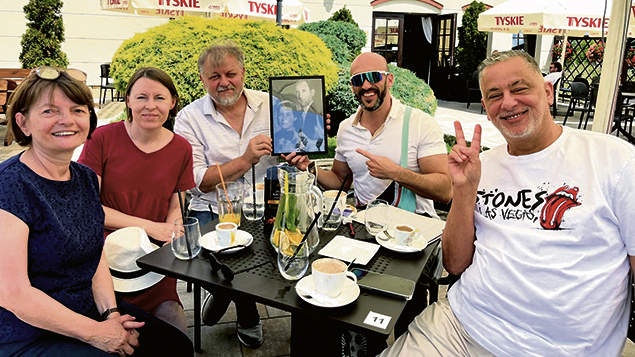
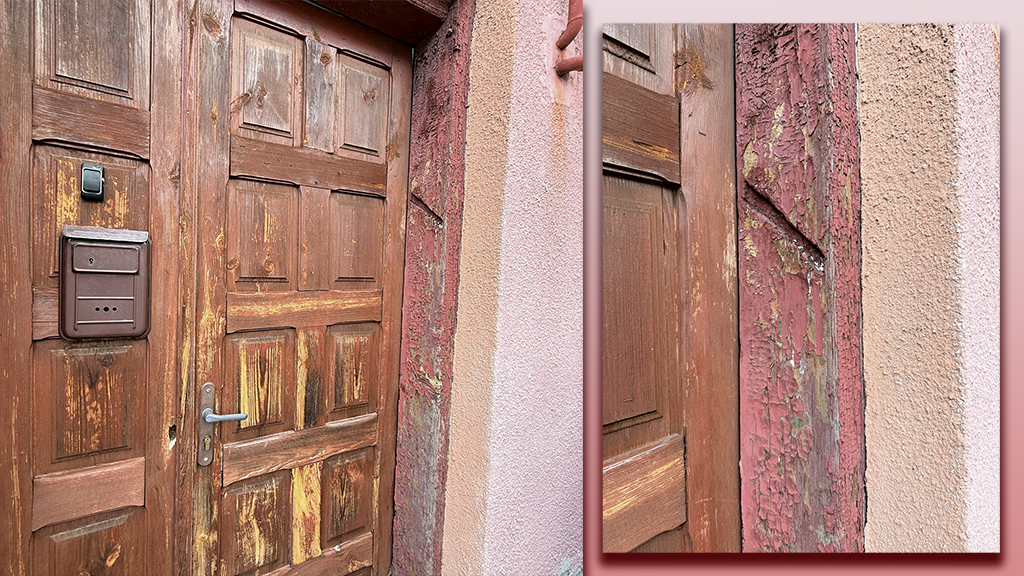
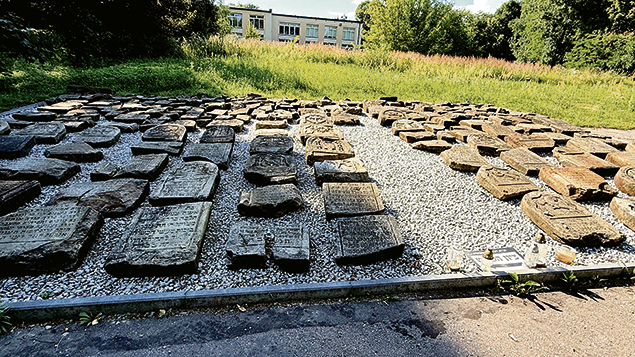
His family had been buried in the cemetery in Opatów for 600 years, Mr. Lentz said. “My ancestry is buried there.” The cemetery had been destroyed; the tombstones were used to build roads. He brought a photograph of his grandparents with them. It was their wedding picture. “I flew to Berlin, to Warsaw, to Opatów, to Krakow, and I took the photograph out and put it on the dresser in the hotel,” he said. “I felt that they were somehow with me. And I felt that in a way I was bringing them back. But I was bringing them back in a positive way.”
Overall, Mr. Lentz said, “it was a positive experience. I thought that it would be negative. But despite the history of the Holocaust, and postwar history, there was something very empowering about seeing all the work being done, all the non-Jewish Polish people who are so interested in preserving our history, because it’s their history too, and they understand it.
“It’s so beautiful to me that these people took their time for a total stranger.”
It’s all enormously complicated emotionally, but it all has to be faced. Mr. Lentz went to Auschwitz. It was difficult. “No matter how much you study the Holocaust, no matter how many documentaries you see, no matter how much you read, when you see it, the scope of it, the magnitude…” Eventually his sentence runs out, dragged down by its own weight.
And also, and yet, and with all the weight of history, “I feel that we as Jews should honor our history in eastern Europe.”
He talked about the irony — the good irony — of the resurgence of Jewish life in Germany. “How do you counter antisemitism?” he asked. “Not by running away.
Dr. Kirshenblatt-Gimblett felt a connection to Mr. Lentz first and most obviously because their families both come from Opatów. Beyond that, she said, “that he was motivated to see the town, to meet people there, and to get a sense of the people who are living there now, their interest in its Jewish history, and their work to restore it — that’s missing from how so many Jews in the world today see Poland. I don’t think that many of those who left feel a strong connection to the place where their families were from, and I think it’s very heartening to see descendants inherit that attachment.
“What I find so gratifying about Jeremy is that he did his due diligence, he read as much as he could, and then he actually went there. He visited in depth and came away feeling that this kind of work should be supported.”
Part of what Mr. Lentz saw in Poland now is the absence of Jews, Dr. Kirshenblatt-Gimblett said.
“How did the shtetl, which is to say the Jewish town, the town that was majority Jewish before the war — how did it become what we call a post-Jewish town? That is to say, a town that once was defined by a strong Jewish presence, and today in many ways is defined by a strong Jewish absence.”
Her father’s art, rich and colorful and full of life, showing the Jewish Opatów of the 1920s and ’30s, makes that point, she said. The Polin’s exhibit of his work, and the book displaying it, shows it as well, “by juxtaposing that vibrant Jewish world, which was not without its problems — economic problems, problems of conflict — with the town that it is today, and how that town became what it is today, and what it means for living there now.” A town, to be clear, full of Jewish history, but without Jews.
But that history isn’t over, Dr. Kirshenblatt-Gimblett said. Not for her, not for Mr. Lentz, not for many other Jews.
“Jeremy’s continuing to look for ways to stay connected to this story. To his story. To this place. I think it’s the beginning of a wider, deeper, ongoing connection.
“To me, that’s really extraordinary and very, very gratifying,” she said.