Let’s talk about dragons
Our analyst looks at the role of drones in the ever-changing war in Ukraine
Game of Thrones. Game of Dragons. Game of Drones. It’s all a logical evolution.
And underneath it, it’s often an almost pre-evolutionary id at work.
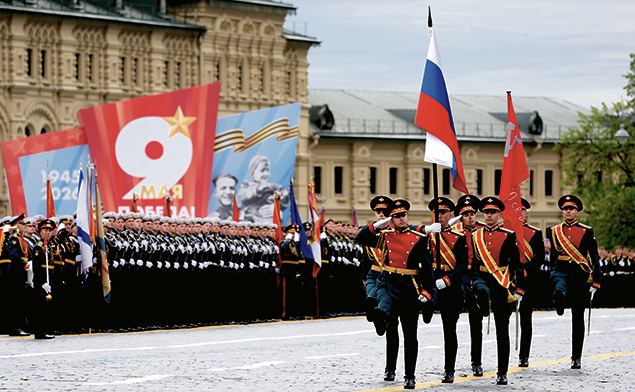
In our last story, Alexander Smukler of Montclair, who analyzes the war that Russia started in Ukraine, told us that Vladmir Putin had — not to put too fine a point on it — asked Donald Trump to call Volodymyr Zelensky to ask him please not to target his sad little Victory Day parade. Zelensky agreed, and held off, but did so mockingly. He signed a “very special presidential decree that allowed Putin to have his parade without any disturbances,” he said.
“I have to tell you that the decree cost tens of people their lives,” he continued. “They were killed a few days after the parade. When Zelensky said that Ukraine was allowing Russia to conduct the parade on Red Square” — to be clear, Zelensky’s tone might have been snarky but the facts were unassailable — “it was a huge insult to Putin personally.
“Putin, remember, is an angry dwarf, the head of a street gang” — he grew up as a smaller-than-average thug on the streets of Saint Petersburg, surviving in his gang by his brain because he had no brawn — “and there is no way that he will forgive Zelensky that enormous insult.
“So based on the rules of the street gang, the next day after the Victory Day parade, Russia started to bomb Ukrainian cities, including the capital, Kyiv. It was a massive attack, bigger than anything Russia had done there before. It was almost 1,500 heavy long-distance drones aimed at Ukrainian cities. Dozens and dozens of missiles were launched from Russia toward Ukraine.
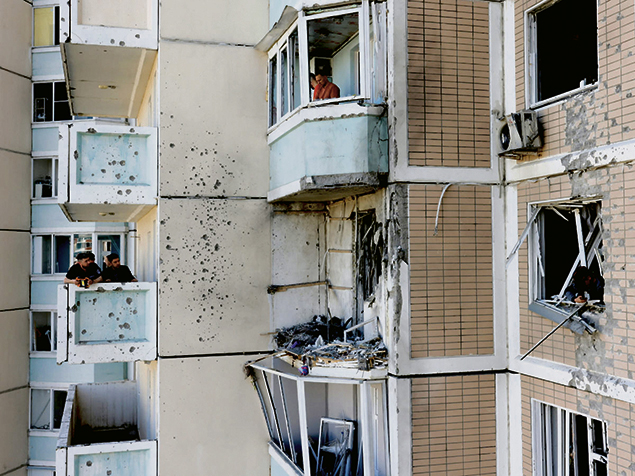
“On May 14, in the massive and brutal attack on Kyiv, 24 people, including three children, were killed and almost 48 were seriously injured and sent to hospitals when their apartment building was hit by drones. Russian drones attacked almost every region in Ukraine.”
The attacks were aimed not just at military infrastructure, as Ukraine’s are, but also at civilian infrastructure, including apartment buildings.

Because the countries and people of eastern and central Europe are closely intertwined with each other, “for the first time, the Ministry of Foreign Affairs in Hungary called in the Russian ambassador,” Mr. Smukler said. That’s because “the Russians heavily attacked some Ukrainian cities with heavy populations of people of Hungarian descent that they’d never attacked before.” (Two of those cities, Uzhhorod and Munkacs, used to be home to thriving, prominent Jewish communities, but those communities were destroyed during World War II. Now they have virtually no Jews, Mr. Smukler said.)
Now, it seems that those cities probably hadn’t been attacked “because of the special relationship between Orban and Putin.” When the war started, “pro-Putin propagandists and influencers wrote that as soon as the Russians take Kyiv, Ukraine no longer will exist as a state, it will be broken into parts, and part of it will become part of Hungary.” But neither of those victories happened. Orban lost and is no longer prime minster.
“Since Orban is out of the Game of Thrones, the situation has changed,” Mr. Smukler said. “Russia attacked those cities heavily.” That’s why Hungary’s foreign ministry, under the leadership of the country’s new prime minister, Peter Magyar, reproached Russia’s ambassador.
“When we see such brutal attacks on Ukraine’s civilian population, do you hear anything about it in the mass media?” Mr. Smukler asked rhetorically. The answer of course is no. “Did somebody report it, standing outside the New York City mayor’s office? Are the signs about stopping the war in Ukraine?
“No. Instead, Mayor Mamdani is signing a decree about celebrating Nakba Day.
“There are double standards. Israel is the mass media’s top interest. But when Ukrainian children are dying, nobody cares.”
It seems that many if not most Ukrainians didn’t like Zelensky’s response to Putin. They thought that it was foolhardy, and it seems to have affected the president’s poll numbers, which are down. “Ukraine paid lots of lives for that decree,” Mr. Smukler said.
And then, as seems inevitable, it was Ukraine’s turn to respond — and it did so with even more force. “Zelensky said that we will mirror Putin’s attack,” Mr. Smukler reported. “And they did. On May 17, there was the most massive and brutal drone and missile attack on Russian territories, which shocked all the military experts in the world, because more than 500 Ukrainian drones had been eliminated over Russian territory.
“But some Ukrainian drones hit their targets in many Russian cities. There were organized, massive attacks on the gas and oil infrastructure. And also, Ukraine concentrated its attacks on Moscow.
“This was the first time when Muscovites have felt exactly the same as people have felt in Kyiv or Dnipro for years now. It’s in every Telegram channel and in every blog — you can hear Russians suddenly realizing that they are under attack, and that bombing on that scale hadn’t happened in Russia since September 1941, when the Germans bombed Moscow. But even then, Moscow was not bombed as heavily as it is being bombed now.
“It’s most amazing that the Ukrainians were able to break through the Russia air defenses, anti-missile, and anti-drone systems in Moscow, hitting important sites in Moscow, including the oil refineries,” he continued. “They hit the Moscow Oil Refinery, Kapotnya,” which provides about 40 percent of the fuel that Moscow and its region need. “That plant was on fire after the attacks. Also, several apartment buildings were hit, three people died, and 10 were injured.
“The Ukrainians’ targets are military or oil and gas infrastructure. They do not try to hit apartment buildings, the way the Russians do. But the Russians can interfere with the drones’ guidance systems and change their trajectories, and then they hit whatever is in front of them.
“So Ukraine surprised the world by sending that massive number of drones into Russia. There are three defense circles around Moscow. There are more than 130 air defense and anti-drone systems called Pantsyr; they’re similar to the American Patriot system. It’s a very sophisticated air defense system. And Moscow is covered by a shield that it’s almost impossible to break through
“And now the Ukrainians broke through the Russian air defense and anti-missile systems, and even their sophisticated radio electronic defense system. The Russians eliminated hundreds of the Ukrainian drones, but dozens of them reached their targets. And that really affected the Russian population. It was a huge shock.
“And that is huge political trouble for Putin and his government, because now people in other cities also feel like they’re targets in the war. They realize that the war is not hundreds and hundreds of miles away. It’s in the European part of Russia.
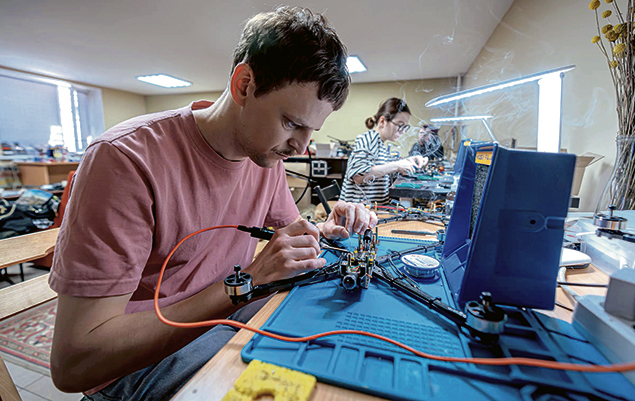
“That’s because during the last four years of war, Ukraine has been able to develop such sophisticated technology that it can produce thousands and thousands of drones, of completely different capacities and for different purposes. And the Ukrainians know exactly how and when to use them to hit their enemies and eliminate incredible numbers of their enemies’ soldiers and infrastructure and oil and gas infrastructure.
“Zelensky recently divided the Ukrainian air force into two parts, creating an unmanned systems force, headed by Major Robert ‘Magyar’ Brovdi. Magyar has just announced that Ukraine today is able to produce jet drones that can fly for more than 2,000 miles and then drop missiles that can hit targets more than 600 miles away. This is a new generation of drones.
“It is absolutely revolutionary.
“Ukraine also developed underwater drones, and also it has developed drones that can deliver weaponry and food to the soldiers on the frontlines.”
Why do all these drones matter? Because they kill soldiers. And it’s a relatively cheap way to accomplish that grim goal.
“Russia has been losing about 35,000 soldiers a month,” Mr. Smukler said. That is an enormous number, and an unfathomable waste of human life. “The Ukrainians recently ordered that number increased; they want to try to eliminate about 50,000 soldiers a month.
“They are trying to eliminate more soldiers than Russia can recruit. This is the first time that Russia has been recruiting fewer people than they lose. So the Russians’ ability to attack and break through the Ukraine frontlines is minimal, because they have a deficit of manpower. They don’t have enough cannon fodder.
“In order to break the Ukrainian front, Putin needs to enhance mobilization. But if he announces mobilization, it will be political suicide. He’s trying to avoid that. He’s recruiting people who are willing to fight for money — mercenaries — but his ability to recruit them is limited.
“So the Ukrainians are trying to create a situation where the Russians don’t have enough manpower on the frontlines without announcing mobilization, which will cause huge turmoil in Russia.”
This works because drones are at least relatively cheap and “100 percent effective,” Mr. Smukler said. “In the kill zone” — that no man’s land between the two sides’ front lines — “if the Russians try to start an offensive attack, the Ukrainians use drones to prevent it and eliminate the enemy. It’s so much better than using cannons and missile systems, because the drones are so much cheaper. Ukraine produces thousands and thousands of them, and they’re basically using two or three FPV drones — superlight drones — to eliminate one enemy soldier. Drones cost approximately $700, and altogether it costs about $2,100. But Putin is giving the family of every soldier who lost his life on the front line seven million rubles, based on their contract with the Ministry of Defense. That’s approximately $95,000 based on today’s exchange rate. So when Ukraine spends $2,100 to kill one Russian soldier, Russia pays $95,000 after that death.
“In order to recruit and replace the soldier who was killed by the dragon — the drone — Putin has to pay another new soldier in advance. He pays about three million rubles for that signing bonus, which is approximately $41,000, so altogether Putin pays $136,000.
“Every month, the Russians pay almost $5 billion to replace dead soldiers. Every month. Every month.”
What would happen if Putin just doesn’t pay the families of dead soldiers? “If he doesn’t pay, nobody else will sign up,” Mr. Smukler said. “Now they will, because $95,000 is a gigantic amount of money for them.
“That’s why the Ukrainians realized that the cheapest way to defeat Putin is to produce as many drones as they can.
“Drones suddenly have become the most sophisticated, most effective, and most brutal weaponry of our time, and the Ukrainians realized that. They surprised the whole world, they’re teaching most of their allies about it, and pretty soon they will supply these drones to NATO.”
That leaves Putin in a situation not unlike the one Donald Trump faces now — trying to figure out how to get out of an unpopular war while not losing face.
There’s much more to say about that — we will see what comes of the pilgrimages first Donald Trump and then Vladimir Putin made to China for meetings with Xi Jinping. This might be an attempt at Yalta II, but neither Trump nor Putin is either FDR or Churchill, and Xi is positioning himself as first among equals.
If there’s anything we can say with total confidence, is that this story continues. We’ll pick it up in the next installment.