Remembering Abe Barzelay
Musician, engineer, inventor, perfectionist, genius
Avraham Barzelay died on Monday, May 25. He was an extraordinary man about whom most people knew very little — because he wanted it that way. He was so allergic to bragging that it nearly silenced him. We wrote about him in October 2018. We’re rerunning that story, slightly updated and with new information at the end.
Avraham Barzelay of Paramus was responsible for the music the audience at the Eric Brown Theater heard on a Saturday night in 2018. He also was responsible for the way they heard it, that night and every other night.
That night, he played music by Beethoven, Gershwin, and Grieg, among others; a pianist accompanied him as he played the harmonica. The what? Yes. The chromatic harmonica, the small, unlikely instrument out of which Abe drew soulful sounds, and to whose modern pioneers, Shmuel Gogol and Larry Adler, Abe was heir.
The Eric Brown Theater, the jewel-box performance space upstairs at the Kaplen JCC on the Palisades in Tenafly, was celebrating its 25th anniversary that night. A wonderfully designed small theater, with marvelous sightlines and even better acoustics, it was carefully designed by the master acoustic engineer Avraham Barzelay.
Oh yes, that’s the same Abe Barzelay whose troubleshooting work for Boeing, among other major corporations, incorporated his unimpeded imagination, long life experience, and rare open-eyed common sense to fix the problems other people consigned to him as otherwise unfixable.
So who exactly was Avraham Barzelay?
Mr. Barzelay was born in Kibbutz Ramat Rachel, in what was then mandatory Palestine, in 1944. He was the child of two Polish-born Jews, who met in the kibbutz in Poland that young Zionists set up as a place to train themselves before they set out for the real thing. His mother, Pesya, got a visa for Palestine and arrived at Ramat Rachel with its founders, and then waited there for two years for her fiancé to arrive. His father, Joseph — that fiancé — stayed behind to help organize illegal immigration to Palestine. He got on the last boat out (a malodorous vessel that had been used to ferry pigs). Most of the rest of both of their families died in the Holocaust.
Like the other children on the kibbutz, Abe slept in the children’s house; like other parents, his would come to say goodnight to him and his older sister. His father would sing him a lullaby, he remembered.
When Abe was about 4 1/2, Israel was declared a state, and then the War of Independence broke out, as its Arab neighbors tried to smother the newborn nation in its cradle. The war soon made its way to Ramat Rachel, not very far from Jerusalem.

“When it got very bad, they put all the little children in one big house,” he remembered. “They put sandbags all around it. There were fighters shooting out from the window, and I remember one of the fighters asked the kids around him for more bullets.
“And then he got one. Right away. A bullet in his mouth.”
Abe remembered that; he remembered being scared, and that other adults came and got him out of there quickly. But the memory lingered.
“They decided a few days later that it was too much for the kids, so they decided to take us out of there, to take us to Jerusalem,” he said. “So they put steel plates around a bus — they armored it — and they took us to Jerusalem, about 40 kids, from babies to 5-year-olds, and some of the mothers.” That included his mother.
“The bigger kids, including my sister, walked to Jerusalem,” he continued. “It was just about a mile away, but the trip took about five hours by bus, because there were landmines and shooting, and at one point I started to cry because there was no water, and I was thirsty, so very thirsty, and I wanted water.
“So my mother asked me, ‘What can I do to make you stop crying?’ and I said, ‘Sing me the lullaby, the one that my father sings me.’ And she started to sing, but she couldn’t do it right, she did not know how to sing, and I started to cry more and more, saying, ‘No, no, you are not doing it right.
“So the worst part of the trauma for me was with my mother not singing the lullaby right,” he said; it is a valuable child’s eye view of how resilient children are, how idiosyncratic memory is, and how very much unexpectedly and all at once something that was okay can become too much.
The evacuated families were taken to Atlit, a camp the British had built to house illegal immigrants to Israel; soon Mr. Barzelay’s father joined his family, and Pesya and Joseph’s third child, another son, was born there. The Barzelays were among the builders of Kibbutz Ain Carmel, where Abe Barzelay spent the rest of his childhood and adolescence.
His father was an engineer — “mechanical, electrical, you name it,” he said — and a very talented man. “He went to school for engineering in Poland, and maybe one or two years in Germany. I would build machines with my father. I got a lot of hands-on experience from him. He was my inspiration.”
His mother was the kibbutz’s head nurse.

“It was an agricultural kibbutz, with one factory, where they made polystyrene,” Abe said. “I had a regular life on the kibbutz, and I went to school there.” Yes, of course, he went to school there, but, as his wife, Hana Arad, pointed out, he also went to the Technion for his last two years of high school. As it turned out, Mr. Barzelay was so gifted at math and physics that his teachers gave up on him — there is nothing worse than a bored student who fights ennui by showing how much more he knows than his teachers do — so he was shipped off to take college-level courses. (“I took two sandwiches and two buses every day,” he said.) Because he had not yet graduated from high school, he could not matriculate, and therefore could not earn an undergraduate degree, but he had done all the coursework for a bachelor’s degree in math and another in physics by the time he finished his school at the kibbutz.
Another strong thread that has been woven throughout Abe’s life was evident from the beginning. He loved music. “When I was very young, there was just one radio on the kibbutz,” he said. “I would go and sit by the window, just to be able to listen to the music on the radio.”
There would be concerts on the kibbutz. When he was 8, he listened to one that affected him strongly. “About six months before the concert, my mother’s brother, my uncle, who had escaped Poland before the war — the only one who survived — came from Cuba,” where he had found shelter from the Shoah, Mr. Barzelay said. “He brought me a very small, simple harmonica from Cuba, and that’s what I started to play.
“The player at that concert was a harmonica player named Shmuel Gogol,” he continued. “To understand this part of my story, you have to know his story.”
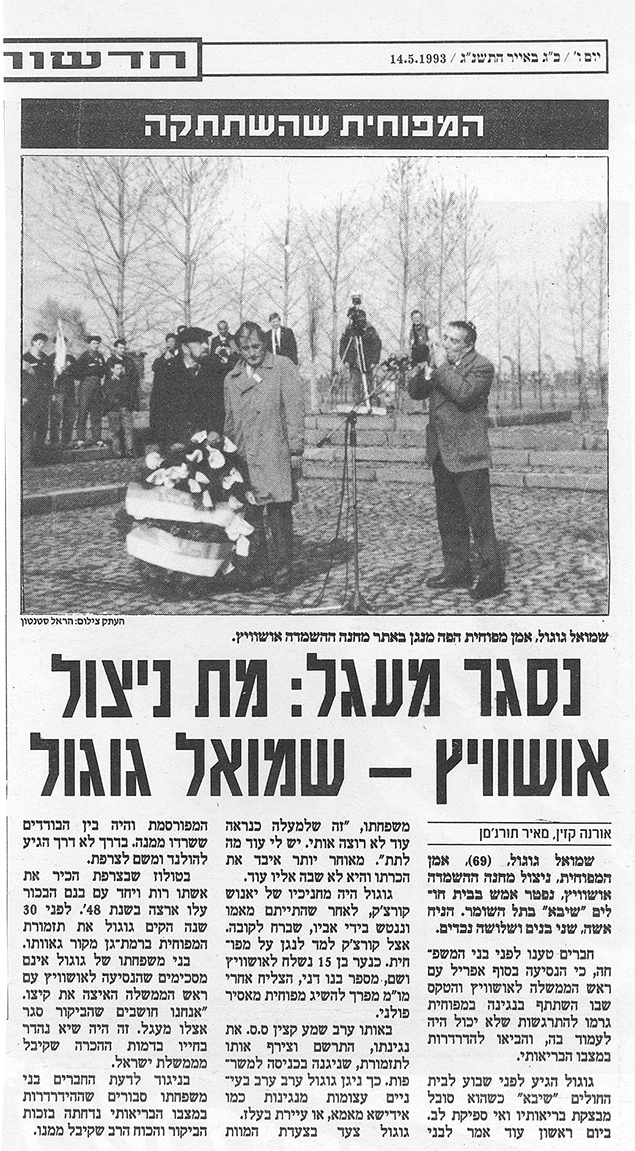
Shmuel Gogol was born in Poland in 1924; he was orphaned, and ended up in the orphanage run by Janusz Korczak, the famous Polish Jewish educator who refused to leave his charges and instead accompanied them to their deaths — and his own — in Treblinka.
Before the Nazis came, Korczak would give children a coin — the Polish equivalent of a penny — whenever their teeth would fall out, Abe said. “He gave coins to Gogol, and eventually, when all his teeth had fallen out, Gogol went to him, and said, ‘You gave me a lot of money. I want you to buy me a harmonica with it.’” And he did.
“A few weeks later, the Nazis came.” Gogol escaped, but ended up in Auschwitz, without his instrument, which he had to leave behind. In the death camp, he “heard someone playing the harmonica, and he asked to buy it.” They bartered — the harmonica for two weeks’ worth of bread — and “Gogol got the harmonica, and a Nazi officer heard him play, and he got him to play in the death orchestra.” That was the group of musicians who sat outside the gas chambers and played as the doomed prisoners were herded in. “And he was playing there, and suddenly he saw members of his own family going in there,” Mr. Barzelay said. “And from then on, he played only with his eyes closed.
“And he promised himself that if he ever got out alive, he would dedicate himself to teaching kids to play the harmonica.
“He got lucky, and he survived, and he immigrated to Israel, and a few years after he got there, the mayor of Ramat Gan, Avraham Krinitzi, heard him play the harmonica, and said to him, ‘I will give you anything you want. What do you want?’ and he said, ‘All that I want is to have an orchestra for kids, and let them play the harmonica.’ And Krinitzi gave him what he wanted.”
After Gogol’s performance at Ain Carmel, some kibbutzniks introduced Abe to him, and Abe played for him. Abe had played a basic diatonic instrument — the much less challenging kind, better for beginners — but Gogol sent him a chromatic one.
During his time on the kibbutz, a musician who came to test the children there to see if any had musical ability suggested that Abe be sent to a conservatory — not only did he have talent, he also had perfect pitch, the expert said, and “why is he wasting it like this, on the harmonica?” — but his parents decided against it. “My parents had enough problems,” he said. “They thought maybe it would be better for me to be a doctor, instead of a musician.”
After graduation — which came a year early, because the kibbutz’s educators had him skip first grade — Abe joined the Israel Defense Forces. He was in the Air Force, stayed in for four years, and left with the rank of major. Even all these years later, he said that he should not — in fact, he could not — talk about what he did there. It was classified.
Throughout his time in the IDF, Abe played harmonica; he’d go back to the kibbutz on weekends, “and on Friday nights, after dinner, the whole kibbutz would dance, and I would play for the dance.”
“The first time I met Abe, he told me that he couldn’t dance,” Hana said. “That’s because whenever he was at a dance, he was always playing.”
When he left the Air Force in 1964, “I went back to the kibbutz, but I wanted to study in the music academy,” he said. “The IDF wanted me to stay, and the kibbutz wanted me to go back, but I wanted to go to the academy. It was burning in my body. The kibbutz said to me that I had to work for two years there, and after that we can send you. And I said, ‘No. I want it now.’”
He applied to the country’s two biggest music schools, one in Tel Aviv and the other in Jerusalem, asking for both admission and a scholarship. Both turned him down. He had no formal training in music, and anyway the harmonica was a toy, wasn’t it?
But then something happened.
“My girlfriend at the time was Nechama Hendel, and she was the biggest singer in Israel,” Abe said. “She was really a star.”
The Haifa Symphony was planning a concert, and “a friend invited me to play two solo pieces there,” he went on. Ms. Hendel “invited the president of the music academy in Tel Aviv and the president of the music academy in Jerusalem to the concert. She was a queen; if the queen invites you, you don’t say no. So they went to the concert, and then they went out to coffee with her, and she said, ‘So, what do you think?’ And they said, ‘The orchestra is eh…’” — to illustrate, Abe put his hand out, palm flat, and rocked it up and down. So-so. “‘But the young kibbutznik is talented, and this is something that we never heard before.’
“So she said, ‘Let me tell you something. You both rejected him.’
“Long story short, two months later I got two scholarships, one to the music academy in Tel Aviv and the other to the music academy in Jerusalem.”
The schools allowed Mr. Barzelay to combine the scholarships and take personal lessons. “I did the whole program and graduated in two and a half years, although it usually takes four,” he said.
Although he also learned how to play the flute, the harmonica was and remains his main instrument. Why is it so undervalued? Because, he said, it is very hard to play classical music well on it. It’s easy to begin to play it, but after that the curve is steep. “You need a special technique to work with your shell,” he said, gesturing toward the bottom part of his face; it’s your jaw and the inside of your mouth, including your tongue. “It’s very hard to do it right,” he said. It’s far easier to play harmonica for blues or jazz or folk; then, “you don’t need a chromatic harmonica.” A diatonic is far easier.
He owned about 50 harmonicas, he said; they vary in many ways, including in key. “Sometimes I’ll try different ones to see which is right for each piece,” he said, and that decision may vary for a range of reasons.
During this time, Mr. Barzelay continued to work in the kibbutz. He managed its garage; it still was mainly agricultural, so he oversaw its combines and other heavy machinery.
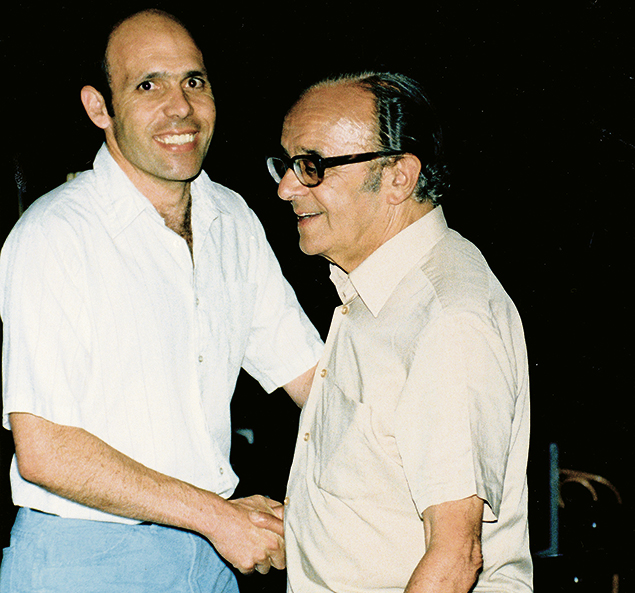
In 1967, the Six-Day War broke out; Mr. Barzelay was in the reserves, so he was called up. He didn’t want to talk about his military experiences, but something else happened to him that affected the course of his life. He met Larry Adler, the American-born harmonica player — the only harmonica player most Americans who can name any harmonica player could name — who left the United States for England during the McCarthy era and rarely returned.
Mr. Adler “used to come on the first week of any war in Israel to play for the injured and for the soldiers,” Mr. Barzelay said. “That was the first time I met him; I played ‘Jerusalem of Gold’ with him on the stage.
“In 1973, during the Yom Kippur War, Larry Adler came again, and again we played together, and he offered me to be his student. But he lived in London, and I did not have the money to go there.”
But, to jump ahead a little in his story, in 1976 Mr. Barzelay and his family moved to the United States, “and I think two years later I started to go to lessons with him. I met him in New York, in Manhattan, because his daughter lived there, and then I would go to London for lessons. I would stay with him for one week in his home every two months. He did not let me stay in a hotel.” They became so close, in fact, Mr. Barzelay added, that he played harmonica at Mr. Adler’s funeral, in 2001.
Meanwhile, Mr. Barzelay married; his first wife, Batya, a gifted photographer, died in 2004. In the spare time that it is impossible to imagine he had, he played sports on the kibbutz. “When I was in the IDF, I took the championship for high jumping, and I played basketball,” he said. And he also developed an expertise in another one of the areas he is passionate about — acoustics.
“This is how I got to acoustics,” he said; why he decided to engineer the spaces in which musicians perform rather than perform the music himself. He was the valedictorian in the music academy, “and as part of the tradition the valedictorian has to conduct the orchestra and the choir for the last concert of the year,” he said. “At the last rehearsal, the professor asked one of the violin players to tune one string a little bit down.” Mr. Barzelay did not hear that request. “When we started the rehearsal again, I heard something wrong, and I stopped right away, and asked the group — the violins, from the first violinist to the last boxes — to play. And they did, and I heard that it came from this guy, and I said to him, ‘Four years in the academy, and you still didn’t learn how to tune a violin.’
“And then the professor said, ‘No, no, I did it. I asked him to do that.’ He did it intentionally, as a test.” To see if Mr. Barzelay could hear it.
“So then he said, ‘Okay, let’s continue,’ and I tried to, but I stopped. I said that I just couldn’t. I just couldn’t do it.
“The professor felt so bad. He finished the rehearsal, and then he went to the president of the academy and told the whole story. He was so sorry. He said that he did it every year, and that no one else had ever heard it.
“I am telling you this story because it made me realize that I am a perfectionist. I can’t make everything perfect, but I can make the place where I hear music perfect.”
Acoustical engineering was a very small field in Israel, so Mr. Barzelay, with his perfect pitch and his finely honed common sense, made his name there very quickly. He was asked to work on the acoustics in many concert halls; “much of what I did was fixing mistakes,” he said. “What you really need is common sense and a good ear.”
On August 23, 1976, the Barzelays — Abe, Batya, and their two sons, Ifar and Amiran, who were very young then, moved to Bogota. Abe had gotten an offer from the Electronics Institute in Yonkers. “They knew about me because I had done a big project in Germany,” he said.
“We moved directly to New Jersey because my brother David had moved here two years earlier. He also has three nieces, who have my heart,” he added.
“We moved to an attic, and it was August, and there was no air conditioning. It really was a shock. And we came with only $500.”
But things got better quickly. “After I was here a year and a half, I was a consultant, and I worked at Carnegie Hall,” he said. The family soon moved to Teaneck, where Abe and Batya lived until they moved to Paramus, six months before she died. “She was happy here every day,” he said. The house backs onto a wide swath of green that runs for miles, from Ridgewood to Saddle Brook, he said; it’s got a brook, and wildlife, and it’s lovely. “Eight miles of walks and deer, who just look at you, like they’re saying, ‘Why are you coming to bother us?’”
Mr. Barzelay created the Eric Brown Theater during that time. He also created Bruce Springsteen’s home studio, a fact upon which he expanded only when prodded.
“The story of Bruce’s studio was that years ago, my friend, the owner of professional studio equipment, asked me to come and consult for somebody who wanted to build a studio in his house,” Abe said. He didn’t know who the client was. When he got there, he met some guy who “introduced himself to me as ‘Bruce,’ and I introduced myself. I said, ‘I am Abe.’ And when we came to more details, I asked him what kind of music he wants me to design the studio for, so everybody started to look a little white and they started to look at me. I didn’t know what happened.
“Then it came out that this guy was famous.”
Bruce’s last name was Springsteen.
Abe didn’t know Springsteen then, and didn’t pretend to, and the singer complimented the acoustical engineer on his honesty. “The result of this meeting was a very nice studio in his house,” as well as an invitation to all Springsteen’s local concerts, Abe said.
Mr. Barzelay continued to be a perfectionist. He worked with the conductor Kurt Masur at the New York Philharmonic for six years; he tells the story of how one day, when they were recording Tchaikovsky’s Symphony No. 4, union rules demanded a break. After the break, “I hear a small noise. So I say, ‘Maestro, stop, please. I hear a noise. Give me a few minutes.’” After checking, ruling out possibility after possibility, he saw that the noise was coming from the direction of the French horns. It came from an elderly player who had switched his hearing aid on during the break and forgot to turn it off. “Kurt started to laugh,” Abe said, and he teased Abele, as he called his acoustics engineer, for the extraordinary acuity of his hearing.
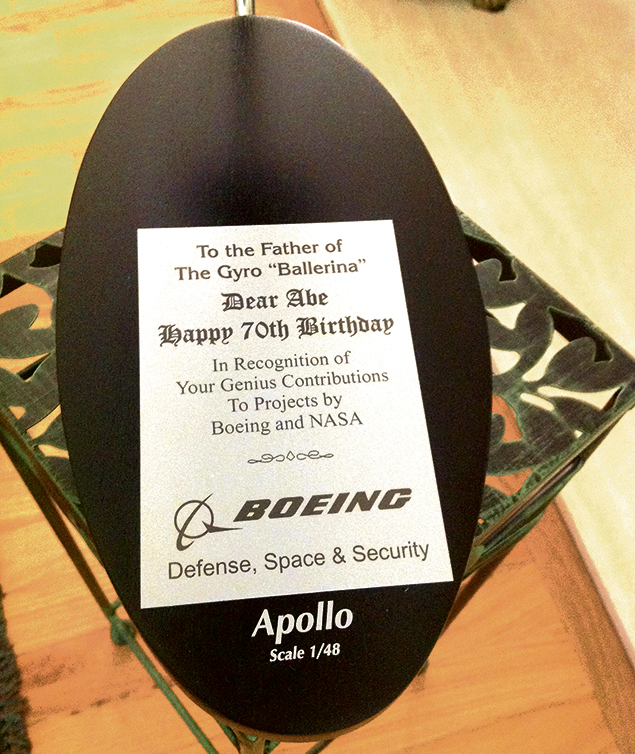
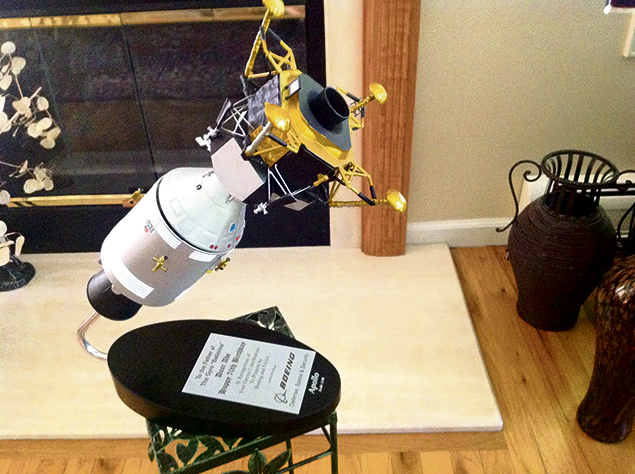
Still, there was another entirely separate part to Mr. Barzelay’s career. He consulted with companies as an extremely high-level troubleshooter. He worked with, among other companies, Boeing, which thanked him publicly for the major improvements he made to its jets’ landing gear. He worked with NASA; he’s responsible for figuring out how to balance the space shuttle. “It was the only problem that he just couldn’t solve,” his wife, Hana, said. “He was struggling and struggling with it.
“And then one day he and his late wife went to the ballet, and he was sitting and watching, and he saw how the ballerina twirls, with her arms stretched out over her head, and then she lowered her arms when she stops.” Hana demonstrates the movement, twirling and then lowering her arms to her sides as she slows and stops. “He jumped up from his seat, and he said, ‘I have the solution!’”
And he did, and NASA has honored him for it.
He worked on many other projects, including medical technology — CAT scans, MRIs, ultrasound devices, mammography machines. “It’s all part of mechanical engineering,” he said, almost dismissively; yet another discipline he’s mastered, almost without trying. Everything that he does, as disparate as it is, is connected by mathematics, and the way that intellectual rigor and clarity of vision combine with common sense and the wisdom gained through experience and filtered through logic.
He has at least 23 patents with Boeing, he said, and some with other companies, but he does not know how many.
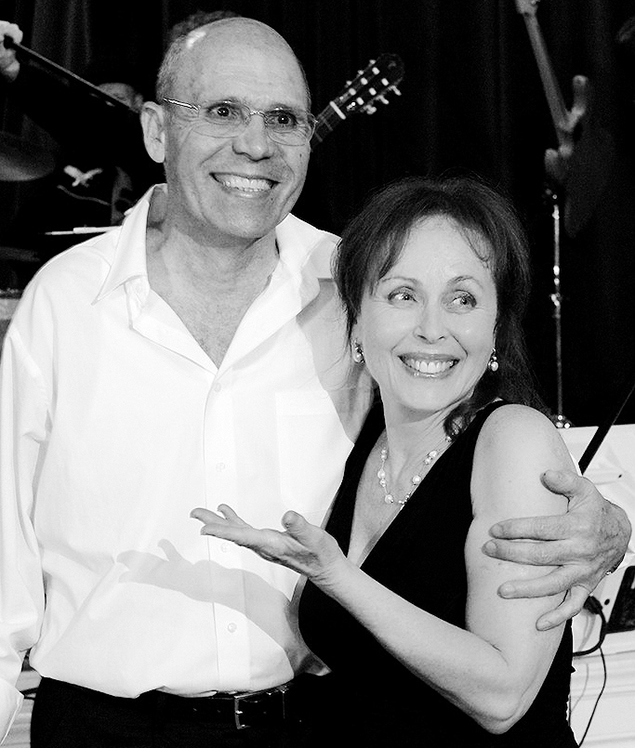
Mr. Barzelay and Hana Arad married in 2014. He continued to work as a consultant and acoustical engineer, and he continued to play.
In the summer of 2018, he went to Auschwitz, and he played harmonica there. He played the haunting song “Eli, Eli,” the poem about faith and hope written by Hannah Senesh, soon before the Nazis killed her.
He was following the model of his early teacher and inspiration, Shmuel Gogol, who went back to Auschwitz, the inferno he had survived, in 1993, to play the songs that he’d been made to play then, including the mourning Yiddish song “Mayn Shtetele Belz.” In 1993, he played “with his eyes open,” Mr. Barzelay said. And then, just a few days later, he had a heart attack and died. He was 69 years old.
It’s a life of good and bad that Mr. Barzelay looked back on in 2018, just like everybody’s, of course, but arguably more dramatic and event-filled than most. This is just a sketch, a mere outline, of the hundreds more stories that he didn’t tell.
•
“He was a genius,” his friend Moshe Banai, a retired professor of business at Baruch College, said.
He recalled the story about how Avram, as he called him — “I also called him Avramele” — heard the single out-of-tune violin as he led the orchestra as a student conductor. He took a life lesson from that, Mr. Banai said. “He said to me, ‘I don’t want to waste my life listening to people play out of pitch. I could not have tolerated it. I would have been miserable.”
So instead, “he picked up engineering. That way, he never worked for anyone else. For any company. He was always an independent consultant.
“He was the master of his own tune.”
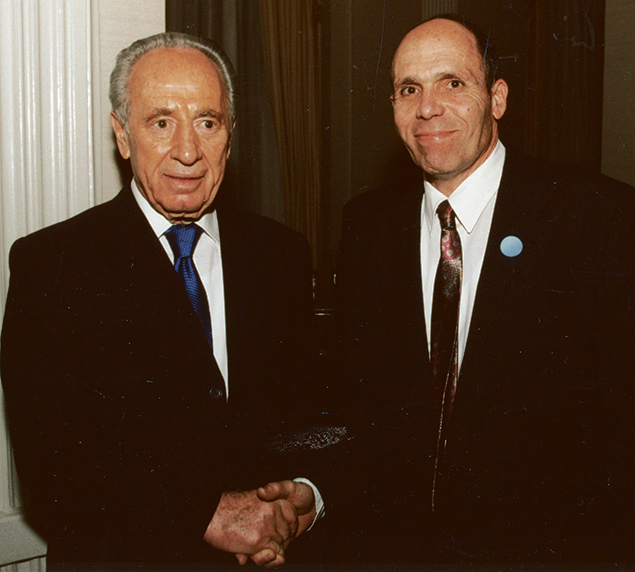
The two men and their families have been friends for 40 years. They met in Teaneck, where both lived at the time, and Dr. Banai and his wife, the photographer Rachel Banai, live today. Their first meeting was at a Shabbat dinner at the home of Rabbi Mordechai Weiss, who since has made aliyah but then led the local Chabad House. Neither man was observant then, and Rabbi Weiss, although “he tried very, very hard,” changed neither of them, but both were — and Dr. Banai remains — deeply Jewish.
“He was so modest,” Dr. Banai said. “He really was a genius”; unusually, “he was a genius with his feet on the ground.” A deeply rooted genius.
“If anybody needed anything from him, from his coming to your house to fix a broken faucet to financing a big loan with no interest and no documentation, only a handshake, he would do it. He was a mensch. A very modest one. He didn’t want anybody to know what he did.”
That includes work Mr. Barzelay did for Israel. “I cannot say exactly what he did, but he did a lot for Israel, all the time, including after October 7. He was dedicated to the state.”
Dr. Banai could talk a bit about some of Mr. Barzelay’s work as an acoustic engineer. “He recorded with the top orchestras of the world” he said. “He used to record for Riccardo Muti and Kurt Masur, and for the Salzberg Festival,” and he remained a perfectionist. “Once, he went to record at Salzberg, and the technicians gave him Austrian microphones. He said no, he wanted German microphones.” The German technology was better. “‘If you don’t give them to me, I’ll quit,’” Dr. Banai reported. Union rules mandated the use of Austrian technology, but Mr. Barzelay won. “Of course he did,” Dr. Banai said. “The conductor insisted.”
Another time, Dr. Banai said, Mr. Barzelay took a consulting job in Germany. “He interviewed local engineers to find out what the problem was, and one of the engineers said, in German, ‘What does the f***ing Jew want from us? He should go back where he came from.’
“He didn’t know that Avram spoke German. Avram didn’t say anything then. He went to the management, and said that he wanted them to know what had happened. They wanted to fire the guy, but he said no. Instead, Avram wanted them to give him lessons about antisemitism.
“He was a good Jew. A good husband, a good father, a good friend, a good Israeli. He was a good everything.”
Sandra Gold of Englewood is a former president and active longtime member of the Kaplen JCC. She knew Mr. Barzelay as a genius sound engineer and harmonica player who fixed the center’s acoustics.
“He was a magnificent artist on the harmonica,” Dr. Gold said. “He sometimes would come to the JCC and other places and play music from ‘Schindler’s List.’ He did that during the Holocaust memorial service. It was so moving that it took your heart up to the heavens.
“He was one of the most outstanding sound engineers of his time, and he was a great artist and a great musician. And he was a great person. He was kind. He was outreaching. He remembered his friends. He had loving relationships with so many people. He had so many talents, and he gave them all away, freely. He was a totally great human being.
Mr. Barzelay is survived by his wife Hana, his two sons, Ifar — a North Carolina-based musician known as Eef Barzelay — and Amiran, who lives in San Francisco. Both of his sons have two children each, a boy and a girl. He also is survived by his brother and sister-in-law, David and Sara Barzillai of Paramus, and three nieces, Mirit, Anat, and Dafna. Mirit made aliyah; Anat and Dafna live in Bergen County.
With his quiet, perfectionist genius, his deep goodness, and his love for Israel, he will be widely missed.