Running toward, not away from
Rabbi Dan Cohen talks about his plans to make aliyah
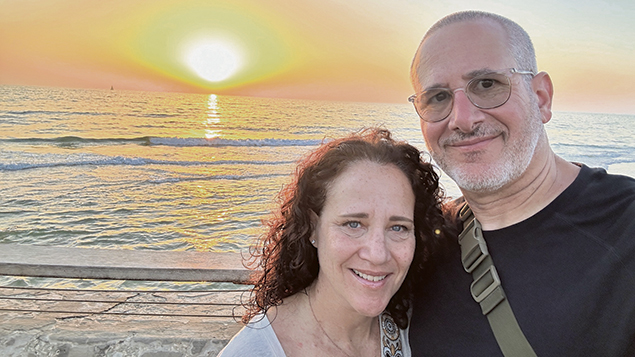
Six months from now, my wife, Raina, and I will leave our careers — mine as a congregational rabbi, hers as senior director of leadership engagement at the ADL — sell our home and most of our possessions, pack up our dogs, Emmet and Nava, and move to Tel Aviv.
Raina and I are keenly aware that we do not fit the usual profile of people making aliyah. At 60, I am older than many people who make this move. And as we were reminded when we attended a Nefesh b’Nefesh aliyah fair months ago, where we seemed to be among the only people who were not visibly Orthodox, as a Reform and a Conservative Jew we are also in the minority when it comes to religious observance and communal background.
Given the current explosion of Jew-hatred, it would be easy to assume that our decision is about “escaping.” In recent months, we’ve heard from countless people who had never before considered aliyah but suddenly are or quietly have begun to pursue second passports to countries from which their parents or grandparents were expelled and that now offer citizenship to their descendants.
But for Raina and me, the truth is exactly the opposite.
This move is not about running away. It is about running toward.
Here’s my aliyah journey.
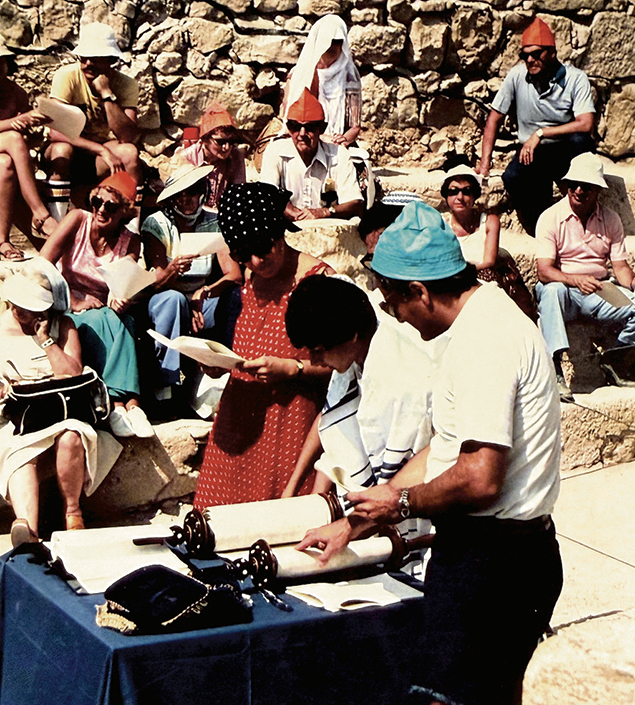
When I was 13 years old, I made a request that puzzled my parents and confused more than a few of my friends. While my classmates were planning bar mitzvah services and parties at home, I asked for something different. I told my parents I wanted to go to Israel and become bar mitzvah on Masada.
Fortunately, they agreed.
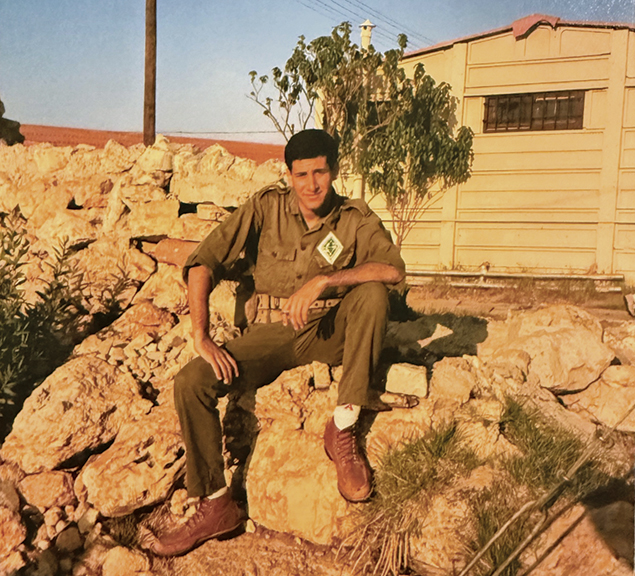
The following August, when I stepped off the plane in Israel for the first time, something inside me shifted. In those days, planes parked far from the terminal. You walked down a rolling staircase, crossed the tarmac, and boarded a bus. I remember the moment my feet touched the ground. It wasn’t only excitement that I felt. It was something deeper, more settled. I felt profoundly at home.
Looking back now, I understand that moment as my first conscious encounter with Jewish peoplehood. No longer was Judaism an abstract set of ideas or rituals. Instead, for the first time, I saw it as a living, breathing civilization with a land, a language, a history, and a future. I soaked up every moment of that trip. I asked endless questions. I listened. I watched. And before we left, I told our guide that one day I wanted to live in Israel. She smiled and said something that stayed with me: “Israel has a way of waiting for people until they’re ready.”
I returned for the summer after my freshman year of high school and again after my junior year, this time to work on the excavations at Tel Dor along the Mediterranean coast.
Years later, when I was in college, during my junior year abroad, I returned to Israel yet again, this time for an extended period. That year was different. This was no longer the Israel of a wide-eyed teenager on a bus tour, or a high-school student excitedly uncovering a city not seen in over two millennia. It was the Israel of daily life — of shopping for groceries, navigating bureaucracy, struggling with language, building friendships, and waking up each morning knowing that this was home, not a stop along the way.
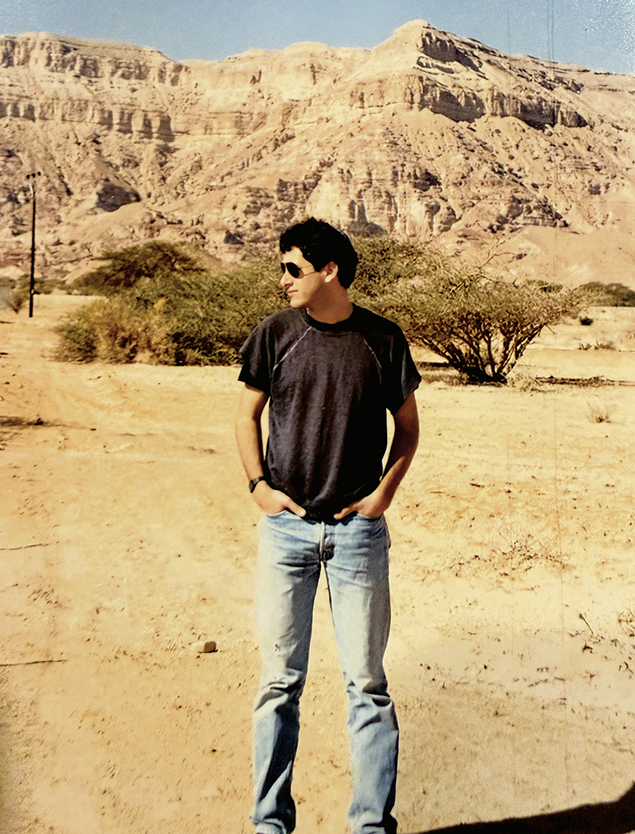
I called home and told my parents. I told my sister. I was clear, determined, and at peace with the choice.
Ultimately, for deeply personal family reasons, that plan did not move forward. Instead, I returned to the United States, applied to rabbinic school, and began a path of service that would define the next four decades of my life. I never experienced that decision as a failure or a retreat. Life, after all, is not lived in straight lines. But I did understand, even then, that something had been merely postponed. It was not abandoned.
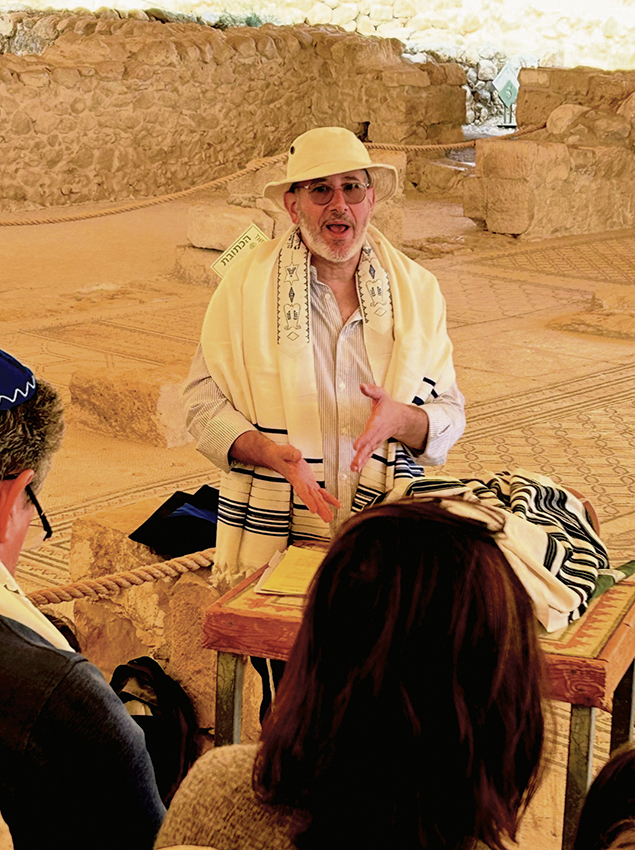
Nearly 40 years have passed since my junior year abroad. In the decades since, I have lived a life filled with meaning and blessing. I have served one congregation for 34 years, first as intern, then as assistant and then associate rabbi, and then, for the last 25 years, as the senior rabbi of Temple Sharey Tefilo-Israel in South Orange.
It has been an extraordinary gift. Together, we built community, marked sacred moments, argued, celebrated, mourned, and grew. I learned far more from my congregants than I ever taught them. Along the way, Raina and I built a life rooted in family, friendship, and purpose. There was never a shortage of work to be done or reasons to stay.
And yet.
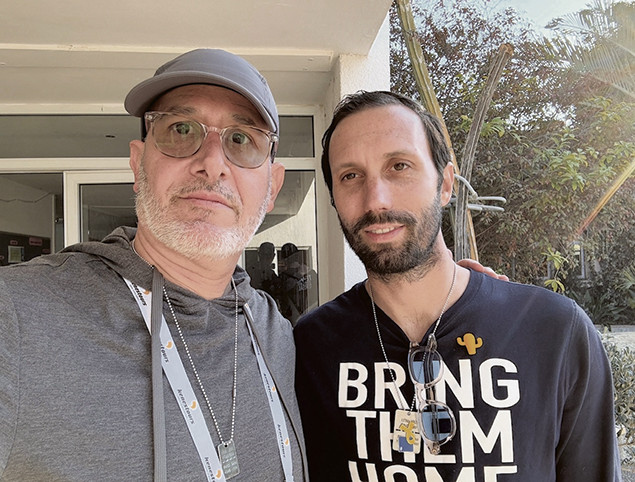
That earlier decision, to make aliyah, never disappeared. Sometimes it was loud, sometimes barely audible, but it was always there, quietly insisting that a chapter remained unfinished.
Making aliyah now is not an act of escape. It is not running away from a life or a community I love. It is, instead, a conscious decision to run toward something new: new challenges, new responsibilities, new ways to continue our people, and a new chapter of living Jewish life in Jewish time.
There is something profoundly different about shaping your days around the rhythms of a Jewish calendar that is woven into public life. In Israel, Jewish holidays are not interruptions but anchors, the Hebrew language carries memory, and history is not theoretical but under your feet. Aliyah is not the end of a journey; it is a recommitment to the idea that Jewish life is meant to be lived not only in memory, but in motion. For me, that is the essential aspect of Zionism.
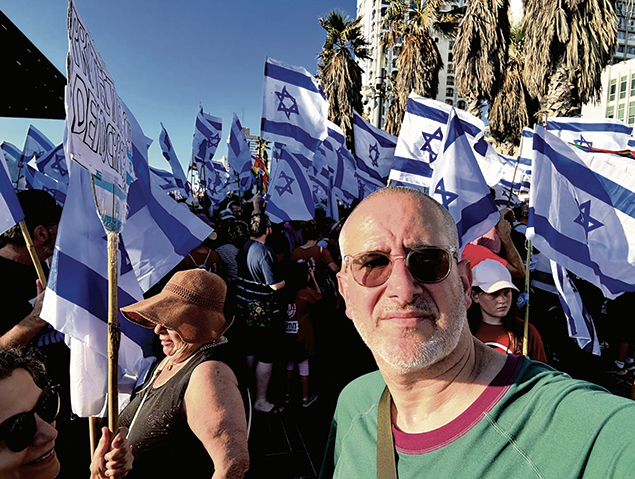
This move also reflects a belief that contribution does not end with retirement. If anything, it deepens. Israel needs builders of many kinds, be they teachers, listeners, or bridge-builders. Israel needs people willing to hold complexity and resist slogans. It needs people who can share the reality of Israel in all its miraculous but oftentimes infuriating complexity and help counter the grotesque caricature our detractors have embraced as reality. Raina and I are not arriving with answers, but with a desire to show up, to learn, and to add our voices, however modestly, to the ongoing story of our people.
It is also important to name something else, quietly but honestly. While the Israeli Ministry of Absorption does not record or share data on the observance of those making aliyah, anecdotally it seems clear that the vast majority of North American Jews moving to Israel today come from Orthodox communities. That is neither a criticism nor a surprise. But we are making aliyah as non-Orthodox Jews who are nonetheless serious, committed, and deeply Zionist. We believe that Israel belongs to the entirety of the Jewish people, not to one stream, ideology, or political camp. Making our lives there is a powerful way for us to make that statement.
In addition, in recent years, the relationship between Israel and many young non-Orthodox Jews in North America has grown painfully strained. Too often, Israel is presented to them through a flattening, reductionist binary of good or evil, victim or villain. Their perception of Israel is shaped by social media, concerted propaganda efforts, and real failures, including Israel’s handling of the West Bank violence and the devastating imagery and misinformation that accompanied the Gaza war. Much of what circulates is misleading or simply untrue. Some of it reflects genuine moral anguish. All of it demands more honesty and more nuance than it usually is given.
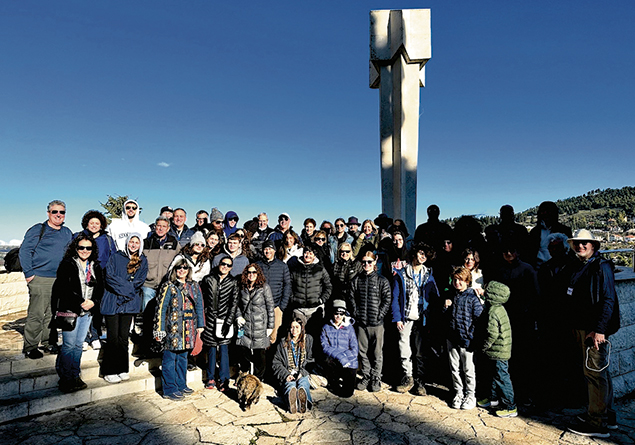
Raina and I are under no illusion that two people can repair a fractured relationship. But we do believe that presence matters. Living in Israel, engaging it as it actually is — messy, moral, imperfect, resilient — offers a different way to speak about it. Not defensively. Not dismissively. But lovingly, critically, and with fidelity to both Jewish values and Jewish peoplehood.
Exactly 40 years after the moment I first decided, explicitly and unequivocally, to make aliyah, that decision finally is being realized.
What began as a youthful dream became a deferred commitment, and has now matured into a conscious, deliberate act of faith.
Israel waited.
And now, at last, we are ready.
Rabbi Daniel Cohen is the senior rabbi of Temple Sharey Tefilo-Israel in South Orange. He will retire on June 30. In July, he and his wife, Raina Goldberg, and their golden doodles, Nava and Emmet, will make aliyah.
comments