

She made the earth move
Biographer Jane Eisner will talk about Carole King
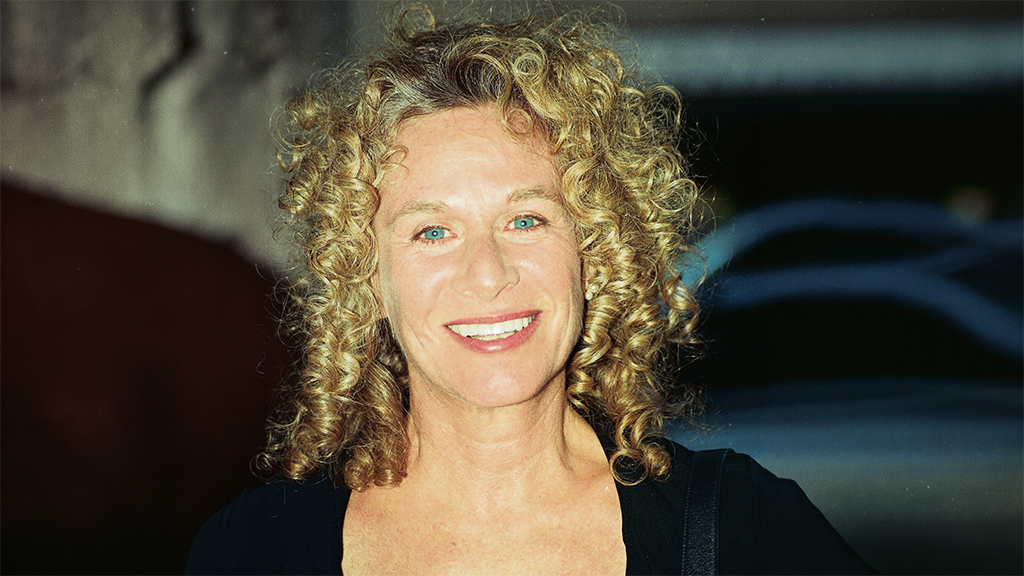
Why write a book about Carole King?
“Because she is a brilliant, consequential, and very complicated woman,” Jane Eisner, the author of “Carole King: She Made the Earth Move,” one of the 82 books that so far make up Yale’s Jewish Lives series, said.
“Her contributions to American popular culture are undeniable and uniquely span one era to another.”
Those contributions span not only time but space as well, as they illuminate the American history that gives them context. Ms. King — who was born in Manhattan in 1942 — grew up in Brooklyn as Carol Joyce Klein. She added the final e to Carol, possibly to differentiate herself from the scores of other Carols (and Lindas and Barbaras and Joyces) in her early Baby Boomer cohort. She later dropped the Joyce Klein for the inarguably less Jewish-sounding King.
Ms. Eisner will talk about her book, on Zoom, for 17 MetroWest communities. (See below.)
Carole King worked first in the legendary Brill Building, the music factory that managed to yoke creative work to an assembly line, pumping out hit songs instead of sedans or donuts. That was in midtown Manhattan, in the mid 1950s to the mid ’60s; she worked there with the first of her four husbands, Gerry Goffin.
Then, when that scene faded, and the marriage already had ended, she moved across the country, to Laurel Canyon in California, to join the hippie-blowing-hair-flowing-skirts-flower-power-y singer songwriters of the next great wave in popular music.
“She really was alone in making the transition from the Brill Building to the singer-songwriter era, where people like James Taylor and Carly Simon and Joni Mitchell wrote their own songs and very often recorded and performed their own songs,” Ms. Eisner said. Like many other Laurel Canyon figures, she also often collaborated with her peers.
“It’s hard to find any other leaders in popular music who made that jump,” Ms. Eisner said. “That’s what makes her unique, and that’s what’s given her such a long, long list of songs, and, I would argue, a very special place in the American musical canon.”
What changed about her? What allowed her to move from behind the scenes to very much center stage? “I think that she had the talent all along, but I don’t think she had the confidence,” Ms. Eisner said. She’d started as the composer, so “first, she needed the confidence to realize that she could write lyrics. She had been very dependent on Gerry Goffin, who was her most important collaborator.
“But she started to realize that she could write good lyrics, and then James Taylor literally pushed her out on stage.”
Well, not quite literally, but close enough. “She was on tour with him, and he was performing, and he said, ‘Ladies and gentleman, Carole King!’’’ It was at least a metaphoric shove.
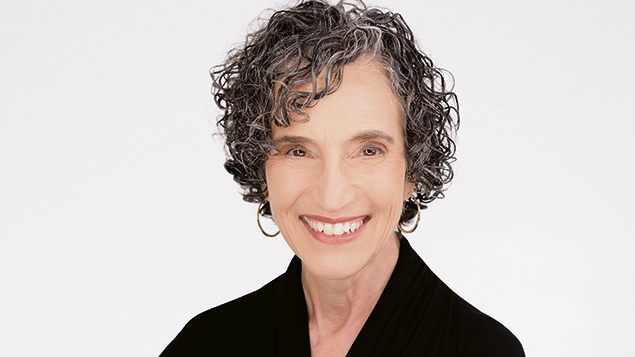
“She doesn’t have a conventionally gorgeous voice,” Ms. Eisner said. “She’s not Barbra Streisand. And she doesn’t have a complicated creative voice like Joni Mitchell.” But it’s more than adequate, “and I think it’s authentic,” Ms. Eisner said. “That’s what makes her such a relatable musician and performer.”
As to her Jewishness, it was pretty much background rather than foreground for Ms. King, Ms. Eisner said. “She grew up in a secular Jewish culture that certainly had aspects of more religiosity, and there were people around her who were more conventionally observant. But that wasn’t true in her house. They probably had a seder. Certainly her mom served deli food. But it was just in the air.”
The question of Ms. King’s Jewishness is a question she’s often asked, Ms. Eisner said; her book being part of the Jewish Lives series most likely makes that inevitable. But she doesn’t want to discuss it in too much detail, she said; she’d prefer to save that for her talk. “But I think it’s fair to say that her Jewishness never held her back.
“And I think that later in life, she called upon Jewish ritual for life events.” What does that mean? “Her mother’s funeral,” Ms. Eisner said. “Her son’s bar mitzvah. I think that for her, Judaism was an affirmation, a way of calling upon ritual to mark those events, but it wasn’t a central part of her life.”
“Still, her first two husbands were Jewish, and she was married in a lightly Jewish ceremony both the first and second times.”
The first step toward the book came from Yale, whose representatives asked her if she’d like to contribute to the Jewish Life series, Ms. Eisner said. Yes, she answered, so she was asked to pick a subject and write a proposal.
She chose Carole King as her subject because “I’ve been a lifelong fan of her music,” she said. “She was, as so many people have said, the soundtrack of my life, from when I was a teenager on. I read her memoir years ago” — that was “A Natural Woman,” in 2012 — “and I knew that she was complicated, and that’s what makes an interesting biography.
“I did not want to write a biography as a fangirl.”
Despite many attempts, Ms. Eisner hasn’t met Ms. King. “I’m happy to describe all the attempts I made,” she said. But she did a huge amount of research.
According to her website, jeisner.com, Ms. Eisner undertook the book as a challenge. As she writes on her website: “Throughout my career, I’ve strived to challenge myself when opportunity arises. I moved to London as a foreign correspondent with a year-old child, the first mother at my newspaper to work abroad. I left a comfortable position in Philadelphia to helm the Forward in New York.”
She left the Forward, where she had been editor in chief, in 2019; since then she’s been writing, teaching, speaking, and consulting. She’s immersed herself thoroughly in Carole King’s life; in fact, according, again, to her website: “Though I’ve admired her music since Tapestry was released, I wanted to understand it from the inside out. To do that, I studied piano for two years, which enabled me to dissect her musicality and describe what musicians call the ‘Carole King chord.’”
That’s dedication.
She also researched by “interviewing people who have known her from grade school, listening to her music, researching the historical context of her life, reading books about her contemporaries, understanding her transitions.”
Although Ms. Eisner does not want to say more about Ms. King, there is one last detail. Where does Carole King live now? “In Idaho.” She’d followed her husband, “a complicated man,” and stayed there after the marriage ended.
Ms. Eisner will talk about that and more — she also plans to talk about “Beautiful,” the musical about Ms. King’s life, in detail — on Zoom on November 16.
Who: Jane Eisner
What: Will talk about her book, “Carole King: She Made the Earth Move”
When: On Monday, November 16, at 7 p.m.
Where: Online
How much: Free
How to register: Go to tinyurl.com/MJCBY email office@mjcby.org, or call (973) 538-9292
Who’s sponsoring: Morristown Jewish Center Beit Yisrael Adult Ed, Morristown; Temple Beth Am, Morris Plains; National Council of Jewish Women, West Morris section; Morristown & Morris Township Library, Morristown; Gottesman RTW Academy, Randolph; Temple Sholom of West Essex, Cedar Grove; Or Hadash, Rockaway; Pine Brook Jewish Center, Montville; Congregation Agudath Israel, Caldwell; B’nai Shalom, West Orange; Adath Shalom, Morris Plains; Congregation Beth Israel, Scotch Plains; Temple Beth Am Yisrael, Springfield; Congregation Ohr Shalom, Summit; Mt. Freedom Jewish Center, Randolph; Temple Sha’arey Shalom, Springfield; Sisterhood of Temple Beth O’r Beth Torah, Clark