

Tracking Tuvia’s travels
Israeli-American journalist reports on his stay in the West Bank

Interviewing Tuvia Tenenbom is always an experience.
And most likely it’s even more of an experience to be interviewed by Tuvia.
His latest book, “Excuse Me, Is This Yours?” is about the West Bank — Judea and Samaria, or the Occupied Territories, or Tuvia’s preferred Biblical Israel, or BI — and the people who live there, each one of whom has a story, many of which he tells.
It takes the huge problem that is the West Bank, certainly doesn’t try to solve it — that’s not at all Tuvia’s remit — and doesn’t even try to explain it broadly, but breaks it down into a pointillist work of art.
The book is written in Tuvia’s own logical but entirely idiosyncratic style; not only first person, seen completely through the brightly colored frames of his unmissable glasses, but addressed directly to the reader, complete with frequent rhetorical questions, and in the present tense. No looking backward or recollecting in tranquility for him. (And he also is someone who cannot be referred to as Mr. Tenenbom. Using an honorific and last name would be far too distancing and pedantic.)
Tuvia combines this intensely personal journalism with the midcentury approach that journalism must be unbiased, dispassionate, and belief-free, which seems to be at odds with his inability (and I assume lack of desire) to blend into the woodwork.
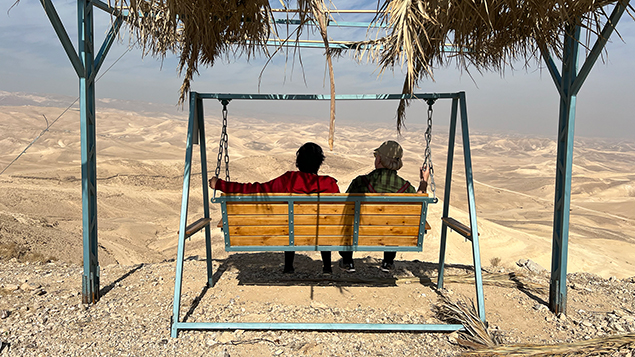
(All photos except this one by Isi Tenenbom)
So what we end up with is a sui generis storyteller. Tuvia is blond, with preternaturally pale pink skin, he has those glasses, and he is — it’s hard to explain it but impossible to miss — always deeply and openly and hugely present. He takes up space.
When he interviews, he offers himself up as entirely guileless, a complete blank slate, not ever interested in passing judgment, asking deadpan questions built on no assumptions but with a willingness to listen to any answer, no matter how unexpected or even outré.
Below that, of course, is a steel-trap mind, that combines with everything else in a way that frankly, my dear, I cannot figure out (as he might say).
First, his backstory. He was born in Israel in 1959, into a prominent chasidic family, and he grew up in B’nai Brak. He’s left that life behind but it hasn’t entirely left him. He’s a playwright and director as well as a journalist; he’s the founding artistic director of the Jewish Theater of New York. He and his wife (and photographer and informal and highly efficient executive director), Isi, live part-time on the Upper East Side, part-time in Germany, and part-time in Israel. Those times are divided and vary by year, mood, and book deal. Although Isi appears in Tuvia’s books only in the acknowledgements and the photo credits, the two seem to be inseparable in real life.
“Excuse Me” is Tuvia’s seventh book. I’ve written about almost all of them here. All of them use Tuvia’s probably literally inimitable style to look at difficult, messy social problems. He’s taken on German antisemitism, in “I Sleep in Hitler’s Room — An American Jew Visits Germany”; the refugee crisis in Europe, in “Hello, Refugees!”; British antisemitism, in “The Taming of the Jew”; the American character, in “The Lies They Tell”; Palestinian-Israeli relations, in “Catch the Jew”; and most recently the lives of Israeli chasidim, particularly in Mea Shearim, in “Careful, Beauties Ahead.”
Many of his books began with an idea germ from his German publisher, and they’re all published not only in English (the language Tuvia writes in) and Hebrew, but also in German.
In each of these books, Tuvia uses his precisely honed open-mindedness — and also, it’s important to acknowledge, his love not only of people and their stories but also of their food, which he’s always happy to eat huge platters of, and wash down with oceans of Coke Zero — to find stories. The way he tells them, they’re human, they’re understandable, and they tend to be funny, they’re intuitive, and at their base they’re kind.
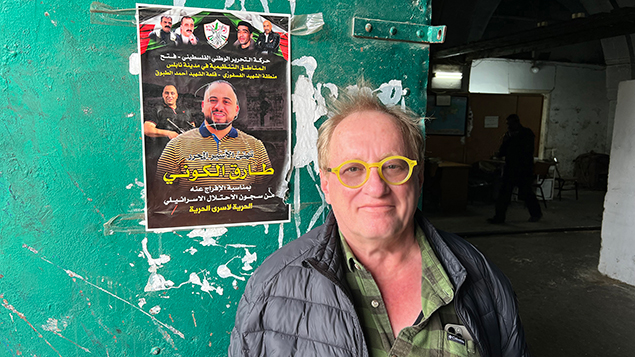
They don’t seem to lead to any solutions, but then that’s never been what Tuvia does. He goes, he listens, and he reports. The rest of us read, sometimes gasp, sometimes laugh, and sometimes — often — despair.
Okay. What’s “Excuse Me, Is This Yours” about?
“The settlements and the settlers are among the most written-about issues in the world,” Tuvia said. “Everywhere you go, it’s about the settlers. You go to the New York Times, you go to the Wall Street Journal, you go to Reuters, you go to the AP. It’s a major issue, all over the world. And journalists go there. How do they know about it?
“Even if they have a reporter on the ground, in Israel or in Palestine, that reporter will go to a settlement, accompanied by a political activist from an NGO. The reporter will spend about three hours there, and then write articles or even books about it. And millions of readers read these things, and they think that this is exactly the way it is. They have videos, they have pictures of everything.
“But the readers don’t know that the reporters usually get the videos and the pictures from political activists. Most of them don’t speak Hebrew, and they don’t speak Arabic. The political activists translate what they want them to say.
“So I got an offer from my German publisher in Berlin, about two years ago, who said, ‘Tuvia, why don’t you go to the West Bank?’ It’s a left paper” – it leans to the left, he’s saying — “and I’ve written for them for 17 years. They said they wanted me to go to the settlements and interview settlers about the war.”
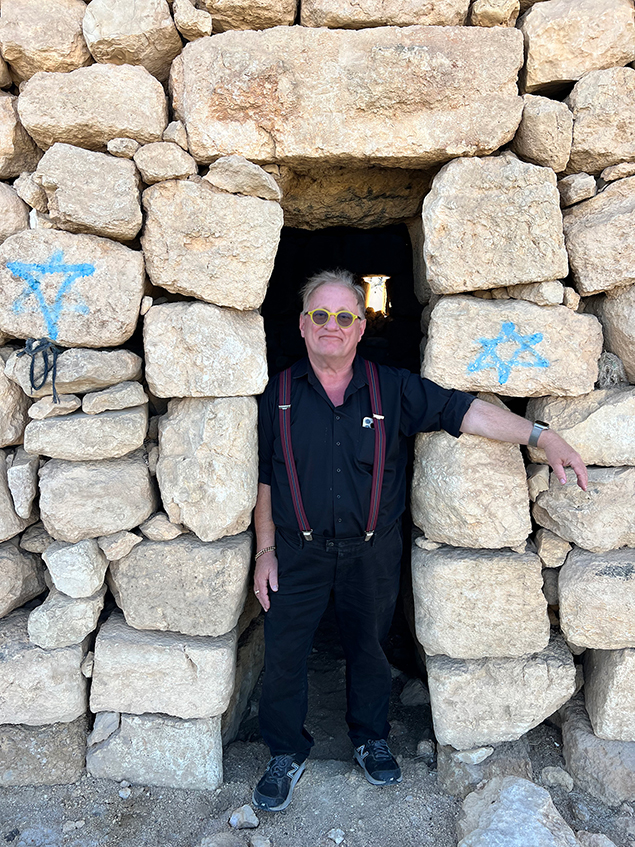
He did, and the story he wrote was the paper’s major feature, and “that’s what led my editor in Germany to say, ‘Why don’t you go and write a book?’
“So that’s what we did. My dear wife, Isi, and I went to Israel.”
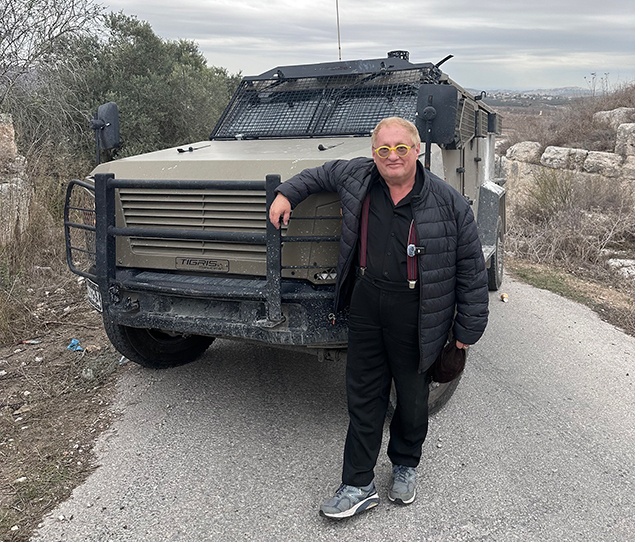
They went to the West Bank — to BI, as Tuvia calls it — and they stayed in each place for about two to three weeks, renting a house and a car. (A Trailblazer, to be exact.)
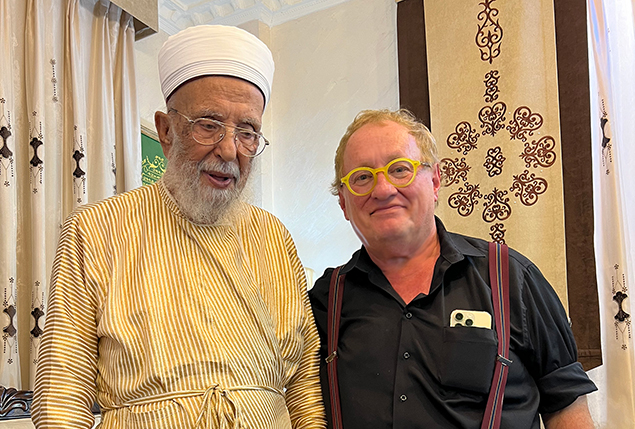
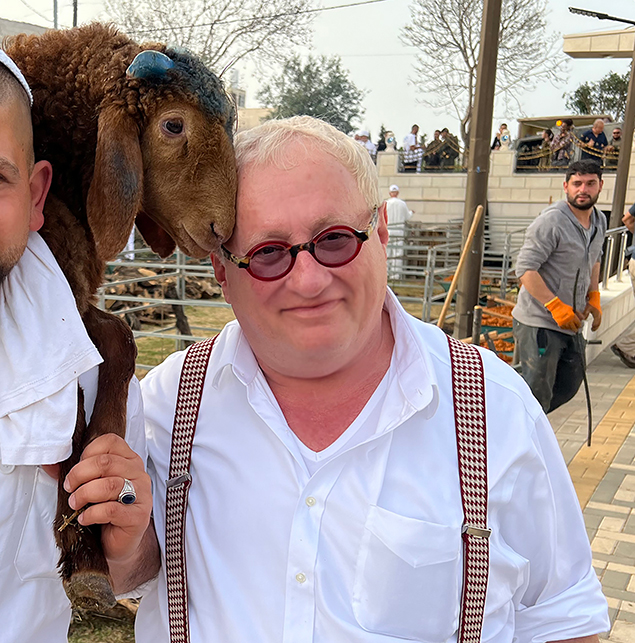
He started with the Samaritans, the ancient sort-of-Israelite group that still lives in the West Bank. He went there before Pesach, and was there for the feasting, which as always he loved and described fully, and the pre-feast sheep sacrifice that produces the feast. (He describes that in some detail too; I skipped all of it. Just no.)
Then he moved to the Jewish settlers. “I lived with them,” he said. “I joined them in their happy occasions, and in funerals.” Because he is fluent in Hebrew — he is a native Israeli — understands Jewish life and its cycles, and is inherently charming, not least because he listens so carefully and well, he is invited into houses and restaurants and shuls and meetings.
And then there is the land itself.
“I’m not a religious person, but I read the Bible,” he said. “And you realize that everywhere you walk, you’re walking where something happened. And almost every Palestinian city or town or village has a name that is actually Arabic for the ancient Hebrew. Like Aricha in Arabic, which is Yericho in Hebrew, and in English it’s Jericho.” That’s just one of many examples he gave.
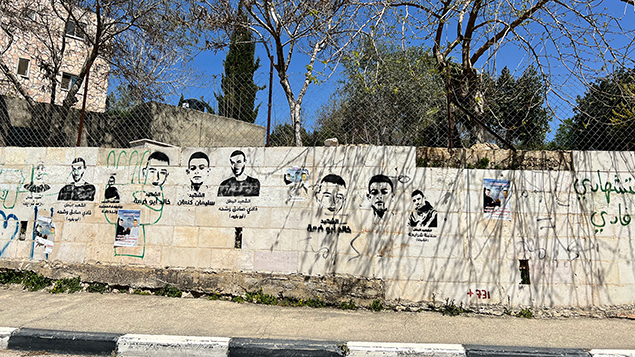
“So it’s like, wait a second, that name is in the Bible. It’s not an Islamic land. It’s nothing to do with the Quran — and I’ve studied the Quran.
“And then, all of a sudden, you see that between 80 and 90 percent of the stories in the Bible take place in what the world calls the West Bank.
“Biblical Israel is not Tel Aviv. It is not Givatayim or Ramat Gan.”
It is not a place that he knew — he’d just done the standard three hours there — until this last book. He learned that “it’s amazingly beautiful.”
As he writes, once you cross over the multi-named wall — “Separation Wall, West Bank Barrier, Security Wall, Apartheid Wall, Protection Wall, Ugly Wall. Choose the name that fits you best” — you are in a place of surpassing beauty.
“It is behind this multi-name wall that the landscape changes, as if by a decree from Heaven, from ugly cement to beautiful nature,” he writes. “The view becomes pristine, of hills and of mountains, open spaces, captivating landscapes, as if we reached another continent. It’s where the words ‘Holy Land’ resonate more than in, say, Tel Aviv.”
There are other descriptions of the land’s unexpected and wildly varying beauty throughout the book. “They’re dancing from the ground, all kinds of hills, naked hills,” Tuvia said, back in his Upper East Side apartment.
Another huge shock for him is how small the area actually is, and how close to everything everything else is. It can take a very long time to get from place to place, because the political divisions demand long routes rather than direct ones, and there are frequent checkpoints.
“I realized that I was driving for hours every day, but I was driving back and forth in the same place. I realized that I had just been here. I thought I made a mistake.” But no.
“We were in Samaria — Shomron — in a place we rented, and I sat outside to smoke a cigarette” — because yes, of course, Tuvia smokes — “and I sit, and I have my coffee, and I look, and I see a familiar background, and hear a familiar sound. And I see that planes are flying and landing. Right next to me. And I think, wait a second. What is this? And then I realize that’s Ben Gurion Airport.”
Right there. Almost in his backyard. “It’s like three kilometers from me,” Tuvia said.
“Imagine October 7, my dear baby. If the Palestinians in this area just crossed into Tel Aviv, they could kill millions instead of 1,200. And it would be so easy to shoot any airplanes that come into Ben Gurion.”
That means, Tuvia says, that a two-state solution is impossible. “You don’t have to be a right winger or a left winger. I think it’s stupid to put politics into everything. You just have to understand that it’s physically impossible to create another independent state there.”
 He held up a coffee cup. “See this cup?” he said. “Imagine that you’re the Palestinian. You say that this is yours. I am the Jew. I say that it is mine. So here comes the United Nations, saying that there is a two-state solution. A two-cup solution.
“So you cut into the middle — but you don’t have two cups. You don’t have one cup. You just have broken glass.”
He learned something else very important, Tuvia said.
“You realize that ‘the settlers’ are not one unit. It’s like saying New Yorkers are all one and the same unit. No, every New Yorker is different. There are two million New Yorkers, and every one is different. And it’s the same thing about the settlers. It hits you all of a sudden.
“There are settlers who are there only because it’s cheap. Some are there because they want open air. Only a few actually are there because of ideology. And some of those are leftists. Some of the settlements were built by left-wing government, by Labor, when Labor was in power. Some of the settlers are atheists.
“So you realize how complex this whole situation is, and how little we know about the area and all the issue.”

Most Israelis who don’t live in the BI don’t go there and don’t know the issues either, Tuvia said. And even most of the people who do live in the settlements don’t know much about it outside of their own little area. It’s that heavily Balkanized.
“I realized, for example, that people who live in Samaria would rather not visit their friends around Hebron,” Tuvia said. “Because they say that the Arabs around Hebron are very dangerous.” And the settlers who live around Hebron? You can guess what they say, Tuvia said. “The Arabs in Samaria are too dangerous.”
So now, when “Israel has controlled the area for almost 60 years, and Israel has the most right-wing government that ever was, and the settlers are controlling the government…”
He explained; when he says “the settlers,” he means some of them, and some of their leaders; he also means the right-wing politicians Bezalel Smotrich and Itamar Ben-Gvir. For the last few years, they have controlled the Knesset, because Benjamin Netanyahu needs them. “So I asked the settlers’ leaders, the politicians, you always say that you want to annex the land. You could have told Bibi that we are not joining you unless you do that, and Bibi would do that.
“And they tell me that it’s not time. Everyone has another excuse.”
Tuvia interviewed Smotrich, he said. “And he says to me, ‘You are a journalist, and I have to make sure not to fall into the pit you are trying to send me into.’ He didn’t answer.
“I asked Itamar Ben-Gvir, ‘Why don’t you annex the land?’ And to sum up, his answer was, ‘What, Tuvia, you want to have another title for another chapter in your book?’

“And I say, ‘No, no, Itamar. I really want to know what you think. I really want to understand. If you don’t think this belongs to you, then get out, move to Tel Aviv. You are just an occupier.
“‘If you think it belongs to you, then for God’s sake, annex it.”
He’s conduced many such interviews, Tuvia said; the answer always is a variation of yes, yes, of course we should, of course we will — but they don’t.
“That’s where the question in the title of my book came from,” he said. “Excuse me, is this yours? If it is, why don’t you finish it? Annex it? And if it’s not yours, why the hell are you stealing it?”
Tuvia believes that the real reason that annexation has not happened is mundane. “It’s money,” he said. “They get a lot of funding from the government. It’s much cheaper. It’s easier to build a house. You don’t have to deal with the Israeli bureaucracy.
“Basically it’s the Wild West. You want to build a house? You just build the house. And then you have a house. There’s no romance to it. Even if it’s ideological for some people, for most people it’s just cheaper.”
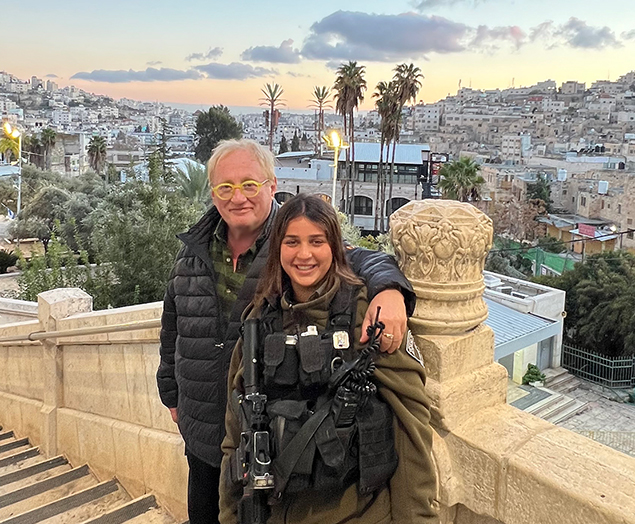
Remember, he said, 37 percent of the settlers live in Ariel, which is a big city just over the Green Line. “They’re not extreme Zionists,” Tuvia said. “It’s cheap.
“Or the charedim who live in Beitar Illit. What do you do there? Why are they in the settlements? Hello! It’s cheap.” It’s not unlike charedim moving from Brooklyn to Jersey City. “It’s cheaper!”
Do people who live in the West Bank say so? “The ones who are honest with me, yes,” Tuvia said.
“It’s all politics.
“And the Palestinians don’t want it either,” he continued. “Ehud Barak told me years ago that he offered them 98 percent of the area that we took in 1967, including East Jerusalem. But they wanted a return to Tel Aviv. And if they get that, we don’t have a country.
“So the Israelis don’t want it, and neither do the Palestinians.
“The whole thing is ridiculous,” Tuvia said. He moved the discussion a few decades back, and over to Gaza. “Egypt controlled the Sinai desert and Gaza. Sadat said, ‘I want Sinai, but I don’t want Gaza.’ Nobody wanted Gaza, with its two million Palestinians.
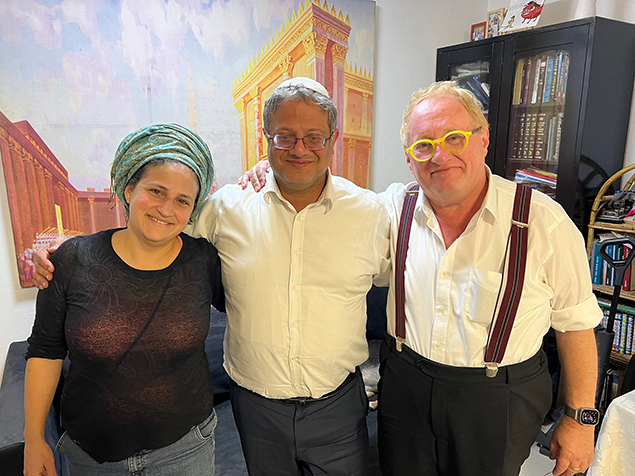
“The world is so consumed with the BI, and that’s because of the Jews on the other side. If the Jews were not on the other side, nobody would care about the Palestinians. The Palestinians are the most hated group of Arabs in the Muslim world.
“They’re called the Jews of the Arab world. I ask, ‘Why don’t you like Palestinians?’ and the answer is, ‘They complain all the time. You can talk to them about anything, and they complain. They complain that they have a key from their great-great-grandmother’s house, and they want to go back there. They say they live in Tel Aviv. At the time, there was no Tel Aviv. It was a little village. It was swamp. There were maybe 100 people living there.
“Now Tel Aviv is skyscrapers, but they want Tel Aviv, or they’re not going to make peace with the Jews. I mean, this is ridiculous.”
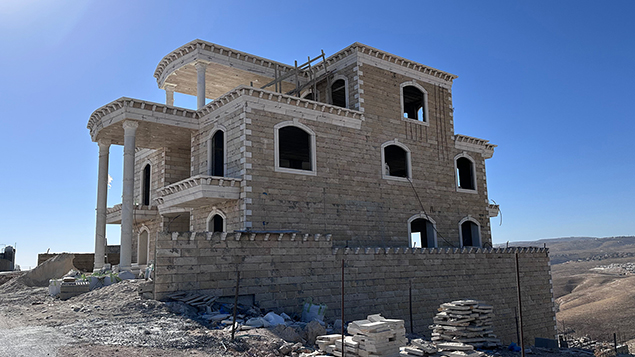
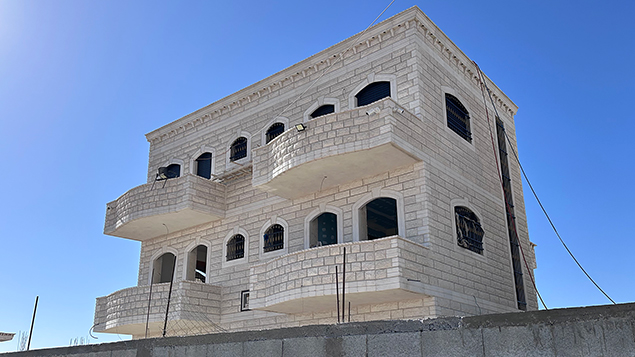
In parts of the West Bank, in Area C, “there are thousands of houses that Palestinians built, but no one lives there,” Tuvia said. “So you see amazingly beautiful houses, but there is no glass in the windows. They didn’t bother finishing them, because nobody is going to live there. They’re there for political reasons.
“There’s an amazingly beautiful new city in the West Bank, one of the most beautiful cities I’ve ever seen,” Tuvia said. “It’s called Rawabi. Big, beautiful houses. Big trees. The streets are so clean you can lick them. One of the most beautiful mosques. There is infrastructure for the internet.
“They cannot fill up the place. The Palestinians don’t want to buy the apartments. They live where they live now better. Okay, it’s smaller. Okay, it’s what might be called a refugee camp. But their friends and neighbors are there. And if they go to live in Rawabi, they would have to stop complaining, and if you stop complaining, you are no longer Palestinian.
“I went to Jericho. There is a refugee camp on my left, from 1948. And there are garages, and cars parked on the street, and I see the newest Lexus. And I talk to people. I say, ‘Is this a refugee camp?’ They say, ‘Yes.’ I ask, ‘How can this be a refugee camp?’ And they say, ‘It is a refuge from taxes.’
“So you realize that the whole thing is fake. You have major news organizations, the New York Times, the Washington Post, the Guardian in England, or German newspapers like Die Zeit, and the pictures you get from them are totally the opposite of what I know from reality because I lived there for over eight months.”
It’s not that violence doesn’t happen, Tuvia said, it’s that it doesn’t happen as it’s reported. The facts are complicated; the stories are not. “I watched the movie ‘No Other Land’ four times,” he said. “The one that got an Oscar nomination, and was made by the people who made NAZA.” (“No Other Land” is a 2024 film about the destruction of a Palestinian town called Masafer Yatta, and how the Palestinians and Israeli peace activists fought back against the IDF. “NAZA,” which is just out now, is an inflammatory documentary about Israel’s purported lack of concern about civilian casualties.
“I went to Masafer Yatta, and to the house of one of the moviemakers, Basel Adra. You see his house a lot in the movie. It’s a dark place, old, poor, nothing. So I went to the village, and I went to his house.
“It’s beautiful. It’s full of light. It’s totally different than in the film. And I thought, excuse me, what’s going on here?
“So I went to the place where they showed the mother of somebody who was killed, shot dead by the settlers, and she lives in a cave. A horrible place. So I went to see her. The cave? It’s beautiful. It’s an ancient house built into a hill. It’s totally different.
“So I interviewed her — she’s an actress in the movie — and she said to me, “Basel, the director, promised me that if I participate in the movie, he would give me 50 percent of the receipts.’
“And to this day, she said, ‘I didn’t get a penny.’”
Tuvia tried to talk to Mr. Adra — he is a journalist — but “he refused to talk. He asked me what publication I’m from. I was shocked that he asked me this question.
“That’s how ridiculous the whole thing is. The media does not even try to verify it. And here’s a little fact. He says that he’s not married. The person who opened the door to his house to me says she’s his wife.
“Nothing stands there without a lie. They show you in the movie how Israel demolished a house. They say the house was built in 1900. That was before the State of Israel was born. I went to see the debris of the house. It was destroyed, but there was a placard there, saying that it was built with donations from the EU.
“The EU did not exist in 1900. So you see how many lies there were. Why didn’t journalists go to verify the facts? This is all very basic journalism. We are taught to stick with the truth.
“And all of this is in the book!”
Still, he said, journalists are being lied to. “If you don’t speak the language, a right wing NGO will take you to one place and show you how beautiful the settlers are and how ugly the Palestinians are, and the left wing NGO will take you to the same place and tell you how ugly the settlers are and how beautiful the Palestinians are. You just need an IQ over 50 to figure that out.
“If you don’t go by yourself, you are not going to get the right story.” What to do if you don’t know the language? It’s not so clear.
As for what’s going on with the settlers and the violence against Palestinians, Tuvia counsels that it’s best not to make assumptions. There’s violence in both directions, he said. That’s not good. It’s not okay. But “it’s easy to make a video and edit it,” he said. “There are some settlers doing horrible things to Palestinians.”
His book has gotten praise from surprising places, Tuvia said. “Der Spiegel, which is often on the Palestinian side, love love loved the book, and it became a Spiegel bestseller.
“Why? It’s a very sensitive issue, and I always try in all my books, and especially in this one, to be sensitive in dealing with it. I always try just to be an observer. Not to take sides. And here I double tried it.
“It’s not a book against the settlers, and it’s not a book for the settlers. It’s a book that shows you how the settlers are and what the settlements are.
“I try to be just as much as I can what I should be. A journalist. An observer. I don’t preach to readers about what they should believe. So the left thinks I am with them, the right thinks that I am with them, and I feel perfectly okay about it.”
But to get back to Tuvia himself, yes, he doesn’t preach. He is an observer. He has opinions, but he shoves them down. He has been doing that for decades and he’s good at it.
What he doesn’t mention but I have to circle back and end with is his affect. The deadpan. The hair. The glasses. The earnestness that covers but probably does not hide the brains. The warmth. The desire to keep on talking to this odd, funny, extraordinary unusual man.
And if you can’t do it in person, you can read his book. “Excuse Me, Is This Yours?” is published by Gefen, and it’s widely available. And if you’re like me, you might want to skip the sheep sacrifice chapter.