

The Jewish prisoners we must not forget
Most are still behind bars in Putin’s gulags
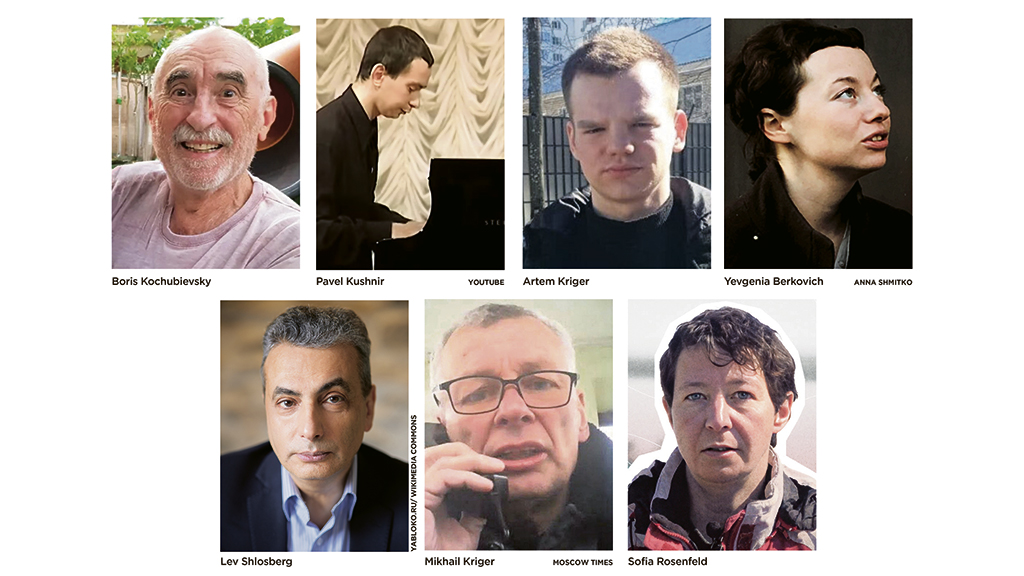
The death of Boris Kochubiyevsky in Israel this October, at the age of 90, brought back memories of a time when the names of Jewish political prisoners were known throughout the free world. Their photographs appeared at demonstrations, their cases were discussed in Congress, and their freedom became a cause uniting millions of Jews across national and political boundaries.
I remember that time not from history books, but from my own life.
In 1968, Kochubiyevsky, a young Jewish engineer from Kyiv, wrote an extraordinary open letter to Soviet leader Leonid Brezhnev. His father had been murdered by the Nazis at Babi Yar in September 1941, and Kochubiyevsky had publicly protested the Soviet authorities’ refusal to acknowledge the Jewish identity of the massacre’s victims.
His letter contained a declaration that became a symbol of Jewish resistance: “I am a Jew. I want to live in Israel.”
For demanding the right to emigrate and openly challenging Soviet policy, Kochubiyevsky was arrested and sentenced in May 1969 to three years in a Soviet labor camp.
There was an extraordinary historical coincidence: His trial took place in the same Kyiv courtroom where Mendel Beilis had faced the notorious blood-libel accusation in 1913.
Kochubiyevsky eventually emigrated to Israel in 1972, where he became known as Baruch Ashi. His struggle helped inspire the international movement for Soviet Jewry.
I was only 8 years old when he wrote his letter. Twelve years later, on August 3, 1980, I applied for permission to emigrate to Israel and began my own 11-year ordeal as a refusenik.
I became involved in the underground Jewish movement in the Soviet Union. We organized Hebrew classes, circulated underground publications, documented discrimination, and maintained contacts with Jewish and political organizations in the West. We understood that the Soviet authorities could take away our jobs, our freedom, and sometimes our lives. But we refused to allow them to determine our identity.
The Soviet government had created a remarkable contradiction. Our internal passports identified us as Jews, yet the state systematically restricted our ability to study Jewish history, practice our religion, learn Hebrew, or emigrate to Israel.
In March 2024, in an interview with the Jewish Standard and the New Jersey Jewish News titled “How the Soviets hijacked my Jewishness,” I recalled an extraordinary meeting in Moscow in 1987.
I was 27 years old when five representatives of our underground Jewish movement met secretly with Faisal al-Husseini, a senior figure in the Palestine Liberation Organization. Husseini proposed using his political connections to improve the circumstances of Soviet Jews, including reducing discrimination and removing the nationality designation “Jew” from our internal passports.
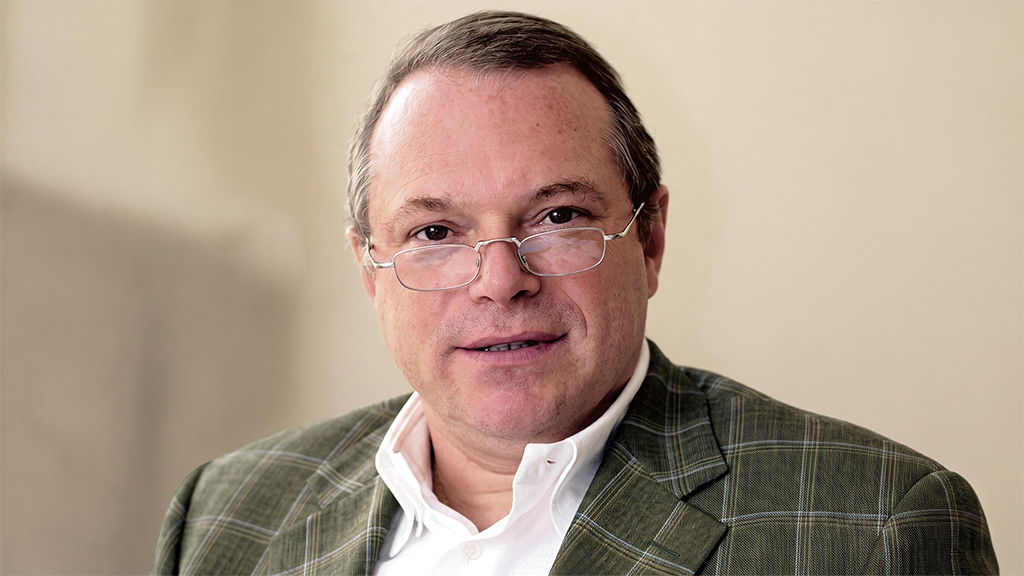
But he had another objective: discouraging Jewish emigration to Israel.
I remember how he questioned our Jewish identity, arguing that decades of Soviet assimilation had severed our connections to Jewish traditions. What he failed to understand was that our Jewish identity had survived precisely because we refused to surrender it. For us, the right to emigrate was not simply about changing countries. It was about reclaiming our history, our identity, and our freedom.
After that meeting, the leadership of the underground Jewish movement confronted a fundamental question: If the gates of the Soviet Union finally opened, who would leave Mother Russia, who would choose to stay, and what would happen to those who remained?
Since the late 1980s, approximately 2.3 million Jews and their family members have emigrated from the former Soviet Union, while hundreds of thousands chose to remain.
When the Soviet Union collapsed, I believed that the era of Jewish prisoners of conscience in Russia had ended forever.
I was wrong.
A Pianist Dies in Birobidzhan
On July 27, 2024, Pavel Kushnir, a 39-year-old Jewish pianist and outspoken opponent of Russia’s war against Ukraine, died in pretrial detention in Birobidzhan.
Kushnir was a talented musician, educated at the Moscow Conservatory, who had performed with several regional orchestras. But he was also a man of conscience. His political activities were hardly those of a powerful revolutionary. His YouTube channel, where he criticized Vladimir Putin and the war, reportedly had only five subscribers. Nevertheless, Russian authorities arrested him in May 2024 on allegations of publicly encouraging terrorist activity.
While awaiting trial, Kushnir began a dry hunger strike, refusing both food and water — one of the most extreme and dangerous forms of protest available to a prisoner. He died in custody before his case could be heard.
There is a bitter historical irony in the location of his death.
Birobidzhan was established by the Soviet government as the capital of the Jewish Autonomous Region, an officially promoted alternative to Zionism and Jewish national aspirations in the Land of Israel. Almost a century later, a Jewish musician died there after protesting a war he considered unjust. According to reports, only 11 people attended his funeral.
I cannot help comparing that image with the enormous demonstrations of the Soviet Jewry movement, when thousands of people gathered in Washington, New York, London, and Jerusalem demanding freedom for prisoners they had never met.
How could a Jewish political prisoner die in such isolation in an age when information travels around the world instantaneously?
Yevgenia Berkovich: When Theater Becomes a Crime
Yevgenia Berkovich’s story is particularly personal to me. In 2023, shortly after her arrest, I publicly appealed to American Jews to pay attention to her case.
Berkovich is a Jewish theater director and poet whose family history is deeply connected to the Russian intelligentsia and the experience of Soviet repression.
Her production “Finist the Brave Falcon” examined the experiences of Russian women recruited by radical Islamist groups. Russian authorities accused her of publicly justifying terrorism. In July 2024, she was sentenced to six years in prison. Her sentence subsequently was reduced to five years and seven months.
As of October 2026, she remains imprisoned in a penal colony in the Kostroma region.
Her prosecution also raised concerns about antisemitism. The Russian Jewish Congress commissioned an assessment of statements made by a supposed expert involved in her case and brought its concerns before the court.
In September 2026, Nobel Peace Prize laureate Dmitry Muratov publicly described Berkovich’s deteriorating conditions in detention, citing her lawyers’ concerns about her weight and repeated placement in punitive isolation.
A Jewish woman, an artist, a poet, is serving years in prison over a theatrical production. For someone who remembers the Soviet persecution of writers, artists, and intellectuals, the historical echoes are difficult to ignore.
Sofia Rosenfeld: Three and a Half Years for Twenty-Five Dollars
In October 2026, Sofia Rosenfeld, a Russian-Israeli scientist specializing in Arctic birds, was sentenced to three and a half years in a Russian penal colony.
Her prosecution concerned two donations totaling approximately 2,000 rubles — roughly $25 — to the Anti-Corruption Foundation associated with Alexei Navalny.
According to her family, Rosenfeld had established recurring donations before Russian authorities designated the organization extremist. She was conducting scientific field work when the disputed payments occurred. Nevertheless, the court convicted her of financing an extremist organization.
Rosenfeld is not a revolutionary or a professional opposition politician. She is a scientist who devoted much of her career to studying Arctic wildlife.
Her case presents a remarkable historical contrast. During the Soviet period, we struggled for the right to reach Israel. Rosenfeld holds Israeli citizenship, yet that has not protected her from imprisonment in Russia.
Lev Shlosberg: A Jew Who Chose to Stay
Lev Shlosberg, born in Pskov in 1963, is a Jewish journalist, politician, and longtime figure in the democratic opposition associated with the Yabloko party.
For decades, Shlosberg challenged the Russian authorities through journalism, political activism, and the defense of civil liberties. He became particularly well known for investigating Russian military involvement in Ukraine and opposing the war. In August 2026, he received an aggregate prison sentence of 11 years and one month. His case remains subject to legal proceedings.
Unlike the Soviet refuseniks, Shlosberg did not build his political life around the demand to leave Russia. He insisted upon his right to remain, participate in public affairs, criticize the government, and work for political change.
We demanded the right to leave. He defended the right to stay. Yet both struggles confront the same fundamental question: Can the state deprive a person of liberty for peacefully expressing political convictions?
The Kriger Family: Two Generations Behind Bars
Perhaps one of the most revealing examples of contemporary political imprisonment is the story of the Kriger family.
Mikhail Kriger, a veteran human rights activist and outspoken opponent of Russia’s invasion of Ukraine, was arrested in November 2022. In May 2023, he was sentenced to seven years in prison for statements that Russian authorities classified as justification of terrorism and incitement to hatred.
His Jewish family background emerged during the court proceedings. When his younger brother Pavel testified, he was asked about his nationality. “Jewish,” he answered. He explained that the three brothers came from Dnepropetrovsk, now Dnipro, Ukraine.
The judge then asked whether he spoke Russian.
For those of us who grew up in the Soviet Union, that exchange carries a familiar historical resonance. We remember a society where Jewish nationality was officially recorded and where being Jewish could make a person suspect, regardless of language, birthplace, or loyalty to the country.
But the Kriger family’s ordeal did not end with Mikhail’s imprisonment. His nephew, Artem Kriger, a young journalist working for the independent Russian outlet SOTAvision, was arrested on June 18, 2024.
Artem was only 23 years old. He reported on political demonstrations, court proceedings, and opposition activities. In April 2025, a Russian court sentenced him to five and a half years in prison for alleged participation in an extremist organization associated with Alexei Navalny. On October 22, 2026, a Russian cassation court — that is, an appeals court — upheld his conviction.
Today, Mikhail Kriger and his nephew Artem are both behind bars. An uncle serving seven years. A nephew serving five and a half. Two generations of one Jewish family imprisoned in separate political cases.
Their circumstances are not identical to those of Soviet Jewish dissidents, and there is no established evidence that their Jewish ancestry was the reason for their prosecution. Nevertheless, their family story reminds me of something we knew very well during the Soviet years: Political repression rarely affects only the person who is arrested. Entire families live with the consequences.
Where Are the Leaders of the Jewish World?
This brings me to the question that has troubled me most. Where is the international Jewish community? Where are the organizations and leaders who once mobilized hundreds of thousands of people to demand the freedom of Soviet Jewish prisoners?
During the 1970s and 1980s, the campaign for Soviet Jewry became one of the most successful international movements in modern Jewish history. The names of Boris Kochubiyevsky, Yuli Edelstein, Anatoly Sharansky, Yosef Begun, Ida Nudel, and other prisoners became familiar to ordinary Jewish families throughout the democratic world. Jewish organizations organized demonstrations, lobbied governments, contacted diplomats, and kept individual prisoners’ names in the public eye.
We knew that we were not alone.
Of course, circumstances today are different. Some Jewish organizations have intervened. The Russian Jewish Congress raised concerns in Berkovich’s case. International human rights organizations continue documenting political prosecutions. Jewish groups celebrated the release of American Jewish journalist Evan Gershkovich in the August 2024 prisoner exchange.
These efforts matter. But they do not amount to the sustained international mobilization that characterized the struggle for Soviet Jewry.
Where is a coordinated campaign for the Jews who remain imprisoned? Where are the public appeals for Berkovich, Rosenfeld, Shlosberg, and the Kriger family? Why are their names not more familiar in Jewish communities across the United States, Europe, and Israel?
I am not suggesting that these people were all imprisoned because they are Jewish. Their cases concern different allegations and different forms of political activity. Nor am I suggesting that non-Jewish prisoners deserve less attention.
But Jewish solidarity has never required that a person be persecuted exclusively because of Jewish identity. We have a long tradition of responsibility toward members of our community who are deprived of freedom. And our own historical experience should make us particularly sensitive to the imprisonment of people for peaceful political expression.
A Mitzvah for Jared Kushner and Steve Witkoff
There is another possibility.
In September 2026, Nobel Peace Prize laureate Dmitry Muratov publicly appealed to Jared Kushner and Steve Witkoff, who have participated in diplomatic contacts with Vladimir Putin, to raise the issue of Russian political prisoners.
Muratov argued that American negotiators visiting Moscow should also seek the freedom of political prisoners. I believe his appeal deserves particular attention.
Both Kushner and Witkoff are Jewish Americans with access to high-level diplomatic discussions involving Russia. They have an opportunity to raise a humanitarian issue that should transcend political disagreements.
They could ask Putin to release Yevgenia Berkovich, Sofia Rosenfeld, Lev Shlosberg, Mikhail and Artem Kriger, and other prisoners of conscience. They could also seek humanitarian releases for seriously ill prisoners and others facing particularly difficult conditions. They would not have to make this a condition of negotiations over Ukraine or broader geopolitical agreements. They could simply make a personal humanitarian appeal.
In Jewish tradition, there is a concept called pidyon shvuyim — the redemption of captives. It represents a profound moral responsibility toward people deprived of their freedom. Modern political prisoners are not identical to the captives contemplated in classical Jewish law. But the ethical principle remains relevant.
For Kushner and Witkoff, asking Putin to release these prisoners could be a meaningful mitzvah.
Such an appeal would not end the war in Ukraine. It would not resolve the Russia-Ukraine military crisis. But it might save human lives and reunite families. And sometimes the most important achievement of diplomacy is not an agreement between governments, but the freedom of a single human being.
The Responsibility of Memory
Boris Kochubiyevsky lived long enough to see the collapse of the Soviet Union, the liberation of Soviet Jewry, and the arrival of hundreds of thousands of Soviet Jews in Israel.
Pavel Kushnir died in Russian custody. Yevgenia Berkovich remains imprisoned. Sofia Rosenfeld faces three and a half years in a penal colony. Lev Shlosberg faces more than 11 years. Mikhail and Artem Kriger are serving prison sentences.
These people belong to different generations. Their political convictions and personal histories are not identical. Their Jewish identity was not necessarily the cause of their imprisonment. But their stories belong to a larger history of Jews who have challenged state power and paid a heavy personal price.
The generation of refuseniks taught us that Jewish unity and solidarity can change history. The least we can do to honor that generation is to remember those who are still waiting for their freedom.
Alexander Smukler of Montclair is a former president of the National Coalition Supporting Eurasian Jewry.