

Deep strikes — who’s behind them?
Some of the 450 drone-makers changing the trajectory of the war are Jewish
Ukraine is no longer losing the war that Russia began when it invaded on February 24, 2022, hoping to dominate its neighbor in a few days and have its army strut into Kyiv, honored as liberators, showered with flowers and gratitude and love.
It didn’t work that way.
As we know, the Ukrainians fought back. It’s been hellish, but now, somehow, surprisingly, Ukraine is holding its own, maybe even starting to win.
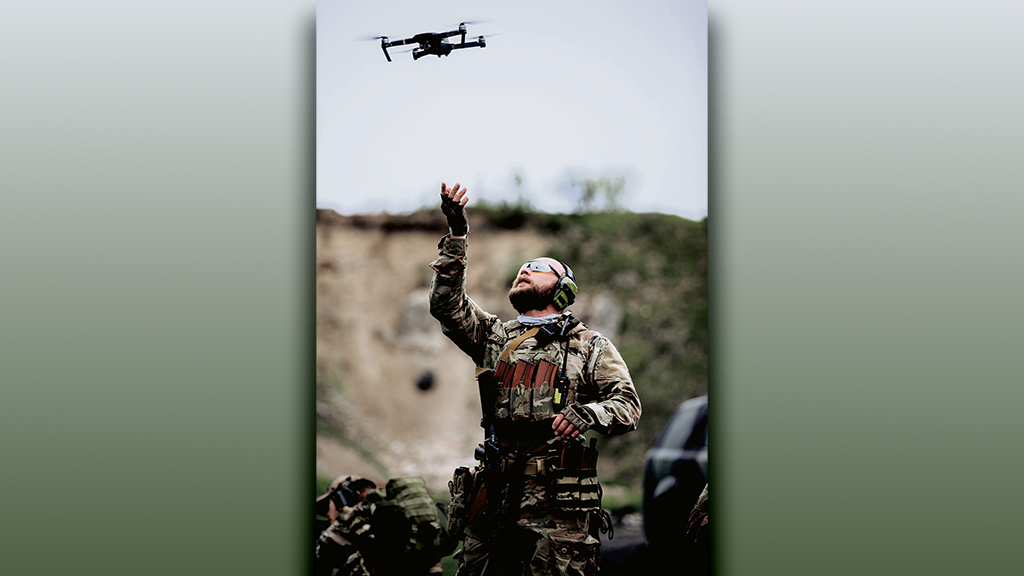
It’s all because of drones, modern-day dragons because they rain death from the skies, but simpler because not only are they not human, they’re not alive. They’re piloted from a safe distance away, by operators who could be gaming except that the enemies they kill are not computer graphics but real people, soldiers sent by the cynical (or desperate) Russian president, Vladimir Putin, to become cannon fodder.
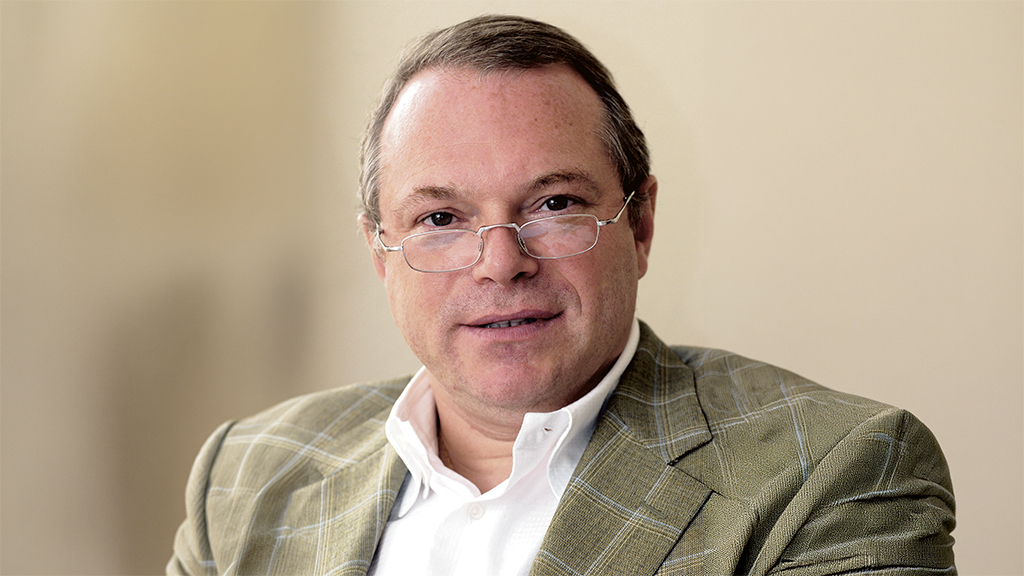
There’s another element to this, Alexander Smukler of Montclair said.
Mr. Smukler, our analyst, lived the first three decades of his life in the Soviet Union, and his contacts in Russia and its former republics are vast, as is his knowledge of life there.
He says that the astounding drone technology that has entirely changed not only Ukraine’s war but the understanding of war in the 21st century has been driven, at least in part — in a way entirely disproportionate to their representation in the population — by Ukrainian Jews.
So let’s explain.
“A few months ago, most of the experts were very pessimistic about the Ukrainian military situation on the front lines,” Mr. Smukler said. “I was among them. I said that the Russian front lines were slowly, slowly advancing, and the Ukrainians were slowly, slowly losing territory.” The end seemed perhaps distant but certainly inevitable.
“Ukraine had the most difficult winter,” he continued. “Russian missiles and long-range drones bombed Ukrainian energy sites.” The country had very little electricity, and so “the whole country, especially in its large cities, Kyiv, Kharkov, Dnipro, and others, people were simply frozen in apartment buildings. They spent the whole winter without energy, without running water. Everybody thought that when the spring began, when the trees will have leaves and the leaves will provide cover, the Russians will start very strong, effective, aggressive operations, which could lead to the end of the war, with very negative results for the Ukrainians.”
That didn’t happen.
“Now we can say that the situation has been changed. Ukrainian drones have been eliminating more Russian soldiers on the front lines than the Russians can recruit.
“The Russians did advance a little bit in Kostiantynivka, which is a very important town in the Ukrainian defense lines, because after it is occupied, the next targets would be Slaviansk and Kramatorsk.
“Those two cities — the two most important industrial cities left in the Donbas — are the most important fortresses. Russians very aggressively try to attack and bomb them. They’ve been doing it for many months. It seems to be a maniac target. I think that Putin gave the order to do it many, many months ago, and that’s why they have sacrificed thousands and thousands of lives.” If Putin wants it, his minions will have to try to make it happen, gruesome death rate notwithstanding. “If those two fortresses fall, Russia will occupy 100 percent of the Donbas,” Mr. Smukler explained.
“But now the nature of the war has changed,” he continued. “We are witnessing a real technological revolution. Ukraine has produced a remarkable technological transformation.
“During the last few years, Ukraine has created an incredible defense industry, which is producing hundreds of thousands of drones per month. Many different kinds of drones. They were able to convert old Soviet military infrastructure that was left in Ukraine after the collapse of the Soviet Union, and now it’s the global center of drone warfare missile production and innovation.”
There are now about 450 companies across Ukraine, some start-ups, some long-established production lines, making drones.
This story isn’t the right place to describe the many different kinds of drones coming from those 450 start-ups — we have neither world enough nor time. But we can give a little sample.
“One of the most effective drones Ukraine is producing now is the FPV drone,” Mr. Smukler said. “It’s a small drone that is used to eliminate manpower.” To put that more clearly — to kill people.
Those small drones fly over the kill zone — the no-man’s-land between the two sides’ front lines — use their cameras to send images back to their operators, and then, when directed, land on or near their targets and explode. They carry about 6 pounds of explosives, and they’re kamikazes. “Statistics estimate that the Ukrainians spend between two and three drones to kill one enemy soldier,” Mr. Smukler said. Although in 2022 the country produced just a few thousand of them, “now Ukraine can produce almost 700,000 FPV drones per month. They’re assembling them with parts they get from China and other sources.
“FPV drones are also used for monitoring and intelligence, and some of them are used to protect Ukrainian soldiers.” They do that by video-monitoring the area around the soldiers; the operators can spot danger. Fully equipped with cameras and explosives, the FPV drones cost between $700 and $2,000; it depends on the systems in them.
“They’re also called toy drones; you can buy them in stores in the United States,” Mr. Smukler said. Kids play with them.
Then there are interceptor drones, the ones that swoop in and take out enemy drones.
Many drones are disposable, but others are not. Those reusable models include the ones that drop food, water, munitions, medications, and other things down to soldiers in the trenches.
Another kind of drone is used for deep strikes — that’s when the drone hits objects very far from where it took off. “During the last few days, Ukraine demonstrated that the deep strike drones could reach up to 2,500 kilometers inside Russia,” Mr. Smukler said. That’s about 1,554 miles. “Ukraine was hitting Russian oil refineries and military objects not only in the European part of Russia but far away, behind the Ural mountains and in Siberia. That completely overloaded the Russians’ antimissile and antiaircraft system, so it physically could not defend against the massive drone attack.”
It also makes Russians feel less safe because it brings the war home for them.
“On June 18, at night, the Ukrainians used 900 long-range drones to attack Russian military objects and oil refineries,” Mr. Smukler continued. I believe that only three to four percent of them reached the targets, and the rest were eliminated, but the Russians are using their most expensive missiles against them.”
The way that a massive barrage of drones can overwhelm an antimissile system is good for Ukraine but bad for Israel, Mr. Smukler said; a huge attack could render Israel’s Iron Dome ineffective. “We see that Hezbollah’s drones are going through the Iron Dome,” he said. “It is very hard for even the most sophisticated antimissile to intercept drones, particularly when it is a massive attack. And that happens in Russia now almost every day.
“On Sunday, Zelensky” — that’s Ukraine’s President Volodymyr Zelensky — “announced that Ukraine had begun the production of long-range missile-drones that possibly could hit Siberian cities like Krasnoyarsk,” one of the region’s largest, 3,000 kilometers away.
There are many other drones made in Ukraine.
Many of them are run by people who use noms de guerre because the Russians would capture and kill them should their identities become known. That includes such figures as General Cherry, “a leading person in creating and producing interceptor drones,” Mr. Smukler said. That’s not his real name.
And some of them — certainly not most, but a disproportionate number of them — are Jewish.
Before we get to them, let’s consider, “amazingly, a young guy, a Jewish guy, who was not a politician or an engineer or a scientist but a showman,” Mr. Smukler said. Yes, he trained as a lawyer, but he never practiced; instead, “he was very successful and very wealthy as a showman and an entrepreneur. He was a standup comedian at comedy clubs since he started doing it in college.
“And suddenly this Jewish guy becomes the president of Ukraine.
“Many different things happened during his presidential term, including the tragedy of the Russian invasion. When he became president, he wasn’t thinking that he would be fighting against Russia for five years, and millions of people would lose their lives. But he became a great warrior, able to defend his country against Russian aggression.”
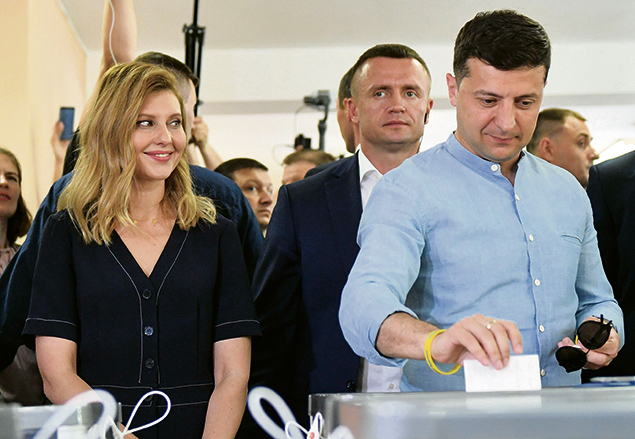
That man, that Jewish guy, of course is President Volodymyr Zelensky.
There’s a controversy raging around Mr. Zelensky now, strong enough to have made American news media, and Mr. Smukler has strong feelings about it, both as a supporter of Ukraine and as a Jew.
“I am very sympathetic to Zelensky, and I am amazed by the Ukrainians’ heroism and ability to defend their country,” he said. “But at the same time, I often criticize some things that I cannot accept. One of those things happened just a week ago. It was a huge personal clash between Zelensky and the Polish president, Karol Nawrocki,” who took the Order of the White Eagle, Poland’s highest honor, away from Zelensky, who’d been given it in 2023.
That’s because “Zelensky named one of Ukraine’s major special forces divisions after the Nazi collaborators who murdered more than 100,000 Polish officers and soldiers between 1941 and 1943,” during World War II, Mr. Smukler said. The “They surrendered to the Ukrainians, and the Ukrainians simply shot them down.”
The Poles have been extraordinarily generous to the Ukrainians since Russia started the war against them, but the two countries, as neighbors with often-disputed borders, have age-old resentments, many of them well justified. This is one of them. “Naming one of Ukraine’s special forces Heroes of the Ukrainian Insurgent Army is a red line for Poles, and they will not tolerate it,” Mr. Smukler said.
The UPA did not confine its murders to ethnic Poles, he added. “They also murdered hundreds of thousands of Jews on the territory of Ukraine.
“What surprised me about the Jewish involvement in defending modern Ukraine is that we are living in an absurd, upside-down world. The Ukrainian Jew who is leading Ukraine — and who is identifying himself as a Jew, who is not going to the Ukrainian church and celebrating Christian holidays there, as many Jews who surround Putin do, and who did not convert, and many of them do — also named an important Ukrainian special forces division after Nazis collaborators.”
Why did Zelensky do this? Internal Ukrainian politics, Mr. Smukler said; it’s too complicated to describe in detail, but Zelensky has to retain the support of Ukrainians and sees this move as a way to do that. “For him to continue to be president and to lead his army in this existential fight against Russian aggression, he needs to have people on the front lines. They think of the Ukrainian Insurgent Army as the Ukrainian Liberation Army, and they feel themselves to be their grandchildren.”
But those grandfathers “killed Poles because they were the enemy, and they killed Jews because they hated them. They killed 12,000 Jews in Lviv in one day, July 12, 1941.”
Where are the Jewish voices raised against Zelensky’s decision to revive the Ukrainian Insurgent Army’s name? They’re silent, Mr. Smukler said. “No Jewish leader in the world said, ‘Wait a minute. This is not acceptable.’”
But history is complicated and often heavy-handedly ironic.
Now, “the Ukrainian army is changing the nature of war, and that’s being driven, in part, by a bunch of Jewish scientists, Jewish entrepreneurs, Jewish engineers who are designing and setting up start-ups and producing the drones that play a key role in that change.”
He cannot name many of those scientists and entrepreneurs — all Ukrainian by birth, some now in Israel, some in the United States, most in Ukraine — but others are public. They are not controversy-free — that is not surprising, considering that many of them are vastly wealthy men who made their fortunes in a notoriously corrupt system — but they are helping their country survive.
They include Max Plyakov, born in Zaporizhzhia, a scientist, entrepreneur, and philanthropist who founded, among many other companies, a drone-making company called Firefly Aerospace
There’s Denys Shtilerman, “the most important figure in the creation of the industry,” Mr. Smukler said. “He’s the founder and CTO of Fire Point, a Ukrainian defense conglomerate that produces long-range deep-strike drones. Fire Point is the largest private drone production company in the world.”
“Fire Point has just demonstrated its newest product, the FP5 Flamingo.” Last week, Mr. Shtilerman gave an interview to Reuters, from an unnamed location, where he talked about his products.
There’s Oleg Rogynsky, “a billionaire Jewish Ukrainian-American, born in Dnipro, who is the founder of a company called UForce, which produces sea drones called Magura.”
Those are all young or at least youngish men. There are also older Ukrainian Jews. The best known, most legendary of them are former business partners Igor Pasternak and Gennadiy Verba, who both left the Soviet Union just before it collapsed. Mr. Pasternak lives mainly in the United States now, and Mr. Verba lives in Israel. Both are very involved in producing drones for Ukraine.
“I could name another 10 engineers, scientists, and entrepreneurs making drones for Ukraine,” Mr. Smukler said. “They are all Jews. This is shocking to me. Today, Jews are contributing significantly to the war. They are not fighting on the front lines, but they are contributing significantly to the country’s defense.
“They are all very close to Zelensky,” he continued. “They are all somewhat connected.”
So why did this happen? What’s going on?
“Before this war, the Ukrainian Jewish community was very close,” Mr. Smukler said. That wasn’t accidental. “There were several outstanding rabbis, all of them either Chabad or Orthodox, who devoted their lives to rebuilding the Jewish community in Ukraine. The most famous of them are Rabbi Moshe Azman, the chief rabbi of Ukraine, and Rabbi Shmuel Kaminetsky, who Mr. Smukler says is “a personal friend and mentor and the father of his community.”
“Most of the Jewish entrepreneurs who left Ukraine kept their connections there because of that strong Jewish community. They were able to conduct very successful businesses there before the war. That’s why so many of the Russian oligarchs were Jewish.
“The Chabad rabbis did recreate the community, and it was reborn — Jewish institutions, Jewish schools, Jewish day schools, Jewish hospitals, whatever. They created community, and the young people who stayed in Ukraine and are behind the drone industry all came out of this community.”
The community is small, despite its impact. “Before the war, there were about 40,000 Jews in Ukraine,” out of a population of about 40 million, Mr. Smukler said. “That’s about 0.3 percent.” (He’s talking about the war with Russia; before World War II there were approximately 2.5 to 2.7 million Jews in Ukraine.”
“And that’s why they supported Zelensky.”
Those Jewish oligarchs saw in Volodymyr Zelensky, the very smart, very quick-witted, very business-oriented comedian and showbusiness entrepreneur whose first foray into politics was as a fictional everyman-turned-president in the television series “Servant of the People” as a possible president for real, and they supported him.
The rest is rapidly unfolding history.