

Emily Dickinson, I’m not!
A paean to the lost art of letter-writing
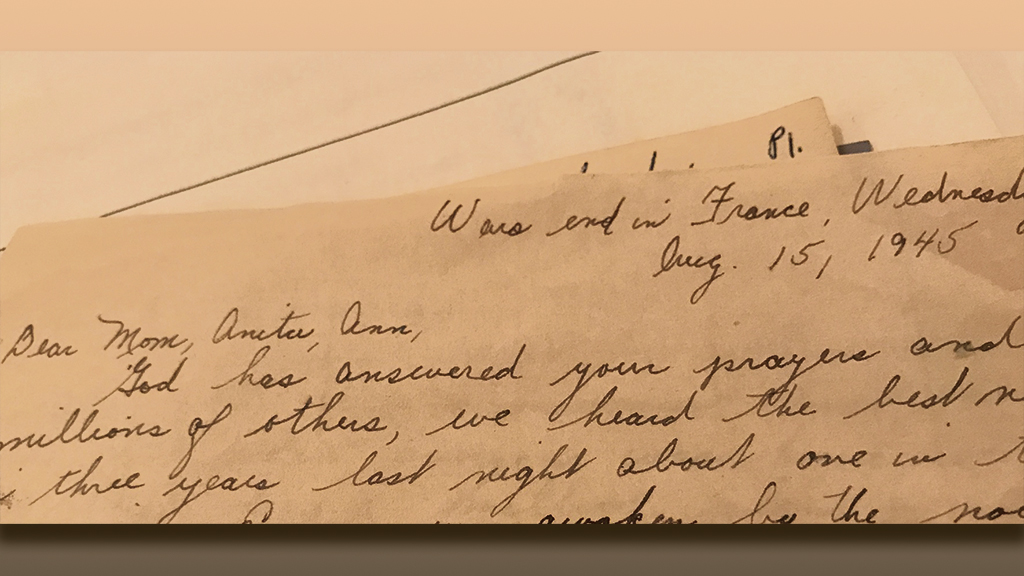
As the number of Rosh Hashanah greeting cards we receive in the mail dwindles to an embarrassing handful, I wonder what has caused the decline. It’s possible my husband and I are just not as popular as we used to be. Or maybe our friends are saving paper, which is good for the planet.
Or perhaps people are too busy or lazy to buy cards, sign their names, address envelopes, seal and stamp them, and then toss them in a mailbox. Step by step, it does sound like a lot of work. Ecards are much easier but, honestly, we don’t get many of those either.
I don’t miss the cards. It’s the art of letter writing that I yearn for.
You don’t have to be Jane Austen or Emily Dickinson to write a letter in 2026 (or 5787), although as I type the word yearn, I fear (oops, there I go again!) that I may be evoking the 19th century.
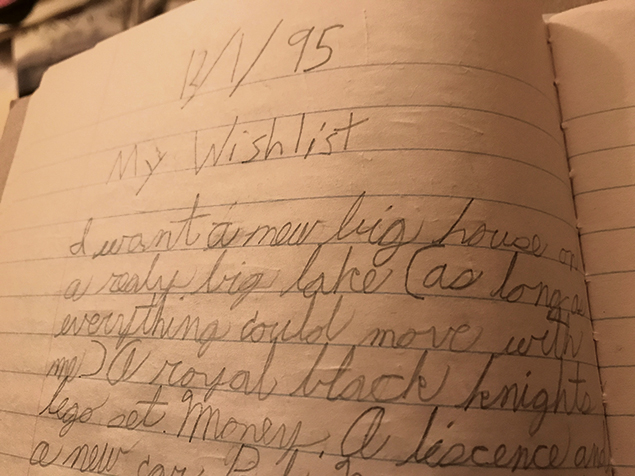
At the risk of sounding preachy, below are some suggestions on how to become a letter-writer in the New Year.
Most importantly, cut the umbilical cord that connects you to your keyboard and screen. Grab a pen. Don’t worry if it feels awkward in your hand. When you start writing, you may not recognize your handwriting. Make sure the ink doesn’t smear, because if you are left-handed like me, that could be a problem.
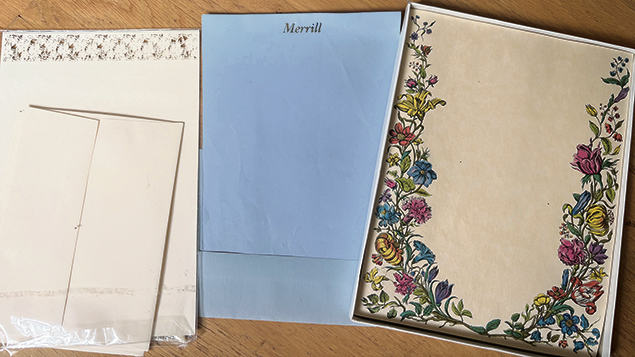
What about paper? Sneak over to your printer and steal some 8 ½” x 11” sheets. The perfect paper is not critical. For instance, my parents wrote letters on scraps of paper, and I still treasure their words. Personally, though, nothing makes me happier than writing on authentic stationery.
Not long ago, I discovered some stationery that I hadn’t used in decades. There was the pastel-colored paper with my name engraved on the top line. It made me feel so important. And then there was the simple yet elegant white paper with a cutout on the top margin. Writing on that was like decorating a lace doily.
Alternatively, search your desk drawers for note cards you may have accumulated from various organizations. In my case, the Sierra Club, the United States Holocaust Museum, even the Monarch Butterfly Migration Fund, to name a few, provide me with an endless supply of cards.
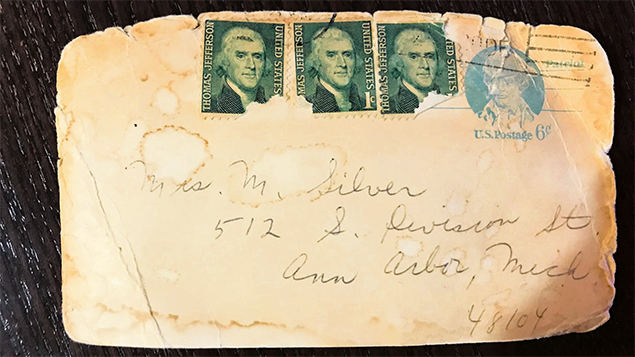
With pen and paper, you are now ready to face the moment of truth. To whom are you going to write, and what will you say?
Honestly, I am not sure it matters. It’s the intentionality of slowing down and purging your-self from technology that is important. It’s focusing on one person and somehow making that person feel “chosen.” The message can be monumental or mundane.
Fifty years ago, when my husband-to-be was in graduate school and I had my first teaching job 600 miles away, we talked on the phone constantly. But our hearts and souls were in the letters we wrote. We weren’t John and Abigail Adams, writing about the Revolution and the birth of a new nation. We were two 20-something kids sharing our new lives, detail by precious detail. The letters allowed us to explore our separate identities and to imagine a future together. To outsiders, the content would be humdrum. To us, they were gateways to a new world.
Recently, I discovered a letter my father wrote to Andy and me 43 years ago, a few weeks before our daughter was born. He was not one to wax poetic, but in this letter, he told us how much he loved us and how lucky he was to have us both in his life.
Would I have appreciated my dad’s letter if he had typed it on his manual typewriter? Of course! But seeing his neat cursive handwriting made the letter more intimate. I pictured him sitting at the kitchen table, writing freely or deliberating over each word. I can’t decide.
Of course, once technology replaced handwritten letters, I embraced it along with the rest of the world. It was so efficient; the instant gratification was seductive. I remember the first email I wrote. A click on “Send” and I was done. I felt like Alexander Graham Bell the first time he talked to Mr. Watson. The novelty, the clarity, and the speed — it was a miracle.
But every so often, I want a reverse miracle. I want to take time to write and to wait patiently for a response. Bring on all the smudges and the crossouts!
Fortunately, a former colleague feels the same way. It’s been more than 20 years since we worked together but somehow, every few months, we write to each other. Eighty-eight-year-old Lydia writes about her family and the loneliness of growing old. She always recommends books to read. Another favorite topic is the extreme weather in Indiana, where she lives.
I answer her. My pen glides quietly along the paper. I’m not distracted by the clickety-clack of my fingers on the keyboard or the constant barrage of messages. I try to write legibly — not so easy! I tell her about my family, my angst about the state of the world, and the heat waves or snowstorms in New Jersey. The content couldn’t be more ordinary.
With the New Year’s arrival, I think about the Book of Life that God inscribes and seals. I can’t guarantee it, but I’d like to believe it is handwritten.
In 5787, may we find the patience and solitude to revisit letters from our past and to write new ones. As we discover our own voices, let’s bid a fond farewell and Godspeed (there I go again!) to Emily Dickinson and Jane Austen.
Merrill Silver and her husband live in Montclair; she’s a freelance writer and retired ESL teacher. Her work has appeared in the New York Times, Hadassah magazine, the Forward, the New York Jewish Week, and other publications. Find her at merrillsilver.wordpress.com