

From bricks and mortar to renewing Jewish life
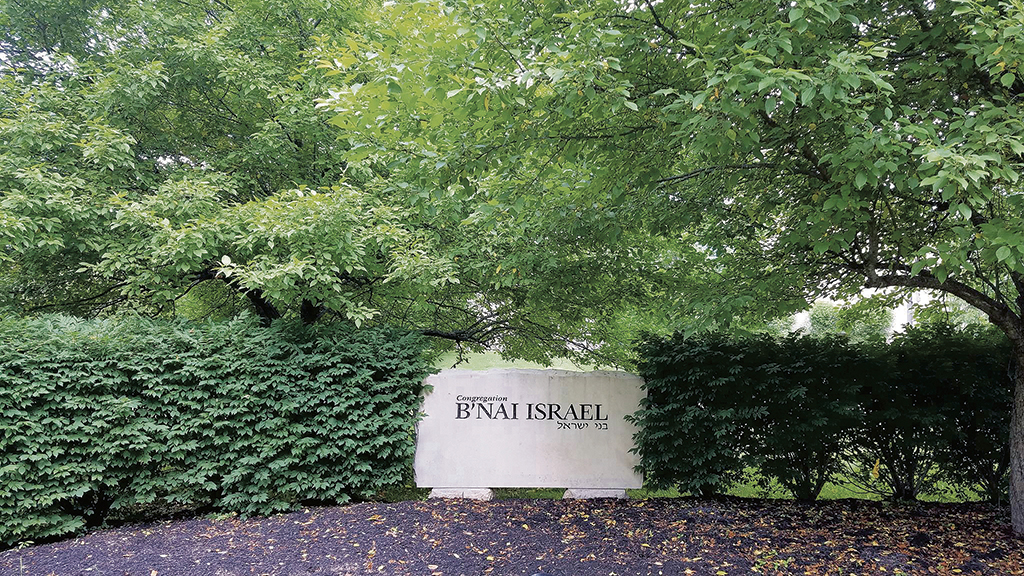
The story of Congregation B’nai Israel in Basking Ridge
Last year I wrote about the decline of religion in the United States. This is manifested by the projection that 100,000 churches will be sold by 2030.
The share of Americans belonging to churches, according to Mark Eldson, author of “Gone for Good,” dipped from 70% in the late 1940s through the 1990s to below 50% today.
If anything, according to Pew Research Center, this trend is even more pronounced within the Jewish community, where a third of Jews between the ages of 30 to 49 don’t identify as Jews in religious terms, referring themselves as cultural Jews with no religious affiliation. Perhaps in the aftermath of October 7, with the attendant rise of antisemitism, the surge of Jewish involvement documented by the Jewish Federations of North America will arrest this trend. But it’s too early to tell.
This macro societal trend has resulted in the merger and closure of numerous synagogues in recent years.
As a consultant for the Jewish Community Legacy Project, which works exclusively with small congregations in planning for their futures, I was engaged by Congregation B’nai Israel in Basking Ridge to help guide its planning. Its president, Anne Nemetz, introduced me to its rabbi and board.
After numerous interviews and a review of membership trends and financial records, we conducted a strategic review of the synagogue’s future. We came to the sad conclusion that CBI did not have the prospect of membership growth to sustain its future. After a difficult vote by the board, the synagogue voted to sell its building and cease operations.
Closing a synagogue is traumatic. In existence just shy of 35 years, CBI, a warm and egalitarian Conservative synagogue, was led by Rabbis Jon Schecter and Robert Green. The sadness I witnessed among its leadership was palpable.
The synagogue held its last High Holiday services in the fall of 2024.
Through the careful work by a cohort of dedicated volunteers, the synagogue ensured that its possessions and memorial items were returned to congregants or donated. After paying off the mortgage, CBI was left with hundreds of thousands of dollars. With my encouragement and thoughtful consideration by the board, the money will be invested in the Jewish Community Foundation of MetroWest.
JCLP has facilitated the transfer of millions of dollars to Jewish federations and foundations as a means of preserving the legacies of institutions no longer in existence.
In a letter to congregants, Anne commended the board for “determining how best to create a lasting legacy which reflects who our CBI community was and what we valued.”
She continued: “To create an impactful CBI legacy we have partnered with the Jewish Community Foundation to distribute our residual funds.”
The largest fund — the Congregation B’nai Israel Legacy Fund — will award grants to synagogues, campus-based Jewish organizations, and Jewish youth groups that are in Greater MetroWest’s catchment area ,and the remainder in Somerset County. Programs considered for grants would include inclusion and interfaith family programming, Jewish youth education, Tikkum Olam projects, new member programs, and emergency assistance for synagogue.
Another fund will provide grants for teacher technology training and expand the use of technology in teaching Hebrew and other Jewish religious and cultural subjects.
The last fund will support Congregation Yetzirah, an independent congregation led by Rabbi Green and the Ohr Tikvah Project, which connects people living in residential facilities with the Jewish community.
Noting this legacy for the future, Michal Werner, executive director of the Jewish Community Foundation, said that “even though the synagogue has completed its chapter, the impact does not end. By dedicating its remaining resources to a legacy fund, Jewish life will continue to make a difference long after its doors closed.”
The architect of this unfolding story is Anne Nemetz. Her calmness during this whirlwind of chaotic change was instrumental in helping her and the board make the right decisions in the past and for the future. She thanked Jewish Community Legacy Project “as a godsend as we navigated the closure of our synagogue. Knowing we were not alone was very comforting.”
As for CBI’s legacy, she noted that it was twofold. “It will live on for generations in the positive impact we had connecting the adults and children of our congregation to their Jewish faith and community, in their everyday lives and in moments of great joy and sorrow. Secondly, the significant money we are gifting to our local Jewish community will help create more robust and meaningful programming and educational opportunities to a wider circle of people.
In short, CBI went from bricks and mortar to renewing Jewish life. I hope this provides comfort to CBI’s congregants.
Max Kleinman of Fairfield was the CEO of the Jewish Federation of Greater MetroWest from 1995 to 2014. He is the president of the Fifth Commandment Foundation and consultant for the Jewish Community Legacy Project.