Born at the Beth
The Healthcare Foundation of New Jersey turns 30
There was no self-description that a Jew from Newark carried more proudly than being “born at the Beth.”
New Jersey’s a very Jewish state, Jews moved to Newark before the Civil War, and for most of the 20th century Newark was a very Jewish city, with Jews from Eastern Europe joining those who’d immigrated earlier, from Germany. Later, the city was a refuge for Jews who’d managed to get out of Europe in the 1930s, before it was too late. The city also had many Jewish neighborhoods, divided by country of origin, wealth, and status; the best-known, most legendary, and far hardest to pronounce, much less spell, famously is Weequahic.
Jews in Newark faced the same challenges as Jews in other places. Around the turn of the 20th century, some of the community’s sons — at that point it was almost entirely sons, not daughters — were able to go to medical school, but found themselves unable to get jobs once they’d graduated. Established practices and hospitals didn’t want them.
So they started their own.
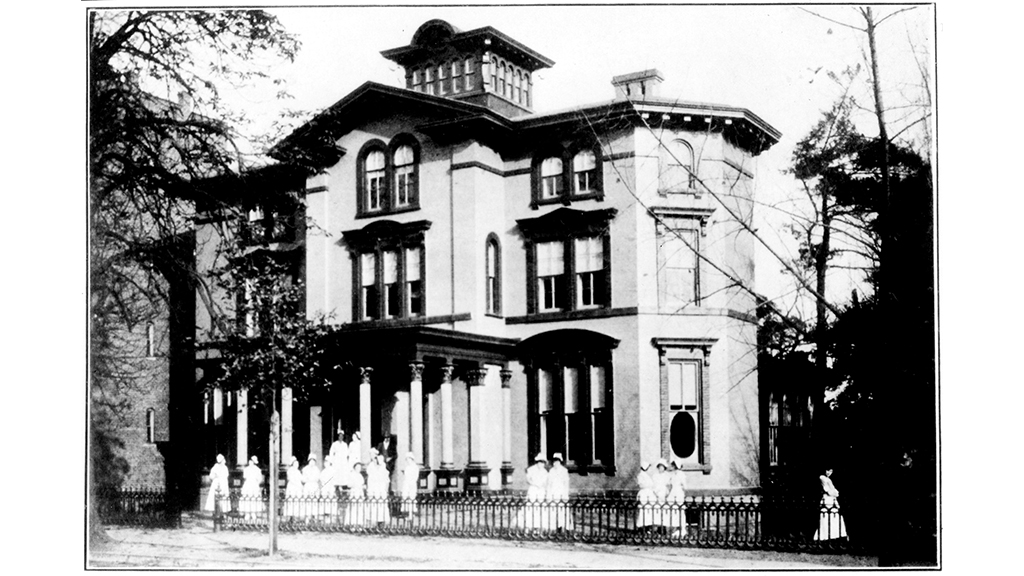
Beth Israel Hospital was founded in 1901 as a 21-bed hospital; as a child of the Jewish community and sensitive to the needs of outsiders, it cared for patients of all ethnicities and employed healthcare workers of all backgrounds. It grew, it flourished, and its leaders estimate that more than 350,000 babies have been born there since it opened.
By the 1960s, many Jews left Newark, most heading for the leafy suburbs that surround it, particularly in Essex County. That flight was exacerbated by the riots of 1967. The congregations that had been housed in the grand urban synagogue buildings in Newark also moved to the suburbs, where they built shuls that sprawled out instead of rising up.
As the healthcare system changed, Newark Beth Israel changed too. In 1996, the Saint Barnabas Corporation bought it; it is now a teaching hospital and part of the West Orange-based RWJBarnabas Health System.
And $125 million from the sale created the Healthcare Foundation of North Jersey, which also was born at the Beth.
Michael Schmidt is the Healthcare Foundation’s CEO, a position he took in 2021. His background is in healthcare, Jewish nonprofits, and philanthropy; he came to Newark after a decade as the director of the American Jewish Committee’s New York region. And while he is not from New Jersey — he grew up in Washington, lived in Israel for many years, and now is a confirmed Upper West Sider — he can claim a serious connection not only to the state, but to Weequahic; his wife Lori Skopp’s mother is Rosanne Skopp, a columnist for this paper who was born at the Beth.
And so was the president of the foundation’s board, Amy Schechner, Mr. Schmidt said.
Because everything connects.
In this case, the person at the center of the connections was Lester Lieberman, the visionary behind the sale of the Beth and the creation of the Healthcare Foundation, Mr. Schmidt said.
Mr. Lieberman, who died in 2013, was a Newark native, a self-made businessman who put himself through college, became an engineer and then the founder of an engineering firm, eventually overseeing huge ventures around the world. He also became a commercial real estate investor and a philanthropist, while always maintaining a deep interest in Newark Beth Israel.
According to the Healthcare Foundation’s website, hfnj.org, Mr. Lieberman’s personal passion for the hospital dated back to 1964, when his daughter battled meningitis, and the hospital’s doctors saved her. That led Mr. Lieberman to the hospital board — he sat on it for 27 years and chaired it for nine.
As chair of the board, a real estate investor, and an engineer trained to solve problems by looking at them dispassionately and logically, Mr. Lieberman realized that Newark’s changing demographics, changes in how healthcare was administered, and changes in healthcare itself demanded changes in how the hospital was structured to best serve its constituents. Joining a larger hospital system would allow Beth Israel to serve its community, he realized — and was able to convince the rest of the board.
At the same time, Mr. Lieberman knew that the Beth’s Jewish mission — to serve its communities, both the Jews who had moved to the suburbs and the neighbors who lived in its catchment area — would remain, and he figured out how to continue that mission.
That was how the Healthcare Foundation, which Mr. Lieberman chaired from its creation until his death, came into existence.
It’s now celebrating its 30th anniversary.
“In the last 30 years, which we started with $125 million, we have given away $200 million,” Mr. Schmidt said. “We have been able to give away almost twice the value of the sale.
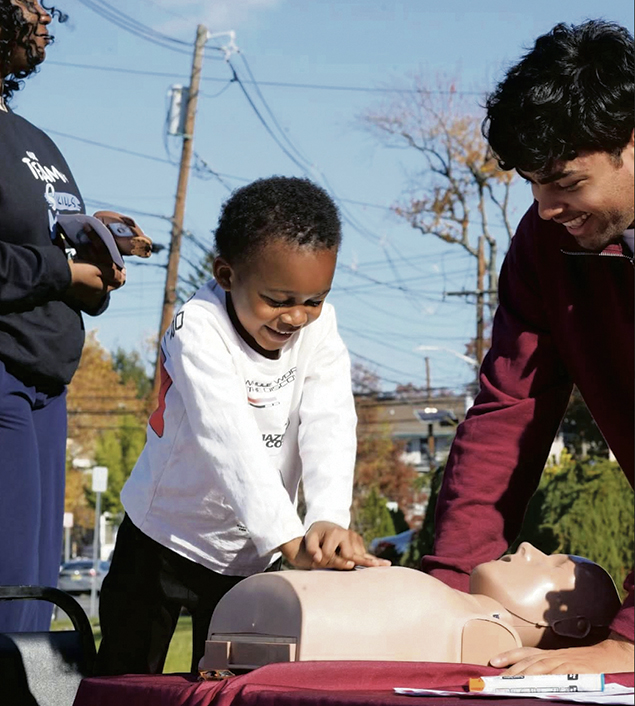
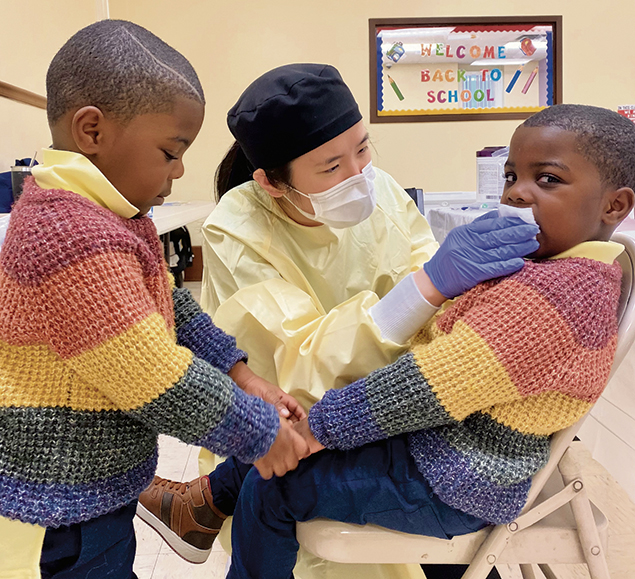
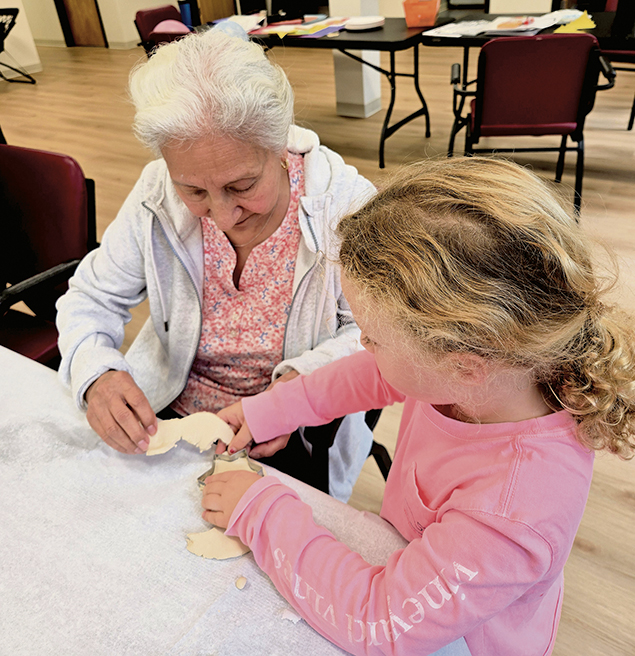
“The foundation’s mandate is to ensure that everyone in the community has access to quality healthcare, and to reduce disparities in the delivery of healthcare,” he continued. That community is “the population of Newark and its environs, and the Jewish community in greater MetroWest.
“Our tagline is ‘founded by the Jewish community,’ because it is important for the recipients of the funds to realize that they came from the Jewish community.” The fund works with all the local hospitals, he said.
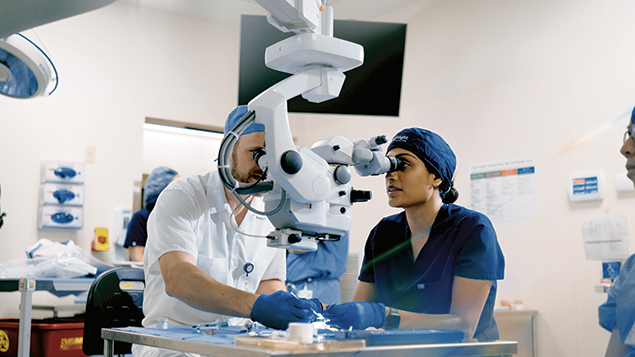
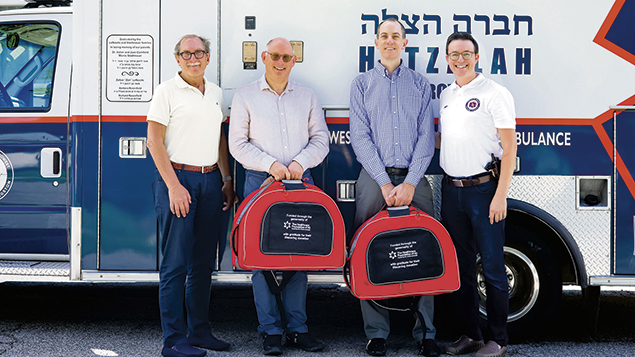
In the first quarter of 2026, it awarded $400,000 to Clara Maass Medical Center in Belleville to help renovate its cardiac catheterization laboratory. In that quarter, the foundation also gave the Northwest Essex Community Healthcare Network $300,000 “to support a second year of coordinated behavioral health services for vulnerable youth and their families,” the website said. And it gave Central Jersey Medical Center $105,842 for a school-based behavioral health case manager for students at two public schools in Newark.
The fund also supports Jewish programs, which is particularly important as students continue to develop more mental health needs and antisemitism exacerbates that problem. The foundation is supporting Moving Traditions, a national organization that provides programming for young Jews. It also works with the Jewish Federation of Greater MetroWest’s Day School Initiative, which supplies parents with information about local day schools and helps them obtain generous scholarships, with the understanding that seemingly healthy incomes don’t necessarily cover tuition without some help.
This year, like last year and the year before, the fund is giving $85,000 “to continue its MetroWest wellness and inclusion training program for Jewish teen leaders, including training for student teaching assistants in Hebrew schools and counselors-in-training at summer camps,” the website says.
That program was launched on October 8, 2023; the timing was accidental but providential, Mr. Schmidt said.
“We had planned it — and then October 7 happened, and it became even more significant. We saw a dramatic rise in antisemitism, which even further reinforced the need for the kind of programs for youth in our community who are struggling with issues about their Jewish identity and issues that impact their behavior and mental health.
Each of the Jewish programs the foundation supports “is slightly different, and all support Jewish teens by addressing issues of anxiety, depression, and isolation,” Mr. Schmidt said. “We convene them regularly so they engage with each other and learn from each other.”
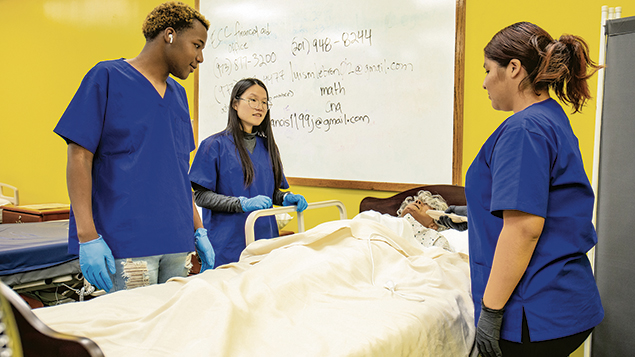
Humanism has been at the foundation’s heart since its inception, Mr. Schmidt said. It was an early partner with the Arnold Gold Foundation for Humanism in Medicine, and among the first to institute its white-coat ceremony. That’s another part of Mr. Lieberman’s legacy, Mr. Schmidt said. He never got to meet Mr. Lieberman, he added, but he feels that he understands his values, and shares them.
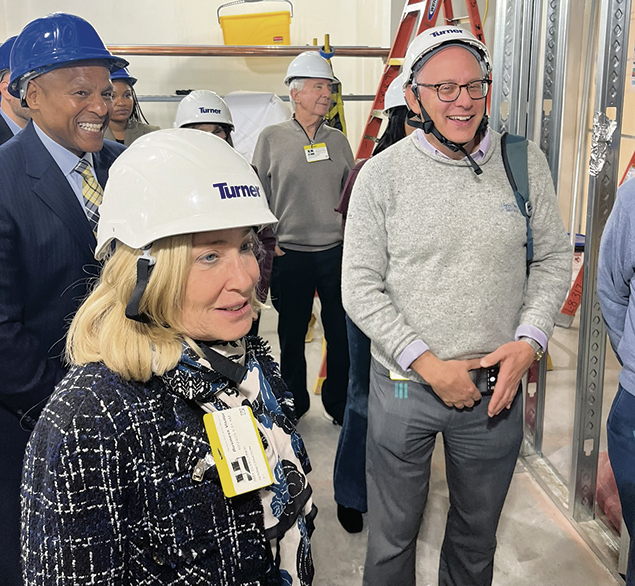
“Lester Lieberman said that you don’t treat the illness, you treat the patient,” Mr. Schmidt said. “You have to support the entire person. I’m proud that we have stayed true to our roots, ensuring that every project we fund has a basis in humanism, with the values of humanity, empathy, and trust that the board has emphasized from the beginning. From the beginning, the board members knew that when a person is listened to carefully and treated as a full person, their recovery is faster and more complete. I’m very proud of that.”
What about the future?
“We want to continue to be responsible to the community,” Mr. Schmidt said. The political climate today is thunderously unstable. “Nonprofits are being impacted by budget cuts,” he said. “We can never replicate the vast amount of federal dollars,” so the foundation “launched an initiative investing up to $1.5 million in unrestricted core operating grants” in 2026. That’s outside its regular cycle.
In January, the foundation was able to give 13 organizations $100,000 each. Those grants are intended to help them respond quickly to changing needs as they figure out how to survive, and help the community survive, as needs mutate and grow.
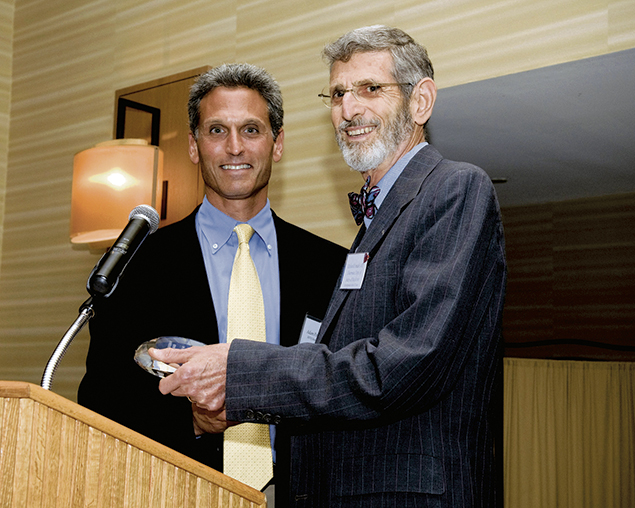
“When we talk about the future, we always try to be self-reflective, and to combine a mix of strategic initiative, seeding new projects and meeting immediate needs,” Mr. Schmidt said. “We constantly focus on evaluation and metrics to ensure that they” — the foundation’s recipients — “are achieving the best possible outcomes and having a positive impact on the community.
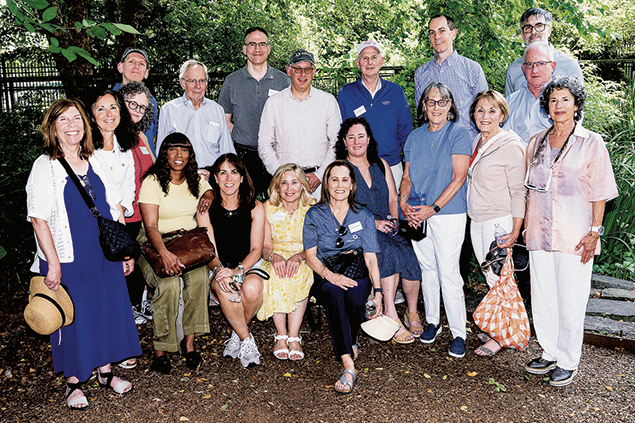
“We are focusing on that, and on bringing in new board members. The baton will be transferred in June. We will have a new board chair, who will be only the fourth in our 30 years.
“It will be a transition from people who were born at the Beth to a slightly different generation, but always with continuity.
“We are very mindful of the situation the Jewish community is facing in terms of increased antisemitism,” Mr. Schmidt concluded. “We will not forget our Jewish roots, and that is an important part of what we can provide to the whole community.”