

‘Ignorance is strength’
Why the hot war in Ukraine soon will freeze
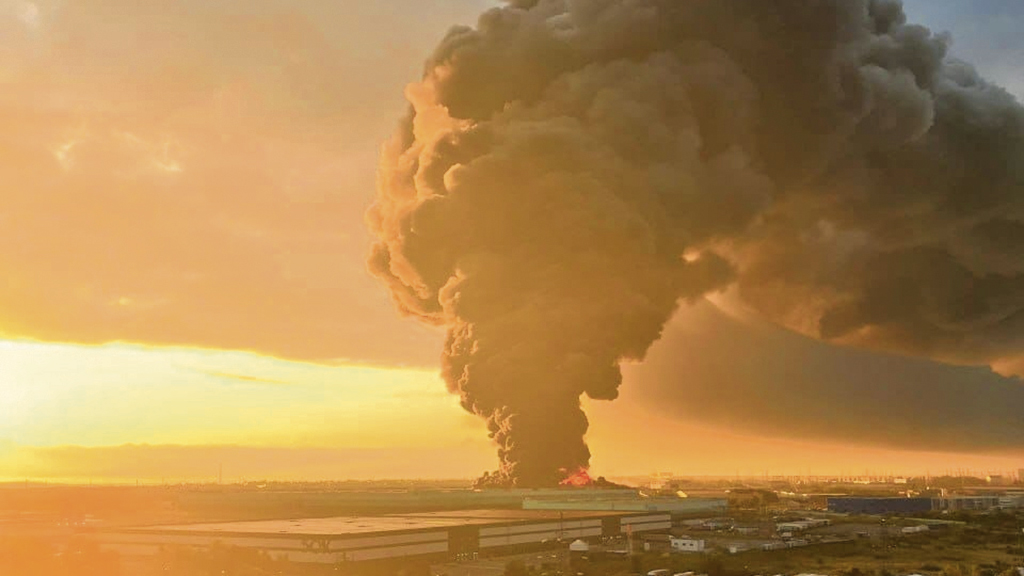
Yes, despite the flood of news about wars and disasters around the world, the unthinkably bloody war that began when Russia invaded Ukraine still is going on, our analyst, Alexander Smukler of Montclair, said.
And it’s changing. And Mr. Smukler, who left the Soviet Union with his family in 1991, just months before it fell, as one of the last refuseniks, not only acknowledges those changes but is able to change his mind, based on the evidence he sees.
He used to believe that despite the glacial pace of its movement into Ukraine, Russia eventually would win.
He no longer believes that. Nor does he believe that Ukraine will win. Instead, he sees stalemate.
Here’s why:
“I want to remind you that 2025 was the fourth year of the war” — the Russians invaded Ukraine on February 24, 2022, expecting an easy victory and a hero’s welcome — “and I constantly said that Russia was slowly, slowly advancing on the front line and slowly, slowly winning the war, and that it was paying an incredible price for it,” Mr. Smukler said.
That price has continued to grow.
“During 2025, according to different sources, including British intelligence, Russians had been paying 89 lives per square kilometer for advancing on the front lines,” Mr. Smukler said. That is a horrifying number. But “during the first six months of 2026, the price Russia is paying in human lives for advancing the front lines and taking Ukrainian territories almost tripled. The Ukrainian chief of staff just announced — and most experts agree with this estimate — that during June, July, and the first half of August this year, Russia now is paying 290 lives to advance one square kilometer.
“’Deep State: The New Voice of Ukraine” — the ironically named website that provides reliable, deeply sourced information about the war — “recently released the latest information. It shows that during July, Russia newly occupied only 27 square kilometers of land in Ukraine. That means that Russia paid more than 30,000 lives for those 27 square kilometers.
“I called it slow in 2025, when the Russians were taking 500 to 600 square kilometers a month. This July, in Russia’s slowest offensive operation since the war started, Russia is paying an enormous price in human lives for 27 square kilometers.”
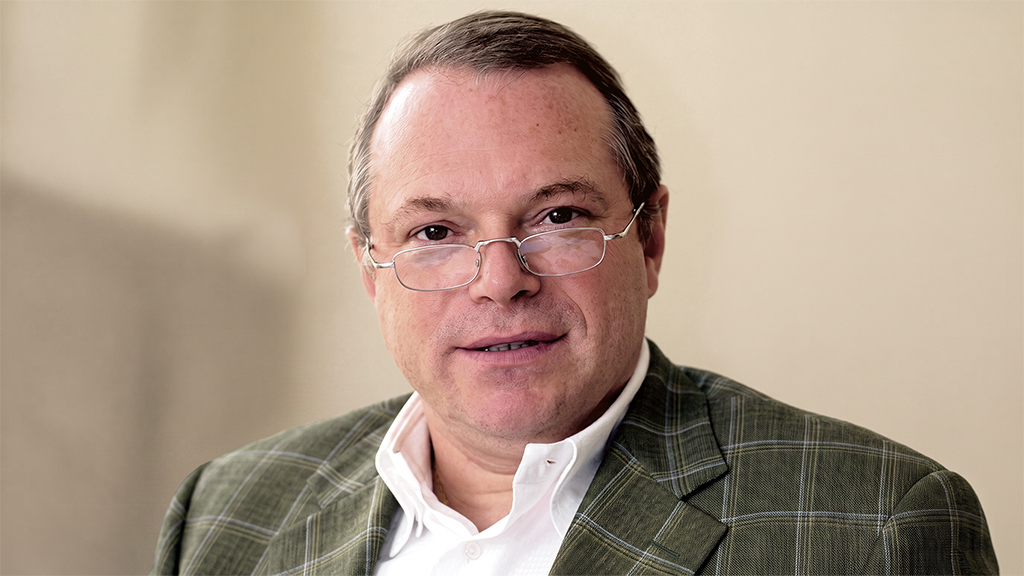
That doesn’t mean that all those Russian soldiers are dead, Mr. Smuckler explained; they are either dead or so grievously wounded that they cannot return to fight and instead will need care. “They cannot maintain normal lives,” he said.
“When we talk about the situation on the front lines, remember that the Russians are like maniacs, trying to occupy and defeat Ukraine in the Donbas, in Sloviansk and Kramatorsk. Those two industrial cities are key points in the Ukrainian defense lines. They used to have between 250,000 and 300,000 people total, but obviously most of them have left.
“The two cities occupy approximately 3,000 to 5,000 square kilometers, so it is easy to figure out that if Russia moves forward at the rate it’s moving now, it will take another year and a half to two years to occupy them, and Russia will need to sacrifice more than a million lives.
“This number has been confirmed by military sources, and by the Institute for the Study of War, which has become a very reliable source.” (The Washington-based ISW, online at understandingwar.org, is nonpartisan and nonprofit.)
Why does Russia want those two cities so badly? Or, to be more specific, why does its strongman leader, Vladimir Putin, want them? “Nobody understands why the Russians are so crazy about taking that part of the Donbas,” Mr. Smukler said.
The president of Kazakhstan, Kassym-Jomart Tokayev, met with Putin last month; in a press conference, he called for freezing the war, and added that he was unclear about the point of this one.
“Let’s say that when there was a conflict — including the frozen one between Azerbaijan and Armenia — the essence and origins of that were entirely clear to us; they stretched deep into history,” Tokayev was quoted as saying. “But here, it is very difficult to understand.”
Kazakhstan is a former Soviet republic and “it is one of Russia’s major allies, but even those who have been silent about the nature of this aggressive war until now have suddenly started to express their opinions, saying they simply don’t understand it,” Mr. Smukler said. Kazakhstan is well positioned to do so, he added; “it’s the largest former Soviet republic after Ukraine, and it is very rich, with mineral resources. And it is very close to and shares borders with China.
“This was an important speech,” Mr. Smukler said. “It was a message to Putin, demonstrating a growing crack. Putin continues to lose allies among his satellites. We know that he just recently completely lost influence in Armenia and Azerbaijan; Kazakhstan is another sign of growing tensions among the former Soviet republics.
“Some experts are saying that Tokayev would not be able to raise his voice, saying that the war is totally absurd, without the green light from China. Some experts say that Tokayev is just repeating or transforming or transferring the opinion that is growing among the Chinese leadership, that it is difficult to understand why the Russians are ready to sacrifice so many lives and pay such an enormous economic price to take these territories.”
To go back to Mr. Smukler changing his mind — he no longer thinks that Russia eventually will prevail. “2026 has demonstrated that neither side can win,” he said. “The situation has changed. I am not saying that Russia is winning the war. I am not saying that Ukraine is winning the war.
“I am saying that it is a stalemate.
“Neither side can win easily at this point. And neither side can afford to lose right now.”
Why can’t either win? “Russia and Ukraine reached the highest level of escalation since the war began this month,” he said. “The possibility of a rapid Russian conquest has disappeared. At the same time, we can’t expect Ukraine to get all its occupied territory back. Ukraine doesn’t have enough conventional weaponry to start a strategic counteroffensive operation, and Russia has a deficit of manpower.
“Ukraine is advancing in technological innovation in a way that has changed the nature of the war. The Russians have all kinds of conventional weaponry to fight on the front lines and to destroy Ukrainian infrastructure, and at the same time Ukraine has developed enough technological innovations to have an advantage over the Russian military establishment.
“The main paradox of this war today is simple. Russia has not achieved victory, but Ukraine has not accumulated enough military power to defeat Russia. So it is a deadlock.”
Each country has a goal, Mr. Smukler continued. Russia’s is to take Ukrainian territory, and Ukraine’s is to survive as a sovereign state. “This is an existential war for Ukraine,” he said. “It is obvious that Russia wants to take the Donbas area and declare victory. But Ukraine does not trust that Russia will ever stop. I think they believe that Russia will just need some time before it starts another wave of war to completely destroy Ukraine and take over again.” To start to redevelop the Soviet Union. “Putin is trying to rebuild the Russian empire. That would be his legacy to future generations, to restore the glory of the empire.”
What about Ukraine? “Although most experts already understand that Ukrainian leadership is ready to give up de facto — not de jure — loss of the territories, for the Ukrainians to win this war means that Ukraine will receive solid, unbreakable guarantees that Russia would never attack Ukraine again, and that Ukraine could become an independent state and eventually part of the European Union, and an ally forever of Western civilization. It would adopt Western values as a democratic state.”
That’s the leaders. What about the people? “They have suffered and sacrificed terribly during the last 4 1/2 years,” Mr. Smuckler said. “They understand that they lost almost 26 percent of their territories, and lots of experts think they will agree with that. But the problem is that the Ukrainians cannot get any solid or unbreakable guarantees that Russia will never attack again.
“I have repeatedly been saying that the hot phase of this war will end by the end of 2026 or maybe the beginning of 2027. What I mean by that is that the conflict will be frozen, in a situation similar to North and South Korea. I predict that there will be a demilitarized zone, similar to the model implemented between North and South Korea back in 1958, and the hot days of the conflict will be over.”
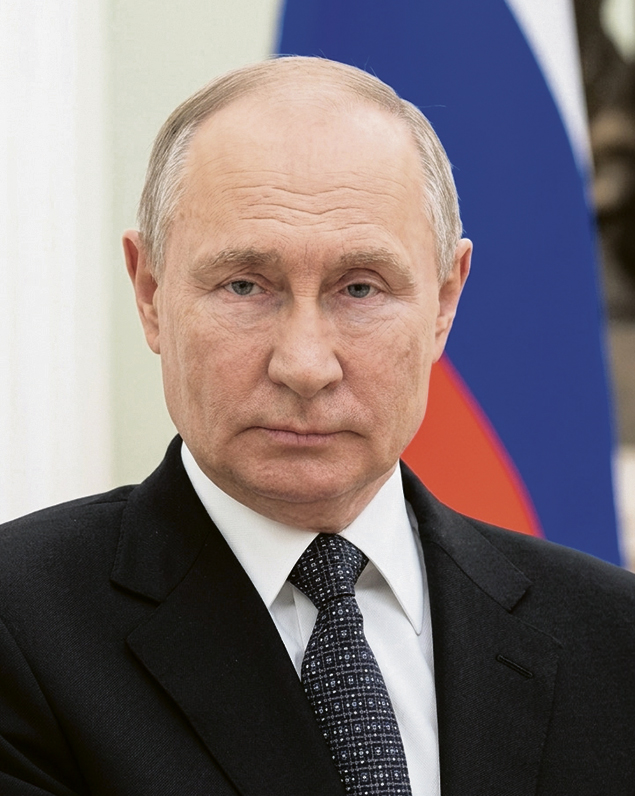
To be able to do that, though, Putin will have to be able to declare a victory, and to do that he’ll have to, as Putin puts it, “liberate” Donbas.
“Russia has a very difficult dilemma, because to liberate Donbas Putin has to break through the kill zones that Ukraine has created to take over Sloviansk and Kramatorsk,” Mr. Smukler said. Those kill zones are the areas just outside the front lines, patrolled by drones that attack and kill anyone unlucky or stupid enough to venture into them.
In order to do that, “Russia must announce mobilization, and it must mobilize between 300,000 to 500,000 people to throw on the front lines.” Putin has not instituted mobilization yet, instead recruiting from prisons and promising contracts to men in rural areas that would pay their families should they die. He’s been reluctant to put a large-scale draft in place. But now it seems that he will have to.
“Putin is preparing to announce the mobilization at the end of September,” Mr. Smukler said. “Then he will take Sloviansk and Kramatorsk; according to his propaganda, he’ll liberate Donbas, and that will give him the chance to announce that Russia has won the war.
“Remember that ignorance is strength.”
Mr. Smukler is quoting George Orwell’s “1984” — “that genius book,” he calls it — where we are told that a totalitarian state practices doublethink, and “War is peace. Freedom is slavery. Ignorance is strength.”
“Ignorance is the strength of dictators,” Mr. Smukler said. “Because of the ignorance of the population, their readiness to accept the lies of propaganda makes dictators and aggressors stronger. In order to survive as a dictator, Putin needs to give the population something they will accept as a victory.
“At the beginning of the war, Putin used words like demilitarization and denazification. Now, the propaganda has changed. Nobody uses those words on Russian TV news channels anymore. Now it’s all about liberating the Russian world.” That means repatriating those Ukrainians whose native tongue is Russian — as is true of many Ukrainians in the eastern part of the country.
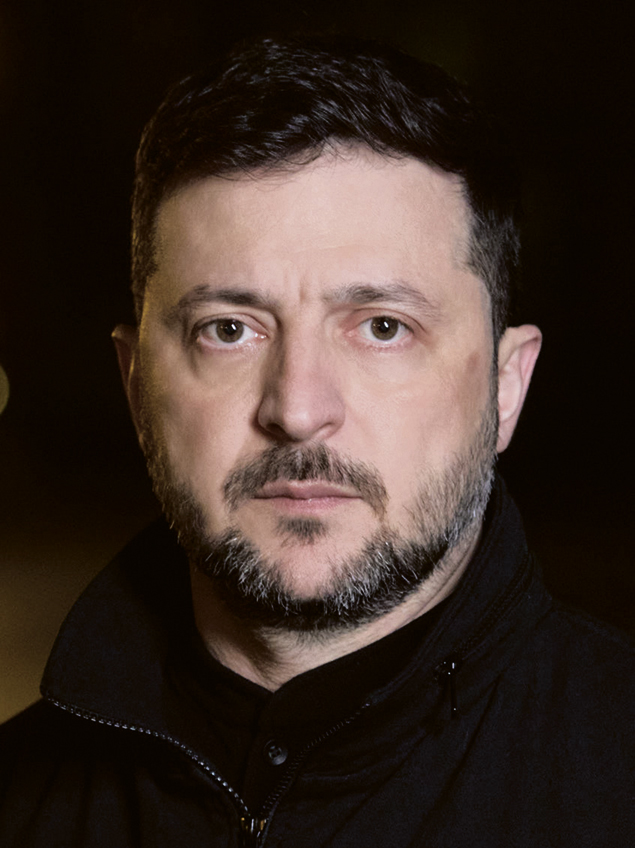
For example, President Volodymyr Zelensky’s first language is Russian, although now he speaks Ukrainian.
He’s unusual, Mr. Smukler said. “He’s a nice Jewish boy, the son of a scientist, born in 1978 in Kryvyi Rih, an industrial Ukrainian city near Dnipro, raised by the Soviet intelligentsia. I thought that about 90 percent of those families left for Israel or the United States when the gates were open wide at the beginning of the ’90s.
“I was thinking that he was one of the very Jewish people who stayed there — I know a lot of people who emigrated to Israel, the United States, Germany, Australia, Canada, and then some came back to build up businesses in Ukraine.
“But there are key figures who remained in Ukraine all these years, and they really believe that Ukraine is an independent democratic state and they put all their knowledge and expertise into it. And they love Ukraine.
“To me, Zelensky is an extremely unusual figure who was freely and democratically elected by the Ukrainians.
“He never covered up his Jewish identity.
“I have some reasons to criticize him, with the glorification of some Nazi collaborators, but I see it as an internal political matter.
“He was a Jewish boy who was raised in Ukraine, became the leader of the state and the commander in chief of the army, which is defending the country against Russia. Before the war, the Russian army was considered the third strongest in the world, after China and the United States, so it’s a kind of miracle.”
So, to go back to the stalemated war, “Putin’s dilemma is to throw hundreds of thousands of lives on the front lines to sacrifice them, or to use unconventional weaponry,” Mr. Smukler said. “Nuclear weaponry. That’s why I think that the conflict has reached its most dangerous point.
“Why did the conflict reach this highest point of escalation? Because in 2026 Ukraine demonstrated an enormous technological advantage over Russia in producing very sophisticated drones, especially drones driven by AI. It was able to create and started to produce its own long-range missiles, and it had an enormous advantage in anti-drone technology, which fights Russian drones.
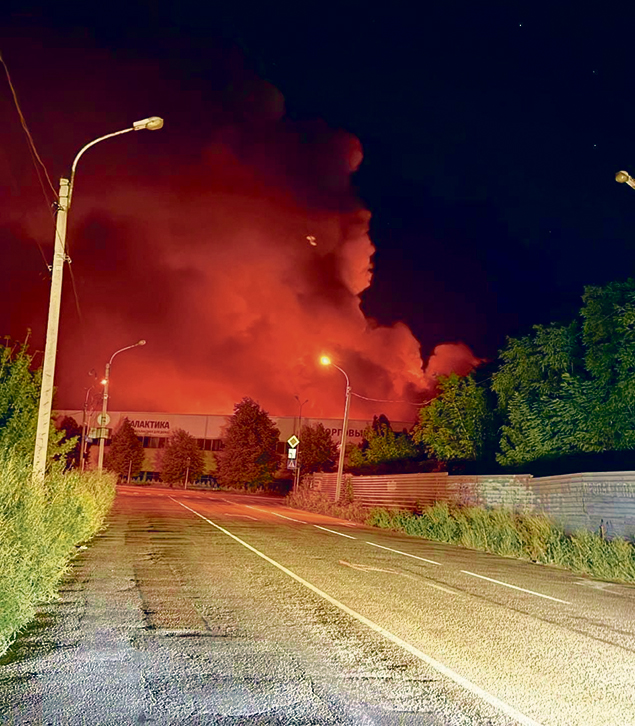
“Ukraine found the weak points in Putin’s empire, and it can bomb objects inside Russian territories, up to 3,000 miles away. It brought the war inside Russian territory in the last month. It hit the most painful objects. It was very strategic in hitting targets that would hurt the Russian economy. Seventy percent of Russian oil refineries were destroyed or partially destroyed.
“Ukraine destroyed the largest Russian marketplace, Wildberries; it’s similar to the American Amazon or the Chinese Alibaba, by hitting its logistic setups in 21 cities, and because of it more than 85,000 people lost their jobs.
“And by attacking oil refineries, Ukraine was able to bring the war into the pockets of every Russian, because the price of gas for cars rose tremendously.”
Gas used to be very cheap, Mr. Smukler said; now it’s the equivalent of $8.50 per gallon. Because of that, Putin has allowed the production and use of very low-octane gas, which had been banned in the country 30 years ago. But almost all Russian cars are foreign — Russians loved the BMWs and Mercedes and Volkswagens and Japanese cars that had been assembled in Russia. But those foreign manufacturers had to leave. Their very sophisticated factories now produce low-end Chinese cars, “and those cars absolutely refuse to run on low-grade gas.” And anyway, “the Chinese cars don’t work very well.”
So there’s a lot of consumer discontent in Russia.
“Somebody on the Ukrainian side understood that destroying Russian oil companies would hurt Russia,” Mr. Smukler said. “Putin’s popularity is going down rapidly. Putin is very concerned about it. And every night, Ukrainian drones are attacking refineries.
“About a year ago there were 120 Ukrainian drone attacks in Russia every day, but now there are 1,200 daily attacks. And these are heavy, long-distance drones attacking Russian territories and infrastructure.
“Ukraine is extremely careful not to hurt civilians” — that makes them extremely unlike the Russians, who do so on purpose — “but still there are casualties. Ukrainians are very precise. Every expert in the world realizes that they could very easily attack apartment buildings, but they are trying to minimize the casualties among the population. But their goal is to infuse into the mind of each Russian that the war is coming home.
“When the war was just in Ukraine, Moscow was flourishing. The theaters were all open. But now everybody sees it every day. They hear the bombing in big cities. They understand that Russian anti-missile and anti-drone systems are not sophisticated, and they cannot intercept the drones.
“That is why Putin is running out of time. He needs to do something.”
Zelensky also has to do something. “Ukraine is running out of time because it also is running out of manpower,” Mr. Smukler said. Unlike Russian soldiers, Ukraine’s know what they are fighting for. They’re not dying at the same rate as the Russians are. But there are far fewer of them — Ukraine is a big country, but Russia is massive — and they are getting very tired.
“Ukraine also is suffering an enormous deficit of military munitions,” he added. Its people are brave but exhausted. This cannot go on for much longer.
So now we get to see what happens next. In the long run, ignorance is not strength.