

A different sesame street
Rachel Simons expands on family history, Jewish connections, and food, food, food
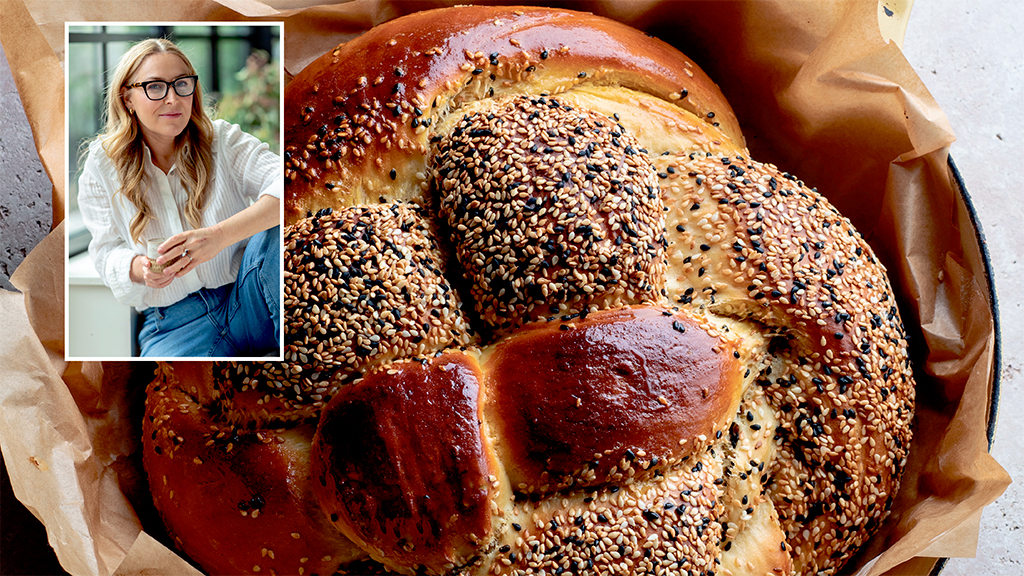
A symbol is an idea. It’s a way to compare one possibly dull thing to another more exciting thing, bringing the duller thing to vivid life. But it’s an abstraction.
Food is about as unabstract as you can get. It’s like oxygen. Without it, we’d be dead.
Because life is complicated, food — the physical thing that we chew, swallow, and metabolize — also can be a symbol, a metaphor, something we dream about, yearn for, and write complicated, at times borderline tortured analogies about.
Rachel Simons, who will speak and do a cooking workshop at the Kaplen JCC on the Palisades in Tenafly on October 28 (see below) is able to talk about food both practically and metaphorically.
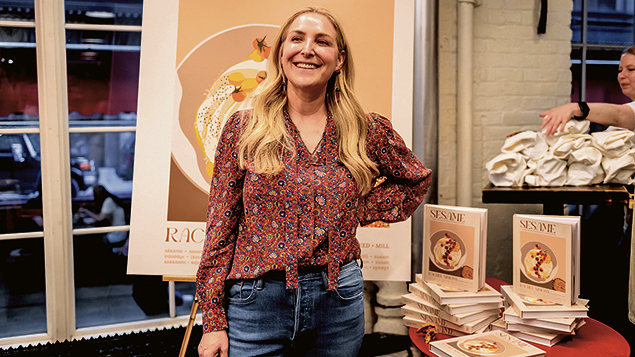
Ms. Simons, who worked as a lawyer in her native Australia, now lives in Manhattan, where she started a flourishing niche store called Seed + Mill in Chelsea Markets and now has written a cookbook, “Sesame: Global Recipes & Stories of an Ancient Seed.”
She’s also a storyteller.
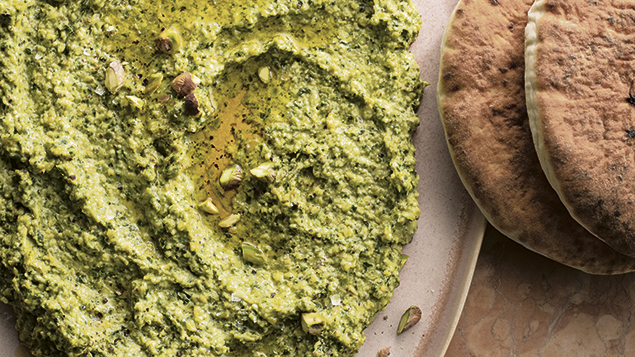
Her story goes from prewar Eastern Europe to Australia to London to Hong Kong to Chelsea. It’s a profoundly Jewish story. It’s about persecution, and it’s also about connections, not only among Jews but also among Jews and the outside world. There is a lot of tragedy in it.
There is also a lot of joy, and a great deal of food.
When she talks about food, or about her life, everything connects, Ms. Simons said. “It comes together like a Venn diagram. I’m going to do a cooking demonstration, with a few recipes from the book. I love to talk about food, and to share recipes. I love to talk about where the food comes from, and I love it even more when I can connect it to my ancestors’ travels, and how I’ve also moved from place to place.
“It reflects the experience of so many Jews. We’re called wandering Jews for a reason. My family experience is very much about wandering.”
As they travel, Jews pick up the food of the cultures in which they find themselves. “Jewish food culture is symbolic of the fact that we’ve moved so much.”
And then there’s what she calls the elephant in the room. “That is the antisemitism that is happening now. It’s been present in our lives for millennia, but obviously it’s worse now than it’s been for a long time.” For Ms. Simons, “it’s left me feeling abandoned by my birth country. It’s left me asking where I belong.”
That question seems far away from food, but really everything connects.
Although maybe 10 percent of Australian Jews can trace their ancestry back to England, when they first were shipped off Down Under with other late 18th-century criminals, ne’er-do-wells, and other undesirables, according to Ms. Simons’ rough estimate, the other 90 percent of the community are either Holocaust survivors or refugees or their descendants.
That’s true of her family. “On my mother’s side my grandparents were Czechoslovakian,” she said. “My great-grandmother, Elishka, and my grandmother, Annika, were sent to Terezin, and that’s an interesting food story.
“They were both farmers and trained horti-culturalists, and they were charged with looking after the food supply in Terezin. It was rare. They were both there for 3 1/2 years. They were lucky in that they had a skill that the Nazis needed.”
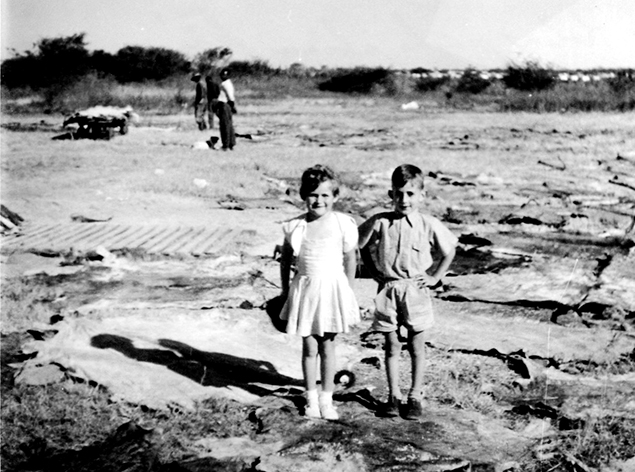
Her grandfather, Otto Roubicek, also had an unusual story. “He had been sent to Zimbabwe — it was called Rhodesia then — by the Bata company, which made leather goods. My grandfather set up their shoe factory in Bulawayo. He was sent there in 1939, and he survived because he wasn’t anywhere near Europe. But all his family was killed.”

Otto went back to war-devastated Prague in 1945. He met Annika, they married, and then, Ms. Simons reported, he said to his new wife, “Why would we stay in Prague?” No one and nothing held them there. “Let’s start a new life there,” in Rhodesia, Ms. Simons said, quoting her grandfather. So they moved to Bulawayo, and he went back to the shoe factory. “My uncle Martin and my mom were born in Bulawayo,” she added. “My uncle was born on the same day as Israel — May 15, 1948.”
Meanwhile, history continued to unfold in Prague. In 2001, after communism fell there, Annika’s family home was returned to the family. Now, Ms. Simons said, “an order of cloistered nuns lives there.” The story’s too long for here, she continued, but she plans on going to Prague next summer and living there, with the nuns, as she researches the story of the house’s return for a book she plans on writing about it.
Ms. Simons’ mother, Jane, grew up in Bulawayo, speaking Czech at home but English everywhere else. As an adult, “my mother couldn’t speak Czech very well but she could understand it,” Ms. Simons said. “I once had a Czech piano teacher when I was a kid. She and her husband would speak to each other in Czech, and they had no idea that my mum could understand what they were saying. This was in Sydney, Australia.”
There is a great deal of wandering in Ms. Simons’ genes, she said. Her mother left Bulawayo for London at 18; she became a physical therapist. “Her expertise was in obstetrics, and her passion was working with women about to give birth,” Ms. Simons said.
“She was working in the labor ward in Guy’s Hospital in London. One Passover, she saw a patient who had a box of matzah in her room. My mom said to her, ‘You’ve got some matzah! You must be Jewish!’
“So they had a conversation in the hospital room, and this woman asks, ‘Are you single?’ and my mother said yes. So the other woman asks, ‘Would you like to meet my brother-in-law? He’s Australian, a lawyer, working in London.”
So the Australian Jew — Ms. Simons’ father, Philip — and the Czech-Zimbabwean Jew, who were brought together by a Romanian-born Jew — Ms. Simons’ aunt, Judy Simons — and by food, married in London. “My parents met over a box of matzah,” Ms. Simons said. “And then my aunt gave birth to my cousin Shoshana.”
Ms. Simons’ father was descended from the small minority of Jews who landed in Australia before the Holocaust, and who can trace their ancestry back to England. “He convinced my mum to go back to Australia with him, and I was born in Sydney,” she said.
“I love to travel,” she said. “When I was 18, I took a gap year and went to Israel. I had gone to a Jewish day school, I learned to speak Hebrew, and I had a proud love of Israel. That year in Israel solidified that feeling. It was 1994, right in the middle of the intifada. There was a lot of terrorism that year.
Like her father, Ms. Simons became a lawyer, and she practiced law for about 18 years. But “as soon as I finished my law degree, because I always wanted to travel, I did just what my mum did. I replicated my mum’s life. I took myself to London, and I lived and worked there for about a year and a half.
“Then I went back to Sydney, worked for a big firm, and they asked me if I wanted to go to Hong Kong. They needed some lawyers there. So I jumped at that chance.
“I have always loved Asian food. There is so much Thai, Japanese, Chinese, and Indonesian food in Australia that it wasn’t unfamiliar to me,” but still she learned much more about those cuisines, including how to prepare them.
Wherever she lived, Ms. Simons cooked. “I have always loved to cook,” she said. “It is a meditative and creative experience. I like to eat too, but I love to cook.”
In Hong Kong, Ms. Simons lived in a small, bare apartment in an extended-stay hotel. “It was tiny, and I remember it as being kind of desolate,” she said. “And the people who were there probably hated me, because I cooked so much and it smelled. I know I wasn’t very popular there.
“That time of my life was the least communal, and maybe that was why I cooked so much. I know that there is an active Jewish community in Hong Kong, but I didn’t connect with it.
“I was a little bit lonely, and I maybe was cooking to combat loneliness.”
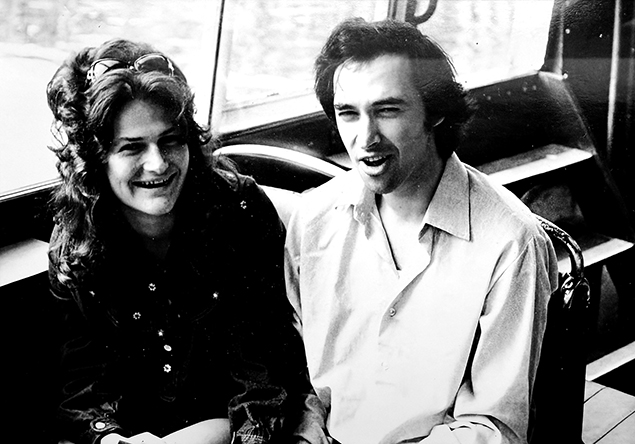
Then she moved back to Australia, still as a lawyer, married her husband, Chris Green, and had two children, Annika and Oliver. Annika is named after Rachel’s grandmother, also Annika — Rachel’s middle name is Elizabeth, the Anglicized version of the name of her great- grandmother Elishka — and Oliver is named after Rachel’s great grandfather Otto. And she continued to work as a lawyer, building her career.
But in 2014, Mr. Green was offered a job in New York that the family decided was too good to decline, “so we grabbed it,” Ms. Simons said. “We thought it would be only for a couple of years. I came with only some suitcases with some clothes.” As she had in Hong Kong, at first the family lived in an extended-stay hotel.
Then something different happened.
“I fell head over heels in love with New York. It’s because my kids joined the Heschel School.” That’s the Abraham Joshua Heschel School, a community Jewish day school on the Upper West Side.
“In that first year, I met so many lovely Heschel parents, and I invited as many of them over as I could for Shabbat dinner. I loved to cook for them, and I made so many friends. We were so happy in that first year in New York. We were just seduced by it.
“We fell in love with the city, we were so happy here, that we decided, let’s stay here a little longer. And then a little longer, and then a little longer. And the kids had friends. And we had friends. And we were all so happy here.
“I’ve really detached from Australia,” Ms. Simons continued. “Unfortunately, both my parents passed away in the last couple of years. My roots were so shallow in Australia as it was, and now, with my parents gone and all the antisemitism there, I feel so abandoned.”
Australia has turned on its Jews harshly since October 7, and reports from there indicate that many members of the Jewish community who still are there share Ms. Simons’ sense of abandonment and betrayal, although the community remains internally strong and resolute.
“Now Australia feels like a place of no family love and no community love, and I have no desire to ever return there,” Ms. Simons said.
She has no more family there, she said; she has only one sibling, her sister, Talia, who lives in North Carolina. Her uncle, Martin Roubicek, moved from Australia to Switzerland 40 years ago, and still lives there today.
“Talia started a food business too,” Ms. Simons said. “She has a restaurant in Charlotte. There is a lot of food love in our family.”
When she first moved to New York, Ms. Simons had to decide what to do. She’d given up her job in Australia. Because she thought she’d be in New York only for a year, there wasn’t enough time to study for the bar there, even if she’d wanted to. She took some time off to think about what to do next. “I thought it would be a sabbatical,” she said. “I enjoyed the first couple of months, but I quickly realized that I really wanted to get back into work.”
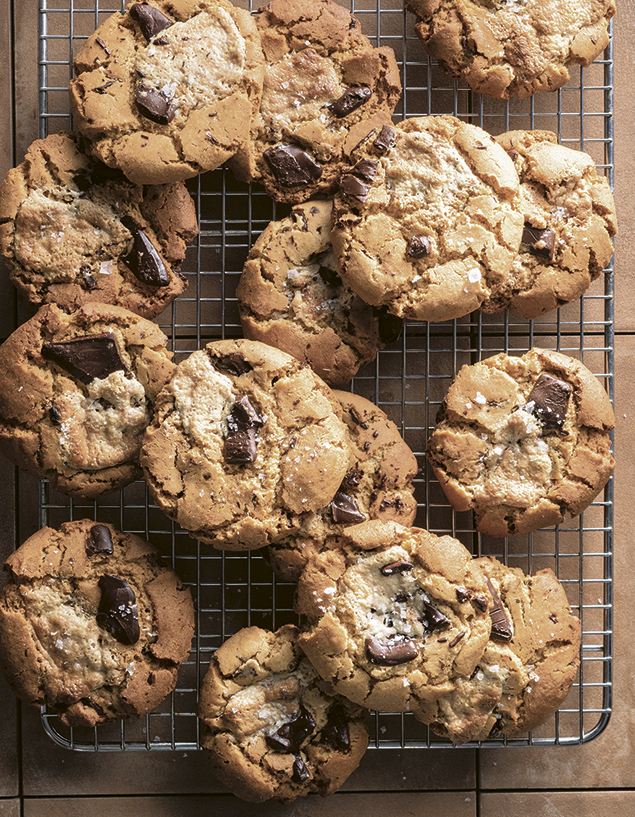
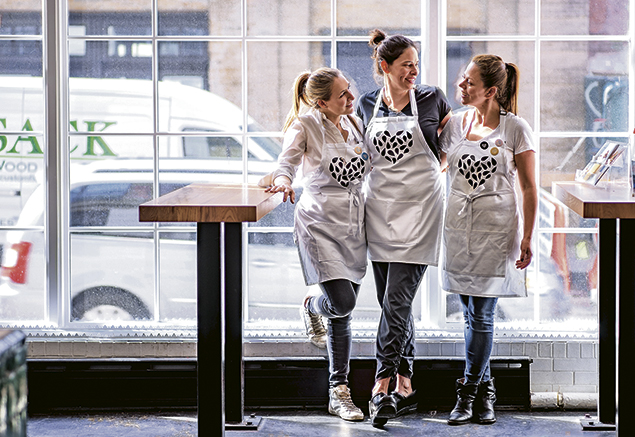
Soon she joined with two other mothers, Lisa Mendelson and Monica Molenaar, “who all were at very similar stages in our lives. We all had corporate backgrounds, and Lisa was also a lawyer. None of us came from food businesses or food families, but we all liked to cook.” The three of them opened a kiosk in Chelsea Market. “It started as a little shop,” Ms. Simons said. It wasn’t a bigger business. It wasn’t a brand. It was just a little stall in a big market, called Seed + Mill, and it was very niche. It sold — and still sells — only sesame products —halva, tahini, and foods made with halva and tahini.
“It is niche,” Ms. Simons said. “I have never seen another store dedicated to an ingredient and the products made from it. The story of the store is the story of sesame, and we love to share that story at the store.”
Now, Seed + Mill sells to retail stores and ships its products all over the country.
The store is both intensely Jewish and entirely global. “Our products are made in Israel,” Ms. Simons said. That has led to some online hate.
Both the store and her cookbook “reflect and mirror the experience of eating at the Chelsea Market,” Ms. Simons said. “If you were to visit, I would give it no more than 45 minutes, tops, before someone would come in and say ‘Oh this is like the halva I used to eat at home. I’m from Turkey. Or Afghanistan. Or Iran. Or Brazil. Or India.’
“In India, there are 200 varieties of halva,” she continued.
“It is amazing. Food connects all of these different people, and they all see a part of themselves in that food. It’s truly beautiful, and it makes me want to be part of the food ecosystem for all cultures and religions.”
Of course, it’s not so easy.
Even though Seed + Mill doesn’t position itself as an Israeli store, it’s often seen that way. “We get accused all the time of culturally appropriating halva from the Palestinians. I’m told that I stole tahini from the Palestinians, and I’m complicit in genocide because I took their identity.
“I just want to say, can’t we take Israelis and Palestinians out of this equation, and see how many people have their version of this product? So none of us owns this. The Jews don’t. The Palestinians don’t. And why do we even have to have this conversation?”
Almost all of these diatribes are online, not in person, Ms. Simons added.
The abuse has worsened since October 7. “I was stuck in Israel during the war with Iran,” she said. “I was meant to be visiting our manufacturing partners and doing some work with them, and that trip got canceled. And I was meant to be on a book tour, and I had to cancel it. So I put up a note on Instagram saying sorry, I’ve had to cancel this book event, and this is where I am.
“And I got all of this abuse about Gaza, asking why I was in Israel. Shock! Horror! Your products are made in Israel! I didn’t know that! So I’ll never buy any of it again.
“So I posted another note on Instagram, and I said to all the people who are yelling at us and abusing us online about the fact that our products are made in Israel, and who are now boycotting us, ‘I’m extending a permanent invitation to you. Come to Seed + Mill, and I will give you a free tahini self-serve, and let’s have a chat. The ice cream will be on me. All I ask is that you come over and let’s have a conversation in person, over a delicious treat that will be on me.
“‘Just give me half an hour of your time. I won’t yell. I’ll listen. Hopefully you will listen too over a treat.’
“I posted this all over our social media, and I write it back to every abusive email I get. I finish with, ‘If you’d like to come to Seed + Mill for a free ice cream and have this conversation face to face, the invitation will always be open.’
“Not one person has ever come. Not one. Ever.”
So there it is. Food as connector. Food as rage-inducer, too, but more often food as connector.
So go for tahini ice cream downtown, get inspiration from “Sesame: Global Recipes & Stories of an Ancient Seed” at home, and maybe go to the JCC to listen to Rachel Simons talk, watch her cook, and think about your own family’s wanderings and the homes you’ve found together.
Who: Rachel Simons
What: Will talk about sesame in general, her new cookbook, “Sesame,” in particular, tell some stories, demonstrate some cooking techniques, and share some offerings from her store, Seed + Mill
Where: At the Kaplen JCC on the Palisades in Tenafly
When: On Tuesday, October 28, at 7 p.m.
How much: JCC members, $60; nonmembers, $75
For more information and to register: Go to www.jccotp.org/event/cuisine-culture, email Marisa at mdolkart@jccotp.org, or call (201) 408-1496