

Survivor, hippie, entrepreneur
The many lives of Bernard Ross, writ large
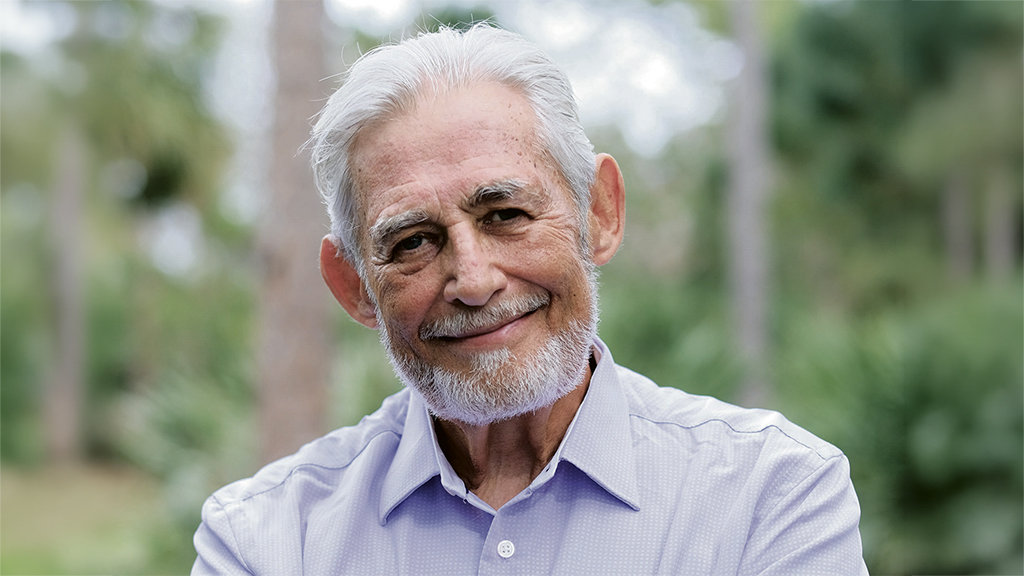
Bernard Ross has lived so many lives.
He’s the Polish-born son of Holocaust survivors. He’s a prototypical 1960s spiritual seeker, trip taker, draft dodger. He’s a successful upper-middle-class family man. He’s a memoirist. And now he’s a man whose various lives have come together through the act of writing.
He’s going to talk about what he’s learned at Congregation Adas Emuno in Leonia on Sunday, June 7. (See below.)
Mr. Ross’s parents came from small towns on the border between Poland and Ukraine. His mother, Chancha Lipschitz, one of five children, was 16 when the Einsatzgruppen, the death squads, came to her town. They murdered everyone else, but her father told her that because she had blue eyes, blonde hair, and looked Polish, she had a chance to survive. So instead of going to the killing fields, she ran away.
“She wandered through the woods all night, and then was taken in by a miller, who knew my grandfather and took pity on her,” Mr. Ross said. There’s a backstory there. His grandfather was a milkman, but on Sundays he’d turn his home into a tavern, welcoming non-Jewish Poles to come in and drink. “He was very jovial,” Mr. Ross said. So a lot of local people knew him and liked him. That didn’t save him, but it did save his daughter.
“He hid her in the rafters of the mill,” he said. “For two years she didn’t see the light of day. He brought her food, and told her not to make any noise because if his wife knew that she was there, she would have turned him in.” In fact, the miller was risking his own life, as well as his family’s lives, by hiding Chancha.
Mr. Ross’s father, Sendor, was a successful businessman. He was a tailor, married, with two children. “He was out on a buying trip when the Einsatzgruppen came. Everybody got wiped out.” Because he had money, he survived the war by paying for safety.
The two met after liberation. She was 18; he was a widower, the father of murdered children, and 32. They married, and moved back to Kreshev, his town. When they got back to his house, they found that most of what he and his family had owned had been stolen. “And stuff kept happening.” The Russians had occupied the town; when they left, “the Poles started abusing the few Jews who survived. They broke into the house when my mother was pregnant; they beat her and demanded money.
“The next day my parents left. They went to Lodz; that’s where I was born.”
The abuse continued in Lodz; the Poles were not glad to welcome home the Jews who survived. “We wanted out,” Mr. Ross said. “My father wanted to get us to the American sector, to a DP camp. It took a few weeks, but somehow he managed to do it.”
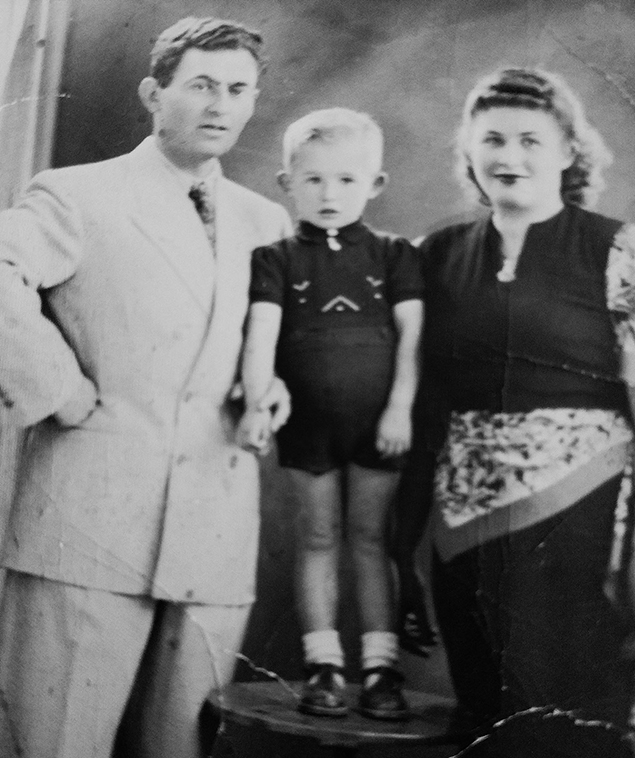
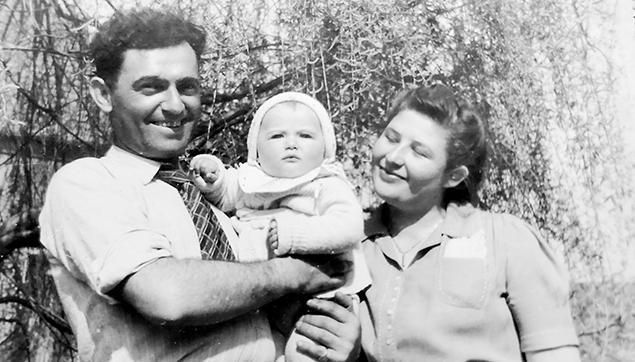
So when Bernard was about three weeks old, the family smuggled themselves out of Poland on a freight train. “I almost died, because my mother’s milk ran out,” Mr. Ross said. “We got to the DP camp, and then we were safe.”
The Rosses tried to get a visa to the United States but failed, “so we got one to Bolivia,” he continued. “My first memories are from Bolivia.” His parents had another child, a brother, who died as a baby. “But then there was a revolution there. And then we were able to get a visa to the United States. My uncle was able to manage it for us. So again we left everything, and we came here. We settled in the South Bronx.”
He became a multilingual child; his first language was Yiddish, his second Spanish, and his third English. His parents had two more children, twin daughters seven years younger than Bernard
“When we got here, my parents worked really hard and saved every penny,” he said. “Eventually, after eight years, we were able to make a down payment on a two-family house in Middle Village, Queens.” He went to Newtown High School, the local public school. “And then my parents went through a lot with me,” he said. “I didn’t bring them naches for several years. And they were always wonderful.”
Right out of high school, he took a job “that I hated, selling encyclopedias and Bibles door to door, in very poor neighborhoods. Anywhere where there were poor people you could trick into spending money.”
The encyclopedia was called the New Standard. “It was 30 cents a day,” he said. “Less than a pack of cigarettes.” That was the sales pitch; he was selling upward mobility through education, and he knew that it was fake. “I hated it, because I knew what it was like to be a poor immigrant. To be struggling.”
He remembers one day in particular. It was November 22, 1963.
“I was trying to sell a Bible to a wonderful Black woman,” he said. “Her name was Florin Lucas. I was in the middle of a pitch to sell her a beautiful Saint James Bible with a white leather cover. She wasn’t interested in it. She was interested in me.
“And then all of a sudden we hear that Kennedy was assassinated. We go into her living room, and we are watching it. I am in shock.
“I had very little interest in politics until Kennedy came along. He really influenced my generation. The whole experience, his death — it was a very powerful experience.
“And she blew my mind. She said, ‘You are going to take LSD, and it is going to change your life.’ At the time, I thought that LSD would fry my brain. I was smoking a little pot then, but to me LSD was up there with heroin.
“And then sure enough, a year and a half later, it was 1965, the beginning of the hippie era, and I was in the East Village, the epicenter of the hippie movement. I took LSD, and it was the most profound experience of my life. It was amazing. I never had an experience that profound again. It opened my eyes to possibilities I never thought existed.
“I got into a lot of trouble back then,” he said. “My parents were very concerned about me, but at that age I didn’t listen to them. I was young and stupid.”
During that wild time, though, he also was going to college. This pot-smoking, LSD-taking hippie majored in accounting. “I did really well,” he said. “It came really easily to me.”
Still, he realized he had to make a change. “My apartment was robbed,” he said. “I went through a really black period, and I wondered what to do with my life. But then I remembered that a number of years before I’d met Timothy Leary” — the controversial psychologist who is best remembered for his advocacy of psychedelic drugs. It’s Leary who advised that we all should “turn on, tune in, drop out”; he taught at Harvard.
“Leary and I met after a talk, and he invited me to live in his mansion in Millbrook,” in upstate New York. “It’s a 64-room castle and 2,400 acres. At that point in my life, I took him up on the offer. I called him, and he was gracious enough to allow me to go up there. I lived there for three months, and really chilled out.
“It was a wonderful opportunity for me to get back into nature, and back into myself.”
Then the world intruded. There was a war on, a deeply unpopular one, in Vietnam. “I got drafted, so I moved back with my parents. They didn’t want me to go. ‘We can’t lose any more,’ they said. ‘We have lost too much.’”
His parents had relatives in Toronto — a popular place for young men dodging the draft — “so I got a job and lived there for about six months.” He was an accountant, so getting a job wasn’t hard. “Then I moved across Canada to Vancouver, and I met my first wife.
“We heard about a hippie community about 150 miles north of Vancouver, accessible only by water. It was very isolated and very beautiful, a 160-acre homestead with a great house, a garden with 100 fruit trees, and phenomenal fishing. We lived there for a year. I built a cabin.
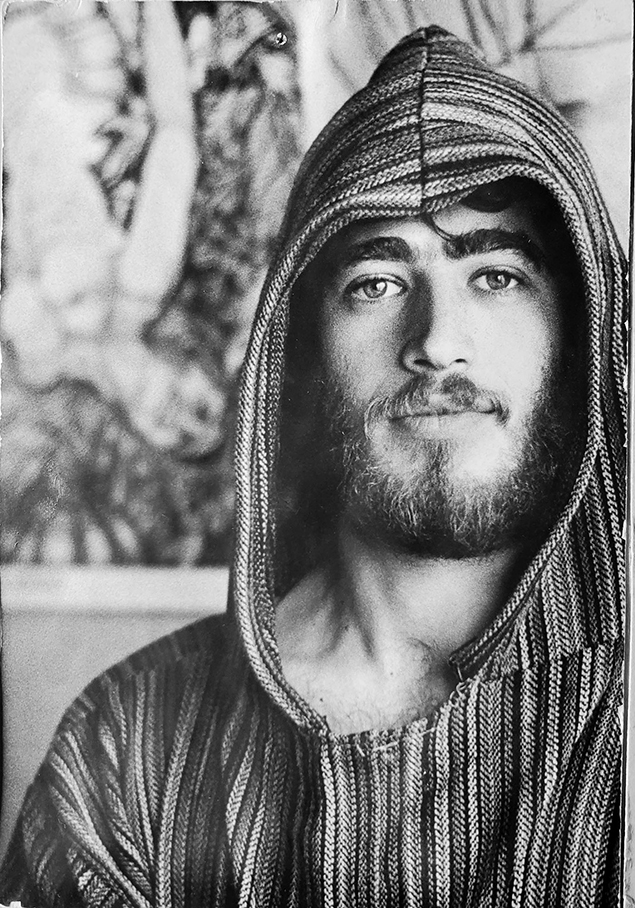
“It was a great experience until it started falling apart.”
When the community dissolved, the Rosses went back to Vancouver. “We went though a lot of stuff,” he said. “I was studying Zen, I had a Zen teacher, I was doing meditation. We became vegetarian, and we loved a vegetarian restaurant in Vancouver called the Golden Lotus.
“I had an epiphany.” He saw a picture of a teacher and was so moved by it “that I read his books, and decided to follow him. You didn’t have to change your name or give up your religion.
“So I took a job as a dishwasher at the Golden Lotus, and a year later I ended up owning it.”
What?
“We organized a group who didn’t like the owner, so we decided to buy it as a co op.” But it turned out that he was the only one in the group committed and organized enough to follow through. And oh yes, he was an accountant. “I had accountant skills and people skills,” he said. “It was going well. We were paying people every week. We were profitable. It was managed well. The food was great. It was in the late 60s and early 70s. Peoplel were interested in eastern spiritual.
“And then we lost our lease.
“We sold all our equipment. I really wanted to visit my teacher in India, so I wrote to him, asked his permission, he said yes, and we went to India for almost six months it was an amazing experience.”
Once he and his wife were back in Vancouver, “I decided to finish my education, I became a CPA, and I got a job as a controller in a wholesale food company, and then in a big steel fabrication company.”
Then things changed again. The couple had a daughter, and then their marriage fell apart. “That was very painful,” he said. “But from a business perspective, things were great. I became a feature film accountant in Vancouver.”
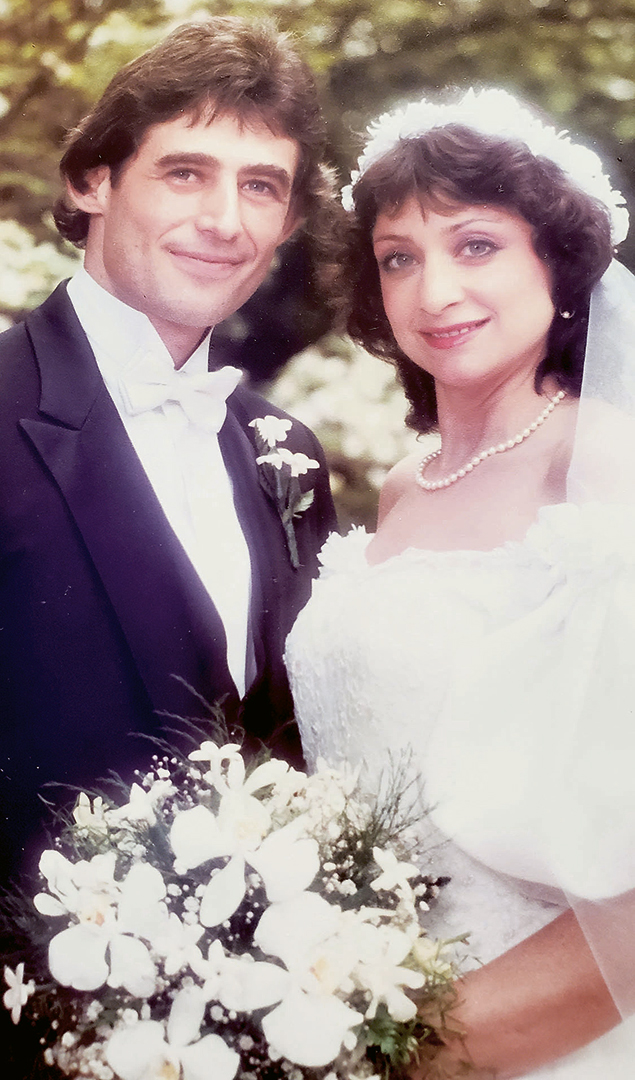
Soon, he remarried. His second wife was an actress, who wanted a career onstage in New York. That marriage also failed, “but it got me to New York, and that’s where I met Rosie, my current wife.
“And finally we had a Jewish wedding. It was in the Five Towns, and my parents were over the moon.”
Mr. Ross’s first wife was Protestant and his second was Catholic, but Rosie is Jewish. “She is also the child of survivors,” he said. “Her father survived Auschwitz, and her mother was in a forced labor camp. When we met, we spoke in Yiddish.”
The couple’s honeymoon was three weeks in Israel.
Mr. Ross didn’t get into the film production business, but “I was able to get into property management software, and when the PC boom started I opened my first company. It was successful until it wasn’t. Then I opened my second, and then my third.”
The hippie recreated himself as a successful serial entrepreneur.
Bernard and Rosie had three children together, and they always have been close to his daughter with his first wife. His daughter has three children, and one of his other kid also has a child.
“I started meditating again,” he said. “It has been a stabilizing force in our life. And I have had a good life.”
He wrote his memoir, “Sipping Sunlight,” because “I realized that I was a different peron t my business friends and my spiritual friends and to my neighbors. I. always hid my spiritual side. And I realized that writing the book made me feel whole. It made me see my life in a different way. It made me feel that I should not be ashamed of anything that happened to me.
“I feel that everything that happens happens for a purpose. Some of it is painful, but I have learned from all of it. I have absolutely no regrets. I feel that is a benefit of meditation, just realizing what is important to me, and that worrying is a waste of time. It’s like living in somebody else’s head
“Thinking too much about the past or the future is a waste of time, so I really work on living in the present. I work on really opening my heart and seeing people for who they are and loving people. That’s what I’ve learned from my meditation.
“Gratitude is very important part of my life.
Who: Bernard Ross
What: Will talk about his book, “Sipping Sunlight,” and his life
When: On Sunday, June 7, at 10 a.m.
Where: At Congregation Adas Emuno in Leonia
What else: There will be bagels!
For more information: Go to www.adasemuno.org