

Caring about the other
I was shocked that when President Trump called Josh Shapiro, the Jewish governor of Pennsylvania and a major supporter of Israel, “retarded,” no Modern Orthodox Jewish leader, lay or religious, publicly rebuked him. And I was stunned when Trump called all Israeli Jewish immigrants to the United States “garbage,” and then, for good measure, said the same about Israel, without a word of condemnation being heard from Modern Orthodox leadership. I was further astonished . . . .
(Oh, excuse me. One of my daughters, who reads early drafts of my columns, is whispering something in my ear. “What? Really? Oops.”)
Sorry; let me correct myself and start again. It seems it wasn’t Shapiro or Israeli immigrants or Israel that the president nastily disrespected with his invectives. Rather, it was Tim Walz, Democratic governor of Minnesota, and the African nation of Somalia and the thousands of Somali immigrants, including citizens, who were shamefully insulted.
But what I was correct about is that not a word of protest was sounded by the leadership of my Modern Orthodox community to these slanders from on high. (Note: I write as an insider about my community; I leave it to others to write about theirs.) While the silence was overwhelming, it was not, sadly, surprising.
Get New Jersey Jewish News's Newsletter by email and never miss our top stories Free Sign Up
And I think I know why. Because it wasn’t about us. It wasn’t about Israel or antisemitism or the importance of governmental funding of yeshivot, which are the only matters of current events that my leadership has talked about for the past several years. Everything else is allegedly “politics” and thus banned from discourse. But issues about us — these “Big Three” — are drilled down on time after time after sermon after statement after article after social media post. So had my opening paragraph actually been true about the targets of the attacks, I’m confident that our leadership would have loudly decried them. When others are the victims, we are relegated to the sounds of silence.
It wasn’t always like this. When I was growing up in the 1950s and ’60s and was a young married in the ’70s, my MO rabbis cared about the outside world beyond the four cubits of our Jewish community. They spoke about issues that were impacting us as members of the larger American community, like the civil rights movement, the Vietnam War, and Watergate; they discussed the Cold War, the impact of scientific and technological advancements on individuals, and the counterculture. Even though these issues had very little, if any, direct Orthodox Jewish involvement, they deeply impacted the character of our nation. Thus, the rabbis I listened to then, and one who spoke then but whom I read now, would sometimes preach about these critical concerns.
To be sure, they didn’t all speak in one voice. Some were liberal, others conservative, and their sermons reflected that. But all seemed to agree that these questions were important to all Americans, including the men, women, and young people sitting in the shul pews on Shabbat and yom tov mornings. Thus, as religious and moral leaders, they discussed with their flock how Jewish values and tradition grapple with these matters.
But no longer. If it’s not the Big Three, our leaders apparently have nothing to say to us, even though recent changes in our country are confronting us with new, important issues. The language our governmental leaders use is coarse and vulgar, with the disgusting ranting in the presidential Truth Social post about the tragic Reiner murders just the tip of the iceberg; disparagement, rather than respect, of predecessors is a daily occurrence; disagreeing with the powerful automatically makes one an enemy and corrupt; a third-world cult of personality is enveloping government operations and decisions. And our Department of Justice flounders, with “justice” elusive rather than a core value, while our Department of Defense has become an alleged Department of War, with militarism replacing peace as an essential part of our nation’s principles.
Immigration policies are implemented with cruelty, by anonymous, cowardly officers with faces hidden behind masks exactly the way the anonymous, cowardly anti-Israel protesters hide theirs; attendees appearing at immigration court sessions are hauled off by ICE and incarcerated, thousands of miles away from family, friends, and legal assistance; demands are made, reminiscent of those in dictatorships, for Americans going about their daily business to “show their papers”; families are split apart, and teenagers and others with no criminal record are sent to countries that are foreign to them; and SCOTUS plays Calvinball, with the administration always winning.
Many advancements in assuring full civil rights to minorities, the poor, and the powerless — a major bright spot in my lifetime — are also being turned back to times we remember with regret. Notwithstanding the recommendations of a congressionally mandated bipartisan Citizens Advisory Committee, special coins being minted for our nation’s sesquicentennial do not include images commemorating the abolition of slavery, women’s suffrage, and the civil rights movement. Too “woke,” I guess, as if opposition to slavery and support of women voting and Blacks finally receiving their constitutionally mandated civil rights is woke. Moreover — and this is personal to me as the father of a teacher of the deaf for more than a quarter of a century — the president is fighting for the right not to have sign language interpreters at his press conferences because that “would severely intrude upon [his] prerogative to control the image he presents to the public.” For shame.
And yet, rabbis and lay leaders have nothing to say about any of this, and so much more. It’s just politics if it isn’t Israel, antisemitism, and tuition credits, and thus supposedly verboten. I wonder if they think that since we in Teaneck or the Upper West Side, with our white skin, aren’t being stopped, questioned, manhandled, and deported by ICE, immigration enforcement isn’t our concern; since we’re not losing our jobs in the military or the federal government because of our color, sex, religion, or political beliefs, firings directed at certain groups aren’t particularly important to us; since our communities, in the main, don’t rely on SNAP benefits and Obamacare and Medicaid, we can ignore cuts to food programs and diminished health care protections. But what is sadly clear is that our moral leaders remain comfortably silent when it’s about others rather than their community.
This silence might be understandable if there wasn’t anything Jewish to say about these issues. But I always thought that Torah, read broadly, has much to teach us about, for example, the proper way to speak about others, and that embarrassing someone is akin to murder; has much to say about cruelty, even against animals much less against humans; has numerous teachings in Tanach how the stranger and the powerless — the other — is to be loved rather than despised. “You shall not wrong or oppress a stranger, for you were strangers in the land of Egypt.” (Ex., 22:20)
But, again and alas, they’re not the Big Three, so silence prevails.
I still listen to music from the ’60s, and much still speaks to me. “Fools, said I, you do not know/Silence like a cancer grows/Hear my words that I might teach you/Take my arms that I might reach you.” We can’t hear words that aren’t said; lessons of Torah not being taught can’t reach us. And as this silence grows, we become more insular, looking only inward rather than at problems that confront our nation.
It shouldn’t be only about us; it should be about all of us.
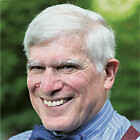
Joseph C. Kaplan, a retired lawyer, longtime Teaneck resident, and regular columnist for the Jewish Standard and the New Jersey Jewish News, is the author of “A Passionate Writing Life: From ‘In my Opinion’ to ‘I’ve Been Thinking’” (available at Teaneck’s Judaica House). He and his wife, Sharon, have been blessed with four wonderful daughters and five delicious grandchildren.
CHANUKAH SALE
My book, “A Passionate Writing Life: From ‘In My Opinion’ to ‘I’ve Been Thinking’” will be on sale through the end of the year. It’s perfect for your bookshelf or as a (belated) Chanukah (birthday, anniversary or whatever else you can think of) gift to someone who is interested in Modern Orthodoxy or just in good and interesting writing on an eclectic group of topics (a little self-promotion is allowed, I hope, in the context of a sale).
Price: $10 softcover; $15 hardcover, which includes delivery in Teaneck and Englewood. For other locations, add $5 for shipping. If you’re interested, please email me at penkap@panix.com with your name and address and the number and types of books you’d like. Quantities are limited, so first come, first served. Payment by cash, check, or Zelle.