

Creating Imaginative Seders
Seder impresario Murray Spiegel explains how to do it

It’s probably true that no two seders are entirely the same. But it’s always true that no two seders at the Roseland home of Murray and Randi Spiegel are alike in any way once you’ve gone beyond the basic structure.
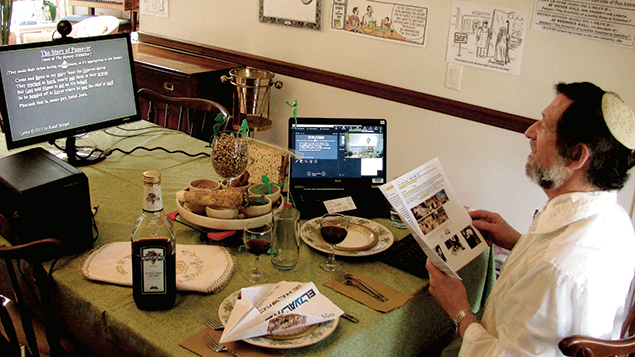
Yes, they all tell the story of how the Israelites left Egypt, and they all include the wine, matzah, seder plate symbols, and dinner that any seder needs. After that, though, wild creativity reigns.
Dr. Spiegel, who is from Pittsburgh, inched toward his role as a seder impresario when he was in graduate school in St. Louis. “I was longing for my family’s seder, when all the family got together,” he said. “Even though I always sat at the children’s table, and even though my grandfather read the Haggadah in Hebrew and I never even knew what page he was on. But it was warm and loving.
“I wasn’t going home for the seder, so I thought, ‘Okay, let me run a seder.’ This was just my friends from graduate school, and we did a lot of fun stuff that year.
“The next year I was thinking that would have been just a one-off, but I was walking with someone in my class, who wasn’t even Jewish, and one of her professors came over and asked her what she was doing for seder this year. ‘And she said, ‘I’m going to Murray’s.’
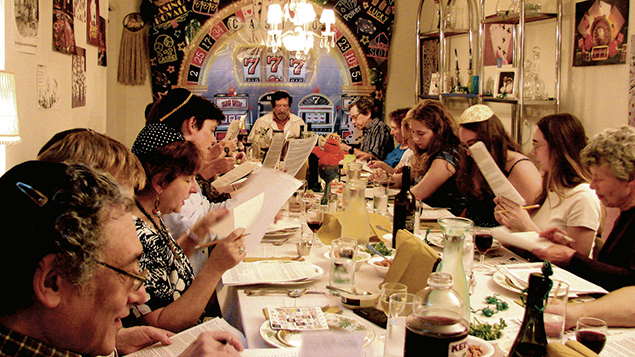
“So I ended up with close to 50 people. I thought, okay, this is getting out of hand. It was a railroad apartment, and everybody sat on the floor. It took two adjacent rooms.”
During graduate school, “I researched how the hearing systems work,” he said. “The actual domain was experimental psychology, but my specialty was in acoustics and specifically how people perceive things. How you can devote your attention to various sounds.”
After a postdoc at Harvard, quite logically, Dr. Spiegel got a job at Bell Labs, and he’s been there ever since. “I’ve been working on speech technology for about 40 years,” he said. “As a result of the contacts I had there, I knew linguists and ethnographers, and I was able to find people who spoke unusual languages. I was able to capitalize on that.”
The way Dr. Spiegel capitalized on that ability to find and work with speakers of obscure or dying or fictional languages came together with his ability to create memorable seders. He now offers not only themed seders, carried out with painstaking attention to detail, and with the story of the Exodus set to well-known folk and folk-ish songs, but also the ability to hear, and maybe even, if you’re adventurous enough to try, the Four Questions in, say, Ladino. Or Hungarian. Or Zulu. Or ancient Greek. Or Phoenician. Or Sumerian. Or Valley Girl. Or Lawyerese.
So here’s the problem in writing about Dr. Speigel’s seders, and his songs, and his translations. The tendency is to list all of them, because they are so clever, and compelling, and creative, and because you didn’t think of them yourself first, which is entirely unfair.
To return to the seders — “The third year of graduate school, I put out a notice that said ‘Murray is not having a seder. Go somewhere else.’ Remorse soon flooded in. “That is the only time I skipped a year, and that was 52 years ago,” Dr. Spiegel said. “I have challenged myself to have a different seder every year.”
Because he and Randi don’t have much family around, they invite friends; many of those friends come back year after year, while new ones join. The Spiegels sing in Kol Dodi, the Jewish chorus that draws participants from across MetroWest, they dance in folk dance groups, and they’re members of Congregation Agudath Israel in Caldwell, and they have friends from all those places.
So how to amaze and amuse them, still staying true to the deeply Jewish message?
“I don’t want the people coming to the seder to know what to expect,” Dr. Spiegel said. “Some years, we have gone way over the top.” He publishes his ideas on his website, whyisthisnight.com, after he’s hosted that seder. “The most copied theme is Flight to Freedom,” he said.
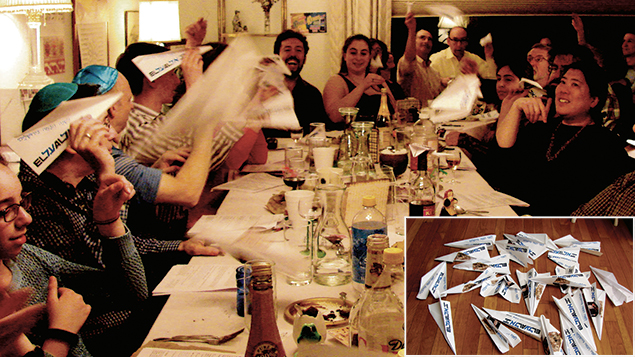
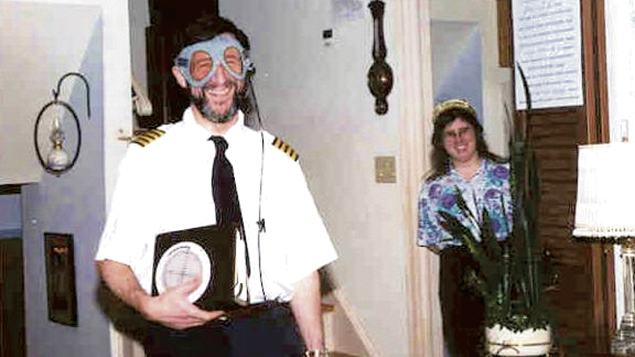
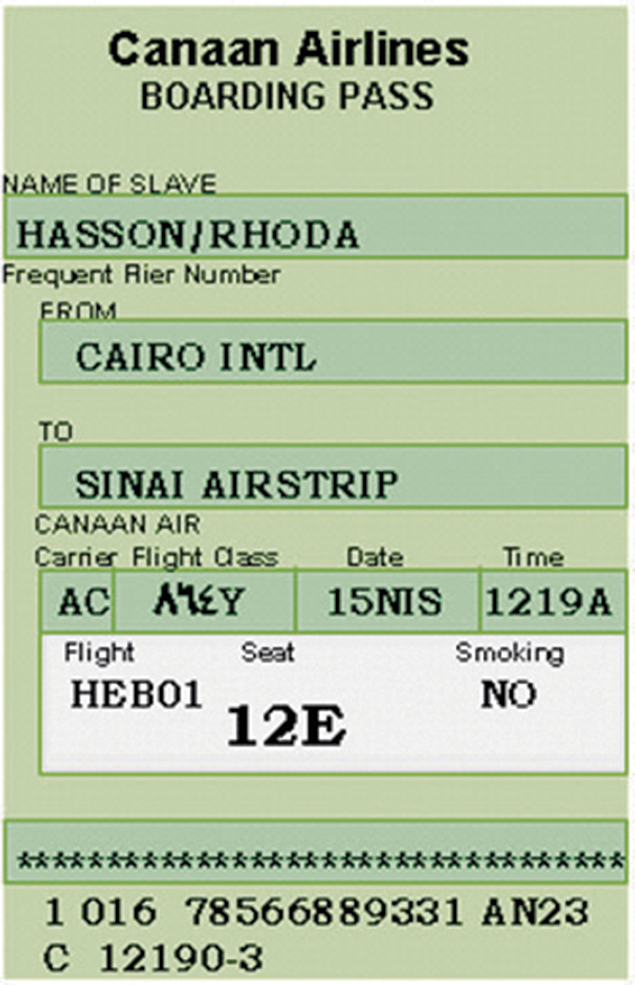
“When people arrived, they saw signs pointing to International Arrivals. They were given boarding passes. The flight was to leave on the 15th of Nissan, boarding at 11:59. I have a friend who was a pilot trainer for Continental; he loaned me pilot gear. We had flight maps of Israel and Egypt on the walls. The bathrooms had signs saying ‘Please wipe the seat for the next passenger.’
“This was taking the ancient Israelites on a flight to freedom.
“During covid, we couldn’t do that — we usually have between 25 and 32 people at a seder, although we try to keep it under two dozen if we can” — clearly they can’t — “so I posted it to the very large mailing list I have for folk dance activities. I said that anyone who wants to come can, and we had about 140 tune in that year.
“The Philadelphia Jewish Museum had a wonderful exhibit on Jewish immigration to America, so I said, ‘Okay, let’s follow it all the way through.’
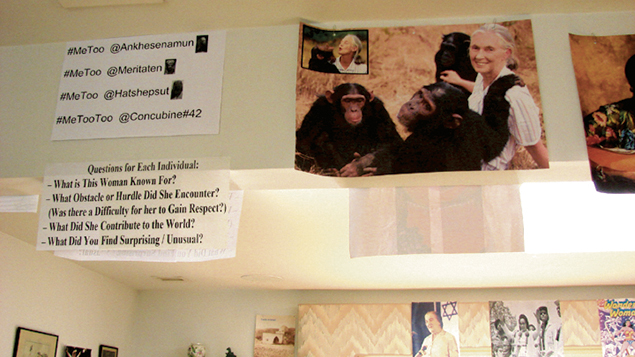
“The following year, I talked about the Jewish community in central China, the Kaifeng Jews.” That one also was online — covid was receding but it was still far too present for in-person seders — “and we had about 170 people from around the world.”
When the seders are in person — as they were once again after that second covid year — “we have them in different rooms sometimes,” Dr. Spiegel said. “I think that the most important thing is change.
“I get a lot of guidance from Noam Tzion,” the scholar whose popular book “A Night to Remember: The Haggadah of Contemporary Voices” has been seminal for people trying to invigorate their seders. “He said that when you are sitting at the dining room table, the expectation is that you are going to eat, so you have to change that expectation.” It’s not that in the end you don’t eat, it’s how you get to the meal.
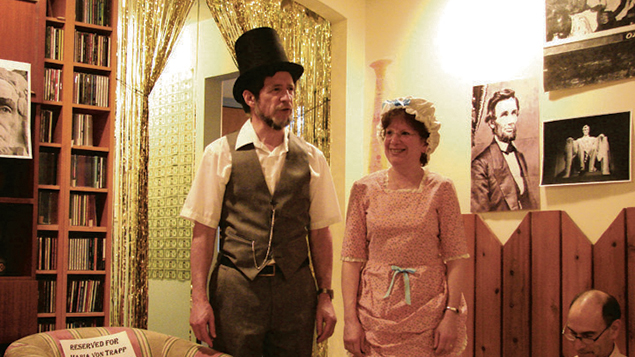
The Spiegels have offered a seder “about the Inquisition, where we dressed as Isabella and Ferdinand, and we followed the customs of Portuguese Jews,” Dr. Spiegel said. “Instead of the leader washing his hands, the lady of the house sprinkles water on all the guests.
“That was fun,” he added.
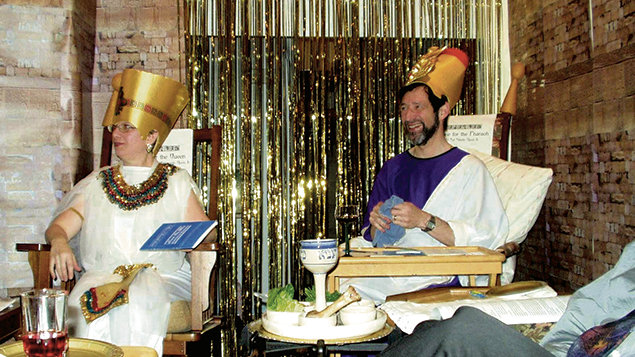
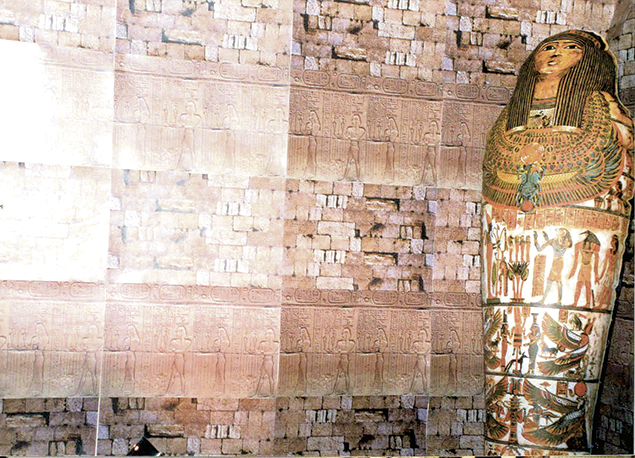
“Another year, we decorated the entire room as an Egyptian tomb and had a blown-up sarcophagus.”
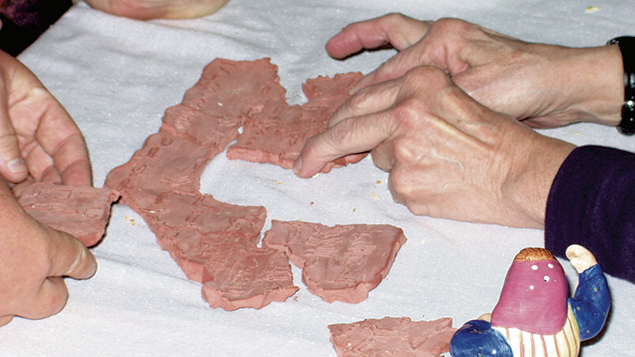
Then there’s the afikomen, with its nearly unlimited potential for experimentation. “Sometimes I hide the clues around the house. In the Egyptian year, we had an archeological dig in our garage. People went in two by two, with little archeological tools, and pulled out pieces of the clay tablet that we had broken up. People had to assemble it like a jigsaw puzzle.” There was more. It was complex; it was about teamwork and imagination and logical thinking. It sounds amazing.
Sometimes the seder is set up to encourage discussion. At other times, it’s not. Both ways work well, Dr. Spiegel said.
It’s impossible not to ask him the obvious question. How long does it take him and his wife to plan a seder? “Sometimes almost a year, sometimes months, sometimes not as long. But it’s always very much on a deadline.”
Then there are the songs. There are videos of some of them, and the words to many of them are posted on one of Dr. Spiegel’s two Pesach websites, sedersforyou.com. (The other one is whyisthisnight.com.) Most of the lyrics are by Randi Spiegel, some are by both Randi and Murray. And some seders, like the one set to the lyrics of the musical “Oliver,” are by a family friend, Robin Shoulson, who doesn’t even go to the Spiegels’ seders but contributes to them nonetheless.
This part of the story is where it’s the hardest not to just keep quoting. But let’s try just a few.
This is from Peter Paul & Mary’s “Leaving on a Jet Plane”:
All our bags are packed, we’re ready to go
We’re standing here outside our doors
We dare not wake you up to say goodbye
But the dawn is breakin’ this early morn’
Moses is waiting, he’s blowing his horn
We’re planning our escape so we won’t die
Here’s from the traditional song called “The House of the Rising Sun”:
Each year our house is made pristine
So seders can be run
And it’s been the ruin of many a woman
And Lord I know I’m one.
How about Don McLean’s “American Pie”? Here’s the opening:
A long, long time ago …
Israelites had to kowtow
To Pharaoh who they knew was vile
And they knew if they had a chance
That they would have to take a stance
And maybe they’d live happy by the Nile
And here’s the refrain:
Why, why must we slave ’til we die
Need a miracle to free us from this life gone awry
We can’t fight back ’cause we’ll be killed if we try
Pharaoh scares us so that we must comply
Scares us so that we must comply
And just one more, as hard as that is — this is from Gilbert and Sullivan’s “Pirates of Penzance,” and seems no easier to sing than the original:
We’re here to tell the story of the Israelites in general
They were the slaves of Pharaoh, who was really quite tyrannical
We read in the Haggadah of the tale that is historical
And that is what a seder is, in order categorical
•
And then there are the languages.
Working with his co-author, the late Ricky Stein, Dr. Spiegel has written a book called “300 Ways to Ask the Four Questions.”
“It all started because one of our friends said, ‘I do an impersonation of someone famous in Hebrew.’” Who? Donald Duck
Dr. Spiegel recorded him, and then he started recording speakers of other languages. “The first one was Ladino,” he said. “That showed that a fine tree can grow out of very strange things.”
It turns out that Ms. Shoulson’s son “is an expert in Klingon,” the imaginary language some characters speak in the Star Trek universe.
Most of the languages are real. “I wrote to Gershon Sizumu when he came to Caldwell,” Dr. Spiegel said. Rabbi Sizumu is the chief rabbi of Uganda and the leader of the Abayudaya, a Jewish community there. “He sent a cassette to me with the four languages in Uganda,” Dr. Siegel said. He has recordings of the two languages the Jews of Ethiopia speak. Rahel Musleah sang the Four Question in Judeo-Iraqi.”
Non-Jews also have contributed to the project. “I have a Catholic bishop, an Eskimo, who has been involved in his community’s New Testament traditions, who was delighted to participate,” Dr. Spiegel said. “And a princess of the Circassian community did two languages for us.
“I have two dozen chants from around the world, and some Native America speakers.” That includes a chant from “the rarest Native American language, Lenape. I got a recording from the youngest native speaker, who was 61 in 2000. There are only two of them left.
“We have Mohawk. We have Crow. We have Maori from New Zealand, and we have an indigenous language from Australia, from around Alice Springs.”
The Yiddish version of the Four Questions, as well as its foreword, came from the legendary Theodore Bikel.
Dr. Spiegel gives workshops about seder-making. There’s still one left this year; it’s at Temple Ner Tamid in Bloomfield this Sunday, March 22, at 11:30. Go to the shul’s website, nertamid.org, for more information and to register. Or, even better, email the shul’s Rabbi Marc Katz at rabbi@nertamid.org. And Dr. Spiegel sends out emails with seder hints. Email him at info@whyisthisnight.com to get your name on that list.