

‘Everywhere all at once’
Documentary filmmaker Barak Goodman reflects on Henry Kissinger’s legacy
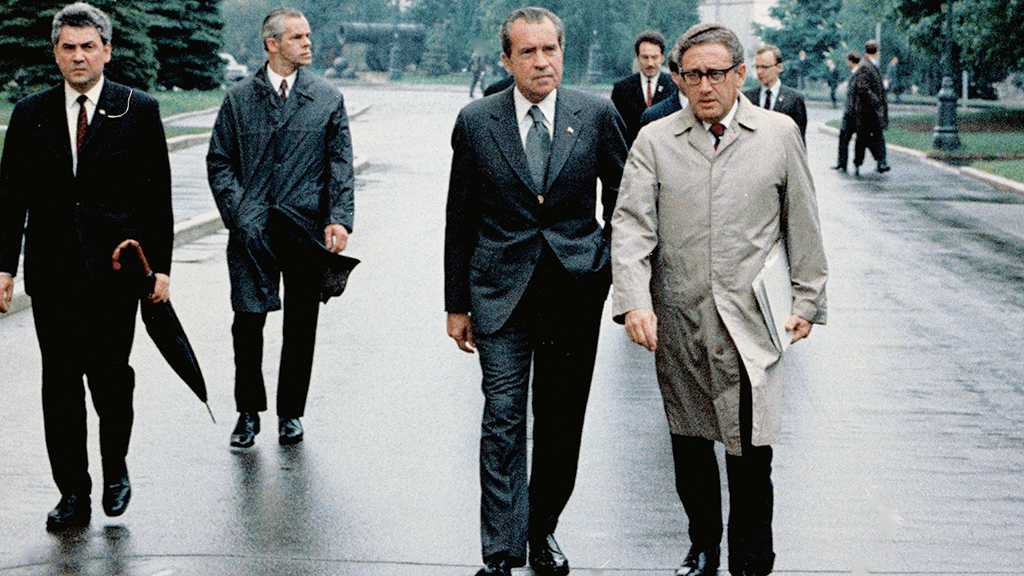
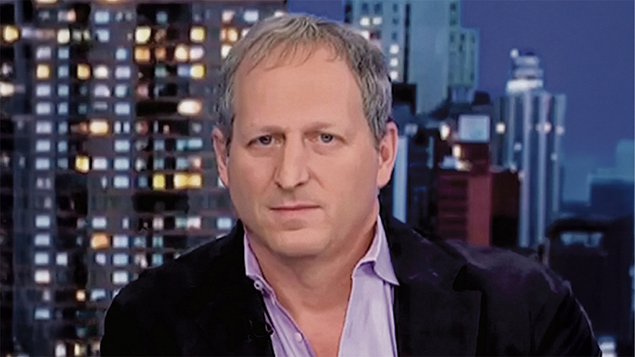
“I’ve long been fascinated by him,” Barak Goodman told me.
We were on a Zoom call from his home in Brooklyn, and Mr. Goodman and I were talking about the subject of his two-part, three-hour documentary on Henry Kissinger. I’d asked him why, and why now.
“I’m a student of American history,” he said. “As far as non-presidents go, there are very few people who have had the impact on the world he has. I am very drawn to characters who are sort of complex, neither black nor white. None of us are.
“But particularly with Kissinger, there’s so much nuance. He’s a morally gray presence. And figuring that kind of a person out has always been intriguing to me. When he passed away, the very next day, I called PBS. I felt like this was an opportunity. That now maybe people would talk who wouldn’t talk while he was alive.”
(Henry Kissinger died on November 29, 2023. He was 100 years old.)
And talk they did. Mr. Goodman interviewed more than three dozen people. And while that many talking heads normally does not make for great docudrama, what they say — combined with archival footage — is so varied, fascinating, and intelligent that it holds your interest throughout.
What it also does is peel away at least some of the extreme mythology surrounding Kissinger’s legacy. He was not the bloodthirsty monster some portray him to be. But he wasn’t the all-knowing international statesman-savant, either.
Even Mr. Goodman seemed a bit surprised at what he uncovered.
Before filming, he said, “I had a very sort of layperson’s vague sense of Kissinger as almost a kind of comic-book villain. There was a sense that he had done something good with China. And there has been something about détente, but I didn’t really understand what it was.
“I knew enough about my own state of knowledge to know that all that meant nothing until I really dug in. I wasn’t going to really understand this guy. So really, what appealed to me was the puzzle of it all.”
What he discovered were both those shades of gray and an “appreciation for the tremendous difficulty of the job that he undertook and the extraordinary, brilliant energy he brought to it. Like with a lot of the figures I make films about, when you really dig in, some of the caricatures melt away. So the whole Christopher Hitchens sort of take, that he’s a war criminal, really felt like it was a shallow and sort of insufficient understanding of him.”
(Christopher Hitchens, a British journalist who died young in 2011, was a brilliant polemist who was frequently enraged, always bitterly, bitingly funny, and as the passage of time has shown, sometimes right and sometimes wrong.)
“But there was definitely complexity here,” Mr. Goodman continued. “What should our foreign policy be? What is realistic in this world to espouse as values and guiding principles? Does any of that mean anything in the practice of foreign policy? All of these are really good questions that needed to be addressed.”
The point of the film, Mr. Goodman continued, wasn’t to sum up a person’s life. Instead, “the point is to try and understand the context, the complexities and difficulties, and let people come to their own conclusions. So I tried to give air, to give space for both sides, to sort of talk about him with people who revered him and think he was the greatest practitioner of foreign policy in our history and others who think he was a terrible person and a moral monster. Both get their saying in the film.
“My opinion is that he’s both: a person with basically well-meaning drive, but someone who took shortcuts. Someone who believed any means were acceptable to achieve the right ends. And that’s something we can debate about.”
Kissinger was 15 when his immediate family left Germany, just two months before Kristallnacht in 1938. Thirteen other members of his family were not so fortunate.
The family emigrated to the United States. Young Henry returned to Germany as an Army intelligence operative, using his native German language skills to root out Nazis in hiding. Back in the States, he entered Harvard on the GI Bill, earning multiple degrees and eventually a professorship there.
His brilliance was recognized relatively quickly, but beneath it all was the Jewish kid from Germany.
According to Roham Alvandi, author of “Nixon, Kissinger, and the Shoah: The United States and Iran in the Cold War,” that experience made him “pessimistic about the idea that norms and rules are going to protect you. Really, the only thing that can protect you is power.”
As a result, Mr. Kissinger adopted a pragmatic attitude toward international affairs, recognizing that “sometimes statesmen have to choose among evils.”
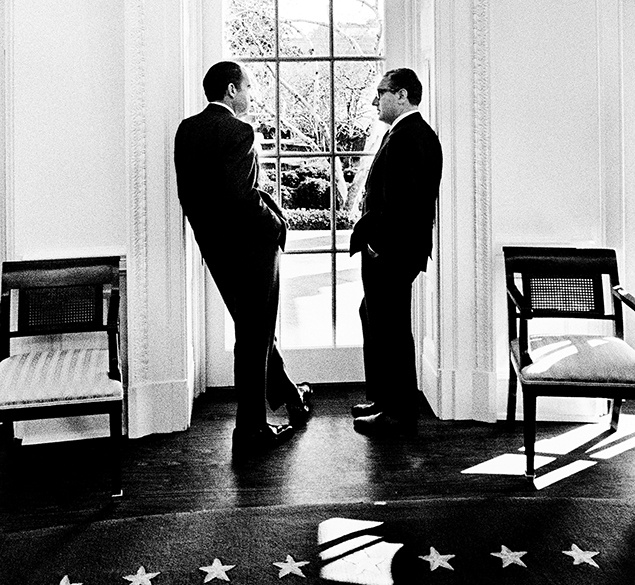
In 1968, he was named President Richard Nixon’s national security advisor. He inherited a war neither he nor the president wanted. “I concluded that there was no way to win the war in the manner in which it was being conducted. I felt from that moment on, we had to find a negotiated way out. But I also felt having committed that many forces, we couldn’t simply walk away.”
There was America’s standing in the world to consider. What would the U.S. look like if it abandoned an ally? Who would trust us in the future? And as we learned from the botched withdrawal of troops from Afghanistan decades later, chaos will erupt if there is not a firm plan in place. When he could not negotiate such a plan, Kissinger upped the stakes, believing bombing and more troops would bring the North Vietnamese to the table. That didn’t work.
When the North Vietnamese began using Cambodia as a sanctuary — going over the border for raids and returning to the protection of a supposedly neutral nation — the United States first bombed Cambodia and then invaded it, broadening its involvement.
Kissinger’s critics believe he could have gotten the same deal he wound up with in 1973 five years earlier.
Stanford historian Niall Ferguson, the author of “Kissinger 1923 – 1958, The Idealist,” is “one of Kissinger’s great defenders and this very articulate voice in our film,” Mr. Goodman said. Talking about 1968-69, Dr. Ferguson “thinks it’s nonsense that the North Vietnamese were ever going to accept any terms at that point. Niall’s point is that everything Kissinger and Nixon did in that period to get the Vietnamese to a place where they would even accept the terms they did — which were very favorable to them — if it hadn’t been those years [of bombing] in between.”
Having said that, Mr. Goodman believes that Kissinger “misjudged the Vietnamese. They were not going to be cowered by violence. They were not going to be persuaded by China or the Soviet Union. They were fighting a war for independence, for their own sovereignty.
“He didn’t understand that and thought they were a fourth-rate power who would succumb to threats and actual violence.”
Ironically, this miscalculation played out well on the international stage in unexpected ways — at least at the time. Mr. Kissinger made secret trips to China, setting up Nixon’s visit and opening relations with the country, at least in part hoping to halt the arms shipments China was sending to Vietnam.
Unexpectedly, that opened diplomatic talks on another front — with the then Soviet Union. Spotting China as a major competitor on the world stage — the two had been skirmishing along their shared border — the Soviets opened stalled talks with the United States that ultimately led to the SALT agreement limiting the production of nuclear arms.
I asked Mr. Goodman if he thought Kissinger’s being Jewish played a role in his professional life. “It’s a very complex question,” Mr. Goodman answered. “Very tricky. First of all, Nixon thought so. He was very wary of Kissinger’s Jewishness. For a long time, the one thing that Kissinger didn’t have control over in foreign policy [as national security advisor] was the Middle East.
“That was the State Department, because Nixon didn’t trust that Kissinger’s Jewishness would not warp his priorities. I don’t think it did. I think Kissinger was someone who rose above his Jewishness and didn’t see the world through that lens.”
While Kissinger assisted the Israelis with an emergency airlift when they were on the verge of collapse, “he stopped the Israelis from destroying the Egyptian army when they had the opportunity,” Mr. Goodman said. “He brokered a ceasefire because he saw an opportunity there. And that was Kissinger’s brilliance. He saw opportunities where others didn’t. He saw an opportunity to build a more durable peace in the Middle East. He had a partner in Anwar Sadat, so he used the opportunity to create what became a pretty durable peace between Israel and Egypt.”
Mr. Goodman’s problem in making the documentary was not finding material but winnowing all the material that was available down to manageable levels, he said. “The problem is that Kissinger was everywhere at once. How are we going to cover all this, and even in three hours make one story out of it? The hardest part was making a coherent story out of this about someone who was constantly on a plane.”
The two-part documentary “Kissinger” airs as part of PBS’s “American Experience” series on October 27-28. Check local listings.