

Finding their way back home
Animal rescuer Marcia Fishkind talks about what she does, and why

When you first walk into Marcia Sandford Fishkind’s beautiful house, in a lovely old section of Short Hills, you think that you’re in a regular house.
Then you see the cans of cat food. Many many cans of cat food. Much Fancy Feast.

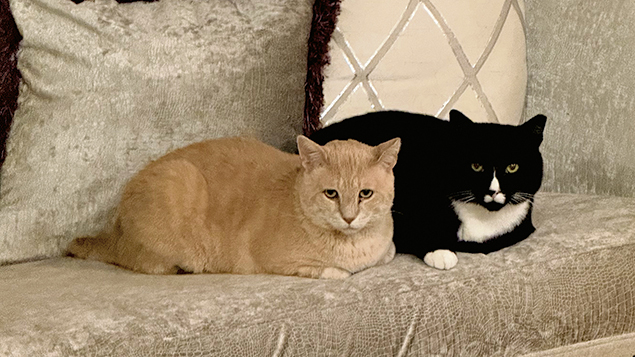
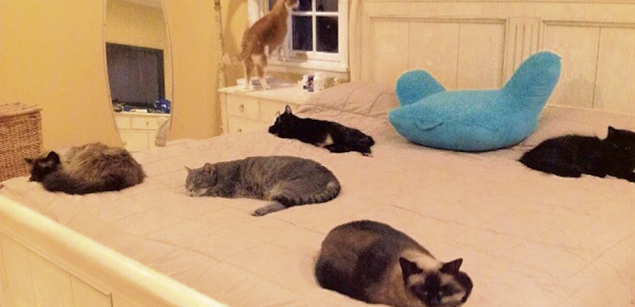
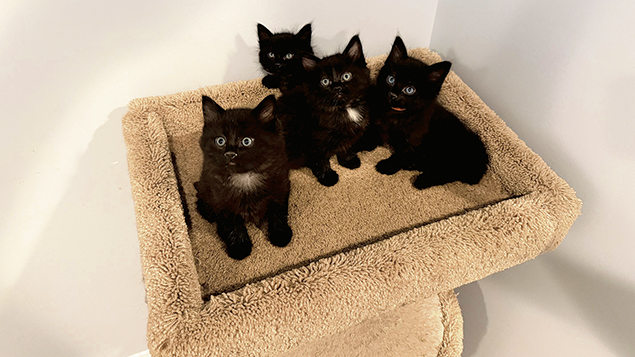
Then you see the cats. There are a lot of them, but it’s a big house. They’re curled up on the couch, occasionally walking through the kitchen. Some of them are in the basement, in different rooms, strategically placed according to their temperaments and needs. There’s a mother with her two tiny, adorable kittens. There are the friendly ones, free to roam, and the one who aren’t good with other cats and have to be alone in a room, always glad to welcome human visitors.
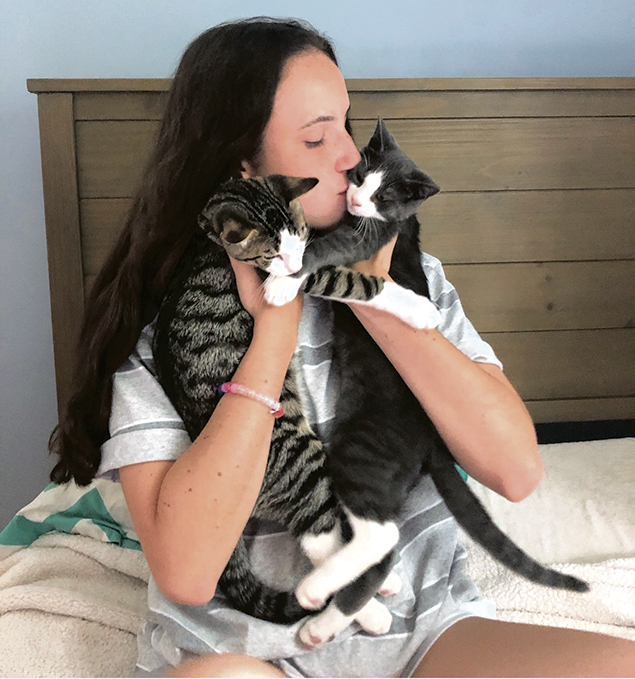
Ms. Fishkind has 18 cats in the house right now. Ten are hers, many because they’re unadoptable. “We keep the broken ones,” she said. Others are waiting to be picked up, or to be discovered by the right person. Ms. Fishkind gives away the cats she’s rescued gladly, but only to the person she thinks is right for that cat.
Oh, and they also have a dog.
 (Full disclosure — my husband and I are the proud adoptive parents of two of her cats, Marley and Luna. My daughter and her family have Miles and Charlie, and my niece has Lizzie and Teddy. They’re all wonderful cats.)
So how did this happen? How did Ms. Fishkind become a cat rescuer? And what about her 501C3, which she and a friend created so they can find lost or out-of-place dogs, cats, and foxes, and get them either back home or someplace safe?
Let’s start at the beginning.
Marcia Sandford grew up in Riverdale, the part of the Bronx that’s sort of the Bronx and sort of its own very specific place. “From before I was old enough to say the word dog I loved animals,” she said. “I remember my mother telling me, ‘You always have to ask before you can pet.’”
But her apartment building did not allow dogs. She was an only child, “and every time that I asked my parents for a sibling, they gave me a cat,” she said. Eventually she had four of them, in her family’s two-bedroom apartment.
Her father, Jerry Sandford, worked in her uncle’s nursing home, “and he was the cat lady,” Ms. Fishkind said. “He would feed the cats, and they would socialize with the old people. He brought home two injured cats. Maggie had a broken jaw, and Pogo had been keeping warm in a car engine.” That’s never a good thing for a cat to do. “His paw just hung, and he jumped like he was on a pogo stick. That’s why we named him Pogo.” Pogo and Maggie joined Jasper, a pure-bred Siamese, and Trilby, a pure-bred Maltese. Both were from breeders; the family never got a cat from a breeder again. But “after that, my parents rescued Siamese.”
Riverdale was different in the 1970s than it is now, Ms. Sandford said. She was Jewish, but not particularly connected. She went to a multiethnic public school. “I went to only two bar mitzvahs during my childhood,” she said. “I never went to a bat mitzvah. It was unheard of.” She did her first year of college at Baruch, communing to Manhattan, at her father’s request. She was an only child, and he wasn’t ready to give her up. “Then I went to SUNY Albany, where it seemed like everyone was from Long Island, and it was a real culture shock,” she said.

“I think I had three pair of Lee jeans and a jean jacket when I got to Albany, and everyone else was wearing Guess jeans,” Ms. Fishkind said. Her mother, Sheila Schwartz Sandford, “took me shopping, so I could get some Guess jeans.”
She made friends, “but I didn’t love college.” She studied hard and did well. She majored in psychology. “One summer, I worked for Albert Ellis,” the famous psychotherapist who created rational emotive behavior therapy and headed the Albert Ellis Institute, she said.
“Another summer, I worked for David Barlow,” another well-known psychologist “at the SUNY stress and anxiety disorder center. I could have picked my PhD program in psychology, but I was having panic attacks. So I told my parents, when I was graduating, that I was done with school. I couldn’t do school any more.”
Instead, she began a career selling technology; she was overqualified for it, but she was good at it. After a few years in house, “I spent the rest of my career selling technology for business partners. That was 31 years. I despised every second of it — but I made good money at it. I did that until covid.
“For the last six years, I have fostered kittens in my basement.”
That leaves out a huge chunk of her life. Marcia Sandford married Howie Fishkind. “We met on AOL Jewish singles,” she said. “I was one of the first people to have a computer, and AOL. My friends in the house in the Hamptons said that I should put in an ad, so I did. I would log in and it would say SHALOM in huge letters.”
Back in those early days, downloads were so slow that she could click on something, walk away for a really long time, and come back to find half a pixilated face staring from her computer as the download continued for half an eternity.
But it worked for her.
“I went on a million dates,” she said. “If only I kept a journal!” Most of them were fine, she said. “And then I met Howie.”
Since she got her first cats, Ms. Fishkind has had either dogs or cats — or both, as she does now — except for one six-year period, when her dog died and she was too dispirted to get another one. “And then we got our first cat, and our second, third, fourth, fifth cat … a lot of cats.”
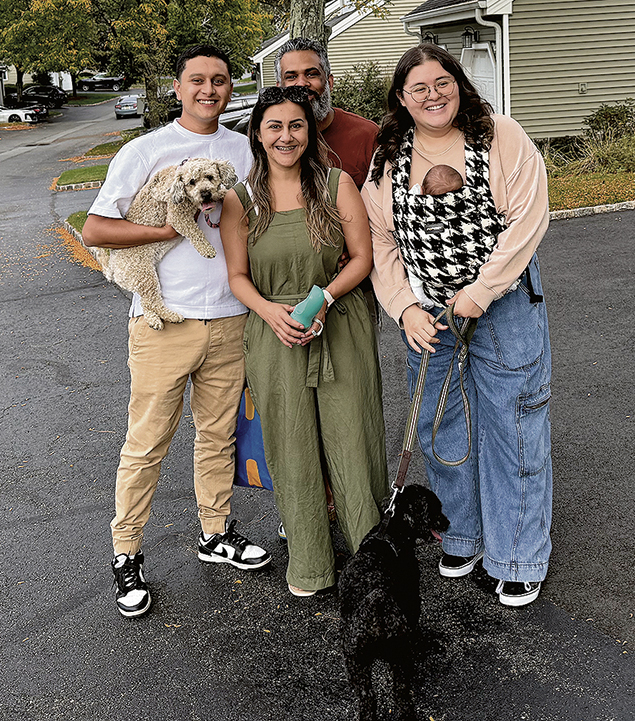
Marcia and Howie Fishkind have three children — Rachel, who is now in veterinary school in Colorado, and the twins Jack and Jessica, who are in college. Howie is a financial adviser, and Marcia continued with her career.
When the pandemic hit, she was about to start a new job where she’d have to meet new clients in person, and meeting in person was impossible, “so I said to Howie, ‘I can stay home, I can save money, and I can do animal rescue.’ And he was like, ‘We can handle it.’ And here I am.”
She’d volunteered for animal causes already. Rachel’s bat mitzvah project was at St. Hubert’s Animal Welfare Center in Madison. “She quickly learned that all a 13-year-old could do was clean the floors and raise money.” Liability issues made everything else impossible. So Rachel raised $3,000 with a soccer game, “and I became the volunteer.” When it was Jack and Jessica’s turn for a mitzvah project, they did it at Mount Pleasant Animal Shelter in East Hanover.
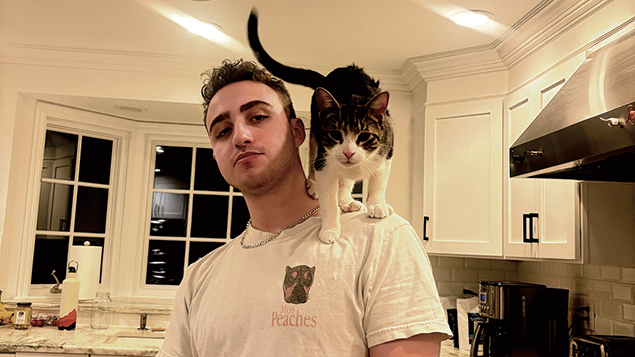
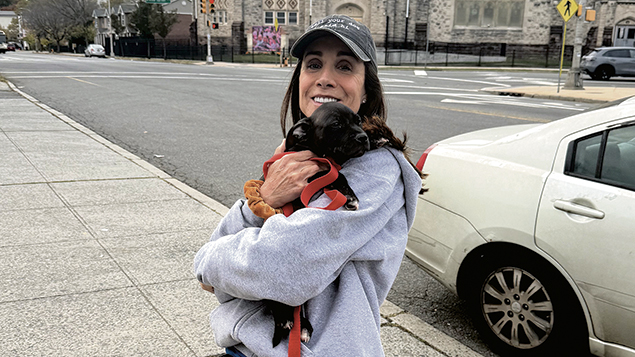
Ms. Fishkind has taken in stray, abused, or unwanted cats for years; she’s ramped up that project in the last few years. Most of the cats she gets come from the streets of Newark, Paterson, and other down-on-their-luck cities and towns. Some escape from hoarders. Some are born on the streets. Ms. Fishkind doesn’t charge anything for the cats she rescues, fosters, and rehomes.
Now, though, Ms. Fishkind and a friend, Kelly Conover of South Orange, have started a nonprofit organization; the 501C3 , All Paws In, now can get tax-deductible donations.
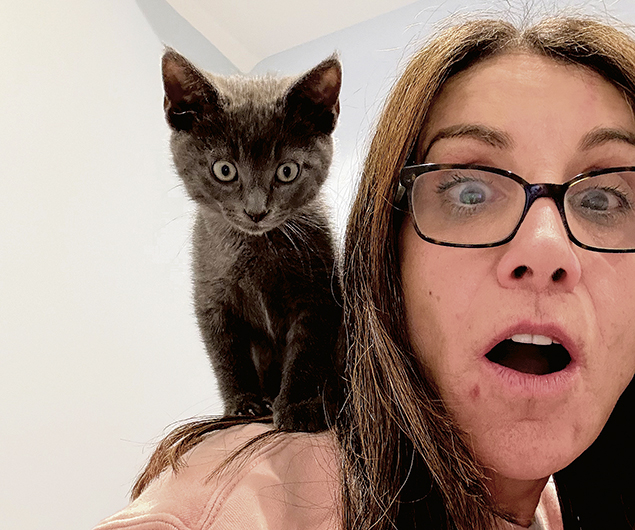
“Kelly and I have been finding lost pets and strays together since 2022,” Ms. Fishkind said. “We met one night, two strangers eager to help a stray running on dangerous highways and agreed to drive around and look for him. The rest is history.
“We started our rescue because we wanted to grow the advocacy part, saving injured, homeless animals of all kinds. We have been doing it with our own money and fundraisers. In order to grow and save more, we need donations for vetcare, supplies, and resources.
“We truly want to take on more animals, more team members, and do more great things. We can not accomplish growth without a larger audience for donations and support.
“So we decided to use our skills to find people’s lost pets. I’m working now with a family in Manhattan, who brought her dog to a pet sitter in Newark, and now the dog is missing.”
How do they do it? “We set up feeding stations and put out cameras, and we either trap them or reunite them with their families, if they are ready.”
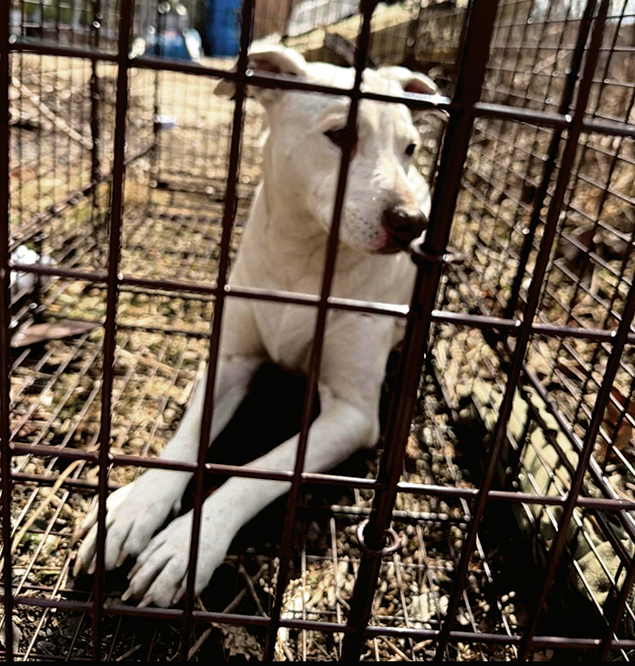
She told the story of a dog named Brownie, “who was lost in New Jersey.” Dogs who do not want to run away sometimes get lost; legend says that they try to find their way home but it doesn’t always work. “She is from South Orange. She ended up in a complex in West Orange and she stayed there for a week. We had the whole complex working with us, sighting her and telling us, and there were signs saying not to chase her. Finally, it got cold, and she found the pool area, a place where no one would see her.
“We set traps for her for about two weeks, and we finally trapped her one night. But it was the perfect storm. As the door shut, she backed out, because she was scared, and the door bunched up a little, and because she is a small dog she escaped. This never happened to us before, but it’s known that it sometimes happens with this kind of trap. We use a different trap now.
“She escaped, and we reset the trap. She continued to go to it, and we decided the risk of having her not come back was greater than the risk of trying again. So we had the family come. They brought their other dog.
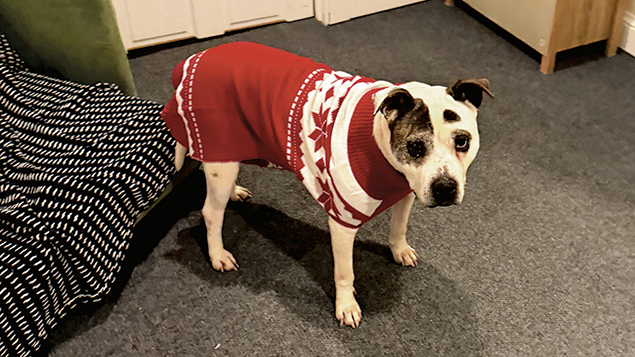
“She saw them and took off. Sometimes that happens. They don’t want to get caught. They see their owners, but it seems like they don’t really register that it’s them.
“There were five people from the family there, but we had only two of them go to the trap, and bring the other dog with them. They saw her, they got down on their knees and held out her little cup, and they saw it was them and she went to them. She saw that it was her father and mother, and they were reunited.”
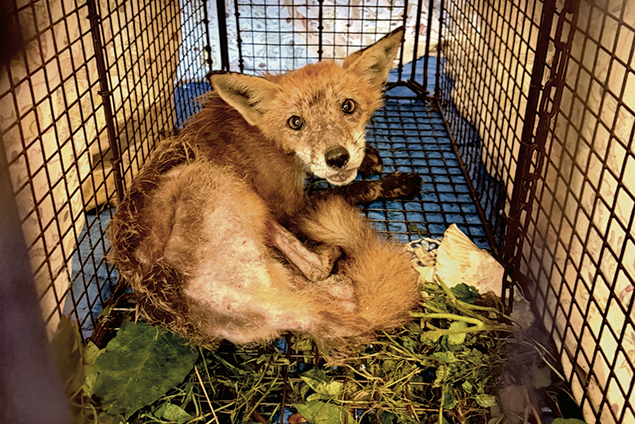
All Paws In rescues foxes as well as dogs and cats. “There are mangy foxes all over New Jersey,” Ms. Fishkind said. “I bring them to a most fabulous rehabber in West Milford. She has never let me down. I have brought her about 10 foxes. The goal is to release them either to their home woods or the rehabber’s woods.”
She also traps feral cats; the goal with them is TNR — trap, neuter, release. “That helps reduce the population,” she said.
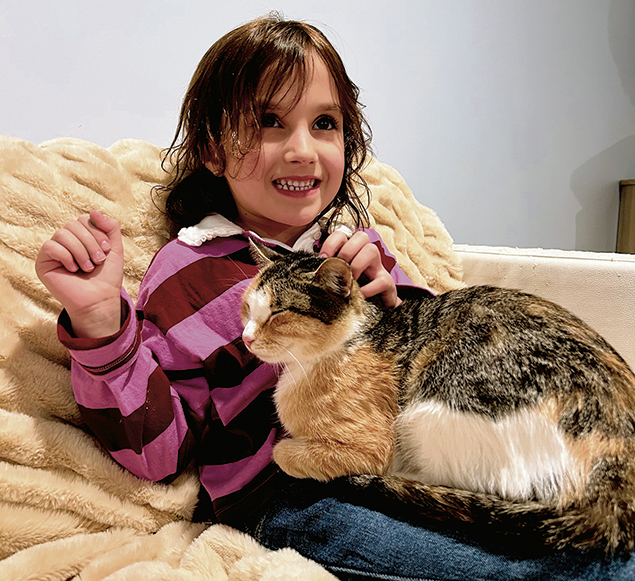
There are also many thoroughly domesticated cats who need to be, in the field’s jargon, “rehomed.” Their owners are giving them up, for any number of reasons — new job, new home, new love interest who doesn’t like cats. “There are stray animals walking the streets,” Ms. Fishkind said. “There’s Dolly. She was just wandering, eating garbage. We took the time to find her and work with her. Now she’s with a foster who adores her, and she will get a permanent home.”
Pit bulls have an unfair reputation that often makes them hard to place, Ms. Fishkind said. They’re often gentle and loving, tend to be ferocious only when they’re trained to be. And anyway, there’s no such thing as a pit bull, really; it’s an umbrella term for a range of mixed-breed dogs.
“There was a dog, a pit bull, on the run for months in Irvington,” Ms. Fishkind said. “Finally he found a home, and now he’s thriving. He’s got his own Instagram, Davey and Dasher.
“We found another dog, a pit bull, who was running 20 miles a day. He went through seven towns, so we named him Miles. He was feral. He went into a shelter for a year, worked with a behaviorist — and then the behaviorist fell in love with him and took him home.”
Ms. Fishkind and Ms. Conover hope that people who love animals and can afford to help will do so. “There are so many animal lovers out there,” Ms. Fishkind said. “We just have to reach them. And then we can do endless good for the world of animals. We can do miracles.”