

Flooding the world with kindness
Local shul reacts to October 7 anniversary with mitzvot and love
Nobody thought that there still would be hostages in Gaza on the second anniversary of October 7.
For the rest of 2023, probably into 2024, we would have assumed that we’d come up with some way to mark the day, which we’d remember with terror and rage and grief. But had we thought two years ahead, to 2025 — which we were not doing then — we would have assumed that it would be over.
But it’s not over. There still are living hostages, and bodies of dead ones, held in Gaza. So how do we mark the second grim anniversary?
Last year, the local federations held commemorations that drew large numbers of people. But this year, October 7 is the first day of Sukkot, so that kind of large gathering, even were people to want it, isn’t possible. The remembrances will have to be smaller scale and more local.
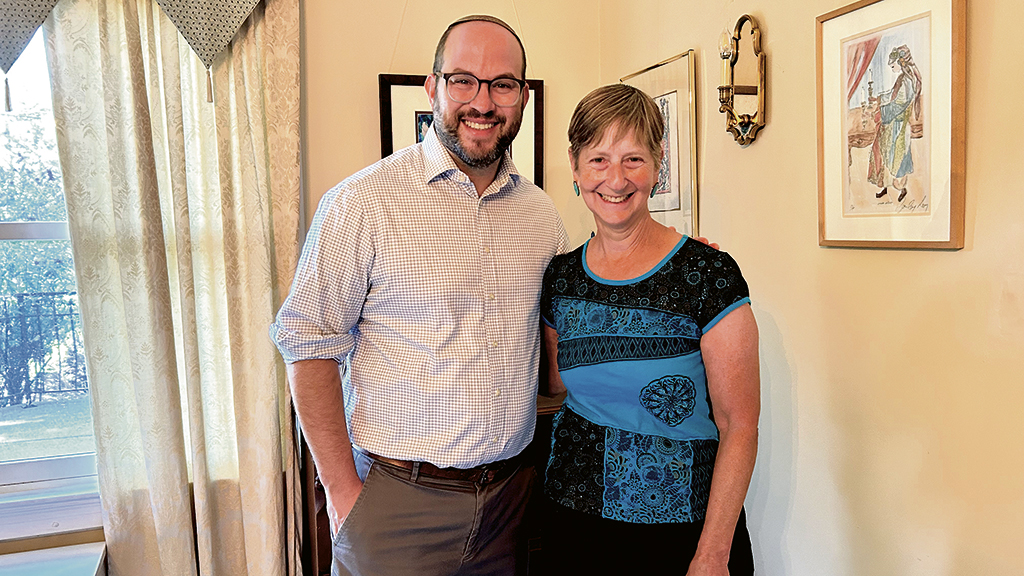
“About two months ago, Rabbi Lucas and I were meeting as we do every Wednesday, and trying to figure out what to do about October 7, in the spiritual sense, in the ritual sense,” Rabbi Paula Mack Drill said.
Ari Lucas is the senior rabbi of Congregation Agudath Israel in Caldwell; Rabbi Drill, who retired as a senior rabbi at the Orangetown Jewish Center in Orangeburg, N.Y., to her longtime spiritual home, Agudath Israel, is now formally its rabbi-in-residence.
Rabbi Drill recalled that at that meeting, she talked about how Rachel Polin Goldberg, the mother of Hersh Polin Goldberg, one of six hostages who Hamas murdered with particularly specific brutality last August, asked that June 10, which was the 613th day of captivity for the still-living hostages in Gaza, be marked. Six hundred and thirteen is the number of mitzvot — variously defined, among many other ways, as commandments, good deeds, and acts of charity — we’re told are in the Torah. Ms. Polin Goldberg said that her husband, Jonathan Polin, came up with the idea that for that day, and that week, Jews should do mitzvot that would “flood the world with goodness and light in merit of all the cherished hostages coming home.”
“I said that we should flood the world with kindness and light leading up to October 7,” Rabbi Drill said. “And then we decided that we should do it during Elul,” the month leading up to Rosh Hashanah and the holidays that follow. Elul traditionally is a month of reflection, introspection, repentance, and eventual renewal.
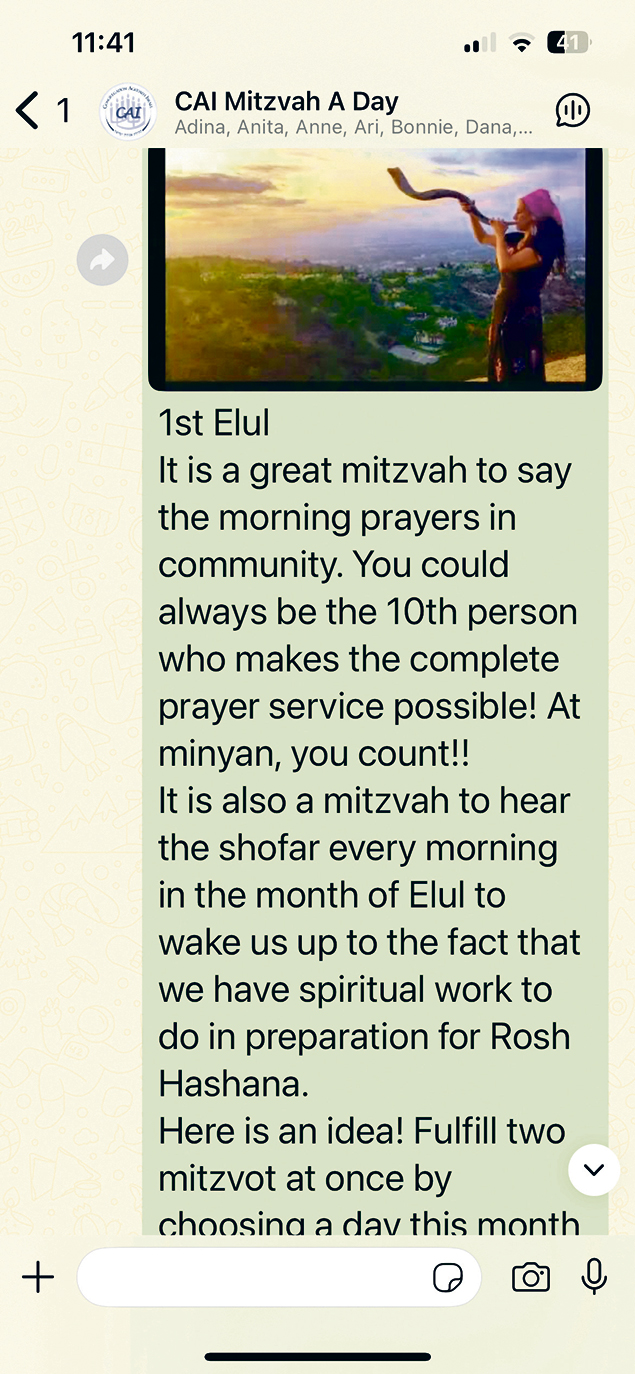
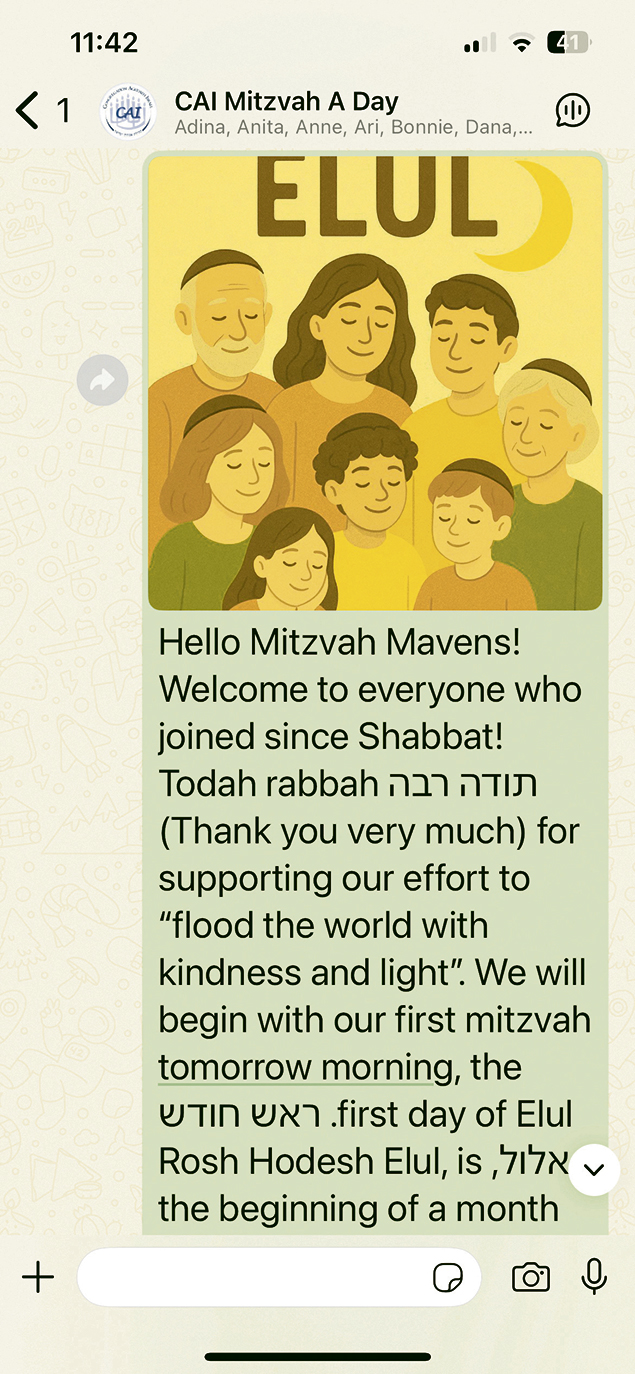
Because we live in 2025, “we started a WhatsApp group,” she continued. “I am hoping that we will have 250 participants.” The group opened to members on Monday, which was both August 25 and 1 Elul; it attracted 62 participants in the first hour, and many more soon afterward.
Rabbis Drill and Lucas are the only people who can post on the WhatsApp account; so far, at any rate, it’s really Rabbi Drill’s baby. Even before the project officially began, she’s been posting notes of encouragement and inspiration.
Group members are able to post their mitzvot in a Google doc and they’re able to festoon Rabbi Drill’s WhatsApp posts with thumbs-ups and hearts.
As they describe their mitzvot on the Google doc, “some people are writing about gemilut chasidim” — acts of lovingkindness to which no response is necessary, or in many cases even possible — Rabbi Drill said. “They’re one-way acts of love. People are writing about giving soup to a neighbor. Someone wrote about calling an aunt who lives out of town every single Sunday.”
The project is for old mitzvot and new ones; ongoing emotional commitments and fresh undertakings. It’s for shul members of all ages; mitzvot can include walking your family dog, if you’re a kid, or doing it for the neighbors, if the neighbor needs a break, no matter how old you are. It can be baking cookies to give away. It can be visiting a nursing home or helping out an animal shelter or rescue. It could be stopping to pay attention to someone who needs it.
It can be donating time, or money. It can be writing letters to politicians or get-well notes to under-the-weather friends.
 It can even be going to Ethan & the Bean, coffeeshops in Little Falls and Morristown that hire people with autism and developmental disabilities. “We have a congregant who volunteers there once a week, and that’s wonderful, but even just plain going there and buying coffee is a mitzvah, because you’re supporting the workers,” Rabbi Drill said.
When participants list the mitzvot they’ve done on the Google spreadsheet, they can be giving other people ideas; when they’ve finished writing their own, they can scan the rest.
Meanwhile, Rabbi Drill — who is leading this project not only by creating it and writing about it, but actually doing mitzvot, just like everyone else — kicked it off by suggesting a double mitzvah.
If community members go to the shul’s daily minyan, they will add to its numbers and make it easier for anyone who has to say kaddish to do so easily. Or, as Rabbi Drill put it in the first WhatsApp message, “It is a great mitzvah to say the morning prayers in community. You could always be the 10th person who makes the complete prayer service possible! At minyan, you count!!”
And then there’s the second mitzvah. Hearing the shofar blown during Elul. To go to the morning minyan is to hear the shofar; to experience its beauty and rawness and to be moved by it; to prepare to be transfixed and transported by it as the holidays draw closer and their intensity ratchets up.
The program will end on the first day of Sukkot, the October 7 anniversary. “We haven’t figured out yet exactly what we’re going to do then, but we know we will talk about the community experience, and what it means to put this energy out there for the zechut of the hostages.” For their merit. For their credit, should anyone be keeping score.
This program is limited to members of Agudath Israel, but Rabbi Drill hopes that other communities do something similar, and that it continues even after the last hostages return home. “You can always do it during the omer!” she said.