

Honoring Israel’s heroines and artists
Shoshanna Keats Jaskoll’s Women of Iron exhibit opens
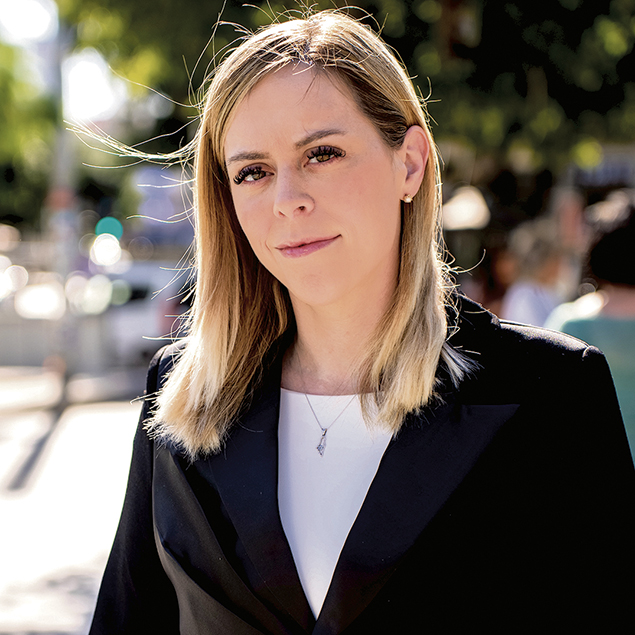
Shoshanna Keats Jaskoll has charisma.
It’s not something easy to define or describe, but when you come across it, you know it. Her kind — the best kind — seems to combine warmth, concern, and fearlessness. She’s the kind of person you immediately want on your side.
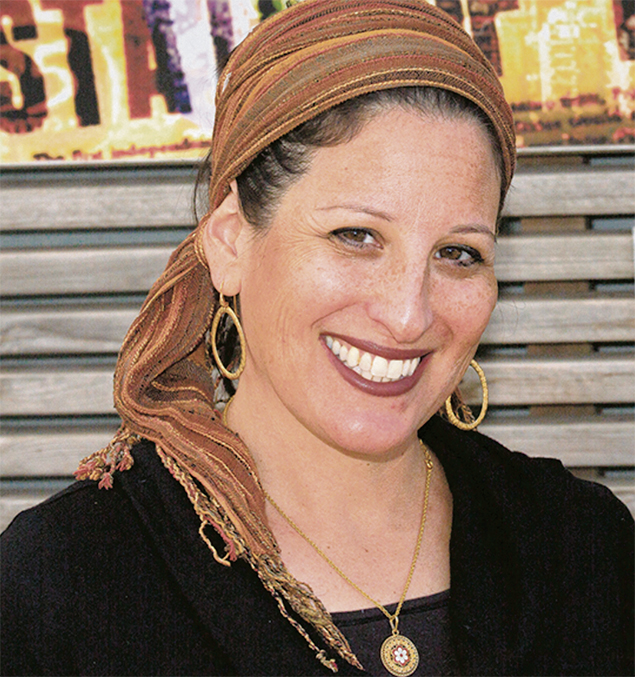
Ms. Keats Jaskoll is an activist, an American-Israeli Jersey-born Orthodox woman who advocates for women from within the Orthodox world — for their right to divorce, to have their faces shown, to have their voices heard.
In November, Hadassah named her as one of its 18 American Zionist women to know. She’s a co-founder of Chochmat Nashim, an organization whose name means “the wisdom of women” and that according to its website “creates change in the global Jewish society by challenging dangerous trends in Jewish communities around the world. Using new and traditional media, we shed light on societal norms that exclude women and feed extremism.”
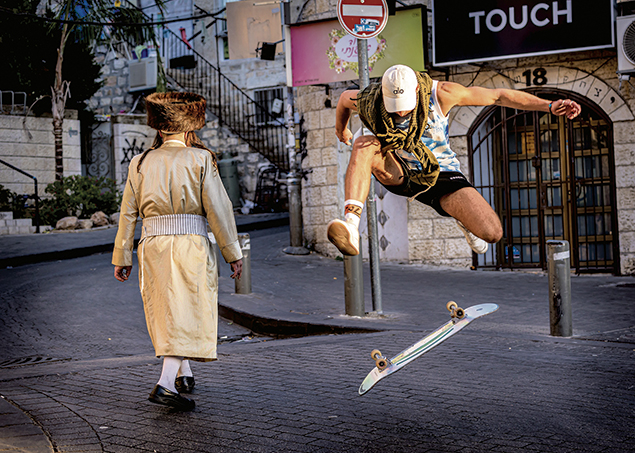
Through Chochmat Nashim, she’s spearheaded a project called the Jewish Life Photo Bank, which shows Orthodox Jews as they live their lives. It’s a way both to fight back against the religious far right, which increasingly has decided that to show a woman’s face is to reveal her immodestly, and to display Orthodox life as healthy, affirming, and actively beautiful.
She’s active in the fight to help agunot, women whose husbands have left them but who refuse to hand them the divorce documents that according to Jewish law only men can give. She writes — among other places, she blogs on the Times of Israel — and she podcasts.
On her website, skjaskoll.com, she calls herself a “warrior with a pen.” On her Instagram, her bio reads “Jew, writer, woman w/many causes.”
A few weeks ago, she was in New York to speak at the JOFA conference — that’s the Jewish Orthodox Feminist Alliance — and she spent a few days there and in New Jersey, catching up with friends and talking about her work.
Now she’s busy on a project called Women of Iron, honoring some of the women whose heroic work during and after October 7 helped their families, their communities, and the nation endure the horror. It features photos and biographies of those women, as well as images by her friend Laura Ben David, z’l, who was also a brilliant photographer and a co-creator of the Jewish Life Photo Bank.
So, meet Shoshanna Keats Jaskoll — or SKJ, as she’s sometimes called in print, and as we’ll call her.
Shoshanna was born in Lakewood in 1975, the grandchild of Holocaust survivors, Rivka and Ben Kunkleschwartz, who played a huge part in her life. Their lives were complicated and difficult.
“My mother’s maiden name was Gerzberg,” SKJ said. That’s because she was the daughter of her mother’s second husband, who died young of cancer. Her first husband was murdered by the Nazis, and her third husband became her children’s father and their children’s grandfather.
When the Nazis killed her grandmother’s first husband, they also murdered three of her four children, but she thought that all of them were dead. “She thought that she had no one left, so she ran into the woods and joined the partisans,” SKJ said. But one of her sons, Saul, had been shot in the back and survived it.
“It ricocheted off his back, and the Nazis basically said, ‘Let the Jew bastard suffer.’ They wanted to watch him bleed out.
“But he didn’t bleed out. He survived.”
Then, after the war, SKJ said, he was in a DP camp, and “he heard a woman singing a song. He said, ‘Who is that?’ And the answer was, ‘Oh, that’s a woman named Rivka.’ He said, ‘Can I see her?’ The woman he was talking to said, ‘Yes, but she’s really sick. She’s dying.’ But he said, ‘Can you take me to her?’
“It was his mother.”
Rivka didn’t die. She married her second husband, Saul took his new stepfather’s name, and the new couple had another baby. They were able to leave the DP camp for Bolivia, where they were sponsored, and that’s where SKJ’s mother was born.
After a few years the family was able to move to New York, but Mr. Gerzberg died of Hodgkins soon after they arrived there. Rivka met another man, Ben Tunkleschwartz, also a widowed survivor. He had a daughter, Brenda, whom he had to leave at an orphanage every day when he went to work.
The two were set up, they married, they moved to Lakewood, and the marriage worked. “My grandfather was honestly the most wonderful human being on the face of the planet,” SKJ said.
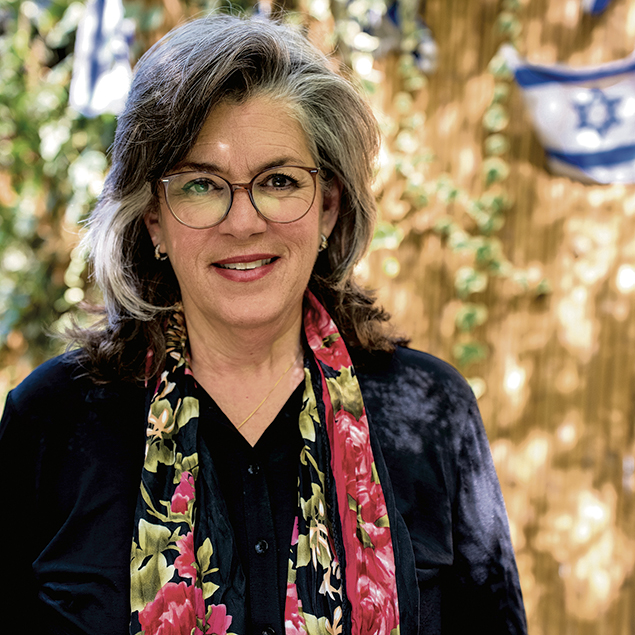
“I always say that I grew up in Lakewood before it became Brooklyn,” SKJ said. “It was an amalgamation of all Jews, of all stripes. There was a Reform shul and a Conservative shul and a modern Orthodox shul. We all said good Shabbes to each other, even if one person was in pants and the other one was in a sheitel.
“My mother would talk to the rosh yeshiva, and she’d be in jeans, walking the dogs, and he would be in his yeshiva garb. This was in the ’80s, and it was a very different Jewish world. I didn’t even know the word charedi then. There was no differentiation. Some Jews did this and some Jews did that. That was the Judaism I grew up with.
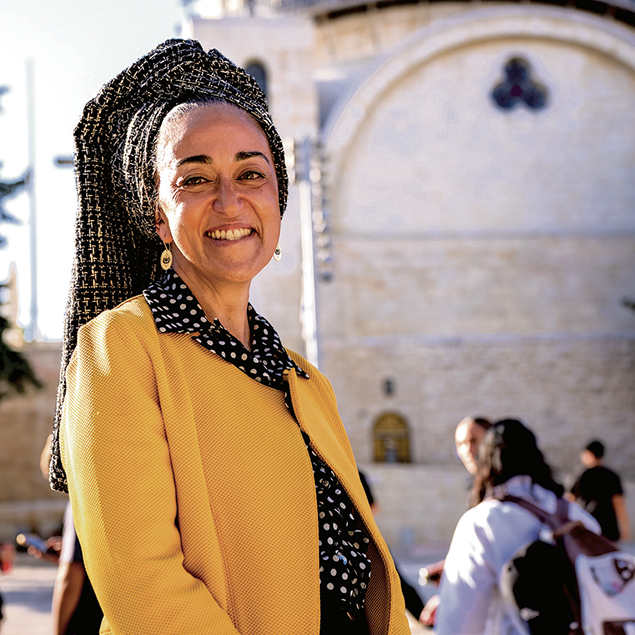
“It was the Judaism of justice and of love and of community.
“So I think that probably these two things, my grandparents being survivors and having grown up in Lakewood with all different kinds of Jews, are the two things that most shaped who I am.”
SKJ moved between public school and day school, so “I grew up with a comfort level not only with all Jews but with all people,” she said. “The school was about 80 percent minority at the time, with Black, Mexican, and Puerto Rican kids, and I had friends from every population, including white Anglo-Saxon Protestants. I have always been very comfortable with people. I see us all as made in God’s image. I wasn’t as insulated as many other kids were.
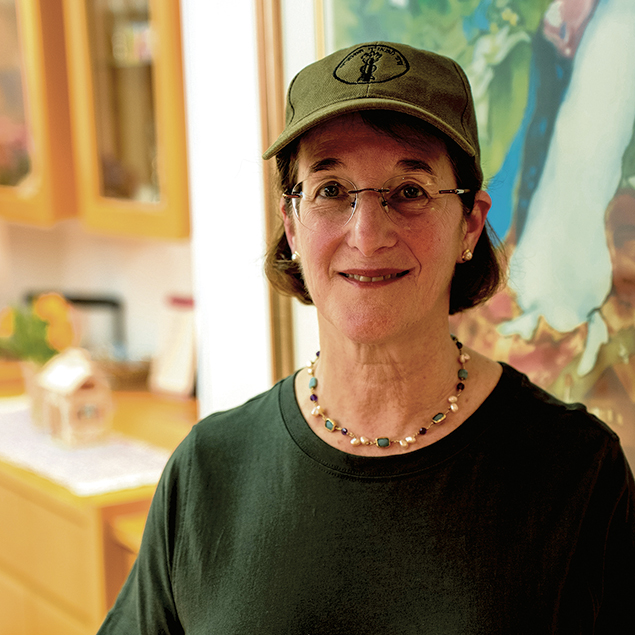
“This whole move toward resegregation is tragic,” she added.
Next, SJK went to college — two years at Yeshiva University’s Stern College for Women and two years at Rutgers.
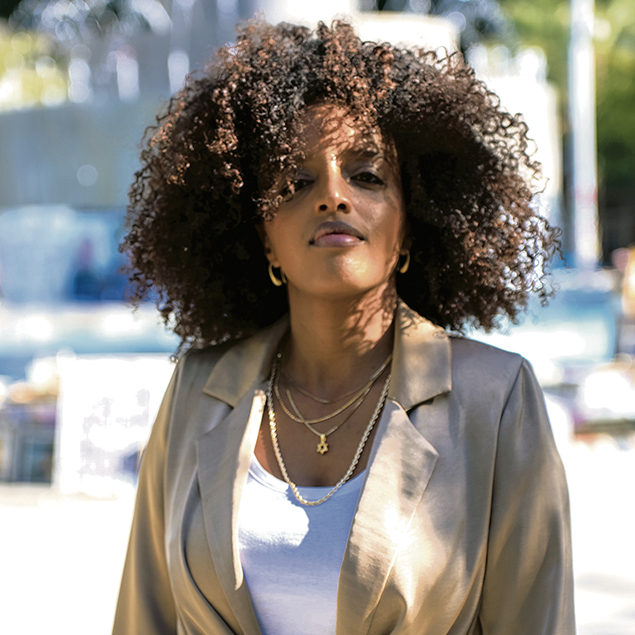
Then she got married and made aliyah. That’s when she became active in the push to help women get gittin — Jewish divorces.
“My husband’s aunt was trying to get a get from her husband,” SJK said. “He was originally British. He served time in jail in the States for fraud, and then he was deported. Like so many Jewish criminals, he chose to go to Israel. She was in Monsey and couldn’t fly back and forth because she was the sole parent. But she wanted a divorce, filed it here in Israel, and because I’m in Israel, she asked me if I could help.”
It took seven years to get the divorce, SKJ reported, and “during that process I learned so much about Jewish marriage and Jewish divorce. Most of us have no idea. The man isn’t told what his obligations are, and the woman isn’t told what the potential consequences of accepting the ring are when she puts it on her finger.
“It’s also a communal contract,” she added.
The Jewish marriage system — marriage begins with a ketubah, a marriage contract, and ends with a get, a legal document dissolving that contract — was developed to help women, but it no longer always does so, SKJ said. Recalcitrant husbands have come up with ways to use many of the truths about modern life, including technology, to help each other avoid consequences when they leave their marriages.
SKJ said that it was hard for her to see this corruption and how easily people could flout the law. She did not lead a religiously observant life when she grew up, although she’d been exposed to people who did lead those lives, and she respected and admired them. She made the choice to become observant and Orthodox when she was 18, in large part because she loved her husband, who was part of that world. But sitting in the beit din as her aunt’s divorce was delayed and delayed and delayed, she had a crisis of faith, she reported. “It was either step away or step up,” she said.
So she stepped up.
SKJ’s best friend, Laura Ben David — when she was growing up in Monsey, her name was Laura Ginsberg — was a board member of Chochmat Nashim and its main photographer and a co-creator of the Jewish Life Photo Bank. “She told Israel’s story through her lens,” SKJ said.
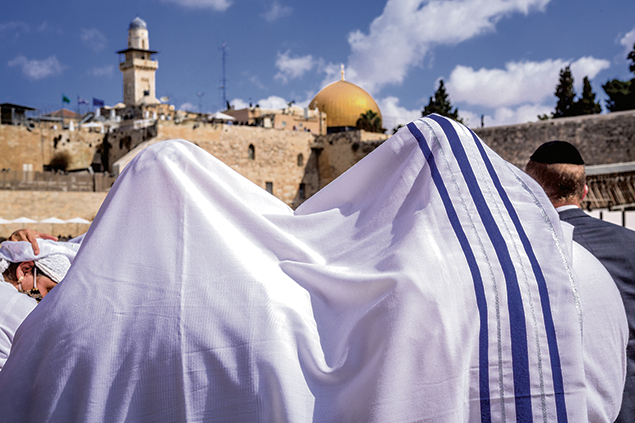
“She wanted the photo bank to be something more than a collection of stock photos. She wanted it to be a place where people could see the real story of the Jewish people.”
That’s what the Jewish Life Photo Bank, at jewishlifephotos.com, does.
Ms. Ben David died in July. She was 56 years old.
“I wanted a way to continue her legacy and honor her,” SKJ said. “We — me and other people who loved her very much — decided that we would honor her by honoring other women who kept the nation going over the last two years. Rescuers, advocates, activists, bereaved wives and mothers, former hostages — women who inspired the nation in the darkest times.”
Because the Israeli government called the war in Gaza Swords of Iron, “we called the women Women of Iron.
“Each of these women upheld, inspired, uplifted, strengthened, rescued, and saved the Jewish people, each in her own way,” SKJ said. “Laura was always dedicated to visible female leadership and role models, so we wanted to combine that message with honoring Laura, so we put together this exhibit of photographs of women and videos of their messages to the Jewish people.”
The messages are about courage and strength and faith and grief; they’re also about resilience and hope and even the possibility of joy, and the importance of continuing to live with both authenticity and happiness.
The exhibit opened at a gala this week; it will be available online, and will include both photos and videos of the Women of Iron and Laura Ben David’s work. “I hope and expect that schools and other educational institutions will use it when they teach about the war, and about Jewish women’s contribution to society,” SKJ said.
All of this is part of a coherent worldview, she added.
“If Jewish families aren’t strong, if Jewish divorce doesn’t have dignity, then Jewish marriage can’t have holiness. And if Jewish marriage doesn’t have holiness, then what future does the Jewish community have?
“For me, this goes hand in hand with Zionism, because it’s all about the Jewish future. It’s all about the Jewish community. There’s no separation. If we’re not healthy and strong, what future do we have? Then why did my grandparents survive the Holocaust?
“Everything I do is about Jewish continuity.”
Continuity demands that we each make a difference, she said. Passivity doesn’t work.
“We have to look and figure out — where can I make a difference? What’s my role here? Why am I here?
“I’m not just here because my grandmother made it out of Poland and made it out of Bolivia and made a new life in New Jersey. That’s not the only reason I’m here. I’m here because there’s something I need to do, and it doesn’t mean that it’s what everybody needs to do.
“I think everyone reading this has a role to play, and if they open their eyes and make a determination, where am I going to make an impact today, whether it’s inviting a neighbor for coffee who’s sad, whether it’s looking for a family that needs a little bit of help for Shabbos, or it’s building a school, I don’t know. I don’t care, whatever that way is for you, that’s your obligation.”