

How do you go home?
Israeli/European choreographer considers the question at the Teaneck International Film Festival

How can I possibly start a story about Sagi Amir Gros?
Maybe it should be with the short videos of his work that I’ve seen online. Mr. Gros is a dancer, choreographer, filmmaker, director, and musician. The videos I’ve seen are of dancers; I know nothing about modern dance, but what I see makes me cry. They’re about home. They’re about longing and loss and the need to explore and the need to find home and be at home.
The ones that I’ve seen all have been made since October 7, and it shows.
Or maybe I should start with meeting Sagi in person, outside the 92nd Street Y. He’s improbably tall, impossibly thin, extremely attractive, and undeniably warm, in a way that you don’t expect someone that tall, thin, and good-looking to be.
It makes sense that there is more than one way into a story about Sagi, because he’s a complicated person; duality seems almost the least of it.
 To start with, he’s half Ashkenazi and half Yemini. He’s Israeli-born, and Israeli to the bone, but he’s also European. Even with that identity, he’s split; he lives in both Amsterdam and Berlin. He’s multitalented as an artist, and he’s multilingual (yes, most Israelis are at least bilingual, but he’s fluent in four languages).
He has many homes, and he is always looking for home.
He has synesthesia, he said; that’s the condition that allows you to hear colors and see music; it’s rare, but it’s real. That, too, makes sense.
Sagi is going to present an unusual piece — not so surprising, right? — at the Teaneck International Film Festival on Sunday. It combines film, dance, and acting, and will conclude with a talkback. (See box.)
So where does he come from?
His maternal grandparents were from Romania, he said; his grandfather, then named Roberto Grosu, was studying piano in Italy when World War II began. Roberto’s parents owned a dry-goods store and factory in Bucharest, “but my grandparents didn’t talk about the past,” so he doesn’t know much about them. Roberto had to decide between going back to Bucharest or going to Palestine, as it was then. He chose Palestine — that probably saved his life, but it cost him his art. He had to use his hands for manual labor instead of music-making when he arrived in 1942; the intellectual circles he’d moved in did not exist there then, or at least he couldn’t find them. He died when his grandson was 18, so Sagi “knew him very well,” he said. “My connection to opera and classical music, to the spirituality of music, came from him. It was a very European orientation. He taught me the philosophy of musicality; how to listen to the silence in the music.” It’s in the silence that the deepest truth sometimes can be found, he said.

Roberto’s wife, Sagi’s grandmother, Sarah, also came from Romania; she’d escaped Europe and ended up in a camp in Cyprus while the war raged. The two of them met at Kibbutz Ramat HaShofet in northern Israel, where both had landed. “She didn’t come from an intellectual background,” Sagi said. But the two were introduced, because they were from the same place and spoke the same language, and they married. Sagi barely remembers her, he said; she never recovered from the trauma that had been her life, and she died young. “This was generational trauma,” he said. As a result of all of that, the predominant figure in his mother’s family was her father.
Until he was 16, Sagi didn’t know that many members of his family had been murdered in the Shoah. No one talked about it, he said; eventually he saw a family tree, with all the names of the dead, and it shocked him. “But now I understand that it was too close to talk about,” he said.
Sagi’s mother, Tova, and her brother, Aaron, grew up poor, but surrounded by classical music. He thinks now that somehow, in some way, the silence in the music that he always has found so powerful reflects the silence that surrounded his family history.
The family loved opera. His mother and her parents would go to live performances when she was a child, just as he did when it was his turn. “My mom didn’t speak Italian — just English and Hebrew — but when we’d enter the opera, she’d know every word,” he said. “She was obsessed.”
She never had a chance to sing opera, although Sagi thinks that she would have loved to, but once she retired, Tova took acting courses, and then she began to get parts. They started out small, but they tended to be noticeable, and then they got bigger. “She was a character,” he said. She died five years ago; Sagi’s grief still is palpable.
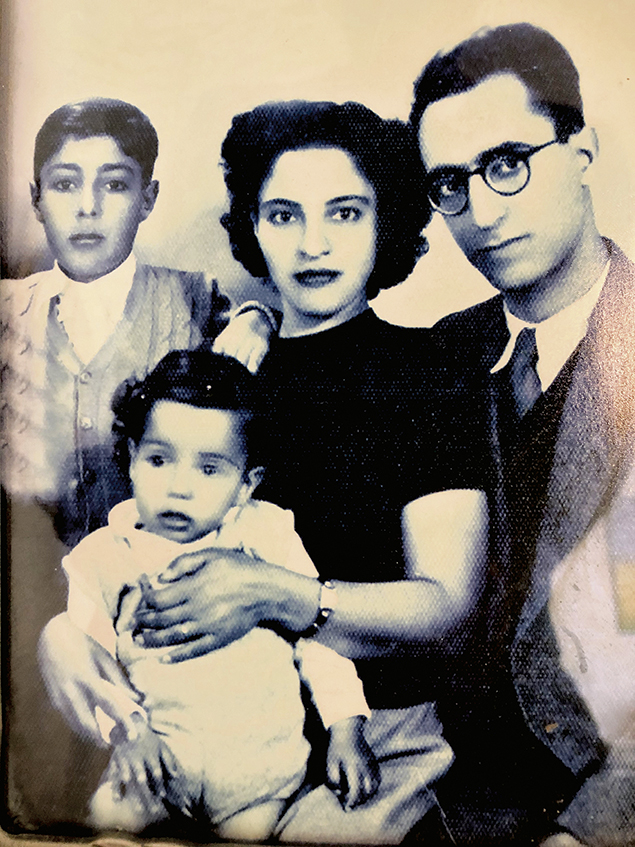
Sagi’s father, Yechiel, was born into a family dominated by his mother, just as Sarah’s family was dominated by her father. Yechiel’s mother, Sarah Ozeri, was one of many sisters, who lived on a high floor in a building in Sana, in Yemen. Her husband, Chaim Amir, was older than she was, but she wanted him, and what she wanted, she got. “She was a diva,” her grandson said.
“They ran away to Palestine together,” he continued. She was a very strong woman. Like his mother’s family, his father’s family also loved classical music. “And they were liberal lefties,” he said. “The only Yemini family I ever heard of back then who would vote for the Labor party.”
His parents married and Sagi was born in Tel Aviv in 1981; he has an older sister, Maya, who now “is a yoga guru in Tel Aviv,” he said. Their relationship was intense — “they had a very big, big love” their son said — but it burned out, and they soon divorced.
Sagi, Maya, and Sara lived together, and music was always central to life. “I have perfect pitch,” Sagi said. “I hear classical music very intensely. And I always would hear the silence.”
Sagi was very close to his mother. She was very much an artist, and she was very good, he said; her name, which means “good,” was exactly right for her. “My mother is part of my soul,” he said. “It is so emotional that I cannot even describe it in words.”
She died of cancer at 68, he said. “It was a long process. It took nine years. And on the last day, when she was about to leave, we were playing opera in the hospital. At the very end we were playing something from one of her favorite singers. My mother was singing, but she was singing less and less. And after the singer’s last inhalation, there was clapping on the recording, and my mom exhaled, and the clapping was there. It was very profound.”
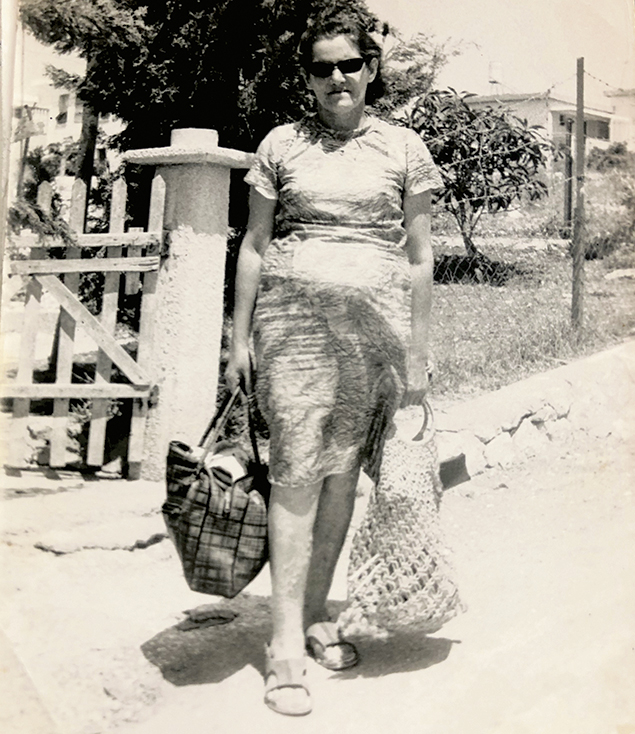
Sagi went to the Thelma Yellin High School of the Arts, a famous school for budding artists in Givatayim, named after a beloved cellist. He began to choreograph and continued to dance there. “I received quite a few scholarships from the America Israel Foundation for the Arts, both for dancing and for choreography,” he added. He danced for the Bat Dor Dance Company.
He moved to Amsterdam when he was 20, and he’s lived between there and Berlin ever since. He speaks Hebrew, English, Dutch, and German. He went to the Dutch National Ballet School, and then “I got my first job dancing at the Dutch opera,” he said.
Now he divides his time between the Netherlands and Germany; he’s gotten Dutch citizenship, and because the Netherlands is part of the European Union, he’s free to travel and live in any of its member countries.
Why Germany?
“It’s rich in artistic practice and philosophy,” he said. “Philosophy and music are important, and they’re part of the German infrastructure.”
He makes art. “I am a scientist of the soul,” he said. “I was doing it since I was a child. I didn’t know it then, but now I know. I didn’t choose being an artist. You don’t choose it. It chooses you. And you cannot choose not to do it. It takes you over.
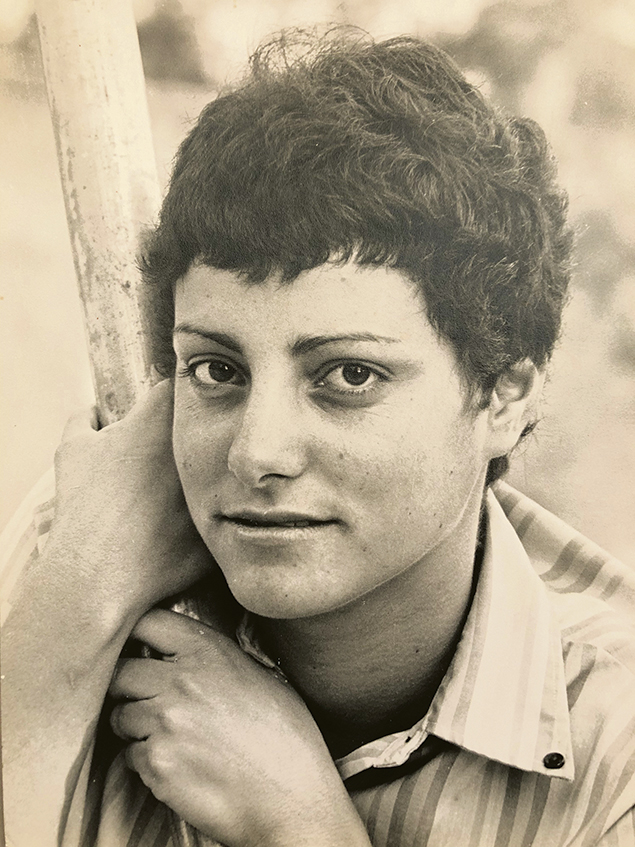
“If I were a lawyer or a doctor or another professional today, I would make a lot of money.” But he can’t.
Instead, he works with music “and the poetic integrity of the physical landscape of the human body,” he said. “How a body can communicate philosophy toward art, toward dance, toward theater, toward opera. Toward life. It’s about emotion and unspoken silences. The body cannot move like a bird flies; that’s how people would communicate with each other in another universe.” Instead, we do what we can.
Sagi works around the world — he’s presented dance and film programs in Korea and in Australia, all over Europe, and in the United States — and he works with researchers “at the intersection of art, science, AI, and technology.” It’s all about how things — people, bodies, ideas, music, philosophy, silence — connect, and what that connection means. Some of it is filmed, some live, and it all connects.
He calls his work “physical script.”
In a written statement, he explains it in this way:
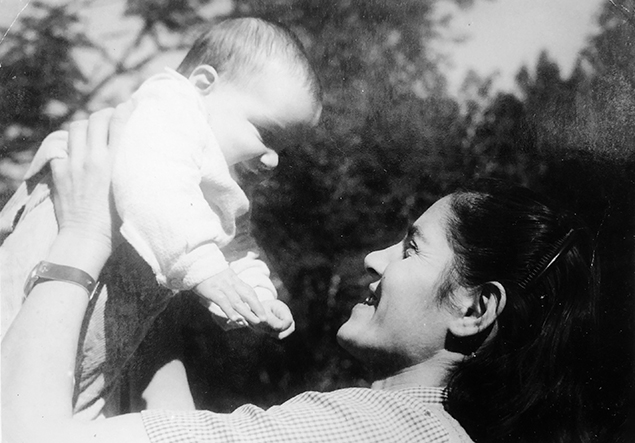
“Physical Script is a philosophical and creative framework that understands the body as an archive, a living exploration of memory, migration, and transformation. It is both an artistic methodology and a human mindset: a way of listening, remembering, and expressing that can be practiced by anyone, regardless of background or discipline.
“The starting point is simple yet profound: what if the body itself were a text? What if every gesture, silence, and vibration carried within it the knowledge of who we are and where we come from? From this question grew an approach that merges movement, philosophy, and social consciousness, a practice where the body becomes a site of storytelling and reimagination.”
Because of how in between he is, Sagi continues, “I carry within me a sense of in-betweenness of migration, memory, and multiplicity. Physical Script was born out of this experience, from the need to find belonging not in one place, but in the moving dialogue between cultures, experiences, and identities.”
And on a less abstract level, he also “talks a lot about food because it brings people together,” he added. To be obvious, food is physical.
As much as he loves where he lives and what he does, Sagi has found that life has changed after October 7. “It comes through in my art and affects what I do,” he said. “When October 7 happened, I thought that Israel would be gone. That it wouldn’t exist anymore. For the first time in my life, I found myself saying ‘Shema Yisrael.’ I called my sister and my friends; my sister couldn’t ever talk because she was always running to bring food to soldiers and help people 24 hours a day.
“It was traumatic. I remember calling a friend in Amsterdam, shouting to her that she shouldn’t let her kids go to school because she is Jewish.”
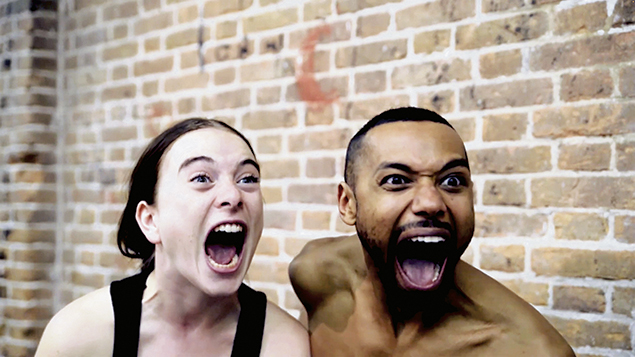
The environment in Europe has changed for Jews, Sagi said, and that change, perhaps ironically, perhaps not, is more palpable in Amsterdam than in Berlin, but it’s not good anywhere. “In Paris, in Amsterdam, in Berlin, they mark Jews’ houses with stars of David,” he said. “This is happening until today. It is insane.
“Things happened to me also. And also the fact that I am gay. Sometimes I just want to be home. Israel is home. I am a Diaspora Jew in Amsterdam. I cannot speak Hebrew in the street. I’m not afraid, but when someone asks me where I’m from, I take a minute to decide if I can say it.”
“Home” is about, yes, home, and it’s clear that it was created after October 7. “I think that every piece I make from now until I die will be about October 7,” he said.
He went back to Israel two weeks before the hostages came home. “It was very intense,” he said. “There were hostage posters all over. But everyone there speaks Hebrew.
“And I live in Europe, and it is very unsafe for Jews there, and nobody does anything about it. Nobody does anything.”
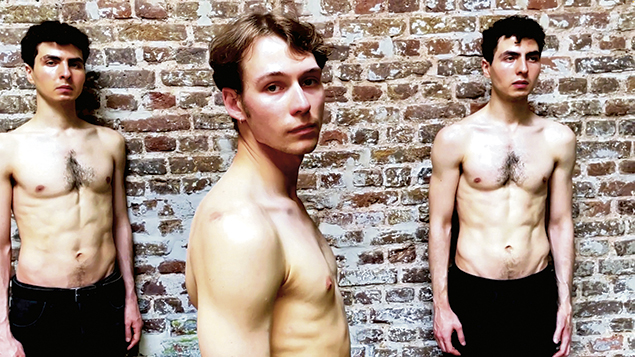
There’s a weird fact about Amsterdam, where he does not feel safe, Sagi said. “Its second name,” its nickname, “is Mokum.” That should look familiar. It’s from the Yiddish word mokum,” which means place. It comes from the Hebrew word makom, which also means place, and Hamakom, The Place, is one of the names of God; it’s often used when God is being described as giving comfort.
“Amsterdam used to be like New York,” Sagi said. It was full of Jews. But overwhelmingly most of them were murdered in the Holocaust.
“Weirdly, I feel much better in Germany than in the Netherlands, and that’s why I’m in New York,” Sagi said. “I realize that I want to connect with the Jewish community.”
He’s most likely going to present work at the 92nd Street Y in 2027, but well before that — on Sunday! — he’ll be at the Puffin Center in Teaneck.
Jeremy Lentz is the executive director of the Teaneck International Film Festival. He met Sagi in Germany last summer, and he’s bringing him to Teaneck.
They met through a mutual friend who is a professional ballet dancer, but then they got together in Berlin, and noted their mirror-image differences and similarities. “I’m an Ashkenazi Jew from New York, half and half because I’m the grandson of Holocaust survivors and Jews who had been here from before the Holocaust,” Jeremy said. “And he’s half Romanian and half Yemini. My search is for reclaiming my European identity; he’s in Europe, having to cover up his identity as an Israeli.
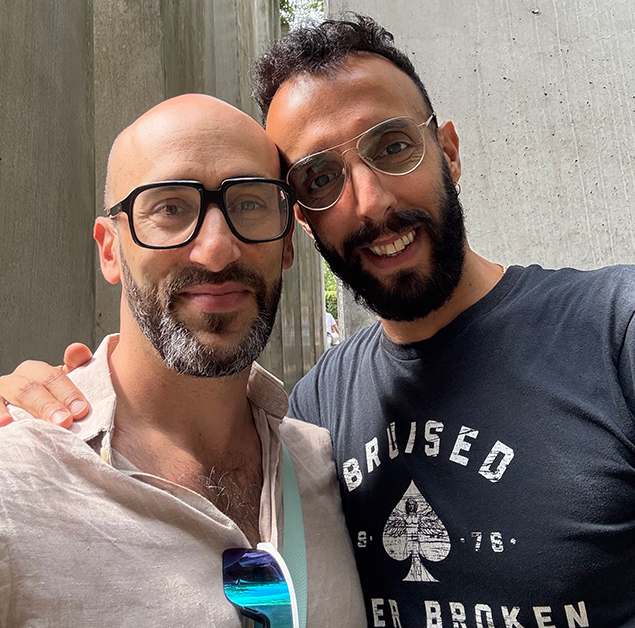
“I felt like in some sense I was returning, or at least that I was bringing my grandparents back home. So we started talking about what home is for different people.
“So many of the dances Sagi has choreographed are rooted in the idea of identity and migration and displacement from home. What does it mean to come from mixed Jewish homes?
“We decided that this calls for a much broader conversation about what it means to come home. So we thought that we’d curate a program in the festival, using his dance pieces, which are focused on that theme, by showing the films at the festival, following that with a live dance performance, and then talking about belonging and resilience. That’s a thread that weaves us all together.
“Everyone yearns for home. Many people struggle with it, particularly refugees. It’s beautiful to be able to present a piece through modern dance that deals with this. And he was generous in lending us his talents to do his piece at Puffin.”
Because the piece will be a mixture of filmed and live performance and a discussion, it will be unique and unrepeatable.
“Sagi is a real person, coming from a real place,” Jeremy said. “There is nothing contrived or phony about him. We all struggle with these complexities. He is a queer dancer, navigating that world, and struggling also with our religion, our country, our heritage — all these labels.”
Who: Sagi Amir Gros
What: Will present “Home: Two (HU)Men, Silent Force, Your Silence is Loud Cecilia”
When: On Sunday, November 9, at 5:30 p.m.
Where: At the Puffin Cultural Forum in Teaneck
For more information: Go to www.teaneckfilmfestival.org