

How perfect was it?
A Jewish writer looks back at life in Radburn
Our next-door neighbors, the Fishmans and the Nichterns, were Jewish, and so were the Kutner and Broslovsky families around the corner. The Goldenbergs and the Hefflers up the street were Jewish, too. Likewise, within a hundred yards of us, were the Kraukauers, Laskers, Witzburgs, Hamburgs, Solomons, Roselinskys, Klappers, Cohens, Hermans, and Heymanns.
Almost every family on our block was Jewish. So was mine.
This was in my hometown, Fair Lawn, where I lived from 1954 to 1975, from when I was 2 until I was 23. An estimated 30 to 40 percent of the 35,000 people who lived in town were Jewish.
I grew up in this Bergen County suburb, about 12 miles west of New York City, believing that pretty much everyone in the world was Jewish, and that nobody anywhere could possibly have anything against Jews.
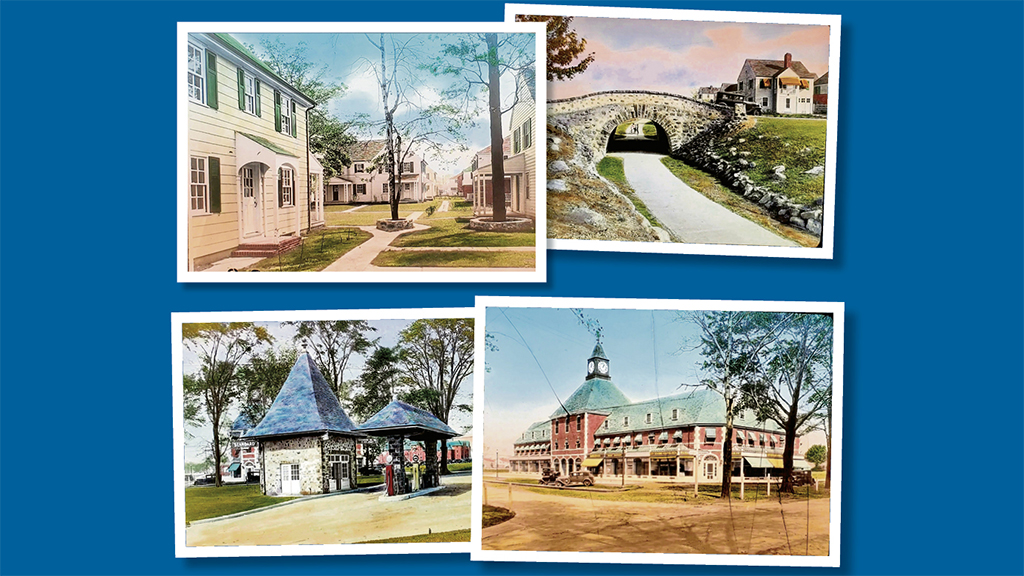
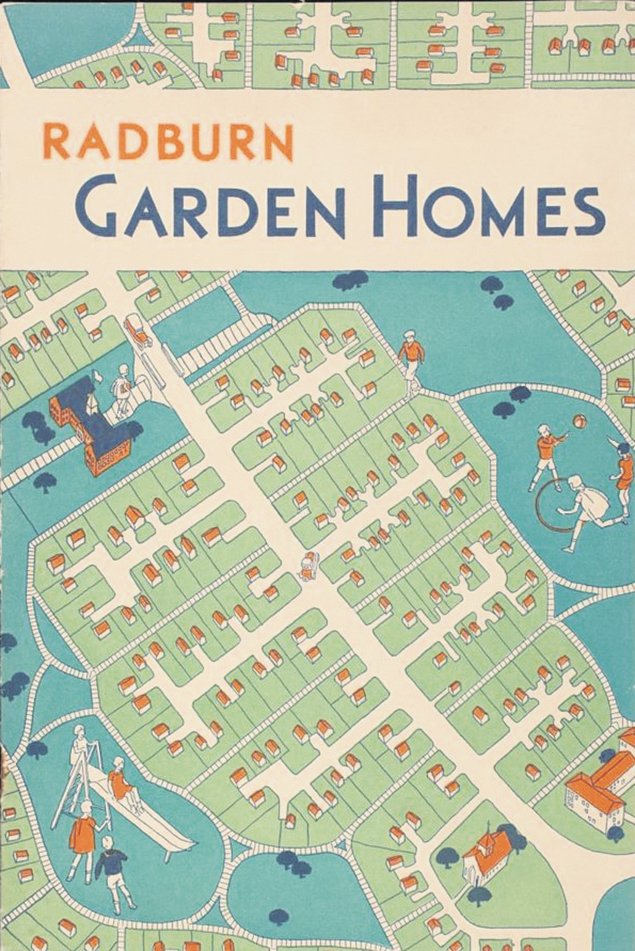
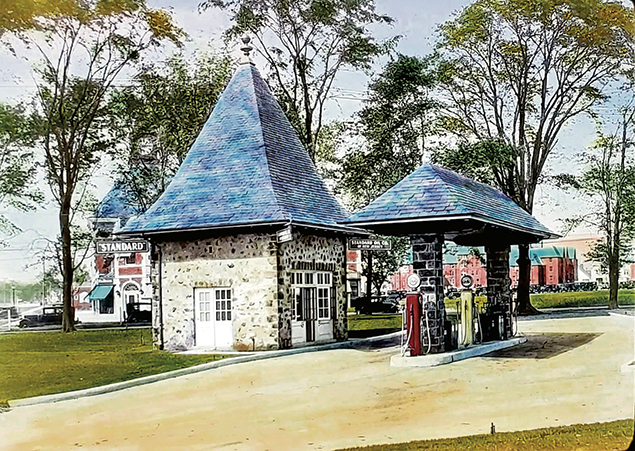
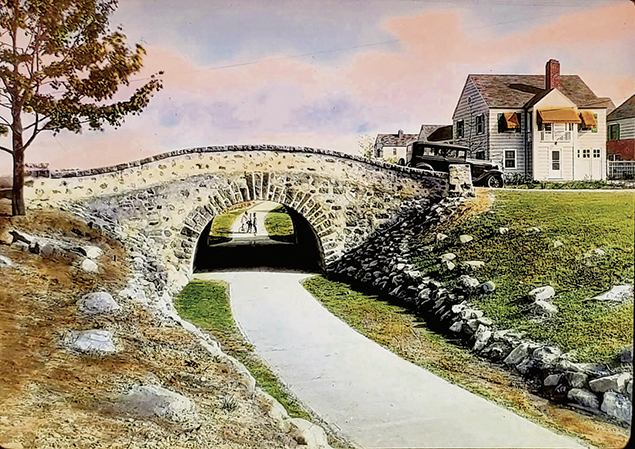
But until recently I was unaware of a dirty little secret right at our doorstep. It had to do with a section of Fair Lawn named Radburn, a 149-acre enclave of some 3,500 residents, internationally renowned as a utopian planned community and designated a National Historic Landmark District for its innovative infrastructure.
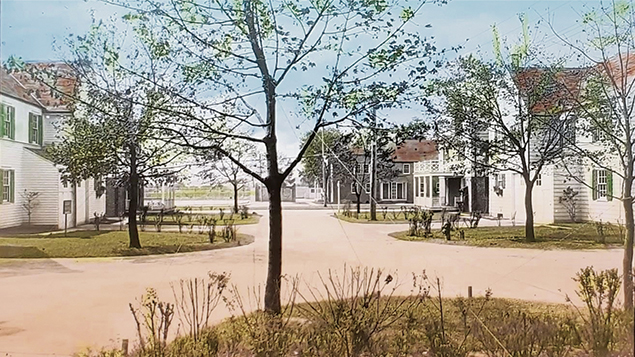
From its opening in 1929 until the 1950s, Radburn was about two-thirds Protestant and one-third Catholic. That’s because it had systematically prevented Jewish families from buying homes there.
•
I lived an idyllic all-American boyhood in Fair Lawn through the 1950s and early 1960s. I pledged allegiance to the flag in school and delivered newspapers on my bicycle to our neighbors. I belonged to the Cub Scouts and played Little League baseball. I went from house to house in winter blizzards offering to shovel snow for a dollar or two. I recited my haftarah for my bar mitzvah at the Fair Lawn Jewish Center.
My proximity to Radburn — our split-level colonial was barely 100 yards from its border — and its history of antisemitism came with an irony. I was very much Radburn, even without our family actually living in Radburn. I lived on Radburn Road. I attended Radburn Elementary School, which was in Radburn itself.
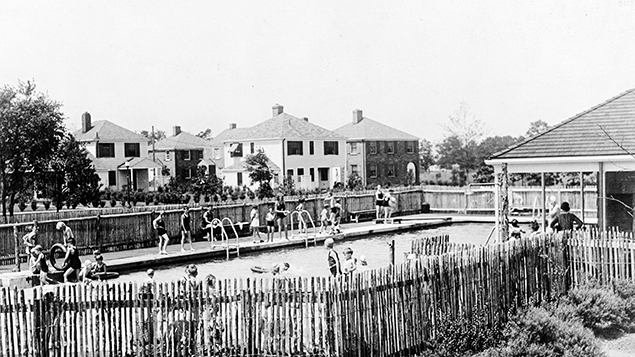
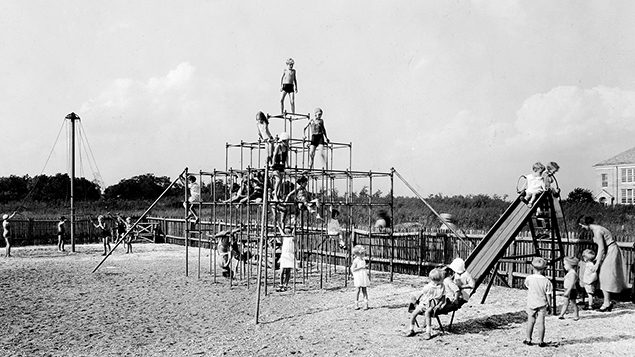
I also played stickball and basketball and touch football in Radburn parks, and I dangled from monkey bars, swung on swings, and seesawed in Radburn playgrounds. My friends and I all took our Flexible Flyers on snowy winter days to sled down a sloping Radburn hill. It was in Radburn, too, that I climbed trees, clambering from branch to precarious branch as far as my prowess and daring would take me, higher and higher until finally I ran out of either branches or nerve.
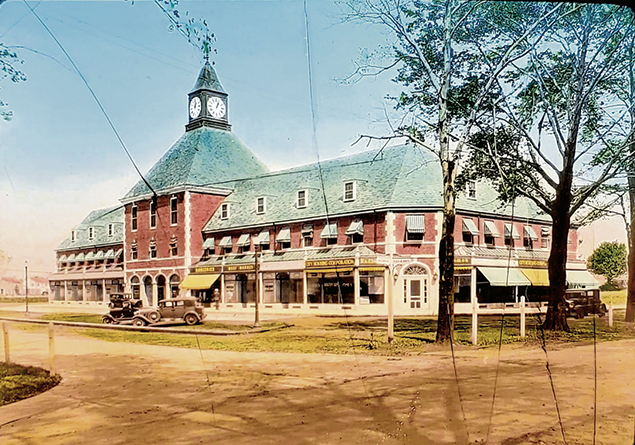
And my father managed the three-story 31,000-square-foot Radburn Plaza Building, a landmark commercial property, complete with four-sided clock tower, in the heart of Fair Lawn.
I knew nothing then about Radburn having an issue with Jews. I knew nothing at all, in fact, until late 2024. Then, as Fair Lawn prepared to celebrate its 100th anniversary, I felt a sudden impulse to dig into the town’s background.
I already knew a little Fair Lawn history — how the Leni Lenape and Algonquin tribes originally occupied the land there, how Dutch traders had settled there in the 17th century and established farms, and, more recently, how the houses on our block were built on the site of World War II Army barracks. But really, I knew very little more.
Over the next few months, I pored over records. I interviewed current and former Radburn residents, the current and former mayor of Fair Lawn, a town historian, two Fair Lawn rabbis, friends from my 1970 Fair Lawn High School graduating class, a civil liberties lawyer, and a historian of Jewish life in the United States over the centuries.
My research told a story about Radburn that was considerably less idyllic than what I thought I’d known. What I ultimately learned cut me to the quick.
•
In 1950, Radburn residents sabotaged a sale to a Jewish couple interested in buying a house there. “Several of the families surrounding the house pooled some money, approached the seller, and offered to buy the house out from under my parents in order to stop Jews from moving into Radburn,” former Radburn resident Janet Moss Kass said. “But the seller refused, and we moved in, becoming only the second or third Jewish family there.”
A current Jewish Radburn resident who requested anonymity recalls an equally telling incident in the 1950s. “My mother told me that when she and my father originally looked in Radburn for a house to buy, the real estate broker, himself Jewish, said they would be ‘unhappy’ there. At the time, my parents had no idea what he meant, nor why he said it. So they followed his advice to buy a house less than 50 yards away from Radburn. Years later, they realized they were being deliberately excluded.”
The Schoenberg family — mother, father, and two sons — moved into Radburn in 1953. They were among the few Jewish families there then. In response, six of the 16 houses on their cul-de-sac went up for sale within weeks. “Were we going to ruin the neighborhood?” Steve Schoenberg, who was only 3 years old then, asked. “Drive property value down? I guess people had no idea what to expect from Jews and were nervous.”
Jewish Radburn residents today recall feeling ostracized as children in the 1950s. “A girl on our block had a birthday party and invited all her classmates except me,” one said. “I knocked on the door to find out why, but the mother just shut the door in my face.”
Another one said, “Some kids called me ‘kike’ and ‘dirty Jew’ as I walked to school. I thought that I must be wearing soiled clothes. I had no idea about this kind of stuff. Finally, I gave those kids bloody noses and they learned some respect.”
•
I posted a query about Jewish history in Radburn on several Fair Lawn Facebook pages. In response, I received 477 comments and 24 direct messages — an outpouring of facts, claims, anecdotes, insights, hearsay, historical context, pushback, and, yes, occasional vitriol. At least anecdotally, the evidence of prejudice against Jews proved overwhelming.
Listen to a sampling of voices from the chorus.
“Radburn was a restricted community,” Sheryl Magram Cashin said. “Jews were not able to purchase homes there.”
“Radburn originally didn’t want Jews in it, so many moved to its outskirts,” Donna Grala said.
“Radburn definitely had anti-Jewish rules back in the day,” Elaine Kirsch said.
“The original real estate agents in Radburn were racist, antisemitic people,” Ann Dworetsy said.
“My brother was beaten up for wearing a yarmulke waiting for the bus to take him to Hebrew school in the 1960s,” Suzan Campbell said.
No written policy expressly banning Jews from living in Radburn ever appears to have existed. But historians and residents have identified an implicit, unspoken understanding among real estate investors that Radburn would be “restricted.” Further, realtors were routinely to inform Jewish families seeking housing there that they might be “more comfortable” living elsewhere in town.
But as an article on its website attests, even the Radburn Association itself acknowledges the town’s history of housing discrimination. “For at least its first two decades, Radburn systematically excluded as residents virtually all people of color and virtually all Jews,” it reads. “This policy was tacitly approved by Radburn’s founders and subsequently carried out by its administrators. Potential residents were excluded not by written policy, but through informal ’steering’ by real estate agents working with or for Radburn’s developer.”
•
In almost entirely prohibiting the presence of Jews in its properties for at least two decades, Radburn was hardly unique.
“Restrictive covenants for segregated housing were fairly widely used after World War I in suburban America to keep out Jews and others,” Scott Richman, a lawyer said; he’s the regional director of the Anti-Defamation League for New York and New Jersey. “Then redlining neighborhoods came into fashion in the 1930s. Some so-called steering might have happened in Fair Lawn. It was nothing uncommon and done covertly. That orchestrating of the population truly ended only in 1968 with the Fair Housing Act.”
Radburn was a microcosm of the national landscape, Hasia R. Diner agrees. Dr. Diner is the author of “The Jews of the United States, 1654 to 2000” and was the inaugural director of the Goldstein-Goren Center for American Jewish History at NYU. “What happened in Radburn was pretty common in suburbs around the country,” she told me. “Realtors steered Jews away from or toward certain neighborhoods.
“Radburn’s original planner, Clarence Stein, though himself Jewish, set out to limit the number of Jews there — but it was never documented,” Dr. Diner, also a professor emerita of Hebrew and Judaic studies at NYU, said. “He envisioned Radburn as non-Jewish, but mainly because real estate interests feared that if it became ‘too Jewish,’ it would attract still more Jews and non-Jews would stay away. Developers were free to discriminate, but only up until about 1948, when the Supreme Court ruled that the restrictive covenants in place were unenforceable.”
•
Jews started steadily moving into Radburn in the 1950s and 1960s. Today, Radburn, like Fair Lawn itself, is estimated to be 30 to 40 percent Jewish.
“Increasingly, in the 1950s, Jews took the attitude, ‘We refuse to be excluded,’” the ADL’s Mr. Richman said. “We’re going to build our own communities, establish our own law firms and corporations, open our own country clubs. And we’ll thrive.’”
Even so, antisemitism still occasionally flares up in Fair Lawn, whether as an offensive tweet by a town official (he resigned), anti-Jewish graffiti — complete with swastikas — scrawled on the walls of Fair Lawn High School, or a bomb threat to synagogues. In October 2023, in response to the Hamas attack on Israel, Fair Lawn’s town council passed a resolution denouncing antisemitism.
Only once in my 21 years as a Fair Lawn resident did I directly suffer the sting of hostility toward Jews. It happened when I was about 15 and went to the men’s room by myself at our local Friendly’s.
Two bigger, older boys jumped me and shoved me around a little. I distinctly heard the words “dirty Jew.” The incident lasted all of half a minute, and I came out unscathed but shaken. It seemed ironic that the attack happened in a place named Friendly’s.
My probe into my hometown’s history yielded one last big surprise. As it turns out, my upbringing as a Jewish boy might never have happened in Fair Lawn in the first place. Back in the early 1950s, Radburn’s board of trustees invited Joseph Brunetti, the developer of the houses along the stretch of Radburn Road that our family would occupy in 1954, to bring that territory under Radburn’s jurisdiction. For reasons that remain unclear, Brunetti never responded. And so our house remained outside Radburn.
So Marc Colyer, a lifelong Fair Lawn resident and trustee of its museum, informed me. The disclosure of this close call forced me to ask myself some disturbing what-if questions. What if Radburn had absorbed our house before our Jewish family had the opportunity to buy it? What if the real estate brokers had dissuaded our family from moving there and steered us elsewhere? We might have gone to another, more welcoming town. I might never have grown up in Fair Lawn. Might never have delivered newspapers on my bicycle or shoveled snow for my neighbors or made the same lifelong friends.
•
By most accounts, Jews and non-Jews generally have co-existed happily in Fair Lawn in general and in Radburn in particular for a long time. Former five-time Fair Lawn mayor John Cosgrove, a lifelong resident and now the town historian, is a case in point. He regularly joined Jewish families to celebrate Passover, and the Jewish families who played host to him helped decorate his family’s living-room Christmas tree.
“I was born and raised in Fair Lawn and graduated from its high school in 1961,” Carol Kalker Poltersdorf told me through Facebook. “I never saw any antisemitism. I’m Christian and I had Jewish and Christian friends. We all got along. Several of my best friends were Jewish.”
“I grew up in Fair Lawn, and we all played together as one,” Cathy Niscia told me through Facebook. “We all grew up together, leaving me with many Jewish friends whom I cherish to this day.”
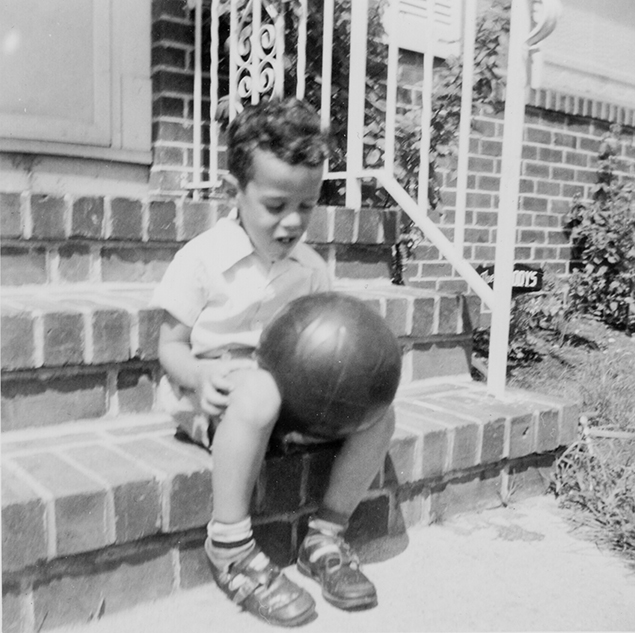
That’s how I remember it all, too. That harmony, transcending religious belief, was especially evident among Fair Lawn’s children, including Radburn’s. We kids all played together. We had no idea who was Jewish or Catholic or Protestant. Nor did we ever ask. Nor did we care. Nor would it ever have made any difference to us.
We knew better than the adults, just as children sometimes instinctively do. We were kids and we knew all we needed to know. If we could play together, we could do anything together.
Bob Brody, a consultant and essayist, grew up in Fair Lawn and now lives in Italy with his wife, two children, and two grandchildren. He is the author of the memoir “Playing Catch with Strangers: A Family Guy (Reluctantly) Comes of Age” and contributes essays to the Wall Street Journal, the Washington Post, and other publications.