

Hunting for a megillah
When your granddaughter needs something, you find it!
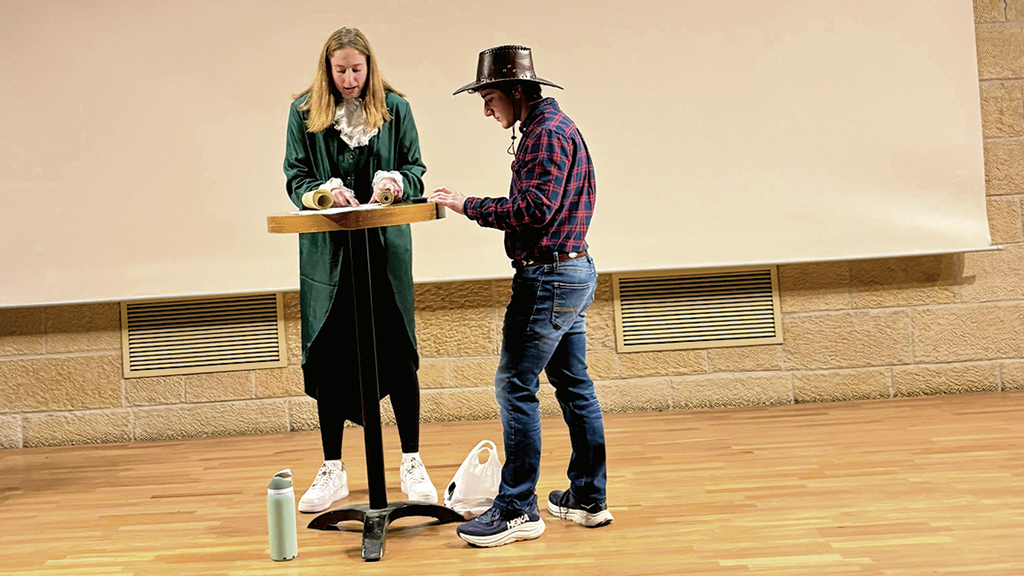
Though there must be hundreds of thousands of kosher Megillot Esther scrolls in synagogues and private homes throughout Israel, and tens of thousands of them must be in Jerusalem alone, how do you get one for your gap year group in time for Purim during the nationwide lockdown imposed by Israel’s Home Command?
For our granddaughter Rena, who was participating in Kivunim, a U.S.-based study and travel program for “building Jewish identity and world consciousness,” which takes its participants to 12 different countries from its base in Jerusalem’s Mishkenot Sha’ananim neighborhood, the answer was simple.
 It was “ask Saba and Safta” — Grandpa and Grandma — who arrived from New Jersey a week before Israel’s latest war of self-defense — “the best defense is an offense” — began.
Though I would have enjoyed the group’s using the 18th-century Turkish scroll that I bought at an antique store on Ben Yehuda Street on my first trip to Israel in 1966, it was still sitting at its place of honor in our dining room in Caldwell.
As veteran members of Congregation Ramot Zion, the Masorti congregation in Jerusalem’s French Hill for over 40 years — we first joined in 1979, when we bought our apartment to use for our visits and for the family — we began asking synagogue friends if they happened to own a Megillat Esther that they wouldn’t be using this Purim. (That was a little easier to ask because regular in-person synagogue services were prohibited. Only services conducted in shelters were permitted.)
Our good friends Rabbi Shlomo and Renee Tucker told us that another fellow member of Ramot Zion, Judy Brown, had one. When we explained to Judy that we were looking to borrow her megillah for use by more than 40 gap-year teenagers, she was thrilled. She explained that her scroll had belonged to her father, Rabbi Abraham Isaac Feldbin, who died in 2012, after serving his Conservative congregation in Brooklyn for decades.
“What a zechut” — a privilege — “to have my father’s megillah read by young Jews at a time like this,” she said. A time of war, she meant. “It’s good to have a reason to smile. I’m sure my father, z’l, is smiling from above.”
Now that we’d secured the megillah, how were we to transport it across the city? Rena knew that the use of private cars was discouraged. Taxis, however, as a form of public transportation, weren’t. She arranged for a taxi to pick the megillah up in front of our apartment building and bring it safely to her group’s base.
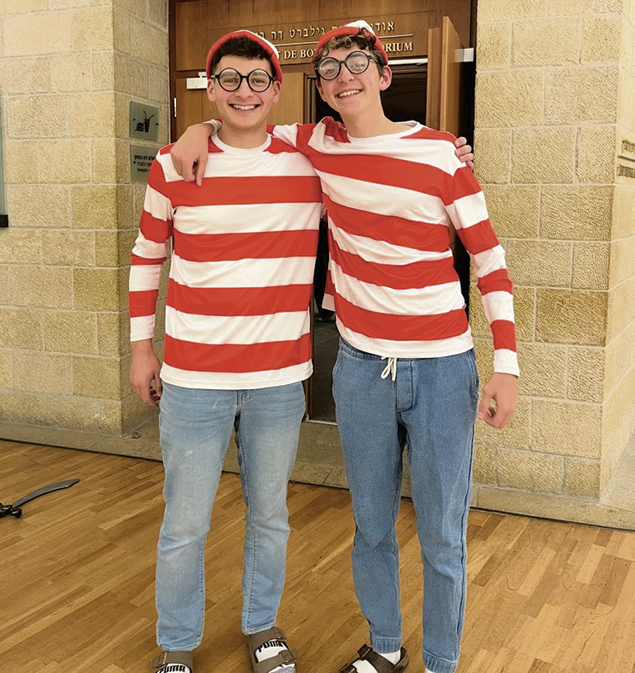
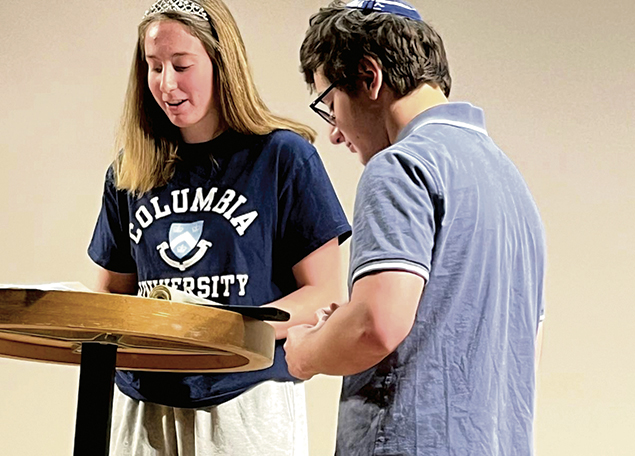
The megillah reading at Kivunim’s base, chanted by the gap-year participants themselves, was joyous. Mordecai and Esther were cheered. Haman’s name — then and now — was raucously blotted out. The festival celebration continued after the reading with jubilant singing and dancing.
The megillah reading at Kivunim’s base, chanted by the gap-year participants themselves, was joyous. Mordecai and Esther were cheered. Haman’s name — then and now — was raucously blotted out. The festival celebration continued after the reading with jubilant singing and dancing.
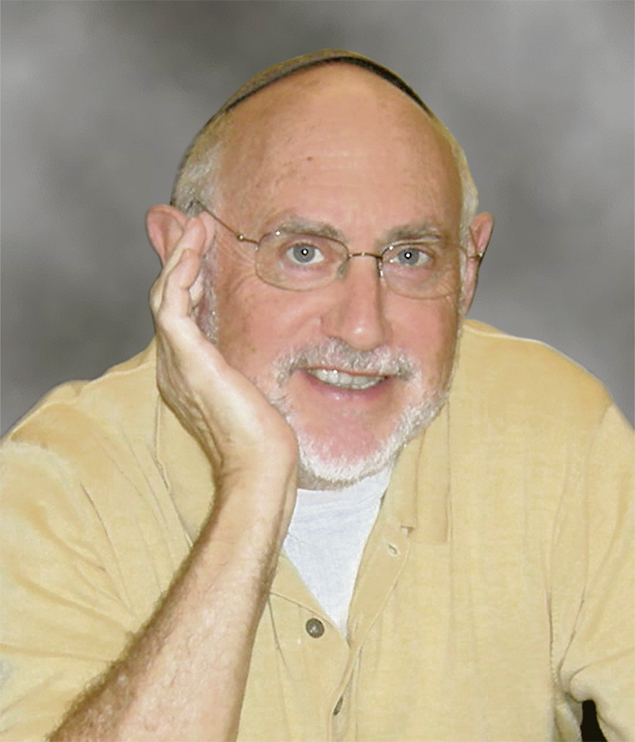
Richard Hammerman of Caldwell, a graduate of the Jewish Theological Seminary, is rabbi emeritus of Congregation B’nai Israel in Toms River, where he served for 31 years, and is a member and teacher at Congregation Agudath Israel in Caldwell, where he and his wife, Sharon, now live.