

Intellectual excitement and loving what you do
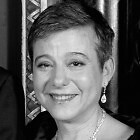
You wouldn’t think that listening to a rabbi or a scientific researcher or a clinical psychologist — much less a rabbi who is also a scientific researcher and a clinical psychologist — talk about suicidal ideation would be exciting.
But listening to Rabbi Dr. Yosef Sokol of Passaic and Touro University talk about his work — which combines intellectual exploration and a willingness to use risky new AI technology, fully aware of its dangers but also of its astonishing possibilities, with a literary sensibility, a humanistic understanding of people as both somewhat predictable but also astoundingly variable, and with a Jewish understanding of the value of traditional wisdom — is to be excited by hearing someone who is genuinely thrilled by the idea that ideas matter.
In his case, all of that is being harnessed to help people with suicidal ideation by accurately diagnosing their real risk of self-harm.
To those of us who never have dealt with such a problem it might seem somewhat theoretical, but Dr. Sokol’s interest in using large language models to understand people’s word choices as they describe where they might be in a decade, and to connect that to the risk of their committing suicide, is inspirational in its creativity.
Get New Jersey Jewish News's Newsletter by email and never miss our top stories Free Sign Up
Years ago, I would watch as Rabbi Arthur Hertzberg, the great Jewish American historian, philosopher, and public intellectual, would synthesize ideas. You’d see him take in one idea, then another, mix them in his head — you could practically hear the little crashes as they butted up against each other — and then come up with a brilliant theory about the relationship of one with the other. It was intellectual alchemy, impossible to understand but thrilling to watch.
And then for something completely different — city workers have been repairing some steps and ramps leading from Riverside Drive down to the park. The work involved tearing up some of the sidewalk and then replacing it.
Because it’s part of the park, the sidewalk isn’t concrete. It’s hexagonal tiles of some stone-like construction material, and each piece has to be laid down separately. You’d expect that city workers would shove the tiles down more or less randomly, new ones against old ones, less concerned with the aesthetics than with getting the job done.
You’d assume incorrectly. The stones have been laid with such care that they all fit, old ones against new ones, so that you can barely tell where one section merges into the other.
I thought of those sidewalk tiles, Dr. Sokol’s work with LLM, and Rabbi Hertzberg’s assessment of American Jewish life as being in some way similar because each involves unmistakable excitement in the work at hand.
In this odd new world in which we find ourselves, we could do far worse than figure out what we love doing — what gives us intellectual pleasure and adds to the wisdom or knowledge or beauty in the world — and do it.
—JP