

It’s all about education
Steve Levy, federation’s interim CEO, on Israel, Yiddish, history, and community
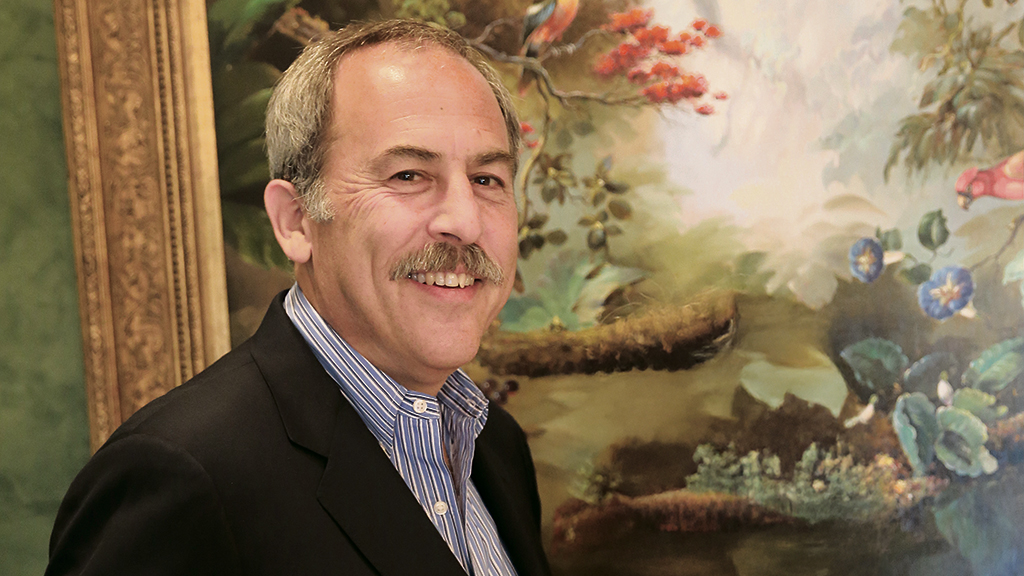
Given his background — intensely but diversely Jewish, as if he was trying to incorporate many ways of being Jewish into one body and one life — it’s not surprising that after a career as a very successful Wall Street securities analyst and a retirement devoted to Jewish education, Steve Levy of Morristown spent this year as the interim CEO of the Jewish Federation of Greater MetroWest.
It is perhaps the culmination of all those different ways of being Jewish.
Mr. Levy grew up in Sheepshead Bay, in Brooklyn. His mother, Mildred Glaser, taught ninth grade algebra in Bensonhurst, and his father, Abraham Levy, was an industrial arts shop teacher in Coney Island.
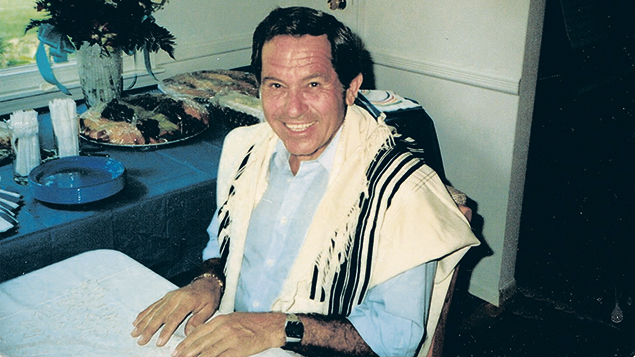
Abraham Levy was born in Jerusalem. His family had come from Russia, but they got to Palestine early. “The family on my father’s mother’s side has roots in Jerusalem going back to 1844, and on his father’s side to 1879,” Steve Levy said. Both his grandfather and his great-aunt had written private memoirs that included those highly specific dates.
“On my grandmother’s side, the Reichman side, the family were chemists,” he said. In another, less English and more American word, they were pharmacists. “On my grandfather’s side, they did something with fruit. Maybe they were fruit merchants. And in around 1936, my grandfather decided that that he couldn’t make a living in Jerusalem anymore.”
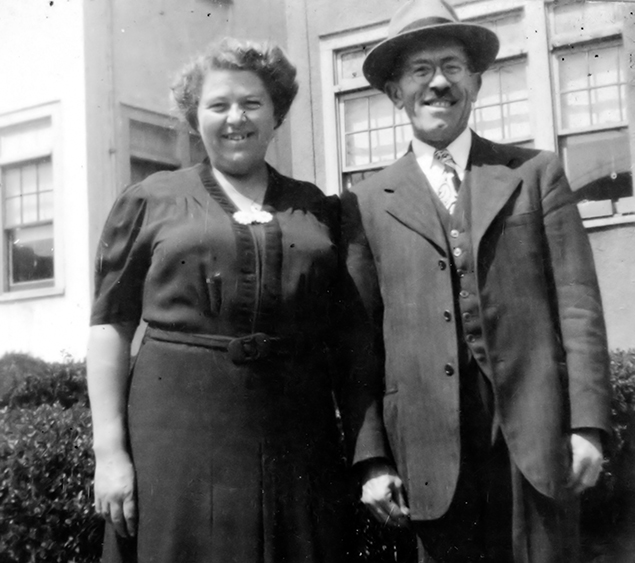
Mr. Levy said that it wasn’t until after his parents died that he realized that the family “really was dirt poor.
“So he came to America. The goldene medina.
“My grandfather found a job in Baltimore. In 1938 he sent for the family and they moved to Baltimore, right before my father’s bar mitzvah.
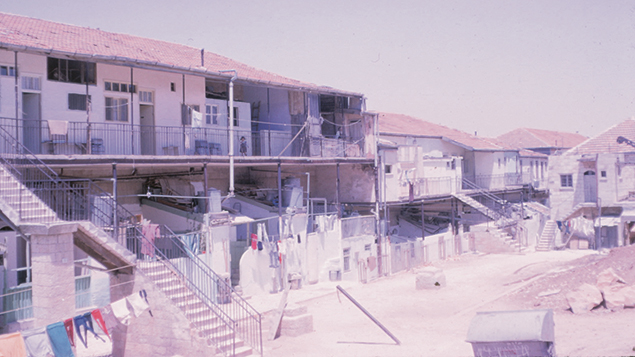
“My father was the only son and he had six sisters; he was number five of the seven. By the time he was born, they’d moved out of the Old City to Batei Varshaw, a neighborhood between Meah Shearim and the Russian Compound.
“One of his sisters, Tzipora Levy, went back to Israel in 1945. She could type, she spoke English, and she ended up being Menachem Begin’s personal assistant during the War of Independence. “She had a code name with the Irgun. She was Leah.” She was involved with the nasty, messy, Jew-on-Jew incident called the Altalena affair. “There was somebody on the radio sending the code saying that Ben-Gurion told Begin to stop the ship. It was my aunt who was sending the code. And she was using the wrong code. Eventually, in the middle of the night, she woke up and realized that she’d used the wrong code, so she went to Begin in the middle of the night.
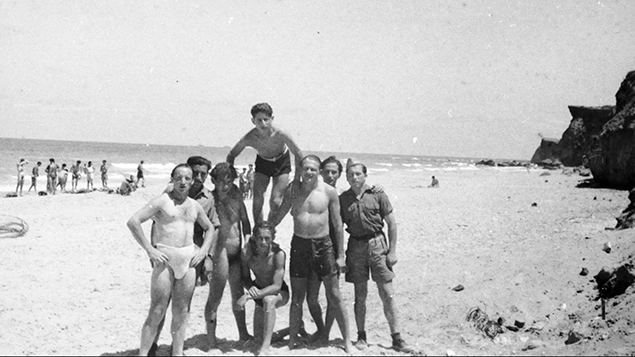
“So eventually she sent the right message, but they were already well on their way.”
Meanwhile, in Maryland, “My father attended Baltimore Talmudic Academy, and then he went to fight in World War II, but because of his age he got in a little late. But he was sent to Europe, he was injured, and he was sent home.
“Then he went back to Israel to fight. He was on the Altalena. When he landed, he went with the Irgun fighters. The one place they were allowed to fight was outside the U.N. line, which was south of Jerusalem, to help break through it. But they couldn’t.”
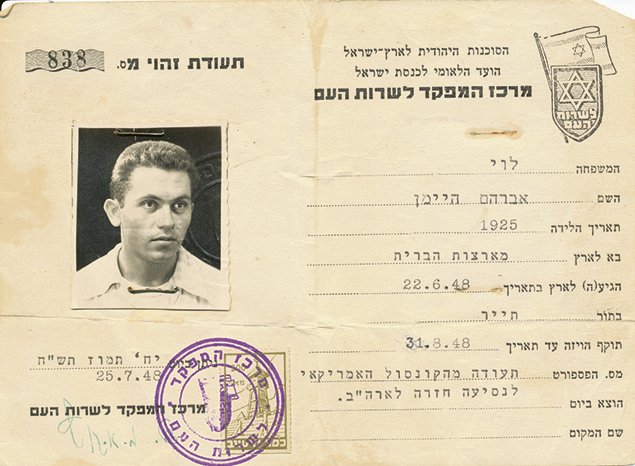
Abraham Levy had gone to Israel on the Altalena with his American passport. “He gave it to my aunt and asked her to hold it.” Then he went off to fight. “But she was on the boat when it caught fire. The passport was gone.
“So in order to get home, he had to get another passport. He had a U.S. passport issued from Haifa, Palestine. I think that it was number 34.”
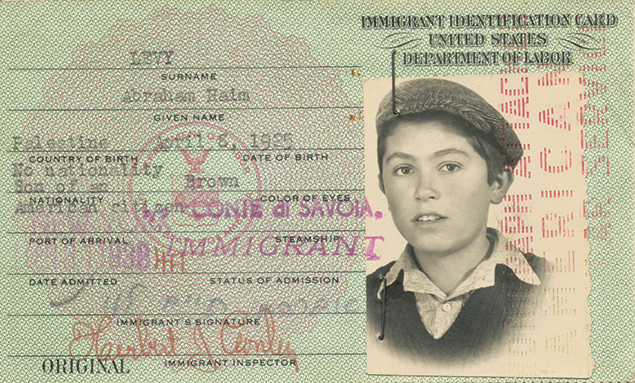
After the war in Israel ended, Abraham Levy went back to the United States. “He met my mother in the Catskills, at I don’t know which hotel, during Sukkot. They were married at Chanukah a few years later, and I was born in 1956.
“My mother was born and raised in Brooklyn. She graduated from Brooklyn College at 20, and she was already a teacher when they met. She convinced my father to get his degree.
“My father was an interesting character,” Mr. Levy said. “He could have been from ‘Welcome Back, Kotter.’ The kids loved him.” (“Welcome Back, Kotter” was a 1970s sitcom featuring Gabe Kaplan as the teacher of incorrigible but lovable bad-but-not-really-bad high school kids. It also introduced John Travolta of Englewood — aka Vinnie Barbarino — to the world.)
“My parents spoke Yiddish. For both of them, it was their native language.”
When the family was in Jerusalem, “my father could go to the cheder, because he was a boy. But then there were the six sisters. You could get scholarships, but you could send only two to a school. So two sisters went to French school, two went to English school, and two went to Hebrew school, so two of them knew French, two of them knew English, and two of them knew Hebrew. Yiddish was their default language.
 In Brooklyn, decades later, “I went to the Workman’s Circle Yiddish Schule, so I learned Yiddish,” Mr. Levy said.
“Both my parents were very left wing. Very out there. They were union activists, educators, and Yiddishists. My sister, who is 2 1/2 years older than me, became very involved in Hashomer Hazair,” the socialist Zionist youth movement.
“When I was in seventh grade, we started the year in public school, but the teachers went on strike. My parents both were union activists — but they said, ‘This is going to go on for a long time, and you can’t stay out of school,’ so they found a Jewish day school, the Ezra Academy, and put me into it.
“The strike was settled after about two weeks, but this started my Jewish day school experience. In 10th grade, I went to the Yeshiva of Flatbush.” That’s because, as Mr. Levy tells it, he took the entrance exam and failed it. Being rejected did not feel good. Although he had not wanted to go to Flatbush, it couldn’t be because the school didn’t want him. So “I worked very hard, I took the entrance exam twice more, and I passed, and then I really had to go there.”
“My mother was absolutely not religiously observant at all. My father’s family was Orthodox. My mother’s nod to his family was that she basically said, ‘We will have a kosher home, so anybody in the family can eat there. But we will not be kosher outside the house.
“When my parents got older, my father went back to his Orthodox roots. When they retired to Century Village in Boca, he and my in-laws helped start an Orthodox shul there.”
So that’s the Yiddish part, the day school part, and the Zionist part “that are very different aspects of being a Jew in Brooklyn,” Mr. Levy said. “And also, my parents were educators.”
His sister, Efrat Levy, lived out that complicated, rich experience too. “She makes aliyah at 20, she lives on a kibbutz, and she decides that she needs another degree.” She’d already graduated from Brooklyn College, at 20, like her mother. “She gets a master’s at Haifa and then a Ph.D. in education at Harvard. While she’s at Harvard, she meets her husband, Dan, and they end up living in Albany. They just retired — she was at Empire State College and he worked for the state as a financial planner.”
So, back to Steve. “At 6, I make my first trip to Israel. We stayed with my aunt Tzipora. I went back with Hashomer Hazair for a summer when I was 16 and then again when I finished college, for another summer. I have family all over Israel. So far, I have made more than 100 trips to Israel.”
Mr. Levy earned a bachelor’s in metallurgical engineering and an MBA at Rensselaer Polytechnic Institute in Troy, in upstate New York, across the Hudson from Albany. “I was going to get a double master’s, one in welding and an MBA, but I ended up just getting the MBA because I lost interest in metallurgy,” he said.
“I met Beena Singer my freshman year,” he said. “Her parents are Holocaust survivors who moved to Troy. Beena grew up there and went to the Hebrew Academy in Albany.” Later, she went to the University of Rhode Island to earn a degree as a pharmacist. (There’s a nice historical connection there — remember, Mr. Levy’s maternal grandmother’s family were chemists.)
“She is finishing her degree, I am finishing mine, I graduate on a Friday, we get married in Albany that Sunday, we go on a honeymoon, and two weeks later I start my career at AT&T in Boston.”
That career took the Levys to Boston, then to Chicago, where their oldest child — they have three — was born, and then to New Jersey. “We wanted to be near a Jewish day school and a synagogue,” Mr. Levy said. He and his wife belong to the Mount Freedom Jewish Center, and they sent their children to the school that was then the Hebrew Academy and is now the Gottesman RTW Academy, and then to the Solomon Schechter of Essex and Union for high school. Their children — Rachel, Jaime, and Jacob — went there, and now so do their three grandchildren; Rachel Levy Meiner is now its early childhood director. And Ms. Meiner, her husband, Yaron Meiner, and their children live just a few miles from the Levys.
“We enrolled our daughter when she was 3 years old, and I joined the board a few years later,” Mr. Levy said. He’s been involved with the school ever since. “Beena and I are the only husband and wife who both were presidents,” he said.
“About six months after we moved here, I left AT&T and started my Wall Street career, and for the 20 years that I was on Wall Street I didn’t really have any other volunteer work than with the Hebrew Academy.
(Mr. Levy’s Wall Street work was stellar, and far too detailed to recount here. But it’s appropriate to say that he had a storied career.)
“And then I retired — and by retired I mean from full-time work — and I started sitting on corporate boards. That was my professional work. I have sat on private and public boards; the kind you get paid for and the kind you don’t. That took up about a third of my time, and I used about another third of my time to volunteer in the community.
“And that’s when my federation involvement started.” He went from his first challenge — “to sit on a task force to oversee the financial situation of the JCC MetroWest, because they were having a lot of issues in 2005” — and from then he got involved with allocations and then with the foundation board. “I stepped down from that last June 30. I thought that I was freeing myself up. I was starting a consulting business to help Jewish day schools around North America become more sustainable.”
That’s because some of Mr. Levy’s deepest love goes to Jewish education. He has never forgotten that he is the son of educators — and now also the father of another one — and that Jewish education has formed him, his family, his community, and the Jewish world.
“I helped design and start the Day School Initiative in Greater MetroWest,” he said. I have been vice chair and then chair, when Paula” — that’s Paula Gottesman, whose family created and funded it — “stepped down. We’ve done some amazing stuff, with the help of some great benefactors. We have learned a lot, helped other communities, and shared a lot.”
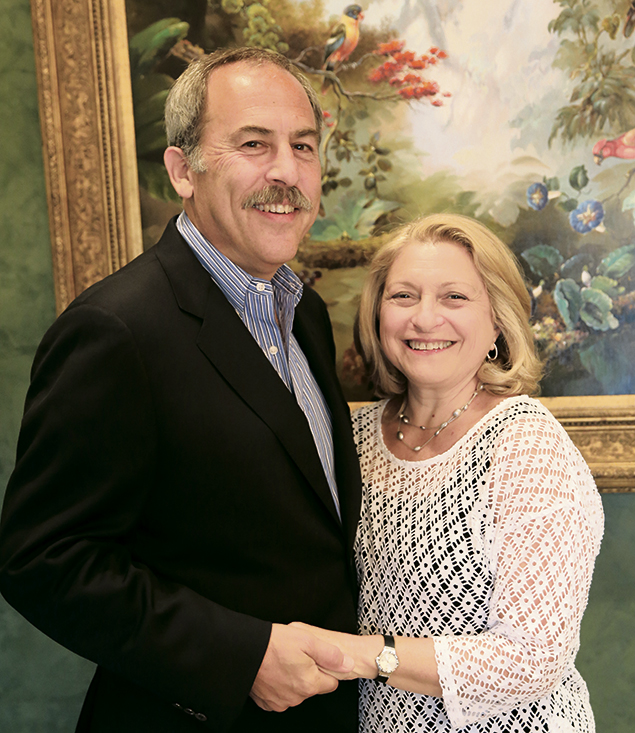
Last July, when some of the federation’s lay leaders knew that its CEO, Dov Ben-Shimon, “was not going to go past his contract, I told Michael Goldberg, who was finishing his first year as president, that if he needed me to step in as interim CEO I could. I have been chairman of companies with much bigger budgets.
“And a month later, Michael said, ‘You’re good. You are going to be the interim CEO.’ I started on October 1. It will be 11 months when I step down.” That’s when the federation’s new CEO, Meredith Dragon, will take over.
“I thought I knew about the federation,” he said, somewhat ruefully. “I thought I knew about 70 percent of what it did. Pretty quickly it became clear that I knew about 50 percent. It has been an illuminating, rewarding, and meaningful time. I think that I helped move the organization forward. We have some very good people working for us.”
He’s excited about Ms. Dragon. “I’m very optimistic about her taking us to the next level,” he said.
The federation’s lay leaders decided to ask Mr. Levy, who is of course one of them, and will return to their ranks once Ms. Dragon takes over, because they wanted to be sure to have enough time to do a thorough search, he said, and he knows that’s what happened.
So when he was asked, “I put the Jewish day school consulting business off to the side to run the federation. But now I am looking to restart it. I will have a partner, we already have had conversations with two schools, and we think that there are a lot of schools out there where we can have a meaningful impact.
“This gets me back to my focus on Jewish education.”
He talked about the “strategic planning process that we had at the federation. I participated early on. It was very early in my time as CEO. The consultant asked a question — if you were starting the federation from Ground Zero, what would you do? I said, ‘Give me a few minutes,’ and a few minutes later I said that I figured out that if you were starting a Jewish federation from scratch, it should be centered on Jewish education of all sorts.
“My view is that if we teach our kids and families Jewish values, and if we give them enough Jewish education, then the social services and everything else we do will take care of themselves. That’s because people will know how to take care of the needs of children and families and seniors and everyone.” That idea of helping people who need help is such a core Jewish value, and so deeply embedded in Jewish education, that it would be clear to the Jewishly educated.
“Kids who are knowledgeable, who are Jewishly educated, find trips to Israel, they have a love for Israel. They go to universities and become leaders and activists. I would put most of my resources into educating them.”
Looking back at his year as federation CEO, the result of his lifelong immersion in Jewish life, Jewish education, Zionism, Yiddish, and also Wall Street, boards, and running large for-profit and nonprofit organizations — and also looking forward to the work he plans to do consulting with Jewish day schools, an observer sees how well-served a community can be by someone with as rich and complex a background as Steve Levy’s. We look forward with anticipation to what he can do for schools.