

IT’S WAR! AGAIN! (BACK THEN)
Scholar tells stories about Rome, Iran, and the Jews from the second century CE
There is a lot of Jewish history, and most of us know far less of it than we realize.
Compare it to, say, American history. We are about to celebrate the 250th anniversary of the founding of the United States, and it is safe to say that most of us know very little about most of it. Challenge a friend to talk about President ChesterAlan Arthur, or the history of Fort Ticonderoga, or even the specifics of the Louisiana Purchase. For that matter, challenge yourself. Most of us would not come out of that challenge very impressively.
Jewish history, to understate, goes millennia farther back than American history.
We can date it back to the patriarchs, more or less around 1800 BCE. That’s a very long time ago. The Exodus? Around 1300 BCE. King David beginning his reign? 870 BCE, give or take. So it’s not surprising that we don’t know very much.
Even when we come to the periods when the history is obscure but still much of it is more factual than legendary — say the extraordinary tumultuous time between 63 BCE and 136 CE — most of us know very little.
All this is a long way of saying that when Dr. Barry Stuart Strauss, an extremely well credentialed military historian who is, among many other things, a professor emeritus at Cornell and the Corliss Page Dean senior fellow at the Hoover Institute at Stanford, decided that he wanted to write about Jewish history, he realized that he could put some of his areas of expertise together.
He’d already written seven books about ancient history; he’s examined the Trojan War, the Spartacus War, and the Battle of Salamis, as well as other areas of ancient Greek and Roman life. He’s also written a book that combines his deep understanding of Greek life with his own love of boating called “Rowing Against the Current.”
“I am a historian of the ancient world, focusing on Greek and Roman military history,” he said. “I am Jewish, and for a long time I’ve thought that I’d like to write something about Jewish history, but I’m not trained as a Jewish historian. But I saw an opening here.”
 That became his most recent work, “Jews vs. Rome.” The book looks at Judea and its very large neighbors, its frequent overlords, through the stories of three decisive battles and many individual stories set during that time.
Dr. Strauss will talk about “Jews vs. Rome” on Sunday, February 1, over Zoom. (See box.)
Dr. Strauss explained that he conceived the book during covid. “I could do library work then, but I couldn’t travel.” As he sat at home, “I was struck by the fact that the ancient Iranian empire and the Jewish people were great friends,” he said. “That’s so different from today that it was a thread I wanted to follow. I follow it through the period.
“I’m certainly not the first scholar to notice that fact, but it is understudied and underappreciated. The situation in Judea was important not only to the Jews but also to the Romans.

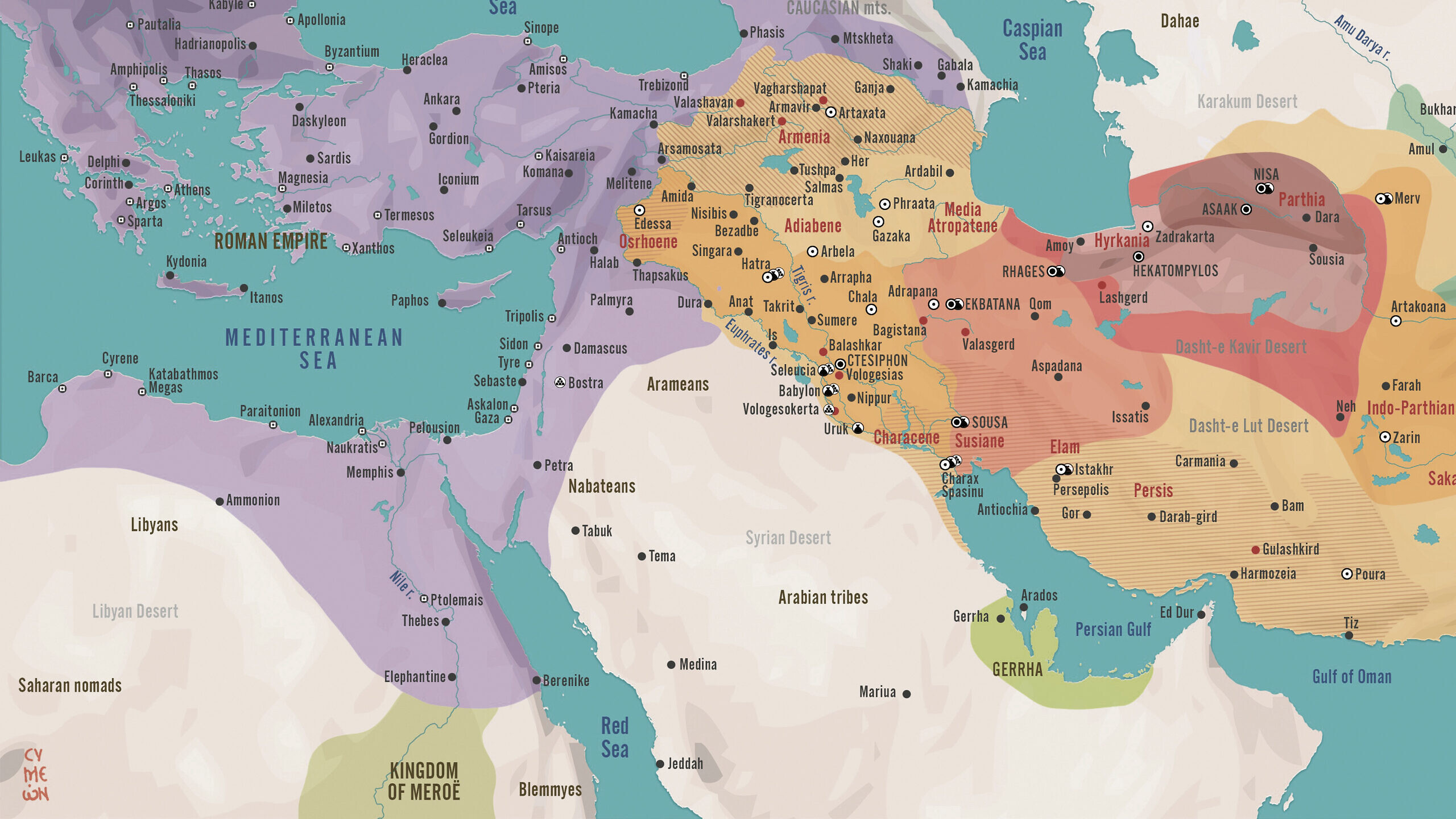
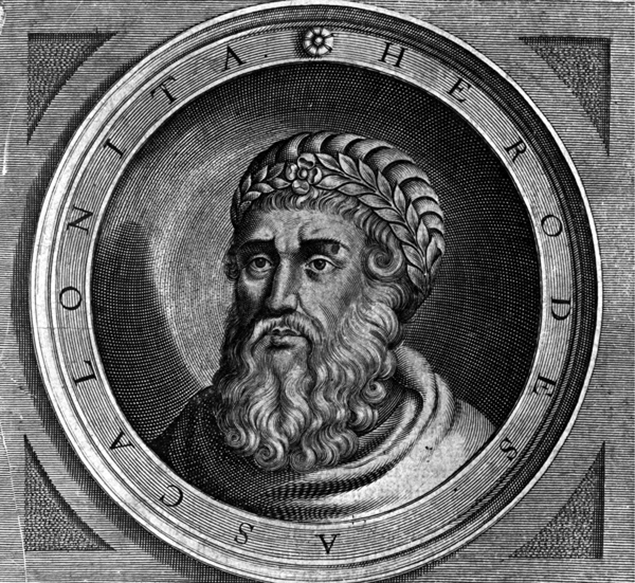
“Pompey the Great conquered Judea in 63 BCE, and 23 years later, the Parthians reconquered it. They kicked out the pro-Roman ruler and put in a pro-Parthian one, and for three years Judea was Parthian.” Then the Romans brought in Herod — “the infamous Herod, Dr. Strauss said, the one who features so unfortunately in the Christian Bible — named him king, and he sat on the throne for well over three decades.
“Judea was not that important a place to the Romans in the vast, broad scheme of empire,” Dr. Strauss said. But Parthia, as the Iranian empire was called at the time, was Rome’s major rival. So the fact that a significant number of Jews in Judea, as Israel was called at the time, were pro-Parthian and had significant connections with Parthia meant a lot to the Romans.
“The Romans are always suspicious of the Jews,” Dr. Strauss said. “Are they still loyal to Parthia?” Babylon was in Parthia, in what is now southern Iraq. “There’s a big Jewish community living in Babylon. The Parthians control Iraq and part of Syria, as well as Iran, and farther east.”
Then there was the question of religion. The Parthians were Zoroastrians. Although he’s not a historian of religion, Dr. Strauss cautioned, his understanding is that “while Zoroastrianism was not monotheistic, it tended toward monotheism. That means that the ancient Jews found it easier to communicate with Zoroastrians — with the Parthians — than they did with the pagan Romans, with their polytheism.”
The Jews also remembered Cyrus the Great, the emperor of Persia, who allowed the Jews to return to Judea from exile in 539 BCE. That was half a millennium before the period Dr. Strauss explores, but the memory remained.
So in general, “the ancient Iranian empires got along quite well with the Jews,” Dr. Strauss said.
Much of the good feeling was strategic. “For two centuries, Judea was part of an Iranian province under the Persian Empire. They had a relatively good experience — an easier time than they did under the Romans or the Greeks. So there’s a substantial portion of the Jews of Judea who thought they’d rather be under the thumb of the Parthians than the Romans.” (Yes, they had accepted the idea that at least for the time being, they’d be under some large entity’s thumb.)
“That’s a big factor in the story of the Great Revolt.”
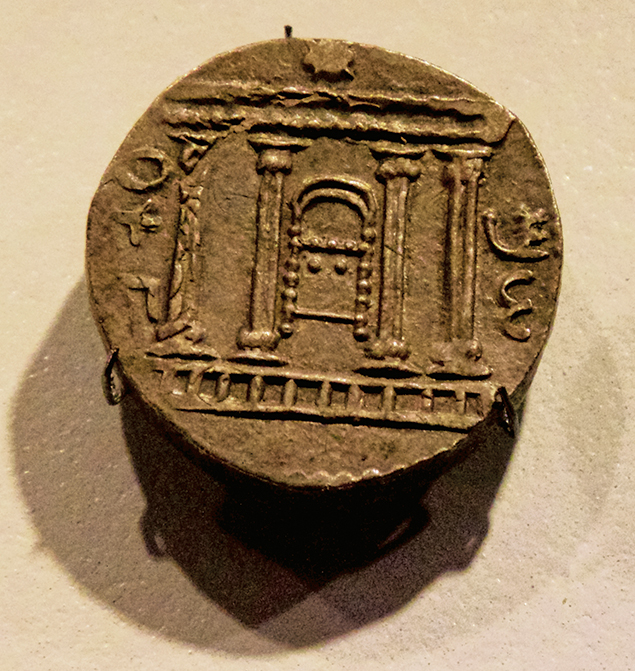
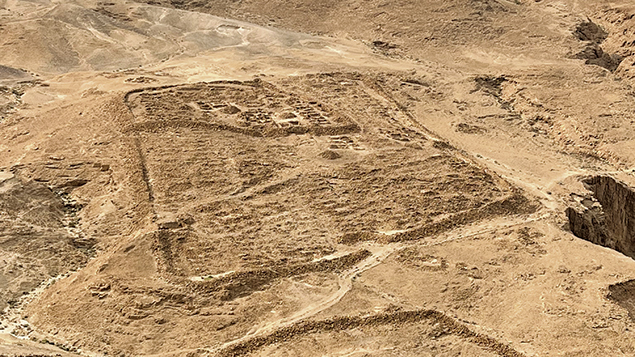
The Great Revolt, from 66 to 70 CE, saw Jews rising up against the Romans. It was not successful; the revolt ended with the destruction of the Second Temple, the end of Jewish practice that revolved around the Temple, and the beginning of the rabbinic period.
“The rebels hoped to get some help from the Parthians in the revolt. They got a little bit, but nothing substantial.”
Next was “the often-forgotten Diaspora Revolt of 116-117, which also is known as the Kitos War,” Dr. Strauss continued “The Jewish rebels in the west were working with the Jewish rebels in Mesopotamia and in Iraq, and with the Parthians who were defending the territories against the Romans, who had invaded it.
“We can’t prove that these two revolts, the Great Revolt and the Kitos Revolt, were coordinated — there is no smoking gun — but there is a lot of circumstantial evidence to suggest that they are.
“We know that during the Great Revolt, the rebels in Judea were trying to get help from Parthia — from either the Jews or the government there.” They don’t get much there, but they “do get help from a small but very interesting vassal kingdom of the Parthian Empire called Adiabenein modern Iraqi Kurdistan or ancient Assyria.
“Abiabene’s ruling dynasty converted to Judaism. They built palaces in Jerusalem, and they sent their sons and grandsons there to be educated as Jews. Those grandsons were in Jerusalem fighting for the rebels during the Great Revolt.”
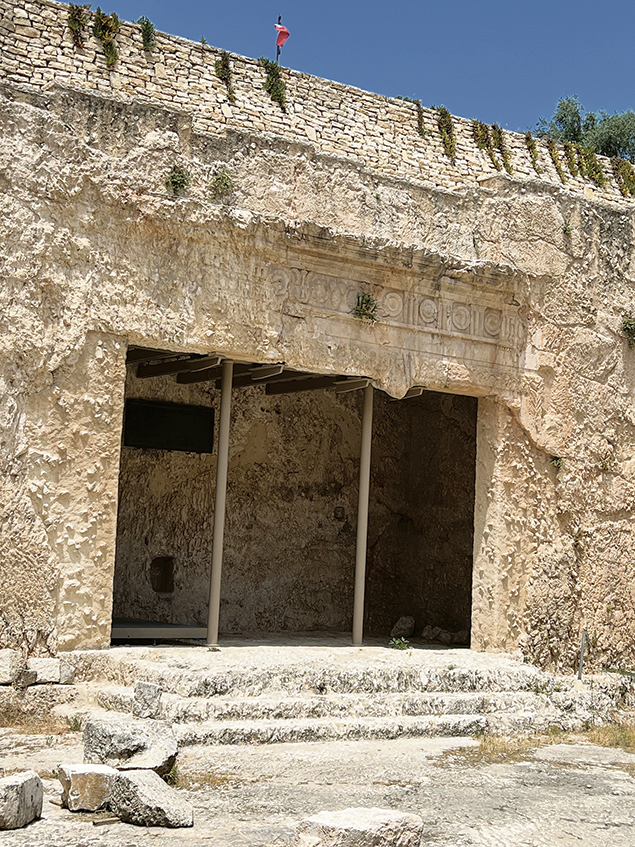
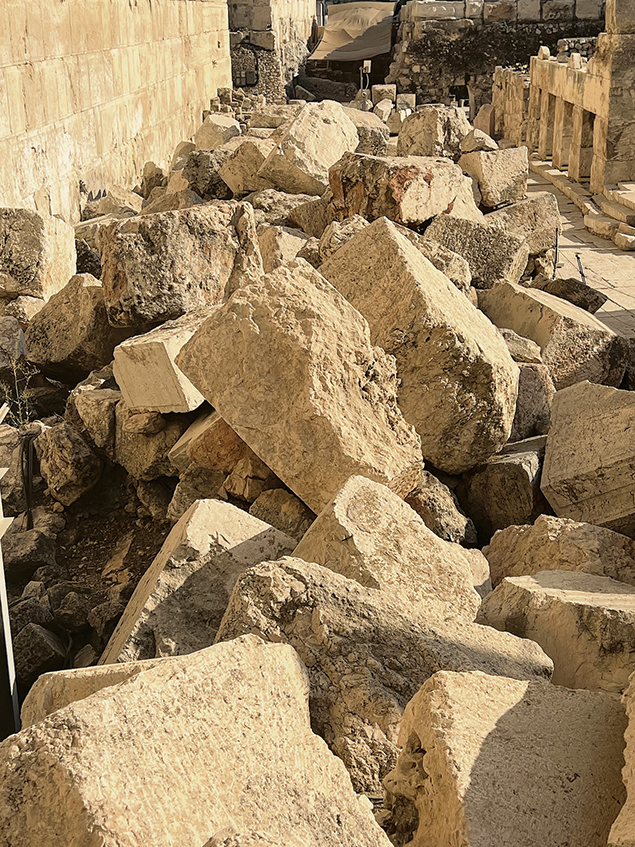
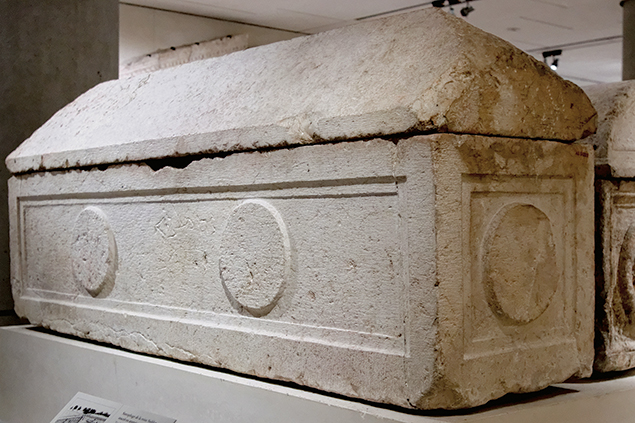
The most well-known figure in this dynasty — “the signature person,” Dr. Strauss called her — was Queen Helena. “There’s Helena Hamalka Street in Jerusalem named after her,” he said. “And her tomb is in East Jerusalem. It’s called the Tomb of the Kings, and it’s not easy to visit. It belongs to the French Republic, and you have get permission from the French consulate to go to it, but it’s an amazing site.
“That’s where she and her sons were buried. It’s kind of a big deal.”
(So, Dr. Strauss, why haven’t most of us heard of Queen Helena? “You got me,” he answered.)
She was never her kingdom’s official ruler, he explained. She was married to a king, who died, so she became the dowager queen. “She was able to convince the nobles of the kingdom to choose the son who would be most appropriate as king, and then went off to Judea for a few years to learn how to be a better Jew, and also to make connections to the West. The Silk Road ran through her kingdom, so she was able to be useful to her overlord, the Parthian king. It was a diplomatic and religious pilgrimage.
“There was a famine in Judea, and she paid for food for the people there. She was beloved, and mentioned in the Talmud, where she was well thought of.”
He tells the stories of many women in his book, Dr. Strauss added.

He also tells the story of “another forgotten figure, and not such a nice one, Tiberius Julius Alexander, whose uncle was the philosopher Philo. His father was a pious Jew who donated gold and silver to the Temple in Jerusalem, but Tiberius devoted his life to serving the Romans. He was the governor of Judea and then was made governor of Egypt; he suppressed a Jewish uprising. The Jews were being attacked by their pagan neighbors, and when they refused to put down their arms, he put the defenders down brutally.”
Tiberius worked for Titus, who later became emperor; the story goes that Tiberius pled with Titus not to destroy the Temple in Jerusalem. Titus didn’t much want to destroy it — “the Romans were not impious,” Dr. Strauss said — but neither man was able to control their victorious, ravaging army. Or at least the historian Josephus tell us that Tiberius made that plea, “but Josephus may have been trying to whitewash Tiberius,” who was, like him, a Jew being not particularly Jewish in Rome.
Dr. Strauss tells the story of Berenice, “the sister of the Jewish king of Galilee, Agrippa II. She’s pro-Roman, as is her brother. Her brother sends troops to help the Romans put down the rebellion. She begs the rebels in Jerusalem not to rebel against the Romans. They don’t listen to her. And she begs the Romans not to punish the rebels. They also don’t listen to her.
“She ends up as the girlfriend of Titus. The mistress of Titus. She goes to Rome, and they live together.”
She’s significantly older than Titus. And she’s not one of his many women. “She’s the love of his life,” Dr. Strauss said. Even after he’s made emperor, he wants to keep her with him, and she wants to stay with him. “But the Senate refuses, and according to Suetonius, he sends her away, against his will and against her will. Against both of their wills. But he does send her away, and she leaves.”
What happened to her next is lost to history.
These are just highly truncated versions of a very few of the stories that Dr. Strauss tells in his book. He will talk about many of them on February 1.
Although the stories he tells are about the past, they are relevant now, and not in particularly good ways, Dr. Strauss said. Many of them involved divisions in the Jewish world, specifically between pro-Roman and pro-Parthian Jews. Today, the Jewish world’s internal divisions are drawn in different places, but they are no less real.
Another recurrent theme is Judea’s position, between the East — Parthia — and the West — Rome. The East and the West mean different things culturally now than they did then, but the magnetic tug each side exudes pulls at Israel now as it did at Judea then. “In America, we think of Israel as the eastern outpost of Western values, but it is also in the Middle East, much closer to Iran than to us. It looks both ways. It has no choice. It had to do that then, and it has to do that now.
Who: Dr. Barry Stuart Strauss
What: Will talk, on Zoom, about his new book, “Jews vs. Rome”
When: On Sunday, February 1, at 8 p.m.
Where: In your own living room; the talk is online
Sponsored by: The Jewish Center of Teaneck, Congregation Beth Aaron, Temple Emeth, and Bergen B’Yachad
How much: It’s free; donations are gratefully accepted
To register: Go to bergenbyachad.com