

Learning from our own history
Izabella Tabarovsky talks about campus antisemitism and her Soviet past

We know that history doesn’t really repeat itself.
It’s not possible. Everything — demographics, climate, technology, baked-in assumptions about how human relationships work — would have to be exactly the same, and that could never be.
But history reverberates. Events today can echo the past, and lessons can be drawn from them.
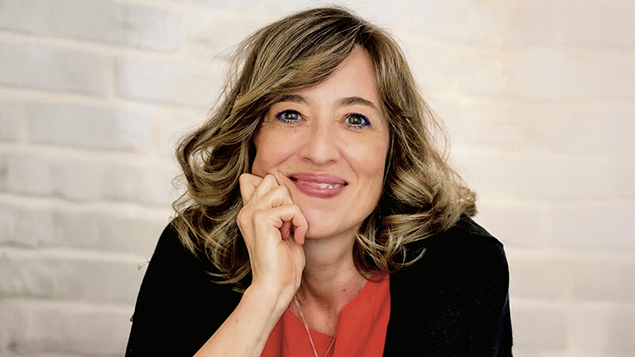
That’s something that Isabella Tabarovsky knows well.
Ms. Tabarovsky is an academic who specializes in antisemitism in general, and Soviet antisemitism in particular. She can do that because she continues to study it; she’s now a fellow at the Wilson Center in Washington, D.C., as well as other think tanks, and she’s a frequent contributor to both scholarly and popular publications.
She’s just written a new book, “Be a Refusenik: A Jewish Student’s Survival Guide” — the preface is by Natan Sharansky — and she’s going to talk about it at the Chabad Center in Short Hills on December 10. (See box.)
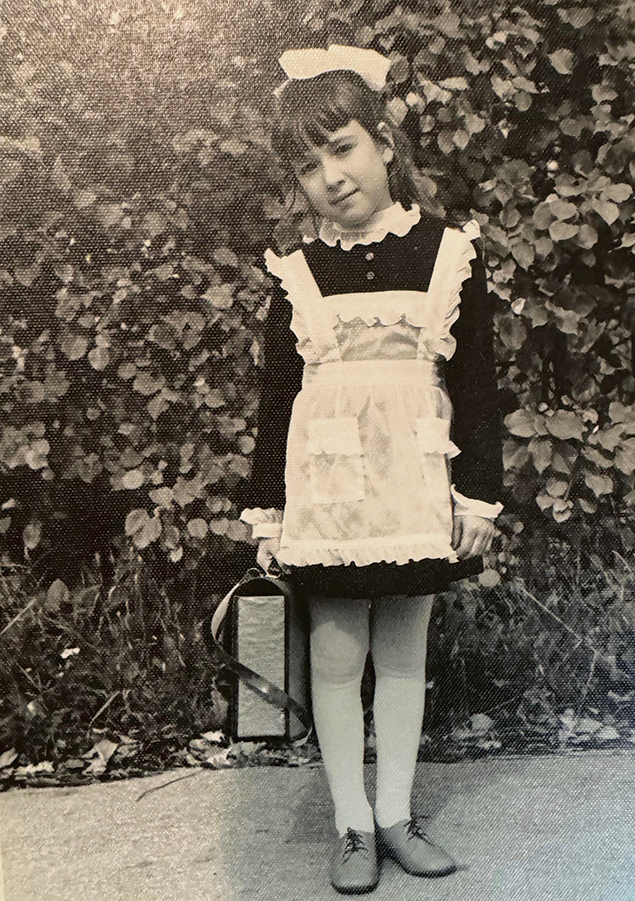
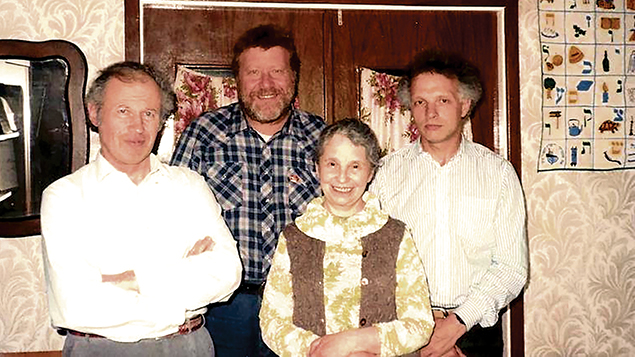
But there’s another, even deeper reason for her bone-deep knowledge of Soviet antisemitism. She experienced it firsthand, from her birth in 1970 until her exodus from the USSR, with her family, 19 years later.
 “I always tell people when I was born, because I want them to understand that much of what I write about I have seen myself,” she said. Many former Soviet Jews came to this country when they were children, “so they speak about things from family memory,” which is real and she honors, “but in my case I lived that reality.”
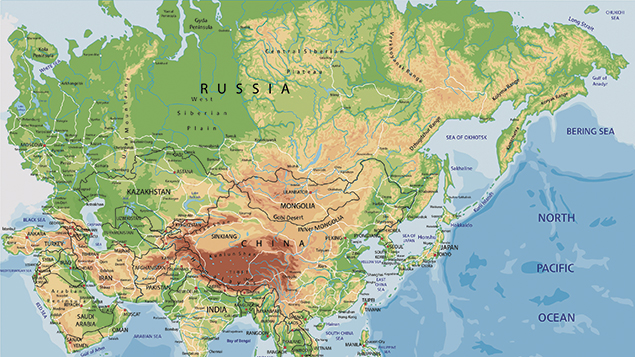
Dr. Tabarovsky was born in Novosibirsk, in Siberia, she said. She knows that when people think of Siberia they often think of the gulags, but “Siberia is very large,” she said; it is about three-quarters of Russia’s land mass, although it has only one-quarter of its population. Its easternmost tip nearly brushes Alaska and its borders also touch Mongolia and Kazakhstan, among other exotic, wide ranging places.
Novosibirsk, like other Siberian cities, “was established in the late 19th century as a stop on the Tran-Siberian Railroad, and it grew into a very big industrial city, with more than two million people. My parents, Lev and Sophia, moved there in the 1960s from other parts of Siberia.” They were drawn by the university there, “which did excellent research, most of it related in some ways to military stuff.” Her parents didn’t do secret research, she said; instead, they were “part of the Soviet scientific intelligentsia.”
When she was 17, Ms. Tabarovsky moved to Moscow. “I really wanted to be there,” she said. “I really didn’t want to be in Novosibirsk.” It was during perestroika, a brief period of reform, from 1985 to 1991, initiated by President Mikhail Gorbachev. “Things started to open up,” Ms. Tabarovsky said.
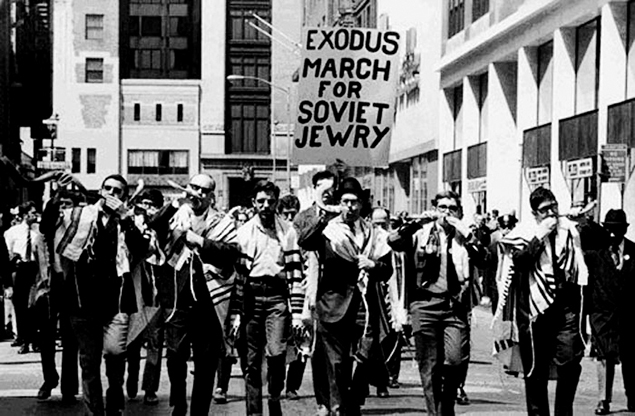
“My father always wanted to immigrate, but by the time he was really prepared to do it, the exits were closed. That was from 1980 to 1989. We left in October of 1989, at a time when a lot of Jews were leaving. About half a million of them went to the United States.
“We left about two weeks before the Berlin Wall came down.”
Jews who left the USSR generally had two destinations in mind — Israel or the United States. “There were no direct flights between the USSR and Israel or the United States, so we all had to travel through other countries,” Ms. Tabarovsky said. Many Jewish families, including hers, found themselves in Austria, either in or near Vienna.
“If you were going to Israel, you could go there immediately from Vienna,” Ms. Tabarovsky said; Jews benefited from Israel’s law of return, which guaranteed anyone with at least one Jewish grandparent or a Jewish spouse the right to immigrate there. “But you needed permission to enter the U.S.
“When we left, the USSR stripped us of citizenship,” she continued. “We had no documents. We had no citizenship. For all intents and purposes, we were stateless refugees.
“In Vienna, we were met by representatives of the Jewish Agency and HIAS. The Jewish Agency took care of everyone who made aliyah. We declared that we wanted to go to the United States, so we were in the care of HIAS.
“We stayed in Vienna while we were processed. In our case, it was three weeks in a little village outside Vienna. Then they shipped us to Rome, in sealed railroad cars. Rome was where the Immigration and Naturalization Service interviewed Soviet refugees.
“Then we found an apartment outside Rome and just lived there and waited and waited until our turn came. Then the American embassy called us for an interview in January of 1990. That’s when we finally came to the United States.
“What did we do while we waited? Nothing. Literally nothing. We received a small stipend from HIAS — and I’ve always been grateful to the Americans who donated to HIAS. We were very grateful. But one of my memories is how little we could buy with that money.”
To listen to Ms. Tabarovsky explain it is to imagine Dorothy when her house landed in Oz, and grim black and white turned to vivid Technicolor. Except everyone in both Kansas and Oz spoke English; Austrians and Italians and Americans did not speak Russian.
“My brother” — Michael is ten years younger than his sister, so he was still a child — “and I spent a lot of time watching Italian television. We watched so much MTV! We spent so much time listening to American music, trying to take in the culture.
“Everything was so bizarre. It’s hard for people to understand what it was like when you live in a world that is totally separated. Totally apart. This was before the internet.
“People in underground circles, refuseniks, would have been better informed than we were but we weren’t part of those circles. We were living in our Soviet bubble.”
It was a classic trope, Ms. Tabarovsky said, to receive a letter from a Russian who already had made it to America. “They’d send photographs of American food stores. There were empty shelves and long lines for basic food items in the USSR. People sent pictures of stores stocked from floor to ceiling with food.
“It was like a food museum, with 50 types of cheese and 15 kinds of milk.”
Ms. Tabarovsky said that when she talks to Americans who went to the USSR during that period, “they all said that something that jumped out at them was how austere everything was.
“There were no advertisements. Just propaganda. And then you come to the West, and you are just blown away by the stores. Not only because of everything that was in them, but because of how beautiful everything was.
“I remember the first commercials I saw. I can remember them frame by frame, because when you see them for the first time, you have a virgin brain. They were such a hit to my brain. One was for M&Ms, one was for Adidas, and one was for a vacation in Hawaii.”
She was not in Rome long enough to learn Italian, but she picked up enough words to try to make some money “by hawking some goods,” she said. “We were allowed to bring only $50 out of the USSR per person, but everybody told us to bring Soviet goods with us — military watches, cameras, photography equipment, matryoshka dolls. I hawked all of it. There was a line of Russian emigres — professors, doctors, engineers — standing in a line in the street.”
Did she sell very much? No? “I think I made a few sales, for a few liras. Maybe about a dollar.”
But the street where they were standing “was a beachfront. Italy is beautiful in December. There were bright oranges on all the trees. Tangerine trees. My brother and I would walk to the next town, to go to the markets there — we didn’t have enough money to take a bus, so we had to walk, and we didn’t have enough money to buy anything, but it was like going to a museum. And my brother was all boy — he was fascinated by the cars. He learned everything about all the cars we saw there.
“The adults felt a lot of anxiety, but I have good memories of it.”
After about two months — an average wait, she said — the family had its interview, and then their next stop was America.
Although most Soviet Jews began their American lives in or near New York, radiating out from dead center in Brighton Beach, the Tabarovskys went to Golden, Colorado. “We had a sponsor, my father’s dissertation advisor,” Ms. Tabarovsky said. “He gave my dad his first job. I started school at the University of Colorado at Boulder. Soon my parents went to Houston — my father’s specialty was oil exploration — and they are still in Houston now, and so is my brother.
“There’s a big Russian Jewish community in Houston,” she added.
“But I stayed in Boulder.”
Although she’d already been to two years of college in Moscow, Ms. Tabarovsky started again as a freshman in Boulder. “I majored in a composite major, central and eastern European studies,” she said. “And then I got into graduate school at Harvard, and I was going to do a Ph.D. in history, but then I realized that I was very new in the country, and I wasn’t ready to make the kind of commitment that a Ph.D. demands.
“Part of the culture shock for me was to realize how different the professional world is here. I chose to go to graduate school because I felt that I had to, but the truth is that I didn’t know what I wanted to do with myself. After the first year, I realized that it could take six, seven, eight years to finish a Ph.D. I wasn’t sure that I was ready for that. I realized that I was putting myself on a narrow track. You can just be a history professor. I felt that I needed to explore American life much more than I had.
“It was only five years after we had immigrated.”
So after she left Harvard with a master’s degree, Ms. Tabarovsky worked in a series of jobs that made use of her knowledge of what by then was the former Soviet Union, often but not always focusing on Jewish life there. “My jobs always had something to do with Russia,” she said. “It was a mix of private-sector consulting. I worked at Harvard in a professional capacity, doing some programming. And I have been part of the think tank world in D.C. For a little bit more than 10 years I have been affiliated with the Wilson Center, as part of its Russia institute. Today I am a fellow there, focusing on antisemitism.” She’s also affiliated with many other think tanks and similar institutions.
Ms. Tabarovsky’s professional life has been “essentially building on my experience and expertise in Russia, because a lot of things were changing in Russia, and there was a lot of interest in it,” she said. “A lot of people wanted to understand Russia and go and work in Russia. This was in the 1990s and the early 2000s.”
The world kept changing — Russia kept changing, along with our relationship with it — “and then, around 10 years ago, I got an opportunity at the Wilson Center to do my own research, and that coincided with my reconnecting and really finding my way to Judaism and to connecting to the American Jewish community.
“It took me a while to do it. Because being Jewish in Russia meant something very different from being Jewish in the United States.” Being Jewish in the Soviet Union was to be part of a detested minority; there was nothing good about it, and there was no way out of it.
“But when I finally managed to do it,” to bridge that gap, “I turned my attention as a researcher to topics related to the Soviet Jewish experience. I started researching and writing about the Soviet Jewish experience of the Holocaust, because it was very different from the way Jews in Europe experienced it.”
To the Jews of the Soviet Union, “it was not the Holocaust of Auschwitz and the death camps. It was the Holocaust by bullets.
“The war in the Soviet Union started quite a bit before it arrived in Europe. And it was an industrial annihilation machine. The Nazis began annihilating Jews in the Soviet territories. Already in June of 1941 they were just executing everyone who they came across as they invaded and moved eastward. As they moved through Ukraine and through Belarus and through the Baltics, they just murdered the Jews wherever they found them, en masse.
“I began writing about that because I had a feeling that this experience was not fully understood among American Jews, or not fully processed. This was my topic of interest.
“I was writing about it on the side, because my day job had to do with Russia in general. It wasn’t specifically Jewish.
“But at some point, in 2017 or 2018, I first turned my attention to questions of anti-Zionism, which has been the focus of my work since then.
“And it’s then that I first realized that there is something happening on American campuses that reminded me of something that seemed familiar to me, as an ex-Soviet Jew, of my Soviet experience. It was the anti-Israel propaganda that demonized Zionism in the same terms that was familiar to Soviet Jews from our Soviet experience.
“I hadn’t seen it in the 1990s on campus when I was a student, an undergraduate or in graduate school. Today, I understand, from having done research and spoken to other people, that it wasn’t there so much in the 1990s. I think that it was there in the margins, but it wasn’t prominent. It’s become prominent in the last decade or so.
“And so I started writing about it.”
Ms. Tabarovsky’s first piece about Soviet antisemitism and anti-Zionism — “We Soviet Jews Lived Through State-Sponsored Anti-Zionism. We Know How It Is Weaponized” — was published in the Forward in 2019; it’s online and easily googleable. She writes about how Stalin, once his initial assumption that Israel would be his ally was proven untrue, decided to demonize it. He used anti-Zionism to nourish antisemitism, and used both anti-Zionism and its identical twin, antisemitism, to provide Russians with the internal and external enemies they needed.
She wrote a column about antisemitic cartoons, illustrated with some of those deeply horrifying pieces of non-art, in Tablet in 2019. It’s called “Understanding the Real Origin of that New York Times Cartoon” — that cartoon, in the Times’ international edition on April 25, 2019, shows Benjamin Netanyahu as a short-legged, long-eared, huge-nosed sausage-shaped dog, wearing a Jewish star necklace and a leash. Donald Trump is holding that leash, but seems to be pulled rather than leading. He’s fat, wearing black-framed dark glasses and a kippah. It’s grotesque. Ms. Tabarovsky unpacks it mercilessly.
Ms. Tabarovsky has reported opinion pieces published in many places; those pieces are both fact-filled and powerfully moving.
Most of them focus on a fact that she finds both obvious and unseen — that college students began to hear criticism of Israel all around them. It wasn’t presented as antisemitism, or even anti-Zionism. It was just constant criticism of Israel.
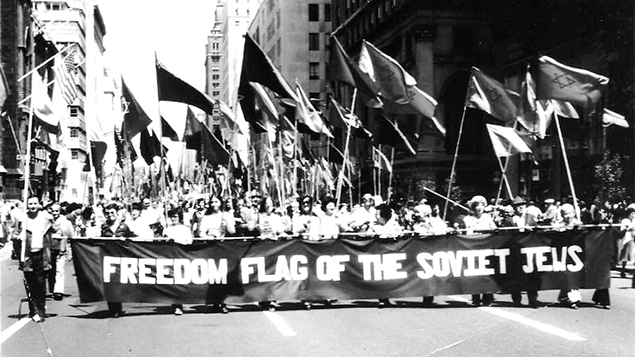
“People were talking about it as if it were something new,” Ms. Tabarovsky said. “What I was telling them is first, it’s not new, and second, it’s not organic. We Soviet Jews experienced it in the 1970s and ’80s, and even before that, and it was the product of an industrial-strength propaganda machine. The Soviet propaganda machine.
“So it was not organic. It was not tied to issues of justice. It had been devised to support Soviet geopolitical interests in the Cold War. It was part of Soviet anti-America propaganda.
“So suddenly there was history to this. Suddenly there was depth to it. And suddenly there were all these interesting questions. If it was part of Soviet propaganda during the Cold War, why are we seeing it here and now?”
Her work became increasingly compelling, both to readers and to herself, Ms. Tabarovsky said, as she kept digging, thinking, and writing.
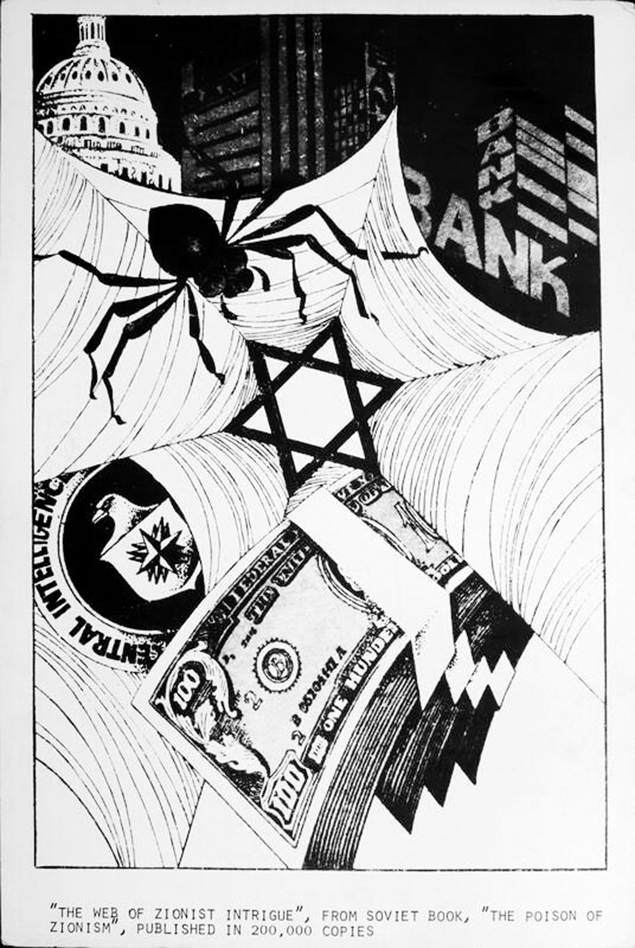
“The research question that motivated me was the correspondence between these two linguistic spheres.” She explored “the way the Soviets talked about Zionism and Israel and the way American campuses were talking about Zionism and Israel were virtually the same. Equating Zionism with fascism, Nazism, settler colonialism, imperialism, Israel as a genocidal state — all had already appeared in Soviet propaganda in the late 1960s.
“Those themes were repeating themselves. It’s incredible. And I thought, well, you don’t just reinvent things like that from scratch. It doesn’t work that way. So there must have been channels of transmission. So I spent a few years trying to figure out if that was right.
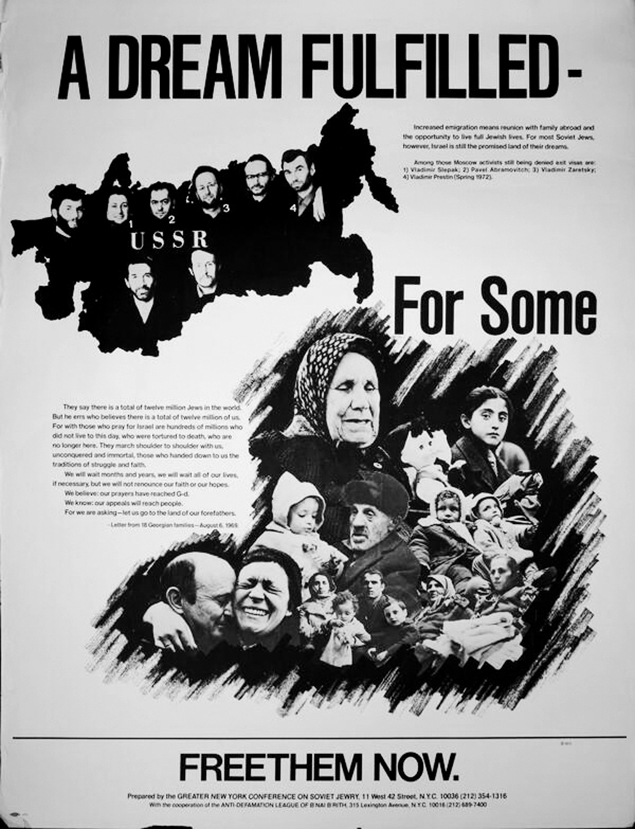
“I started by reading Western left-wing press; I knew about the specific publications that the Soviet Union sponsored during the Cold War. They conveyed Soviet propaganda. I wanted to see if they had articles that contained this language. And they did.
“So I went on from there to broader left-wing publications, but I focused on those where I could say with certainty that they had connections with the Soviets. I spent a lot of time in the British Library, because the left was very strong in the U.K.
“And having read enough, and having done other research, I understood that absolutely there were channels where the Soviets sponsored left-wing publications and groups and events.
“Many of them were events in what we called the Third World then — today we call it the global south — because they were national liberation movements, as they were called then. And they created an echo chamber, an ecosystem, you could say, that was stuffed with anti-American propaganda, because they were building an anti-Western, anti-American ecosystem in the Third World and in the West.
“They inculcated anti-Zionist, anti-Israel messaging as part of their broader agenda. And they tasked their diplomats with communicating their anti-Zionist positions to elected officials in the West, to try to get them to turn against Zionism and Israel.”
Why did they do that?
“Because when the Israelis won the Six Day War in 1967, it was a real crisis for Moscow, because it was supporting the Arab states. Egypt, Syria, Jordan were Soviet.” They were somewhere between allies and client states, she added. “The Soviets were financing them and training their militaries and supplying them. During the Cold War, starting with Khrushchev in the 1950s, the Soviets viewed the Third World as their sphere of influence. They believed that they could gain influence there in their grand war with America. So they worked very actively in that part of the world.
“Early on, Israel declared that it would orient itself toward America.
“When the Six Day War happened, the Soviets fully expected that the Arab states would win because they knew how well trained and well equipped they were. It was really shocking for them that little Israel won in six days, and that immediately raised their suspicions.
“The KBG and the Soviet security apparatus were always conspiratorially minded. That’s just what happens in a totalitarian state. And it was only about 15 years since Stalin died. They all were trained in the Stalinist system, and this kind of paranoia was part of the late Soviet regime.”
Also, she added, that regime was “very antisemitic.
“So they immediately jumped to the question of how there must have been something behind the scenes that really helped Israel.
“And they thought it was America. When they looked at America, they saw Jews in influential places, and they immediately jumped to the idea that, wow, it’s Jews who control everything.
“It’s classic.”
But the Soviets had a problem. “They couldn’t talk about Jews, because they knew that if they did, they’d sound like Nazis. So they talked about the Zionists instead.
“And that’s where the refusenik part of the story comes in.
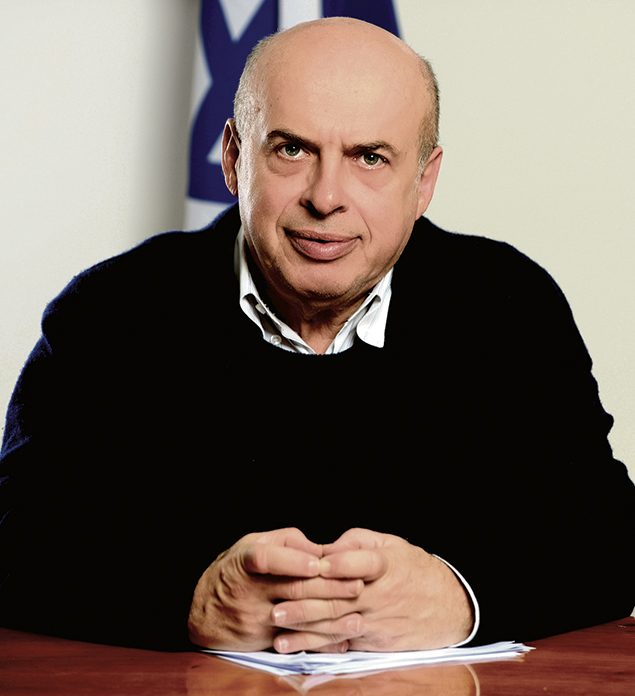
“1967 was a time of great inspiration for Soviet Jews. For people like Sharansky,” the fabled, brilliant refusenik. As Anatoly Schchransky, who started life as a child prodigy, he was thrown into prison after prison after life-endangering prison for the crime of wanting to live a Jewish life outside Russia. Eventually, miraculously released after enormous pressure was placed on the state, he made aliyah, became Natan Sharansky, and became an Israeli politician of enormous probity and charisma.
“This was a point of real awakening for Sharansky,” Ms. Tabarovsky said. “He and other refuseniks realized that Israel and their Jewish identity could be a source of inspiration, not shame.”
The Soviets’ method of dealing with Jews was “quiet assimilation,” she said. “Let’s deprive the Jews of every mode of identity, of synagogue and Jewish culture and Jewish history and Hebrew and let them quietly assimilate.” But because antisemitism was so deeply rooted in Russia, and because it was state-sponsored, complete assimilation was a hard ask.
“So for Soviet Jews their Jewish identity was a source of shame and confusion, because they knew they were different but didn’t understand what made them different. Kids would tease them at school for being Jews, because of their Jewish names, and they would come home crying, asking their parents ‘Why are they teasing me? I’m just like them. I speak Russian.’ They loved Russian literature and Russian music. They were Russian in every real sense and yet they were called Jews and discriminated against.
“It was very traumatic.
“That’s when parents had to explain to their kids what it meant to be a Jew.”
But those parents didn’t really know what it meant either. Their generation, like their kids’ generation, had been systematically kept from being Jewish in any but a genetic way.
“Jewish parents often said that being a Jew means that you have to study really hard to get into the best college and get a good job. Get really good at math or physics, because the humanities were extremely politicized. So many of the refuseniks were great technical thinkers. Sharansky was a great mathematician
“So the framing is that being a Jew is to be handicapped — and then 1967 happened.”
In response, “the USSR launches a massive anti-Zionist campaign.” Some of them feel that there is a “Zionist conspiracy operating against them around the world.”
The response isn’t monolithic, Ms. Tabarovsky continued. Some Soviet politicians, including the country’s leader, Leonid Breshnev, saw the dangers in the approach. “He was an old-school Bolshevist internationalist,” she said. “He thought that it might create too much negativity.” (Spoiler: It did.)
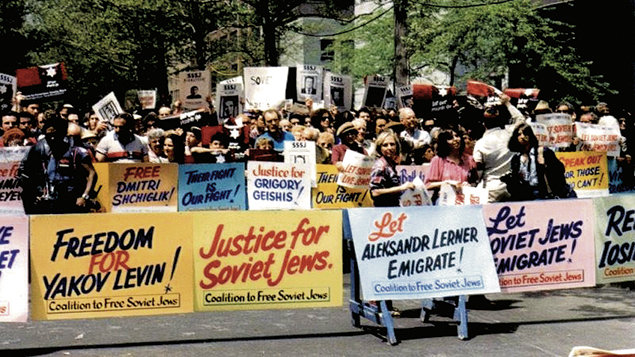
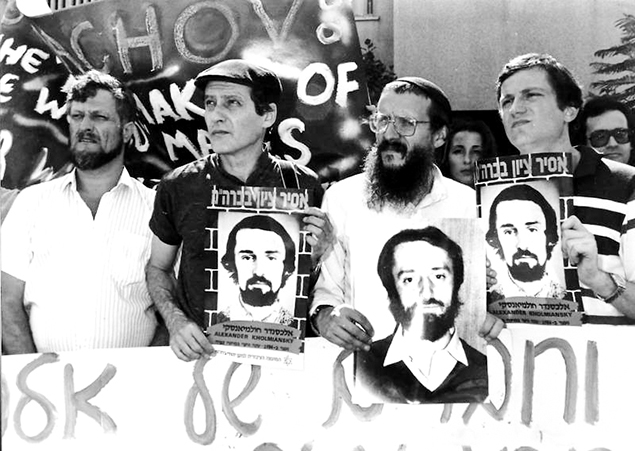
The refusenik movement and the Western movement to free Soviet Jewry began at around this time, and it was hard for the Soviet Union’s leaders to believe that it wasn’t all a gigantic Zionist plot, she said.
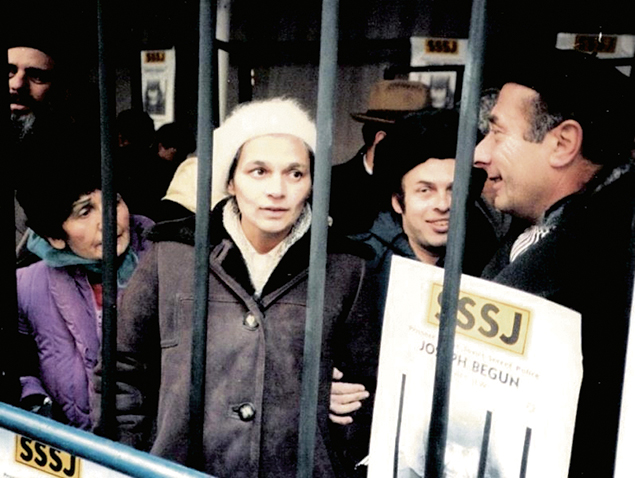
Ms. Tabarovsky tells the story of the Soviet response to Russian Jews, but that’s just one of the threads that she weaves throughout her work.
She also focuses on the Jews “who decide that they’re going to reclaim everything that the state has taken away from them. They begin to study. They apply to emigrate. They refused.”
The word “refusenik” is in the title of her book, she said, but she’s reversing the usual understanding of the term. It’s not that the USSR refused them visas, and Jewish life, and to be freely themselves. It’s that the refuseniks refused.
“They refused the antisemitic environment they were living in. They refused to assimilate into the antisemitic culture they lived in. They refused to become invisible. They refused to be erased. Instead, they began a process of reclaiming their real Jewish identity. They asked themselves what it meant to be Jewish. ‘They’re telling us that we’re Jews,’ they said. ‘We don’t know what that means, so we’re going to find out.’”
Her book describes that process.
“Part of the reason I chose this subject is because it’s an incredible story of Jews reclaiming their Jewish pride, their Jewish identity, their connection to the Jewish people,” she said
“Right now, American Jews feel very much under attack. They’re surrounded by antisemitism. It’s in fashion. It’s a calling card in some spaces. In this environment, you have to rethink how you think of yourself, and to connect yourself to a different tradition.
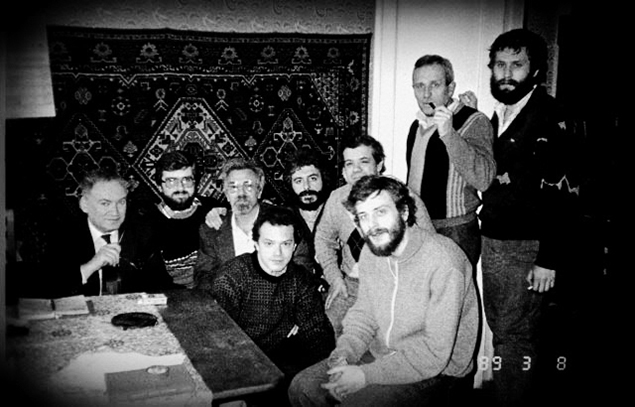
“I think that American Jews have developed a very strong collective memory of the Holocaust, and it’s a story of victimhood. The story of the refuseniks is a story of struggle, empowerment, and victory.” She feels, however, that American Jews are more closely woven into the refusenik story than they often realize, and they too can take heart and wisdom from it.
Ms. Tabarovsky’s book weaves these two stories — of refuseniks and young American Jews on campus today — together. She acknowledges the differences, but she argues that the commonalities are there, they’re strong, and they provide valuable lessons for today.
“In the book, I write about how the refuseniks did not think of themselves as victims,” she said. “That’s extraordinary, because they were kicked out of everywhere. They lost their brilliant careers. All in the name of being true to themselves, of being whole instead of having to life a double life, of being Jewish on the inside and just kind of blah on the outside.”
Nobody could possibly think of Ms. Tabarovsky as being blah. And she advocates for being Jewish inside and out.
Who: Izabella Tabarovsky
What: Will talk about her new book, “Be a Refusenik: A Jewish Student’s Survival Guide”
Where: At Chai Center Chabad in Short Hills
When: On Wednesday, December 10, at 7 p.m.