

Lights, cameras, focus groups
Kevin Goetz helps movie moguls pick (mostly) winners and stay on budget
Kevin Goetz did not think the “Barbie” movie would work.
Which is kind of ironic, since Mr. Goetz is the founder of Screen Engine, a film research and analytics company and makes a living telling studio executives how successful a movie will be.
As he and co-author Bob Levin wrote in his new book, “How to Score in Hollywood: Secrets to Success in the Movie Business, Mattel executive Robbie Brenner “brought me in to conduct research on a long list of Mattel brands, the objective being to uncover which would inspire the greatest interest among moviegoers if they were used as the basis for theatrical films.
“When the results were in, Barbie landed at the bottom of the list. The brand was loved by many, had tremendous awareness, and was nostalgic among adult women.
“But the data told us that outside of very young girls and some of their mothers, there was not much excitement for a Barbie movie. I told Brenna to run from it.”
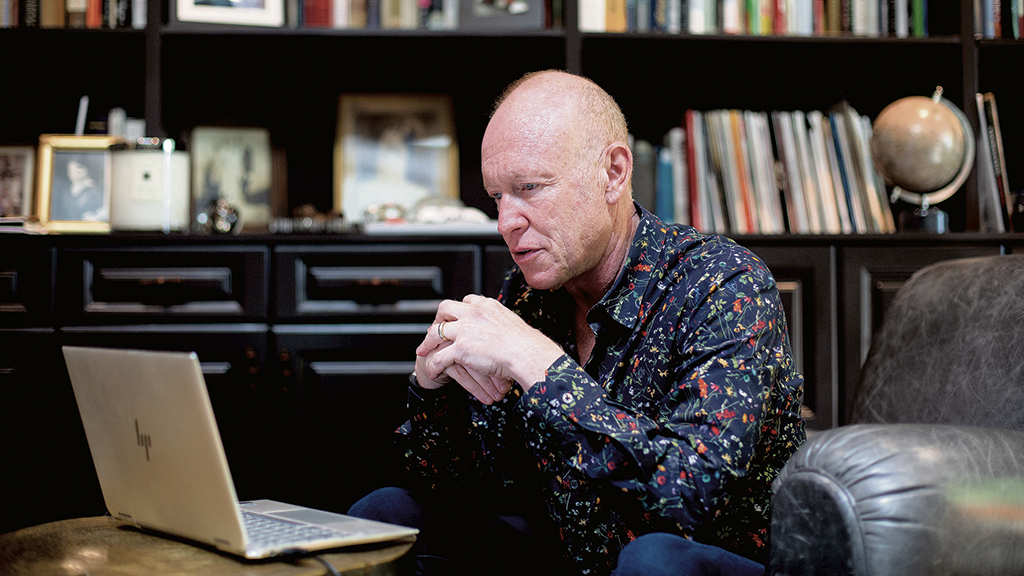
“Barbie” of course brought in almost $1.5 billion and went on to become the highest grossing film of 2023. When I mentioned this seeming disparity to Mr. Goetz during a recent Zoom, he explained the Barbie he looked at isn’t the “Barbie” they filmed.
“The early concept tests we did showed that Barbie by and large was rejected by almost everyone,” he said. “There was huge awareness. Everyone knew Barbie. But a Barbie movie was of zero interest to men, mild interest to young girls, and some interest with nostalgia to their moms.”
What happened?
After rejecting many scripts, the producer, Margot Robbie — who also eventually played Barbie — hired Greta Gerwig and Noah Baumbach to have a go at it.
“They changed the DNA of the property,” Mr. Goetz explained. “They gave it that irreverent tone. That way of going in and saying perfection is not attainable. You can be wonderful and not perfect. That theme of female empowerment struck a chord in every woman of every age.”
That is just one of hundreds of behind-the-scenes anecdotes about films and the people who make them — Mr. Goetz seems to know everyone — and is sure to delight movie lovers, even those who don’t start every Monday morning checking the weekend grosses.
In a wide-ranging interview, he covered everything from entitled audience members who believe it their right to take phone calls during a showing, to the importance of using both sides of your brain. And of course he talked about his early days in East Brunswick.
“I was born in Brooklyn,” he began. “In Bensonhurst. When I was about 7 years old, we moved to the country, which back then meant either Long Island or New Jersey. In our case, it was Central Jersey.”
The family moved to East Brunswick, which was a very good place for a young boy, particularly a young Jewish boy, to grow up.
“It was a pretty strong Jewish community,” Mr. Goetz said. “We had the East Brunswick Jewish Center and there was a Reform temple” — he doesn’t remember the name — “in New Brunswick.
“The funny thing is that friends of mine who went to the Reform temple, later in their lives were more religious than people who went to the East Brunswick Jewish Center, where I went. Mine was more traditional.
“I remember my mom was very much a vocal proponent of women getting aliyahs, and I remember the rabbi dismissing her. This was in the early ’70s.”
Mr. Goetz, who describes himself as a High Holiday Jew, compares his Hebrew school experience to his secular study of “geometry and algebra, thinking what the hell am I going to do with this stuff. And then you realize that there actually is a reason for it: stretching my brain in a particular way or making me think critically.
“It’s the same with Hebrew school. It informed the sort of person I am. I try to be a mensch every single day, and live a life of gratitude and tzedakah.”
Originally, Mr. Goetz intended to make a career as a performer. “I was a triple threat,” he said. “An actor and a singer and a dancer.” He achieved a measure of success while still in high school, traveling across the Hudson and landing parts in commercials.
“A lot of mothers and dads in town would tell me, ‘Oh my God, that’s so cool that you get to do those commercials on TV. How do you do it? I want my kids to do it?’ And I thought, ‘Let me think of how do I leverage this?’”
He started a dance and acting school. Obviously.
“I found a space in a local preschool,” he said. “I had four teachers and up to 100 students at one point. I ran it for five years. I was 17 and the youngest member of the Brunswick Chamber of Commerce. The school helped me pay for college.”
College was Mason Gross School of the Arts at Rutgers; Mr. Goetz graduated in 1984 with a degree in theater. He immediately started landing TV commercial work, enjoying a modicum of success. He was a Dominos pizza boy and for three years he also was a Wrangler jeans guy. He appeared in campaigns for Sure deodorant, Toyota, and McDonald’s.
About a decade in, though Mr. Goetz went legit, taking what he calls a survival job with a company doing research. “I didn’t know anything about the business of research,” he said.
He learned.
In 2010 he founded Screen Engine, which since has expanded into television and gaming.
While his initial decision was at least financially motivated, he also felt the need to scratch the same itch that drove him to establish his dance and acting school.
He contends most people have more than one side to their makeup. It’s what he calls their “and.” “One day I’d like to give a TED talk on finding your ‘and,’” he said. “Understanding that you can do this and do this and this.”
But is there a disconnect between the two sides of his brain, at least when it comes to the creative arts? Should movies be made on the basis of surveys — the business side of the brain — or based on gut feelings — creativity?
“There have always been filmmakers who balk at the idea of polling people and grading it,” Mr. Goetz explained. “They say that’s impeding the creative process. But the way I look at it, we’re helping filmmakers realize their vision, even though they may not know it.
“Because unlike a writer who can take a manuscript he does not like and put it in a drawer, or an artist who doesn’t like a painting but he can put it in the back of a closet, never to be seen,” it’s different in the movies. “With a movie, other people are involved.
“It’s not a solitary art form. It involves production designers, and art directors, casting agent, editors, composers, each one an integral part of helping create a director’s or producer’s vision. You want people to see it, and there is a large business component to that. So what I do is unpack how you can avoid big mistakes so that your vision gets to the screen.”
He does that in two ways. First there is pre-testing — the main subject of this book. “I have a facility in North Hollywood,” he said. “We have actors read the scripts. The test subjects have testing dials that range from double positive to double negative. They sit there, listen to the actors, and use their dials as the story progresses.”
They also fill out a questionnaire and participate in a focus group.”
The process, Mr. Goetz said, can help everyone from the producers who get a better idea of how to budget a movie (“I can’t tell you how many people screw up by not budgeting correctly,” he says) to the director and screenwriter, who may see ideas for changes that make their film more enjoyable.
Screen Engine also does research after a movie is completed, showing it to test audiences, who rate it. A surprising number of films have had their endings changed based on what the test audiences report. Those films include “My Best Friend’s Wedding,” the 2004 remake of “The Stepford Wives,” and “Rambo.”
What will the future bring? “Hollywood is morphing and changing,” Mr. Goetz said. “The idea of going to a movie theater has shifted quite a bit. People will still go to see movies in theaters because they love seeing movies in theaters, but they are going to see far fewer of them.”
The cost of going to see a movie in a theater has become prohibitive for many people. And that’s without the cost of popcorn. “Avatar,” “Wicked,” and “Zootopia” still draw audiences, but mid-range films — even well reviewed ones — are having a tougher time.
On the other hand, streaming has made it easier to just stay home to watch whatever you want to watch, at your convenience. Netflix and Apple TV and Disney+ all offer unlimited screens.
Mr. Goetz believes he’s seen more than 5,000 movies over the last 40 years. That works out to more than two a week. But he doesn’t watch them the way a normal person does. “I’m always looking at the audience and the screen and then the audience and the screen, trying to see their reaction and add anecdotal color to my analysis,” he said.
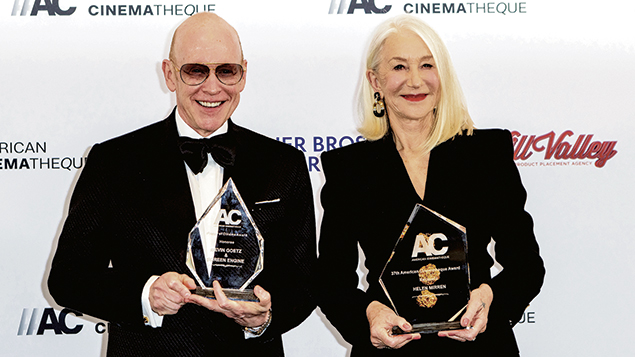
That dedication earned him the prestigious Power of Cinema Award from American Cinematheque, an organization that promotes the moving image, in 2024. And it hasn’t diluted his enthusiasm for the medium. “Even at work, when I do get immersed in a movie, I know it’s doing its job,” he said. “To take me out is a high benchmark, and when it happens, you know, I’m still a fan.”