

Selichot at the detention center
The shofar resounds outside the walls at ICE’s Elizabeth facility
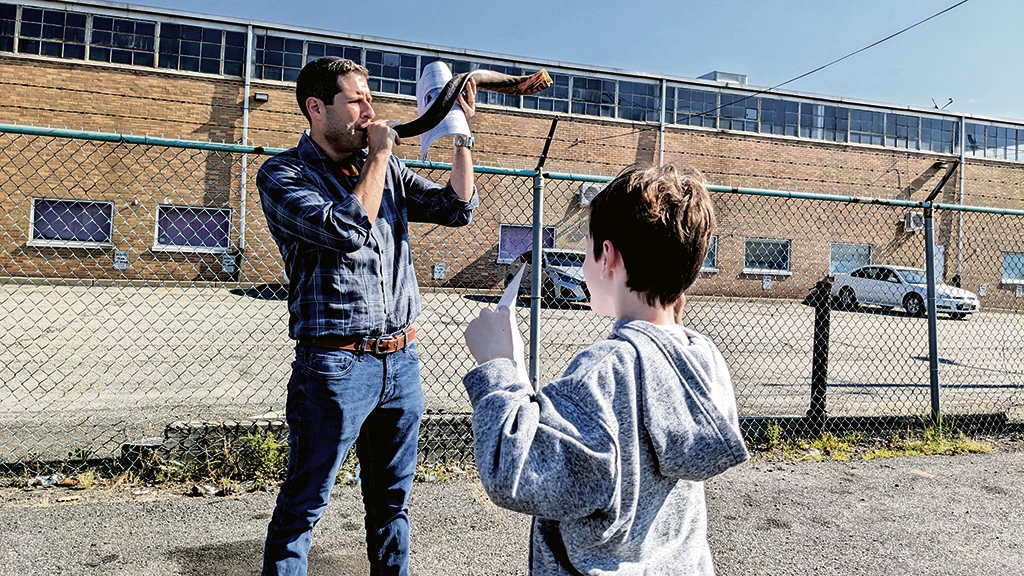
Different parts of the Jewish world have different traditions for Selichot, the prayers for forgiveness that in general Sephardim say throughout Elul, and Ashkenazim start late on the Shabbat before Rosh Hashanah. (Yes, it’s more complicated than that, but this will do for here.)
Like most Conservative shuls in America, Congregation Beth El in South Orange offered a Selichot service last Saturday night. But the next morning, the shul’s rabbis, Jesse Olitzky and Rachel Marder, led another Selichot.
This one was at the Elizabeth Contract Detention Center, the building that ICE — that’s the federal Immigration and Customs Enforcement agency — uses to detain people suspected of being in this country without proper documentation.
About 20 people, ranging from children to seniors — more than enough Jewish adults to count as a minyan — made their way to Elizabeth that morning.
“We chose the Elizabeth detention center because we found ourselves there regularly in 2017 and 2018, when there were attempts to change ICE’s policy and behavior,” Rabbi Olitzky said. That was toward the beginning of President Donald Trump’s first term in office, when such official actions as family separation impelled many Jews, among other religious groups, to protest. (Other Jewish groups supported the president’s actions, then as now.)
“It seems that there has been silence in response to ICE’s actions now,” he continued. “We want to make sure that we hear the cries and the voices inside this ICE facility.”
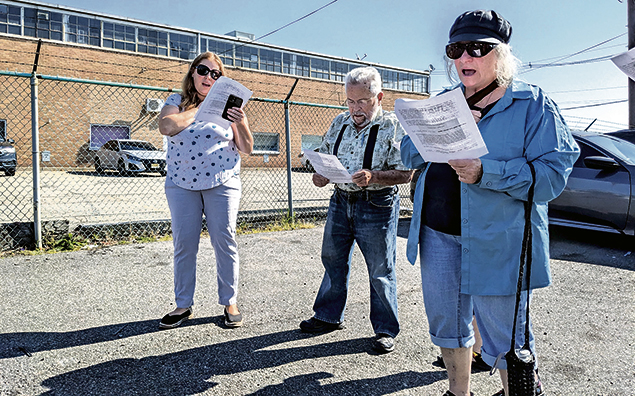
The nondescript building is “tucked away in the middle of industrial buildings and warehouses,” in an obscure corner of Elizabeth, Rabbi Olitzky said; “it’s tucked away, almost as if it were hidden.” it’s unlikely that many people would find it were they not looking for it.”
When they got to the building and stood outside, “we made clear to the guards who were out in front and came to ask what we were doing that we were participating in a prayer service,” he said. “It’s different from a protest. The guards didn’t hassle us. They let us be.”
The ICE employees they encountered were courteous, Rabbi Olitzky added, and they did not wear masks.
As the Beth El group stood there, another group did find the building. “It was a car full of people who had a family member in the detention center,” Rabbi Olitzky said. “They weren’t allowed to visit. So they were driving up and down the street, screaming their name, hoping that somehow they would hear them inside the building.
“We were thinking of them, of that family, and hoping that the sound of the shofar would awaken so many of us from complacency about what is going on around us. We hoped that they would hear our shofar blasts and would know that we are thinking about them.
It was appropriate to have Selichot at the detention center because “of the themes of Selichot — asking for forgiveness not just for our individual transgressions, but for communal transgressions,” the rabbi continued. “Asking for forgiveness for the sins that we as a group — as a community, as a polity, as a nation — have been committing is exactly what we do in the month that leads up to Rosh Hashanah, and in the month that follows. “Remember that many of the prayers are written in the plural,” Rabbi Olitzky said. “it’s the notion that we’re all responsible for each other’s actions.”
That morning, he added some newly written sections of prayers to the traditional ones. The Al Chet, the list of sins for which we ask forgiveness that we say on the High Holy Days and at Selichot, offers the opportunity to think about what we have done wrong, both separately and collectively; those actions do not have to include only the ones we think about every year. The list can expand.
That morning, the group from Beth El asked forgiveness for the sin of “closing our eyes to look away from the horrifying reality that face many families who are torn apart due to deportation, and that children may be sent back to a country they’ve never called home,” Rabbi Olitzky said.