

‘Soul of a Nation’
Documentary filmmaker looks at the divides in Israel society

The documentary “Soul of a Nation,” about the schism in Israeli politics, is a film whose unlikely genesis began with the director’s mom.
Jonathan Jacubowicz is a Venezuela-born documentarian whose mother, Daniela, “did aliya about 15 years ago.”
On a Zoom from his home in Los Angeles, he continues: “She lives in Tel Aviv now. From the beginning of 2023 something shifted in the way she was talking about Israel. For many years, all she spoke about was how happy she was. How everything was great. How it was her dream to be there.
“Then suddenly she started talking about politics in a way that reminded me of what we’d lived through in Venezuela, which was a society so divided by politics that we ended completely destroying the country.
“So I started getting worried and paying more attention to the divide. I felt I had to do something, because if Israel is destroyed by outside enemies, that’s one thing. But if Israel is destroyed by infighting and I did nothing about it, I couldn’t forgive myself.
“I thought: Let’s go to Israel. Let’s see if we can get people to communicate.”
Mr. Jacubowicz arrived in Israel in late May and stayed until the end of September 2023, leaving just a week before October 7. In his time there, he spoke to more than two dozen Israeli leaders on both sides of the political spectrum, former prime ministers, defense and foreign affairs ministers, Nobel Prize winners, all trying with mixed success to make sense of the mess.
The result of all that time in Israel, and all the conversation there, is “Soul of a Nation,” which Mr. Jacubowicz narrates. (While he returned to Israel for brief visits after October 7, he did not film then; pretty much everything in the documentary is based on events before the Gaza War, so it is a bit outdated.
Perhaps because she was a relative newcomer to the country, Ms. Jacubowicz believed the divide she experienced two years ago was something new. Yes, there had been mass demonstrations in 2023 against government plans to stifle the Supreme Court. But the fact is that level of rancor has been part of the Israeli political scene for at least three decades or more.
Examining this discord, Mr. Jacubowicz created an informative primer for anyone not keeping an eye on Israeli politics that also offers interesting nuggets for those who are.

The film starts in 2005, when the Israeli government forcibly removed all Israeli settlers from Gaza, where 30,000 IDF troops had been assigned to protect 10,000 settlers. It was traumatic — both for the settlers and the soldiers now tasked with their removal.
If Israelis hoped the move would bring peace, they were mistaken. There is a scene of a young Hamas trainee saying to a camera: “We asked Hitler why he left some of you alive.”
The perception in Israel, as Mr. Jacubowicz says in the film, was that the country “had gone to its outer limits of compromise and all it received in return was Intifada.”
The anger the disengagement generated in Israel was strikingly similar to what had happened a decade earlier following the Oslo Accords. Then, too, there were massive demonstrations throughout Israel, but they were followed by a national tragedy. As one film participant put it, Prime Minister Yitzhak Rabin was assassinated “because he had the audacity to push for change.”
The latest schism, the one that worried Mr. Jacubowicz’s mom, was the result of Benjamin Netanyahu’s efforts to check the Supreme Court’s ability to limit the power of the government. Demonstrations against the proposal rivaled the size of the recent Bring the Hostages Home rallies.
“Getting closer to October 7, we felt like we were the only people talking to both sides,” Mr. Jacubowicz told me. “Israel is a small country. You want to talk to someone, just walk across the street. But there was a level of disconnect. The lack of communication became chilling and mind-blowing.”
Worse, Yoav Gallant, a former defense minister, cautioned that “the divisiveness threatens Israeli security.”
He said that before October 7. Considering that statement in retrospect raises the possibility this divide encouraged the Hamas invasion. But that is not something Mr. Jacubowicz covered in his film, which focuses on the Supreme Court-related discord, which he says he approached with an open mind.
“I have some personal opinions, but I was able to put them away because I was interested in what [the people I interviewed] thought. One of the things that struck me from the beginning talking to both sides is that there were no stupid people. Both sides were incredibly intelligent and incredibly articulate and convincing.”
While both sides can be intelligent, articulate, and convincing, both sides can’t be right. It is hard to understand how a film about the issues dividing Israel doesn’t address the settler movement in the West Bank, charedi refusal to serve in the military, and the prime minister himself.
On the day this is written Israeli press reported settlers had set fire to a Palestinian mosque. The day before they’d set fire to Palestinian trucks. And the day before that, they’d stopped Palestinians from harvesting their olive crop. And they did all this with apparent impunity.
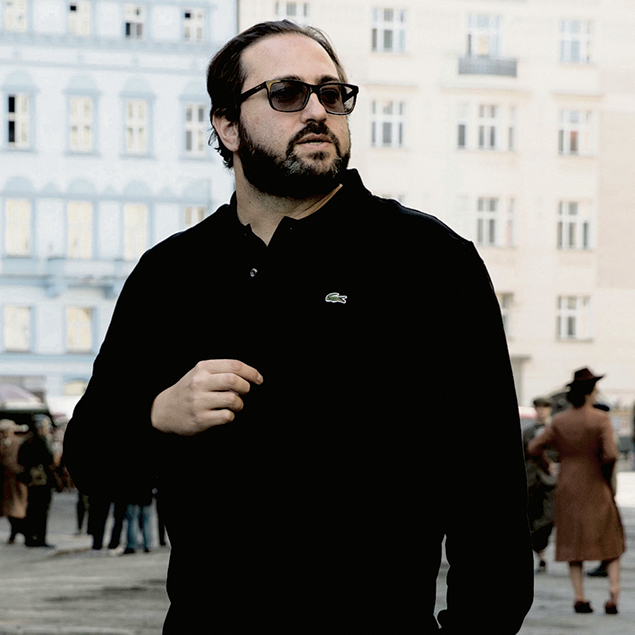
Mr. Jacubowicz argued that I was generalizing too much, making “a blanket stigmatization of settlers, as if it’s just a group of crazy radicals who are trying to attack the Palestinians. There are some who are like that. But it’s nowhere near the majority.”
True, not all the settlers attack Palestinians. But strangely, the folks who attack West Bank Palestinians all seem to be settlers.
His response was the same when I asked him about the charedim. “There are some religious Jews who are part of the military, you know, and there is an entire new unit made up of charedim.”
I told him I did know that and I also knew about incidents when religious zealots ganged up on charedi soldiers and beat them up.
And then there is the issue of Netanyahu I wrote about a film “The Bibi File” here last December. The filmmakers had managed to get police interrogation footage of people who reportedly gave Netanyahu gifts that, in at least one of the cases he’s facing now, were valued at $300,000.
Mr. Jacubowicz kind of poo-poos the charges. “I am not in a position where I can defend or attack what Netanyahu accepted as gift,” he said. “I’m from Venezuela, so the notion that somebody receiving a Rolex is corruption is a little strange to me. A Rolex from Arnon Milchan,” the Israeli billionaire, “is probably illegal, but doesn’t sound to me like the end of the world.”
Ironically, it is just that kind of corruption that ultimately forced Mr. Jacubowicz to leave Venezuela. “I made a movie that got me into trouble with the government,” he said.
The grandson of Holocaust survivors from Poland, Mr. Jacubowicz grew up in a “small, but significant and very tight” Jewish community in Caracas. “I went to Jewish school, elementary and high school. I was active in the community but was not very religious.”
He was 19 when he directed his first film, at the behest of an aunt who wanted to tell the story about her parents and of Jews arriving in Venezuela during World War II.
It was called “Ships of Hope,” and was “a little bit of a break,” he said. “It ended up being bought by HBO in Spanish and Discovery Channel. So it kind of showed me and my family that there was a way ti make a living as a filmmaker, something which was unthinkable in Venezuela.
His next full-length film, “Secuestro Express” — “Kidnapping Express” in English —is about the high crime rate in Venezuela. It smashed box office records in the country but was not well received by the government, which threatened to put him on trial.
So he’s experienced two countries in turmoil. I asked if he recognized any of that in the United States.
“Absolutely,” he said. “I think the United States is living on October 6.”
Soul of a Nation is available for streaming on major platforms.