

The future is calling
Clearinghouse offers U.S. day school students a pathway to Israeli higher ed
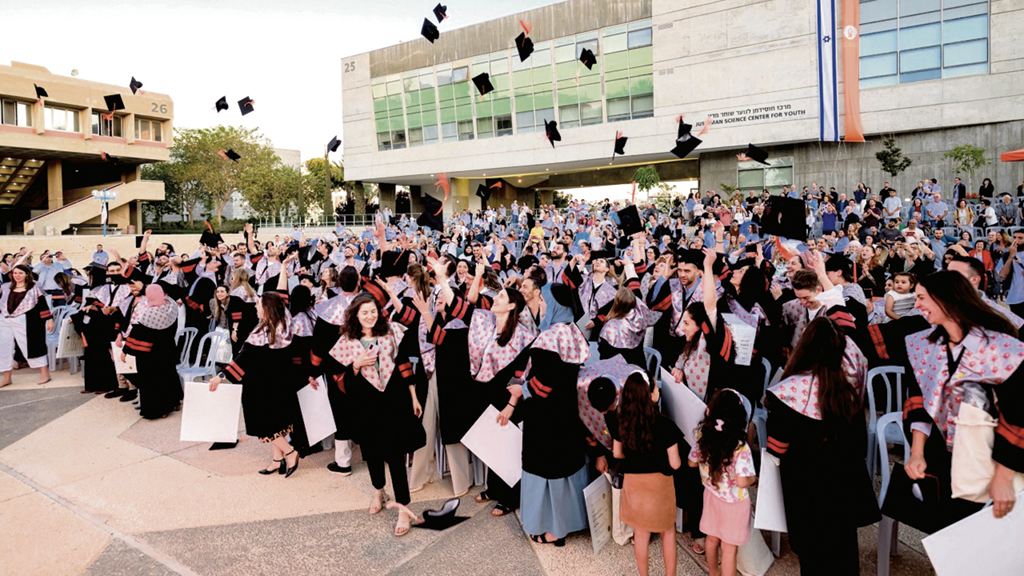
A new campaign, dubbed the Future is Calling, helps Jewish high school students and their parents find information about higher education in Israel within an English-friendly framework.
Launched by the Tzemach David Foundation, the initiative (online at TheFutureIsCalling.org) addresses a significant increase in inquiries, the result of the confluence of spiraling college tuition and spiraling hostility toward Jews on college campuses.
The story behind the Future is Calling starts just weeks after the Hamas attack on Israel on October 7, 2023, when University of Pennsylvania graduate and major donor David Magerman halted all financial support to his alma mater.
In an open letter to Penn’s leadership, he wrote that he’d become “deeply ashamed” of his association with the university, saying that “there is no place for self-respecting Jewish people at an institution that supports evil. And, by hosting Hamas on campus, and by failing to call Hamas evil, that is exactly what Penn has done.”
Mr. Magerman redirected his largesse to several Israeli institutions of higher learning: Tel Aviv University and Bar-Ilan University in central Israel, Technion-Israel Institute of Technology in Haifa, Hebrew University and Jerusalem College of Technology in the capital, and Ben-Gurion University of the Negev.
He had already invested in strengthening Israeli public education at the K-12 level by establishing the Tzemach David Foundation in 2022 to “create meaningful change through Zionism, leadership, and innovation.” The first area of implementation is the state’s National Religious schools, whose approach roughly corresponds to America’s modern Orthodox day schools and is the system of choice for many English-speaking immigrants.
Mr. Magerman’s post-October 7 expansion into the higher education realm is driven by the goal of improving the integration of non-Hebrew speaking students for the benefit of both the students and the state.
This involves, for instance, offering newcomers a wider variety of courses taught in English while helping them master academic Hebrew so that they can gradually mainstream into Hebrew-speaking degree tracks. It also involves offering more support services for foreign students to help them acclimate academically, socially, and culturally.
While working with beneficiary schools to create or refine such programs, the foundation’s leadership saw the need for a central online clearinghouse where potential students have access to accurate, reliable information on Israel’s higher-education landscape, presented in a user-friendly, culturally relevant format.
The foundation’s executive director, former teacher and educational consultant Tamar Krieger Kalev — before moving to Jerusalem, she worked at Jewish high schools including Teaneck’s Ma’ayanot Yeshiva High School for Girls — explained that existing sources of information were inconsistent, incomplete, or confusing for Americans.
“We wanted to distill all the information and present it in not only English but in an American context, so that people can easily find out what they really want and need to know,” she said.
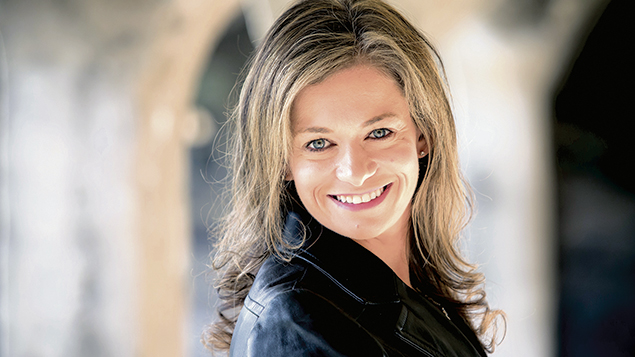
That’s why the Tzemach David Foundation rolled out the Future is Calling, which includes a free guide to Israeli higher education on request.
In a press statement, the foundation explained that while its overall focus remains helping English-speaking immigrant families integrate and thrive in Israel’s primary and high schools, the lens has been widened to include helping non-Israeli students and families “see Israel itself as a first-choice destination for higher education.”
The Future is Calling campaig — bringing together parents, students, and universities to imagine a future where Israel is not only the homeland, but a place of world-class learning, belonging, and growth. Choosing Israel opens doors that last a lifetime — opportunities for networking, professional development, and friendships that root students both in the Israeli and global community.”
The information flow goes both ways, Ms. Krieger Kalev said. In addition to disseminating information to prospective students, the foundation makes programming suggestions to universities based on the questions they receive from prospective students and their parents. “For example, there is a demand from Americans for more physical therapy and occupational therapy degree programs,” she said.
Another example is presented by students interested in pursuing a degree in medicine. The Israeli structure, designed for students coming out of a few years serving in the military, doesn’t always follow the American standard of four years of undergraduate and four years of postgraduate study. “We can share pathways in order to make sure that pre-med students see options that are relevant to them,” Ms. Krieger Kalev said.
The fact that the Tzemach David Foundation was established about a year before October 7 points to a trend that already was evident: With American college tuition costing 60 percent to 75 percent more than at Israeli institutions, statistics over the last eight years show a surge in applications from American Jews of all denominations to Israeli universities.
Among Modern Orthodox teens, who customarily spend a gap year studying in Israel before starting college, a small but growing number remain for an additional year or more to do military or civilian National Service (“Sherut Leumi”) alongside their Israeli peers. Last year, Ms. Krieger Kalev said, a record-breaking 150 male and 140 female American gap-year students decided to exercise that option. Many of these young adults will end up deciding to continue their education in Israel.
There are more than 50 colleges and 10 universities to choose from, several of which consistently rank high worldwide for excellence in various fields of study. In cooperation with the Orthodox Union’s JLIC (Jewish Learning Initiative on Campus) program, the Future is Calling can give religiously observant students insights into which Israeli campuses would be most comfortable for them.
To that end, the Tzemach David Foundation has brought college guidance counselors from Jewish high schools to Israel to tour the schools and talk to admissions officers. This is happening amid a growing recognition that for students hoping to make aliyah someday, the old model of gap year in Israel followed by college/university in America followed by aliyah isn’t necessarily in their best interest.
“To be successful in Israel, the earlier you build your life here and learn Hebrew, the better,” Ms. Krieger Kalev said. “We aim to give students the appropriate information while they are still in high school to make an informed choice and smooth out any obstacles. If they know they will be going to college in Israel, this can transform their high school experience; they can be themselves rather than trying to fit some notion of the ideal Ivy League candidate.”
Among the college guidance counselors who’ve participated in these sessions are Leebie Mallin from Ma’ayanot in Teaneck and Esther Genuth from Frisch in Paramus.

“This is my 16th year at Ma’ayanot,” Ms. Mallin said. “In that time, I’ve seen interest in college in Israel increase a great deal. About 95 percent of Ma’ayanot students do a gap year in Israel. In the beginning, it was one or two students per year who knew in advance they’d want to stay after their gap year and maybe another one or two who decided during their gap year to stay.”
She’s seen the numbers grow over the last 10 years and even more so over the past five years. “The numbers have increased since October 7, but this phenomenon was already happening,” Ms. Malllin said. “Now, with the greater variety of international programs available, the opportunities are so great.”
Fourteen of the 76 Ma’ayanot graduates in the class of 2024 intended to stay in Israel after their gap year, she added.
Her informational trip to Israel, along with 10 other college guidance counselors, gave her additional insights to share with parents and their daughters. “Since I’ve seen the campuses firsthand, I can describe the thriving Anglo Jewish communities there,” she said. “And since I’ve met with representatives of admissions offices, I can ask follow-up questions that parents and students may have.”
Ms. Mallin finds most parents support their children in making this decision. “Though the distance can be a challenge, they’ve sent their daughters to Zionist schools and are very connected to Israel. The affordability piece is also important; college in Israel is overall a lot more affordable than college in the States.”
Ms. Genuth has noted a bigger change at Frisch since October 2023. “While we have always had students who serve in the IDF and then continue their college careers in Israel, about two years ago we noticed a shift; a significant number of students and families began actively seeking more information about college options in Israel,” she said. “Our students hold strong Zionist values, and the world post–October 7 has only deepened their commitment to Israel and strengthened their desire to be there.”
Like Ms. Mallin, she found the foundation-sponsored trip “invaluable.”
“Nothing can compare to seeing firsthand the vibrant culture and outstanding academic opportunities at Israeli universities, especially witnessing our alumni thriving on their campuses with the support of JLIC, which has fostered welcoming communities,” Ms. Genuth said.
“I was struck by the number of programs available for students across diverse fields and by how eager Israeli universities were to engage with us, learn about our students’ interests, and build meaningful partnerships. They are genuinely excited to welcome an influx of college-age American students from Jewish day school backgrounds. And our students can access top-notch, world-renowned education that values academic freedom, at an affordable cost, in Israel.
“As a result, we now include a panel on Israeli colleges at our college fair to help students learn more about the incredible opportunities available to them.”
For more information, go to TheFutureIsCalling.org.