

The little minyan that could
Remembering my father on this Election Day
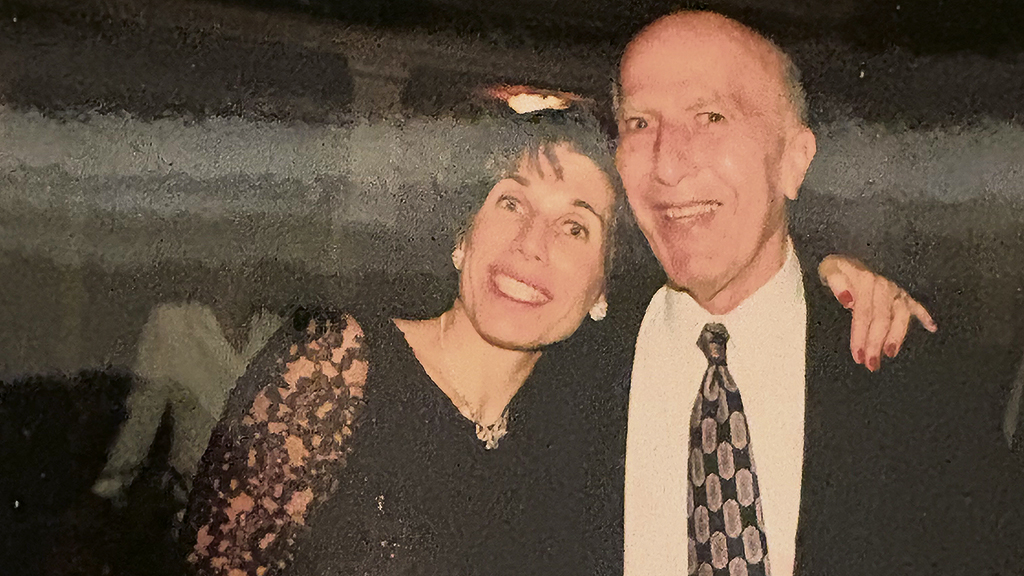
While everyone is looking ahead to the midterm elections, I am looking back to another Election Day: November 4, 2008. That was the day Barack Obama was elected the 44th and first Black president of the United States. It was also the day my father died at age 89.
Mike Leventer died in a Connecticut hospital, near where my sister lived. The funeral was in Connecticut, the cemetery was on Long Island, and the shiva minyan was at our home in New Jersey.
When shiva ended, the house was empty. There was no longer a quorum to recite the Mourner’s Kaddish, and our Conservative synagogue, Congregation Shomrei Emunah in Montclair, did not have regular weekday services so that I could continue the custom.
I knew I didn’t have the discipline or level of observance to recite Kaddish daily, especially if I could not do it at my neighborhood shul. Nonetheless, I felt bereft. Would it be a sin if I created my own ritual for mourning my dad?
Encouraged by our community and our rabbi, I organized and conducted a weekly Ma’ariv service at our home during Sheloshim, the 30-day period of mourning. Every Wednesday for a month, I recited Kaddish for my dad.
When the 30 days ended, something unexpected happened. Congregants who had been attending our makeshift minyan bonded to each other and to the prayers. The 30-minute service in Hebrew and English was accessible. The intimacy and informality of our living room, with its fuzzy old loveseats and mismatched chairs, were irresistible. The rattle of the radiator had a reliable rhythm. As for me, rearranging furniture and piling kippot and siddurim on the coffee table had become second nature.
The minyan was a pause in an otherwise hectic week.
With a combination of curiosity and chutzpah, we agreed to continue the new service. Surely it would be temporary. Maybe a few months, at most 11 months, when my obligation to say Kaddish would end.
I quickly learned, however, that the minyan was not about me at all. It was about community.
Although I sent reminders and asked people to RSVP, predicting attendance was like watching the stock market fluctuate. Would we eke out the requisite 10 people, or would we need extra chairs for an overflow crowd?
Who would attend?
Some people came to say Kaddish, others came to say, “Amen.” When we sang Debbie Friedman’s “Mishebeirach,” folks shared a name of a congregant, family member, or friend.
There was an explosion of joy when people announced births in their families, or other simchas. Expressing gratitude became a recurring theme.
Some participants came directly from the train station, even before going home for dinner. They wore their work clothes and left their briefcases in the foyer. Others came in jeans and T-shirts. They arrived on bicycles, by car, even by motorcycle. They walked unassisted or aided by a walker or cane.
We were a mishkan in Montclair. We didn’t measure our dwelling in cubits, but rather in how silent the Amidah sounded and how spirited the Bar’chu was. As we appreciated the “succession of seasons,” we davened in the sukkah, holding flashlights and observing “the stars in the sky according to Your [God’s] will.” When we prayed on the deck in the summer, the birds accompanied us. My neighbors listened. They didn’t understand a word, but they loved our energy.
If someone was observing a yahrzeit, I encouraged them to say a few words about their relative. Our living room became a history book, a family scrapbook, where we shared stories about the people gone from our lives, yet always present. We were introduced to the dad who grew up in an orphanage and became a successful dentist, and the mom who was a NYC police officer, a highly unusual occupation for a woman at that time.
We admired the determination of the husband who became a Ph.D. in his mid-50s, and the sheer will of the dying husband who left the nursing home to attend his son’s wedding. There was the 61-year-old doctor/father who delivered a baby at home and then died suddenly a few hours later in his own house.
My father would have loved our “little minyan that could.” He loved people and their stories, and he was so proud of being Jewish. When he retired and there was no longer a shamash at his Brooklyn synagogue, Mike took on the responsibilities. Each weekday morning, he made sure there was a minyan. He bought the bagels, unlocked the building, and opened the bottle of schnapps. Our suburban minyan was different. We met in the evening, the front door was always open, and we substituted tea for schnapps.
What did we have in common? In the Montclair living room and the Brooklyn shul, 10 people gathered to pray together. Our minyan was, in fact, temporary, but no one could have imagined we would meet weekly for seven years. When we began to struggle, we decided to meet monthly. What a surprise that our monthly minyan lasted for another six years!
For several months during the pandemic, we davened together on Zoom. On January 6, 2021, we gravitated to our Zoom squares and added the “Prayer for our Country” to our regular service. Then we sat in silence, as we tried to grapple with the horrific events of the day.
Now, 18 years later, as Election Day approaches, I can still remember the call from the hospital telling us Mike had died. It gives me goose bumps. But I also get goose bumps when I imagine my father smiling at the “little minyan that could” created in his memory.
Merrill Silver and her husband live in Montclair; she’s a freelance writer and retired ESL teacher. Her work has appeared in the New York Times, Hadassah magazine, the Forward, the New York Jewish Week, and other publications. Find her at merrillsilver.wordpress.com