

‘The Tailors of Tomaszow’
Allan Chernoff talks about his mother’s life in prewar Poland, the Shoah, and Jewish challenges today
The story that Allan Chernoff of South Orange tells is complicated, because life is complicated.
His mother, Rena Margulies Chernoff, survived the Holocaust. She didn’t talk about it when he was growing up in Brooklyn, and he didn’t ask; it was a benign, mutually imposed don’t-ask-don’t-tell life. Granted, the number A-15647 tattooed on her forearm was a constant reminder that something unusual and terrible had happened to her, but it was not a subject for conversation.
But eventually that changed, and Ms. Chernoff started talking. In 2014, mother and son published a book, “The Tailors of Tomaszow: A Memoir of Polish Jews.” Ms. Chernoff died eight years ago, but her son continues her work, which is becoming only more urgent as the world around us changes in ways that his mother might have recognized.
He sees danger looming.
“One of the core messages of my book is that Jews need to keep their divisions in perspective,” he said. “We are living in an age in which the Jewish community is deeply divided over what is happening in the Middle East, in Europe, and at home.
“There were deep divisions in the Jewish community in prewar Europe, like the divisions my cousins are experiencing now in Israel. There were deep divisions in how to respond to antisemitism. The Zionists felt ‘We have to move to Palestine, to establish a Jewish state.’ The Yiddishists felt ‘We have to build and fortify our culture here.’ And the Bundists, the socialists, felt ‘We have to make a more just society, and fix it here.’”
That there was a problem was generally recognized, but “everyone had a different answer to it,” Mr. Chernoff said. “They weren’t all moving in the same direction, and that divisiveness meant that they didn’t respond properly to the coming storm.”
No, he doesn’t think that a united Jewish community could have stopped the Nazis, but had communal energy not gone into metaphorically punching neighbors in the face “many more people could have been saved,” he said.
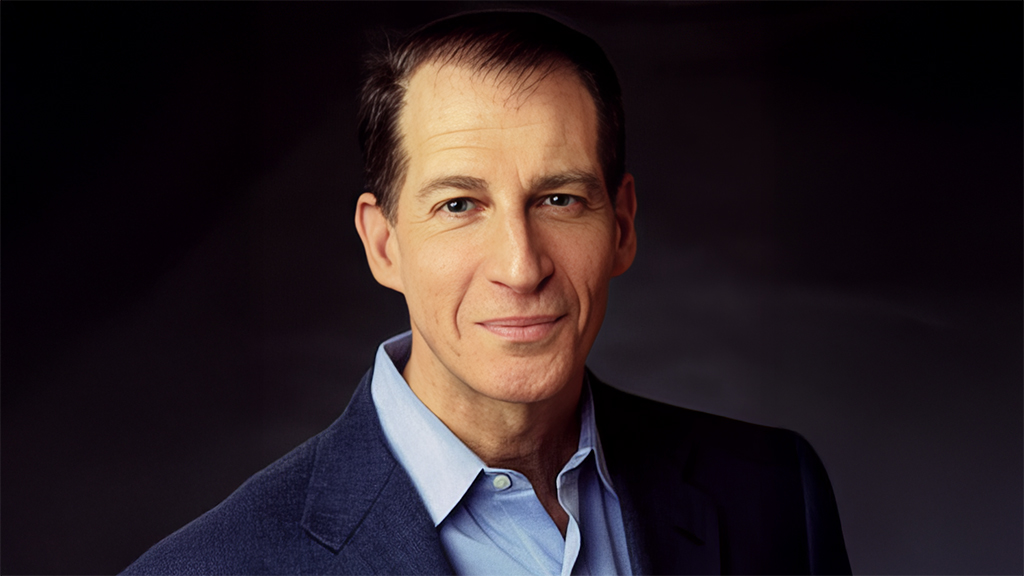
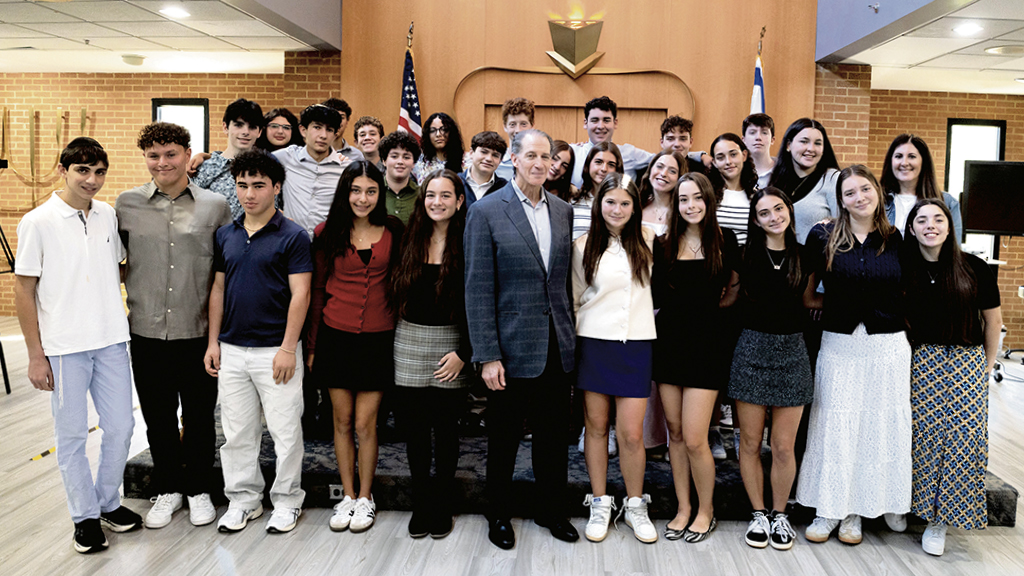
Mr. Chernoff is deeply involved in teaching about the Holocaust. He speaks about it often, both locally and farther afield. He’s been involved in the Golda Och Academy’s “Names Not Numbers” program since it first began. (That’s the West Orange Jewish day school from which his twins graduated.) He’s a heritage testimony speaker for the Museum of Jewish Heritage on the southern tip of Manhattan. And his next local talk is scheduled for October 29 at the JCC MetroWest in West Orange. (See box.)
He’s also an accomplished journalist and TV reporter; he spent three decades working for CNBC and CNN — he was a senior correspondent for CNN for 11 years — and he’s won too many honors to list, but they include three Peabody awards. He now runs his own communications company, Chernoff Communications, where he uses his most deeply rooted skill, writing, to advise corporate and nonprofit organizations.
Which means that he knows how to tell his family’s story clearly, movingly, and in a way that resonates with audiences.
His book “is unique in that my mother and I wrote it in my mother’s voice, but it’s a communal memoir,” he said. “It’s centered around my mother’s experience, but I interviewed dozens of other survivors from her town,” whose jaw-breaking full name is Tomaszow-Mazowiecki. “The first part of the book takes the reader back to prewar Poland, which was home to two million Jews. So many of us here in the United States trace our history back to prewar Europe, especially Poland, and the book — and the lectures I give — talk about the cultural life, economic life, political life there. It’s not just about what happened during the Holocaust. It’s about the real life of prewar Polish Jews.”
The need for such books and talks is growing, a result, at least in part, of the decline in general knowledge that’s aided by the rise in social media, Mr. Chernoff said. “So many young people rely on rumor and innuendo in cyberspace, or on lies, rather than getting their information from a truly reliable source. That is a major problem, and it is a consequence, at least in part, of the economic collapse of local journalism, of local papers shutting down.” That trend, which has been going on for decades, means that people know less about what’s going on right around them, and makes them feel less connected to their neighbors. It also helps hide corruption, because fewer people see it.
To quote a cliché — which has lived for centuries, attributed to various people over that time — lies can go around the world while the truth still is putting its pants on.
That’s been particularly hard on Jews.
“We live in an era of great potential danger, and Jews are terribly divided,” Mr. Chernoff said. “We need to put our divisions in perspective.” How can we do that? “It is a matter of being disciplined, being willing to accept disagreements but remaining civil, rather than going to war with each other.”
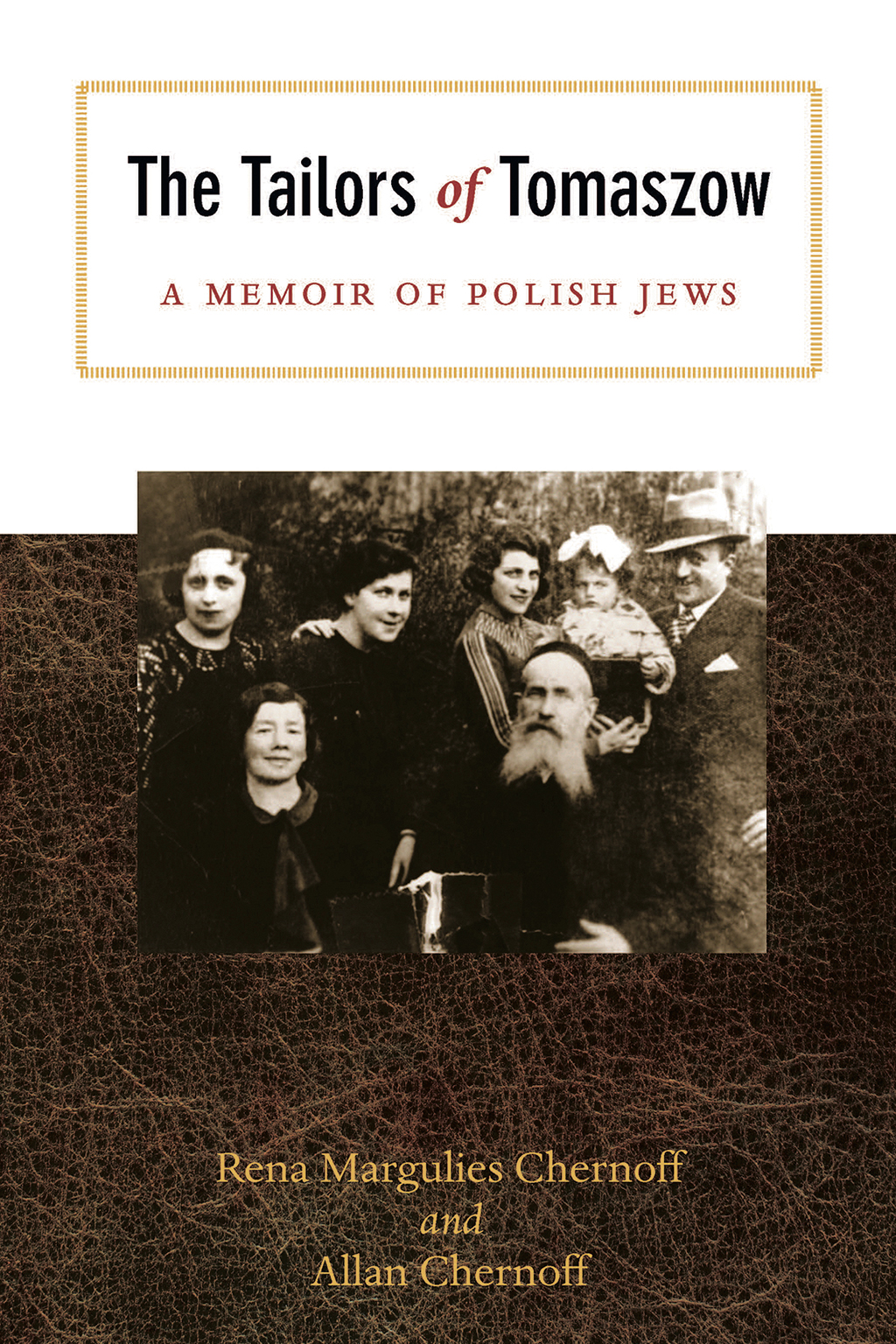 He returned to his mother’s story. “Her father, Avram Chaim Margulies, was a successful tailor, and that was quite an accomplishment,” he said. There were many tailors in Tomaszow; “the joke was that in the 1930s, when the economy was not so great, there were more tailors than customers.” But his grandfather was a master tailor, who had gone to Paris with his brother to study the craft there.
“My mother grew up in a comfortable household and had a lovely early childhood,” Mr. Chernoff said. “She was 6 years old in 1939, when the war started, and right away the Nazis invaded Poland. One of the first days after that, my mother was sitting by the window sill when a Nazi officer came by and asked her if she’s Jewish. My mother says yes, and he says, ‘Oh well, if you are Jewish, that is going to be very bad for you.’
“They had no idea what would happen. The Nazis were highly cultured people, with great music, poetry, art, and other cultural accomplishments.” None of that, of course, was relevant. “The Nazis established a ghetto. They created workshops, and my grandfather led a group of tailors. The Nazis forced them to work, but that is how they survived. Needles and thread helped them survive — at least at first.”
The ghetto kept being shrunk. “The people who had jobs were put into the smaller ghetto on October 30, 1942, and on November 2 there was a selection in town, and the vast majority of the Jews were sent off to Treblinka and killed there. That included my great- grandparents and many cousins.
“The following year, the remaining Jews were sent to slave labor camps. That included my grandparents and my mother, who was 10. They worked fixing German army uniforms, and they lived in a barrack that had been a stable for horses. In July of 1944 they were sent to Auschwitz. My mother’s younger brother, my uncle Romek, was killed there. My grandmother, Hinda Margulies, survived, and so did my mother. My grandfather was killed on a death march — he tried to escape and he was shot.”
His mother, his grandmother, and his great-aunt Eva survived the war. They tried going back to Poland, but found only antisemitism there; they managed to get out and spent time in a DP camp before they made it to the United States in 1949. His mother moved to Queens and went to Forest Hills High School; later she and her mother moved to Brooklyn, and she transferred to Samuel Tilden, and graduated from high school there. She went to Brooklyn College for her undergraduate degree, and to NYU for a master’s, and eventually became a middle-school math teacher, working mainly in parochial schools. “She was very happy there,” her son said.
She married Benjamin Chernoff, who was born in the United States, to parents who had come to America before the war. Mr. Chernoff was a chemical engineer, and the family had a happy life.
Mr. Chernoff feels compelled to tell his mother’s story because he believes that if we forget stories like hers, the danger of reliving them rises. But he also sees hope in the way the survivors remade their lives here. “They are incredible people,” he said. “They were so amazingly resilient. They went through the Shoah, survived starvation and seeing their closest relatives murdered, and so many of them came here and rebuilt their lives, and in so many cases they were extraordinarily successful.
“My mom was amazingly resilient. She was an incredible person. She embraced this country,” and in many ways it embraced her back.
Mr. Chernoff will talk about his mother, her experiences, her town, and the risks he sees a divided Jewish community facing at the JCC MetroWest.
Who: Allan Chernoff
What: Will talk about “The Tailors of Tomaszow,” the book he wrote with his mother, Rena Margulies Chernoff
Where: At the JCC MetroWest in West Orange
When: On Wednesday, October 29, at 1 p.m.
How much: Free for JCC members, $15 for guests
For more information: Go to www.jccmw.us/LLLfall25
or contact Michele Bernstein (973) 530-3447, or email mbernstein@jccmetrowest.org