

Whither Holocaust education?
As we commemorate the second anniversary of the October 7 massacre, we have witnessed the demonization of the State of Israel. Accusations of genocide have become the conventional wisdom for too many people. Calls for true genocide as contained in Hamas’s Covenant and in chants “from the river to the sea” and “globalize the Intifada” have been downplayed in “elite” circles. Jewish students have been intimidated on too many campuses, and high school juniors and seniors are increasingly anxious about the reception they will receive as they prepare for collegiate life.
Against this backdrop, how has Holocaust Education fared, and what steps should be taken in response to the new climate after 10/7?
The New Jersey Legislature passed the mandate for requiring Holocaust education for high schools in 1992 to teach what happened and promote tolerance. Twenty-one other states have followed suit. As a result, numerous colleges and universities have established Holocaust and genocide studies departments in New Jersey.
One of the stalwart programs is at a Catholic university — Saint Elizabeth University in Morristown. The chair of its the Holocaust and Genocide Studies Advisory Board, Marjorie Feinstein, and its director, Rich Quinlan, hosted a program on Holocaust education and confronting antisemitism on September 25. The panel selected to discuss this topic were Sarah Coykendall of Kean University, Dr. Jacob Ari LaBenz of Ramapo College, Ilyse Shainbrown of the Jewish Federation of Greater MetroWest, and Dr. Angela West of Drew University.
Get New Jersey Jewish News's Newsletter by email and never miss our top stories Free Sign Up
In her opening remarks, Ms. Feinstein said that we are in the “days of awe,” where we seek introspection and accountability. She asked a series of questions about how the panelists viewed the efficacy of their programs and what changes should be made to confront antisemitism.
Highlights of their answers follow.
Measuring the effectiveness of their programs in confronting hate is difficult. But feedback they have received from reviews of courses and correspondence has been generally positive.
Training teachers has a significant multiplier effect as each of them teaches dozens of students.
While the Holocaust is generally considered a unique event, they aim to teach about other genocides against other groups.
Lessons are most effective when they’re personalized, focusing on stories told by survivors and others. The challenge will be who will replace the survivors as their numbers dwindle.
Social media, with so much of its content toxic, is a given and cannot be wished away. The task at hand is to identify reliable sources and give the students the tools to identify propaganda and confront the falsehoods they encounter in antisemitic statements.
The goal is to celebrate differences, not impose uniformity.
Post 10/7, students have become more fragmented, clustering with groups with which they identify. Many are afraid to express views that may be scoffed at by others.
Despite the challenges, the panelists viewed their overall mission to inspire students to exhibit respect for all and understand how the past can teach lessons for today.
In my view, Holocaust education is not a panacea, but a valuable tool. The fact that Catholic universities such as Saint Elizabeth embrace Holocaust education is emblematic of its usefulness.
Aside from surveying the details of the Holocaust, I think the education should include some additional elements, if they have not been incorporated already.
One, it should confront head-on the dangerous falsehoods of antisemitic tropes disseminated by the antisemites and social media.
Two, Jews should not only be identified as victims but as inheritors of a sophisticated civilization that has had a disproportionate impact on their host countries as well as within the State of Israel. The recent $10 million grant awarded by the National Endowment of the Humanities to the Tikva Society hopefully will advance this agenda.
Three, teach the definition of genocide — the deliberate effort to systematically kill a people. In Gaza, Israel has warned civilians of impending attacks, eliminating the element of surprise at the cost of IDF casualties. Israel has opened evacuation sites for civilians. Unbiased experts have calculated the civilian-to-combatants’ ratios of casualties to be among the lowest of any army engaged in urban warfare, where Hamas hides behind civilians. For exhaustive details on this, please read “Debunking the Genocide Allegations,” published by the Begin-Sadat Center.
Four, it should teach that if there had been a Jewish state in the 1930s, millions of Jews would have been resettled in the aftermath of the disastrous Evian Conference, which closed the gates for Jewish refugees.
The Talmud teaches us that the highest priority is for education to lead to action. The Federation of Greater MetroWest has some excellent teen programs that promote better interfaith relations. They include “Interfaith Teen Leaders,” which establishes dialogue between Jewish and Gentile teens and also includes a trip to Washington, D.C., to visit the Holocaust Museum. And there’s “Student to Student,” which trains Jewish high school students to deliver their Jewish narratives in front of their non-Jewish peers in the classroom. I’m honored to fund the latter program in memory of my late wife Gail.
I believe that every synagogue should collaborate with the federation and/or consortia of synagogues to develop programs for students and their parents to arm them with the facts about Judaism and Israel, identify resources they can tap on the college campus, such as Hillel, Chabad, and the ADL, and provide emotional support as they face the travails of the college campus. I believe that the environment is improving as more colleges understand their legal liability for not protecting their Jewish students from a hostile environment.
As we face the Days of Awe, may we redouble our efforts to educate our youth with the tools and motivation to live rich Jewish lives on the college campus and beyond.
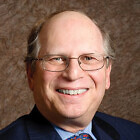
Max Kleinman of Fairfield was the CEO of the Jewish Federation of Greater MetroWest from 1995 to 2014. He is the president of the Fifth Commandment Foundation and consultant for the Jewish Community Legacy Project.