

Who knew Bull Durham could dance?
Choreographer Joshua Bergasse fields questions on the new Paper Mill musical
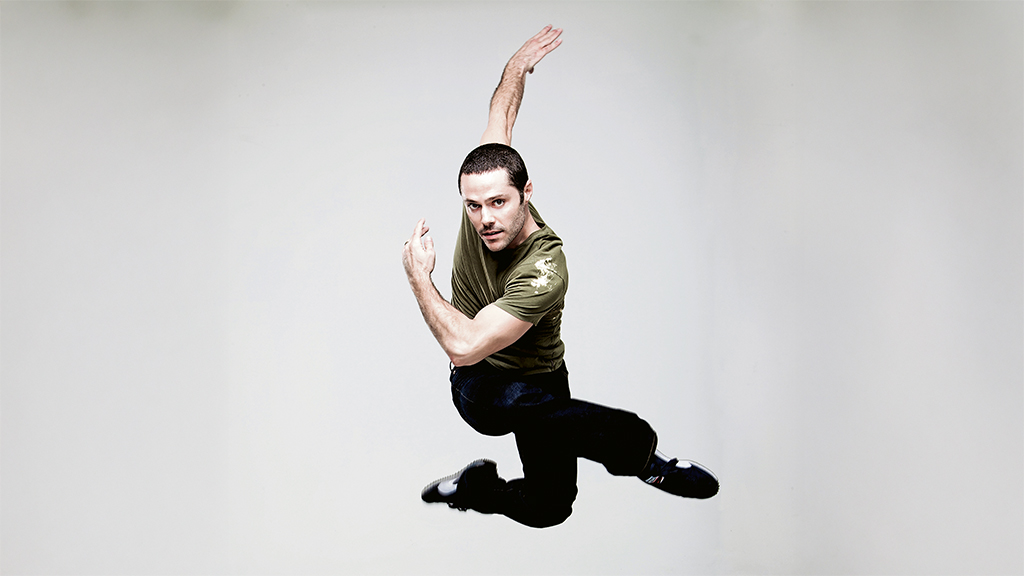
There was a moment, a wrinkle in time, if you will, where Joshua Bergasse thought about becoming an accountant.
But that passed quickly.
For a guy who started taking dance lessons when he was just 3 years old — at his mother’s suburban Detroit dance studio, no less — there really was no choice. He was destined for a life of barre-hopping.
It’s a career that will likely seem familiar to anyone who’s seen the musical “A Chorus Line.” In fact, Mr. Bergasse closely identifies with dancer Mike, who remembers watching his sister in dance class and thinking (and subsequently singing) “I Can Do That.”
Clearly, Mr. Bergasse, 52, can do it too, and he has proven it over a 30-year career. He’s now the choreographer of “Bull Durham,” the musical based on the 1988 film that starred Tim Robbins as a young pitcher, Kevin Costner as a veteran catcher, and Susan Sarandon as a baseball Annie, who needs to choose between the two.
“Bull Durham” will be at the Paper Mill Playhouse in Millburn from October 2 until November 2.
Mr. Bergasse has been involved in the production since the first workshop in 2013. Although a dozen years is a bit longer than a normal development cycle, the fact is that producing musicals has become so expensive that everyone is reluctant to bring a show to life until they all agree it’s fully ready. Fully. Cash outlay involves more than just salaries — for the cast, musicians, and crew — but also lighting and sound design, sets, and costumes before the first ticket is sold.
“I got involved with the producer,” Mr. Bergasse said. “The original producer, not the one now. I interviewed with the director. I pitched some ideas I thought would be good choreography for it. And they liked my ideas, so I got the job.”
“We did a four-week workshop in 2013 and then performed in Atlanta. And we’ve been developing the project ever since.”
People dropped out. People were added. In fact, Mr. Bergasse is the only member of that founding group — except for the writers — still with the show. He’s an award-winning survivor in a very tough business.
Mr. Bergasse grew up in Farmington Hills, Mich., in a household he describes as “Reform-Conservative. Somewhere in there. My grandparents were Holocaust survivors, so we were honoring a lot of the tradition, but not that religious.”
On a whim, in New York on vacation, he tried out and when he was 22 actually won a role as Baby John in a touring company of “West Side Story.”
“It was a two-year national tour around the U.S. and Canada, and we also went to Tokyo,” he said. “Before that, I was teaching at my mom’s dance school. I wasn’t planning on leaving. I was planning on taking over when my mother retired. Then I got this tour, and I really loved it. I knew right away that this was something I wanted to keep doing.”
The tour also suggested a possible secondary career path. At one point along the way around the country, he was named dance captain, making him a “middleman between the dancers and the management, which was particularly challenging because I was one of the younger people on the tour.” But it also provided valuable training for the transition, a grande jeté, so to speak, from dancer to choreographer. He was 35, a senior citizen in the dance world. And though he felt he had a couple of good years left, he also felt it was time.
I suggest that it must have been a tricky transition, in part because he then would be supervising people whom he went out on casting calls with — friends, or more likely frenemies.
“What’s even trickier is that the people you want to be employed by are used to employing you as a dancer, and now you want them to see you in a different way,” he answered. “You know, as someone who is going to be responsible for these big budgets, getting assignments done on time, and things like that.”
He discovered “aside from the creative aspect, so much of it is management. I need to create a schedule that gets assignments done on time and work with other creatives. I’m part of the management team now.”
How did he make the transition? “It was tricky. You basically have to start small, work in smaller regional theaters, work that doesn’t pay well, but builds a reputation.”
It was slow going for a while, but Mr. Bergasse lucked out when someone spotted a video of his work and recommended him to Steven Spielberg, who was producing “Smash,” the TV series about creating a fictional play.
That job changed everything. He won a prime-time Emmy for his work and went on to choreograph six Broadway productions so far (including the current hit “Smash”), earning him two Tony nominations and a slew of other awards.
I mention that there are times when I attend a musical and see beautiful choreography, dancers making great moves, but those moves don’t seem related to the show’s story.
He’s seen that, too, he said. “The best choreography is choreography that is in support of the story.”
It is why “‘Bull Durham’ is one of my favorite shows, because it’s so different from what I normally do, and I’m a big baseball fan. So I’ve infused the choreography with a more athletic type of movement. You know, throughout the years, we’ve done training sessions with local baseball teams. We even did that with the Durham Bulls,” a real minor league baseball team.
“I’ve tried to capture the excitement of watching a baseball game. You know, one that has a lot of action. Not a super slow one.”