

You can’t make this stuff up
From Tevye to Thakur to near misadventures at Newark airport

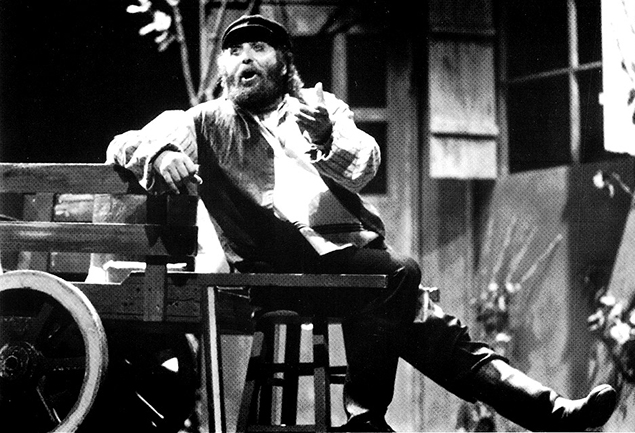
My acting career began when my wife told me to try out for a role in the hit musical “Fiddler on the Roof.” We were members of Congregation Oheb Shalom in South Orange, and that’s the show that the Oheb Shalom Players were going to be performing in early 1986.
“C’mon,” she said. “There are lots of roles, you’ll probably get one of the smaller ones, but you’ll meet lots of new people and probably have a great time.”
I tried out and was asked to play the role of Tevye. (For those of you who don’t know the show — which in this crowd would be beyond impossible — Tevye is the lead.)
There are many stories about this production that I know you would enjoy, but that’s an article for another time.
After “Fiddler” ended (it was a sold-out run … both performances), I began auditioning for various community theater productions in New Jersey. I got every role that I auditioned for and, thinking that I actually might be pretty good at this acting stuff, I decided to audition for shows in New York City.
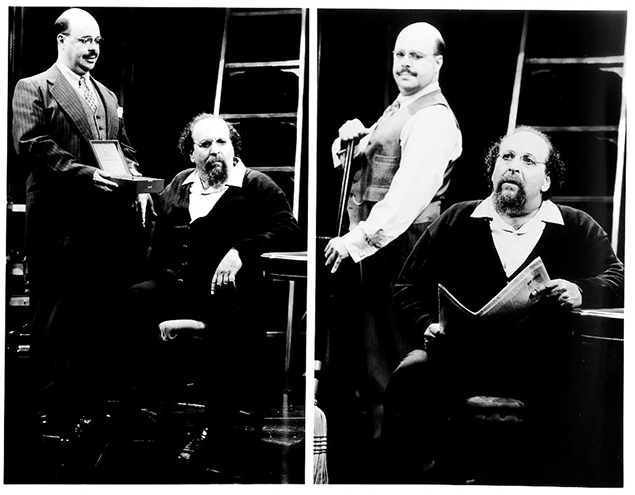
In 1988, there was an audition notice in Backstage (one of the largest online platforms for hiring creative talent) for a show based on a book about the life of a renowned guru, called “Ocean in a Teacup.” It’s the story of two American soldiers who served with an ambulance unit during World War II. The soldiers met a guru, Thakur, in a village in East Bengal. (Thakur means teacher.) They fell in love with him, his disciples, and their way of life, and lived with the guru and the disciples for 25 years.
I looked at the audition notice wondering which one of the American soldiers I would be right for, as both suited me physically and vocally. I sent them my picture and resume, got a call for an audition, and went into the city.
The cast included more than 30 people, and it looked like most of the roles, no matter their nationality in the story, would be played by Caucasians. That included Thakur — and that’s the role I got.
I was both flabbergasted and overjoyed to have been cast as one of the three leads in a major production in New York City. Talent agents and casting directors would be invited to see the piece, and that was exciting. This could be my shot to leave the world of amateur theater in New Jersey and hit the big time.
The music was brilliant, and hauntingly gorgeous. Thakur sang in many of the songs and had three incredible solos, but the writer of the book of the play thought that I was too tactile, and too effusive. Thakur should be more sedate, and less “out there.”
The show ran for about a month, including the first two nights of Pesach. There was a huge cast party after the show on the first night of Pesach, and I led a short seder at the party. They ate and drank whatever was there, but I brought shmura matzos, chopped liver, and gefilte fish with chrain, and I drank kosher for Passover 777 Brandy.
“Ocean in a Teacup” ended with a matinee on the first day of chol hamoed.
The families whom we had been going away with every Pesach since 1976 were all in Florida. So after the final curtain, I ran out of the theater, still wearing my Thakur garb — a salwar; baggy linen pants that were gathered at the ankles, a loose fitting, collarless Indian blouse called a kurta, and makeup — my hair was all gray, and my face, the top of my chest, my hands, half of my forearms, my feet, and my calves were all coated in bronzer, so that the audience saw my skin as a lightish tan. I jumped into my car, drove to Newark airport, and headed for the bathroom.
I looked at the guru in the mirror, smiled, opened my makeup bag, took out a jar of Albolene cleanser, took off my blouse, and started removing my makeup.
The gray in my hair came out easily with water, and as I toweled my hair dry, a couple of men walked into the bathroom. They looked at me, and I smiled at them while I continued cleaning the bronzer off my face, neck, chest, hands, and forearms. I put on a T-shirt, took off the linen pants, put on a pair of shorts, and started cleaning the bronzer off my legs and feet when two Port Authority policemen walked into the bathroom.
They stood against the wall and didn’t take their eyes off me. I packed up my costume, put away my makeup bag, threw a bunch of used paper towels into the garbage can, slipped into a pair of deck shoes, and headed for the gate to board my plane. Both of the officers remained about six feet behind me. They never said anything, never got closer than six feet, and just stood there watching as I checked in and boarded the airplane.
My family was overjoyed to see me, and I was more than excited to be with them and bask in the sun for the remaining days of Pesach.
As I thought about writing this article, I couldn’t stop smiling, because if I had done that any year after 2001, I would have still gotten out of that bathroom, but I’d have been in handcuffs.
One of the actual soldiers who the story was about came to see the musical. He was standing with the writer as I came offstage after my curtain call. He gave me a huge hug and said: “Wow. I never dreamed that Thakur was actually Jewish, but you were just like him.” The playwright was speechless, but not so my dear friend Mickey Ackerman, A’H, who had a note delivered to my dressing room after seeing the show. It read: Taka, Thakur!!
Cantor/Rabbi Lenny Mandel, who left the wilds of Manhattan almost 50 years ago and lives in West Orange, has been the chazan at Congregation B’nai Israel in Emerson for the past quarter century.