

‘If not now, when?’
Jewish values inspire local Medal of Honor winner
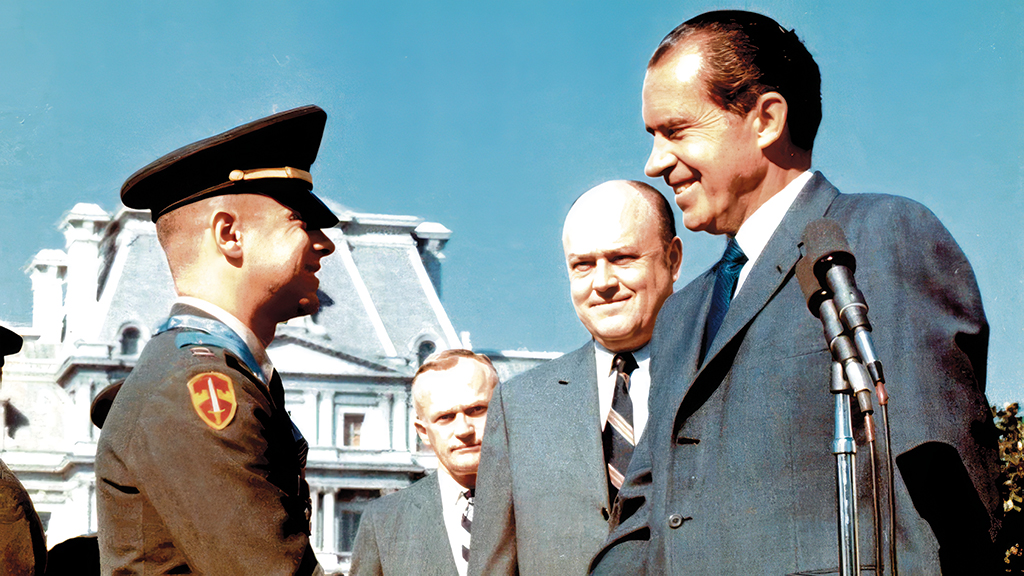
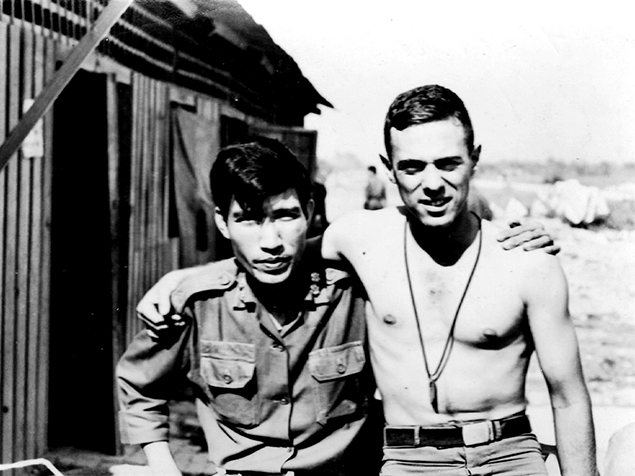
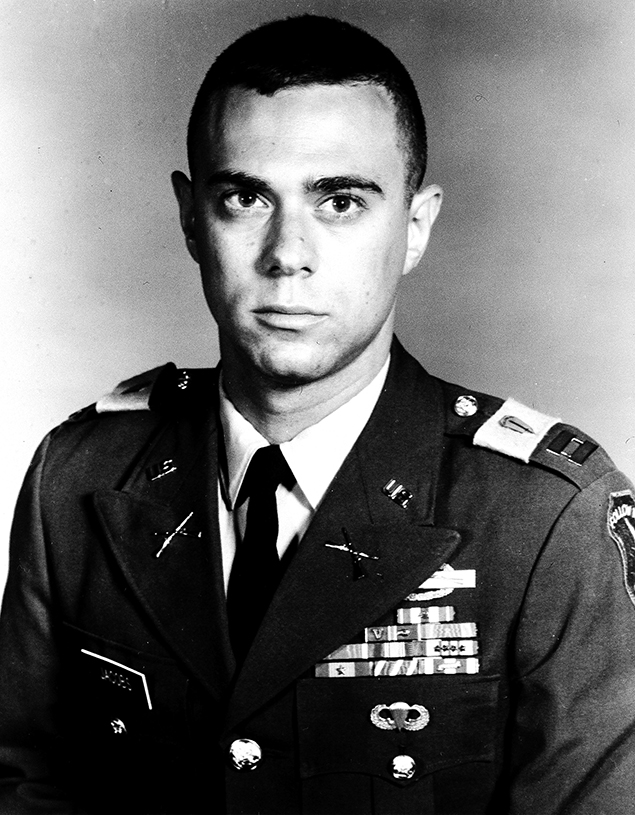
Jack Jacobs was a young lieutenant when he was sent to Vietnam and assigned as an advisor to a battalion of Vietnamese soldiers.
At first, he said, he was involved in a series of “relatively small firefights.” Inevitably, though, not long into his tour, his troops became embroiled in more intense combat.
“We were caught in the middle of a square. The enemy was lined up in a very advantageous position. I called my boss, who had an enormous amount of combat experience, and I told him I needed some guidance.
“‘Well,’ he said very quietly, ‘I’m not there so I can’t make an accurate assessment of your situation. But you better do something. Even if it’s wrong.’”
That advice stayed with him. Months later in an even bigger battle, his battalion’s position was hard hit with many casualties, including his company commander. Jacobs was severely wounded, but still he took charge.
For a reason he can’t explain, he recalled the famous, perhaps apocryphal, tale about Hillel the Elder. Approached by a wealthy man about his obligations toward the less fortunate, he asks:
“If not for myself who will be for me?
“And if I’m only for myself, what am I?
“And if not now, when?”
The young officer knew inaction wasn’t an option. He remembers thinking: “Jacobs, if not you, then who? And if not now, then when?”
He moved his troops to a more defensible position and then ordered several Vietnamese soldiers to supply covering fire. He ran to the closest enemy position and threw a grenade into the bunker.
On the way back, he dragged a wounded soldier to safety. His vision clouded by blood from a shrapnel wound in his head, he went back several times, understanding that something had to be done — and he was the only one who could do it.
That action won Jacobs the Medal of Honor, the peak of a 20-year career that ended with him promoted to full colonel.
In a Zoom interview from his home in Central Jersey, Mr. Jacobs, 80, said he went into the military in large part because of his father. “He served in the Second World War, in New Guinea and the Philippines. He hated it, of course. But when he got to be my age, all he would talk about was how proud he was about having saved the world.”
But there was more. “There’s always this overriding — I’m trying to look for the right word — but one of the things one gets imbued within a Jewish household is an obligation to the rest of the community.

“I came to the conclusion that it was my responsibility to do my bit.”
He was not alone in that belief. “It was a pervasive notion in the country, because we were living in the shadow of the Second World War, where everybody had served. All of my friends’ fathers had served, and some of them didn’t have fathers because they’d been killed in action.”
Given his record and awards — it includes two Silver and three Bronze stars plus two Purple Hearts, he likely would have made general officer.
“I was encouraged to stay in the army and not retire,” he said. “One of the arguments made was that I was going to get promoted. But I retired anyway, reluctantly. I was 42 years old. I had already put my daughter through college. I had a son in college and another son I was going to have to put through college. Quite frankly, I couldn’t afford to be in the army anymore.”
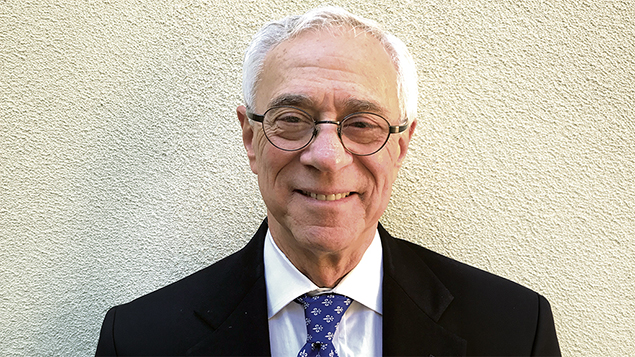
He went on to a successful career in finance, working for Bankers Trust and Goldman Sachs, among others. He now is a member of the faculty at West Point and a political and military analyst for MS NOW and NBC.
Mr. Jacobs was born in Brooklyn and lived briefly in public housing in Queens “before we got thrown out of the projects,” he said. “You could only make like 2,000 bucks a year and live in the subsidized housing they’d built after the Second World War.”
But with help of the GI Bill, which guaranteed zero-down-payment, low-interest loans, “my parents bought a house in Woodbridge, and I went to Woodbridge High,” he said.
“I had a different kind of Jewish upbringing, because my father’s family, they were all Greeks, Romaniote Jews,” descendants of Roman slaves from Judea brought to Greece 1,600 years ago. Greek was his father’s first language
His mother’s people were Yiddish-speaking Ashkenazi from Poland or thereabouts — they’re not certain exactly where. It was considered a mixed marriage.
“They came from two completely different cultures,” Mr. Jacobs said. “My mother was horrified that on Pesach we had peas and rice.” The two sides of the family “started having Pesach together, but that lasted only one of two Pesachs.”
The Jacobs “celebrated all the holidays. I went to Hebrew school” — Conservative Congregation Adath Israel, which no longer exists — “was a bar mitzvah, and went to Shabbat services. But we didn’t talk about the differences in our culture.”
Ironically for a soldier, his Torah portion — “I can probably still recite it now — was from Isaiah, the beat-their-swords-into-plowshares prophet.