

‘Arguments need evidence’
How Touro University’s antisemitism fellowship makes its case
Although there is no agreement about its cause or its likely development, no one argues that antisemitism is not rising in the United States and around the world.
That’s a grim fact.
Nor is there much disagreement about the need to figure out how to face and counter it, but so far plans still seem to be at a premium.
Touro University, though, is on it.
The institution, headquartered in New York with programs and schools around the country (and one in Berlin), opened its Antisemitism Institute soon after October 7, 2023, in response to the massacre. One of the institute’s programs, the Teaching Fellowship, has just started working with its first cohort.
The program’s fellows are university teachers from institutions other than Touro, both around the country and across the world, who will learn and share insights about countering antisemitism in their classrooms.
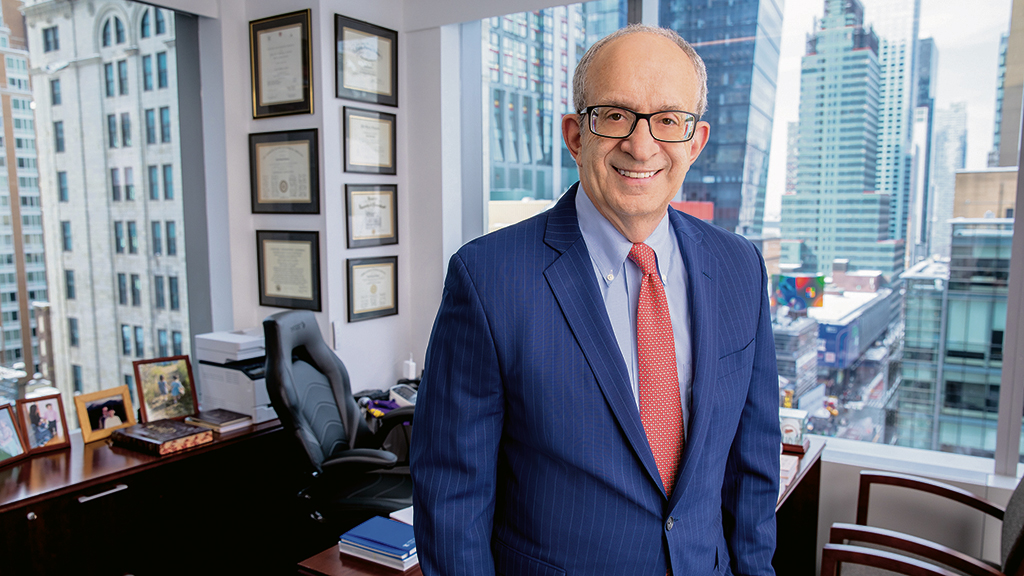
“There is a lot of concern about antisemitism on college campuses,” Dr. Alan Kadish of Teaneck, Touro’s president, said. “We obviously can’t control campuses, or have the ability to influence other institutions’ policy, but we felt that one way we could help combat antisemitism was to be sure that appropriate education was offered to students at other colleges and universities.
“It turns out that doing that is not so trivial.”
But Mark Goldfeder is on the case.
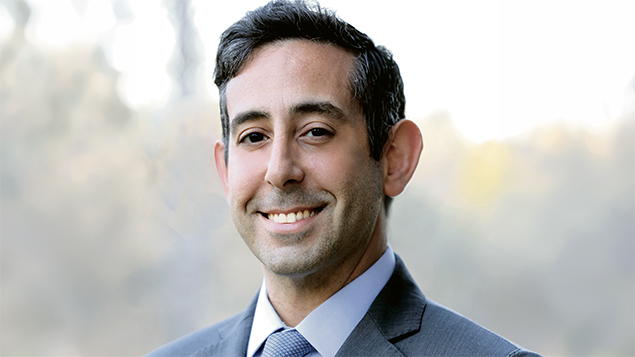
Rabbi Dr. Goldfeder is the director of both Touro’s antisemitism clinic at the school’s law center and of the National Jewish Advocacy Center. He is a lawyer, and a passionate believer in the idea that education, when pursued with intellectual honesty and academic rigor, can debunk antisemitism and all such built-on-intellectual sand ideological hatred.
He believes in the power of education to change the world, one open mind at a time. So Touro and the NJAC, in the person of Dr. Goldfeder, worked together to create the fellowship.
The program gathered 10 students — most of them university professors from around the country, one from the ADL, one from the Great Neck school district, and one from the Slovak Academy of Science in Bratislava, Slovakia. They represent a range of disciplines — they teach sociology, they teach English, they teach history.
They work separately and together, and learn from each other, to develop courses for their students back in the home institutions that examine antisemitism dispassionately and deeply.
“Six of them already have developed courses that have been approved, and some are in the process of being approved,” Dr. Goldfeder said.
“We always say that one professor can teach a whole generation of students, and then those students become teachers and journalists and lawyers and leaders,” he continued. “That’s why we think that a fellowship like this can change the world.
“It’s not just about spreading awareness. We’re talking about prevention. We want students to be able to recognize antisemitism early, before it is accepted and normalized and acted on.
“Some of the course, in particular the ones being developed in law schools, come at antisemitism from a different intellectual bent. They will equip students to examine evidence and to questions assumptions and to recognize when an argument relies on prejudice.”
But, Dr. Goldfeder, doesn’t this sound like the basis for any really good education? Yes, “this is lasting input,” he said. “Every time that one of these fellows teaches this course, a new group of students will gain tools that they will carry for the rest of their lives.
“Antisemitism is the great lie because it explains the whole world without ever asking for evidence. So we’re teaching students the foundational concept of the West, which is that arguments need evidence. We conceive of this very much in terms of shared responsibility. The first cohort brought together Jews and Christians and Muslims.
“These courses will be taught in schools where there aren’t big Jewish populations. We are hoping that the concepts are introduced in a way that will create a sense of shared responsibility, not only as a favor to the Jews, but as a way of protecting and, honestly, saving the West.”
How will it save the West?
This might be a cliché, Dr. Goldfeder said, but “antisemitism often is called the canary in the coal mine of intolerance” for good reason. That’s because “it really speaks to an inability to tolerate difference.

“When you look at a society that is decaying, oftentimes one of the first things you see is the rise of antisemitism and scapegoatism. When bad things happen to people, there are two questions they can ask. One is ‘What can we do better?’ Or they can ask, ‘Who did this to us?’
“A society that asks what we can do better tends to do better.
“A society that asks who did this to us tends to start with antisemitism, but it doesn’t end there. Usually it ends with the degradation of society as a whole.”
Often, Dr. Goldfeder said, the answer to “Who did this to us?” is “The Jews.”
There always are conspiracy theories, and often Jews are seen pulling its strings. “If you look at the plague, if you look at covid, if you look at anything bad that happens, Jews tend to be the explanation for a society, for a part of society, even for a small part of society,” he said.
“In the United States, depending on where you live or what channel you watch, Jews are either too weak or too powerful. Too parasitic, or, if you go to the extreme, you get to the superhuman Jews in the Protocols of the Elders of Zion, to the subhuman Jews in Nazi ideology.
“What they all have in common is that none of them are fully human, which makes them easier to hate and then to kill.
“Because our courses look at this from different angles, we hope to expose some of those insidious roots.”
Citing Rabbi Jonathan Sacks, Dr. Goldfeder talked about “Rabbi Sacks’ underlying theory of antisemitism as really focusing on Jews as a collective identity, so you can usually find antisemtim take the form of whatever is the largest collective identity of Jews on the world stage at any particular moment.
“If you go back to the Middle Ages, Jews for the most part are a religious community, so they’re hated for religion. Fast forward a couple of hundred years, to the 1800s, the 1900s, and Jews become secularized. Their primarily identity is their ethnicity.”
So medieval Jews were hated and murdered not because they were Jews — it wasn’t entirely acceptable to put it in that way, Dr. Goldfeder said — but because they were Christ-killers. And by 1935, when the Nuremberg laws were passed, they were loathed for their blood.

“And today, the largest collective identity for Jews on the world stage is their nation state. Jews are hated for being Jews, even if they’re not Israeli. ‘I don’t hate Jews, I just hate Israelis. I just hate genocide enablers.’
“It’s always an appeal to polite society.”
The appeal of the fellowship is to examine the roots and the implications and the symbolism of antisemitism, and to combat it using that understanding.
“We are trying to teach people how to think,” Dr. Goldfeder said. “We’re trying to teach skeptical students what to ask, and we’re building repetitions so they understand how these things play out.
“We pair up modern examples with historical examples.
“We give the fellows a number of rules that I want them to follow, no matter what course they are teaching.”
A basic rule: “The document always does the accusing. I don’t want the students to take my word for it. So I put the movement’s own document on the screen so students can read it. A summary can be dismissed as spin, but not the primary source.
“I also make sure to teach them on a ground where nobody’s flag has been planted.
“A lot of antisemitism cases today are built on Title VI of the Civil Rights Act. But I won’t teach them Title VI on a Jewish case. I’ll teach them on David vs. Monroe, which had to do with a 10-year-o0ld African American girl in Georgia. There wasn’t a Jew within 50 miles.
“I want them to understand it thoroughly, and once they do, when there’s no political spin on it, and before they’ve adopted any analytical tool, they can understand. Now they can inspect it and apply it, without any preconceived bias.
“We also concede first, and proudly: A lot of people really don’t understand the limits of the First Amendment, in either direction.
“Criticism of Israel generally is not antisemitism unless it crosses some very severe grounds, and I will be the first to argue for free speech in that regard as well. I say that, and I have proved that, and I have argued that in writing multiple times. So we concede first, and we concede proudly.
“We make sure to never overclaim, because accuracy is the entire brand, right. One overinflated claim could undo what we’re doing.
“We never go with a strawman argument. We go with the steelman. Whenever I’m teaching a course like this, no matter what the subject, I take the absolutely strongest version of the opposition’s argument, and I deal with it head on, and I represent it honestly. I want to make sure that they see that we’re prepared to engage serious arguments wherever we encounter them.
“If you only teach the strawman, then when the freshman goes back to the dorm and is challenged, they’ll lose the argument, and they’re never going to believe you again. So tell the argument, tell its limitations, and trust in the sources.
“Universities are where people go to learn to think. But over the last 30 years we have ceded that classroom to people who are not teaching. They are indoctrinating. So I want my students to challenge me.”
Dr. Goldfeder is talking about the 1993 Philadelphia Conference, when the FBI monitored and wiretapped a meeting of virulently anti-Israel activists from the Middle East who, among other things, financed 30 years of anti-Israel propaganda on college campuses, from college professors.
“And when my students now, who are the professors, go to their students, they will ask for that challenge,” he continued.
“We are building the course for the skeptical student, not the persuaded one. Both the persuaded student on one side and the activist on the other already are spoken for. Our customer here is the skeptical 19-year-old in Row 3 who has heard from people she trusts that this whole subject is a smear and a lie. And so there can’t be any assumed premises in any reading, any exercise, any week.
“Everything has to stand on its own two legs.”
Learn more about the Touro University Antisemitism Institute at antisemitism.touro.edu; learn more about the fellowship at antisemitism.touro.edu/fellowship.