

The hardest part of a chess game is accepting a draw
Alexander Smukler looks at the recent peace negotiations in Miami, and Putin’s response to them
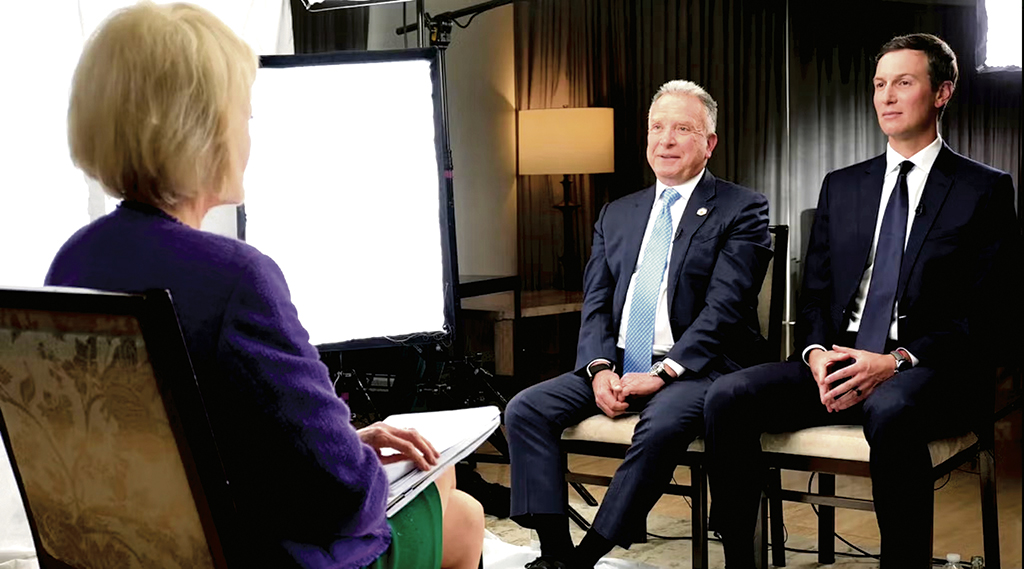
Last weekend, negotiators for the United States shuttled between delegations from Russia and Ukraine in Florida, hoping to bring an end to the war that Russia started when it invaded Ukraine nearly four years ago based on a 28-point peace plan proposed by President Donald J. Trump.
But things are seldom what they seem, at least when Russia is involved, Alexander Smukler of Montclair said. And he should know; before he and his family built a life for themselves in New Jersey, he was a Jewish refusenik in the Soviet Union. The three decades of life in Moscow has given him both an understanding of Russian political and tactical thinking and a host of contacts still in the former FSU.
So — what’s going on now in this three-cornered exchange? We know that it ended without any resolution, but why?
Let’s start by recalling what happened, Mr. Smukler suggested.
A few weeks ago, Mr. Trump presented what was trumpeted as a peace plan, but most readers saw it as a capitulation to the Russians by the Ukrainians. In fact, it seems to have been presented by the United States but written by Russians. It soon was revised, but it still retained some points that made it impossible for the Ukrainians to accept it.
First, “the territorial exchange,” Mr. Smukler said. The proposal wasn’t much of an exchange, though. “Putin wants Ukraine to withdraw troops completely from the part of the Donbas that Russia does not already occupy.” That includes two big industrial cities, Slaviansk and Kramatorsk. “Putin fully understands that he would have to pay hundreds of thousands of lives to take them, because both cities, and particularly Kramatorsk, have become real fortresses. During the almost year-long siege of the city of Pokrovsk, the Ukrainian military command was able to build up enormous underground facilities and trenches around Slaviansk and Kramatorsk.”
So those cities have become enormously difficult for Putin to win, but still he wants them.
And what exchange did he offer? “He was going to offer to release a small occupied territory in Dnipropetrovsk and some territory in the Kharkov area,” Mr. Smukler said. “And of course Zelensky” — Ukraine’s president, Volodymyr Zelensky — “and the European leaders” — who have supported Ukraine throughout the war, standing with Zelensky even as Trump yelled at him and withheld aid — “are reluctant to accept that they have to withdraw troops, without a fight, for no reason, from big industrial cities that do not belong to Russia.”
The next unresolved issue is the security guarantee — how will Ukraine remain safe, or even remain a country, if it cannot ever join NATO, must have its own military reduced drastically, and has to rely on the so-far-unreliable promises of its putative protectors?
“The Ukrainians have been offered and accepted the idea that Ukraine will not join NATO, but it will have very strong security guarantees from the United States and its European allies,” Mr. Smukler said. “That security guarantee is similar to the fifth paragraph of the NATO agreement.

“It means that if the Russians violate the peace agreement and attack Ukraine again, the United States will immediately be at war with Russia. Trump has already agreed to provide such guarantees to Ukraine.”
That compromise appeals to Putin, who cannot stomach the idea of Ukraine as a member of NATO.
The third issue in the peace plan “is the legitimacy of the presidential power in Ukraine,” Mr. Smukler continued. The reason — no, the excuse — that Putin uses to avoid meeting with Zelensky, whom he refers to as a clown, “is that Zelensky is not legitimately the president because his term is over and he was not re-elected.”
That Zelensky’s term, under normal conditions, would have been over is true. “Zelensky always responds to this by saying ‘How can we hold an election now? Ukraine is a democratic country, and I will not govern as president illegitimately, but how can we hold an election now, when almost 30 percent of Ukrainians have left the country?’”
It must be pointed out here that Ukrainians have fled because Putin’s forces invaded the country and have rained death on it, so his argument is a bit circular.
“Different experts say different things, but most say that between 10 million and 12 million people have left Ukraine or been internally displaced during the war,” Mr. Smukler said. The country’s population was estimated at about 42 million before the war started. Ukrainians have fled around the world; many are in the United States, the E.U., Canada, and Australia; there is a sizable group of Ukrainians, mainly women and children, in New Jersey, he added. And about 1.4 million Ukrainians are stationed on the front lines. Voting would be a logistical nightmare, and “in these circumstances it would be almost impossible to conduct a fair election.” The country is under martial law, which does not permit elections anyway.
Still, last week Zelensky said that he would be prepared to hold elections within 60 to 90 days, if the United States and Europe could ensure that Russia would keep from attacking during that time.
There’s a good chance that Zelensky would lose the election, although no one has committed to running against him.
“It is a huge compromise from Zelensky, and a strong sign that Ukraine is eager to find a solution, stop the war, and sign a peace treaty,” Mr. Smukler said. “Of the three issues, the most painful is the territorial one. The Ukrainians would try to convince Russia to freeze the front line and create a demilitarized zone. They will never accept de jure that the occupied territories are Russian now, but they are ready to accept it de facto in order to stop the war and sign a peace treaty.”
So that was the situation in Miami — the Russians in one place, the Ukrainians in another, and Trump’s son-in-law, Jared Kushner, and a real-estate friend, Steve Witkoff, neither with any government credentials or background in negotiations, and Kirill Dmitriev, Putin’s aide and the head of the country’s sovereign wealth fund and also not a negotiator — running back and forth between them, when Putin gave a press conference.
Remember, Mr. Smukler said, that the last story we wrote about Russia and Ukraine was headlined “Catch Me If You Can.” The “me” there was Putin. He’s always running; always has to be ahead, always has to get out of the corner he’s boxed himself into.
Here, the trap from which he was extricating himself was the peace treaty. Vladimir Putin does not want peace except on his terms, Mr. Smukler said. Going through a negotiating process, getting some but also giving some, is anathema to him.
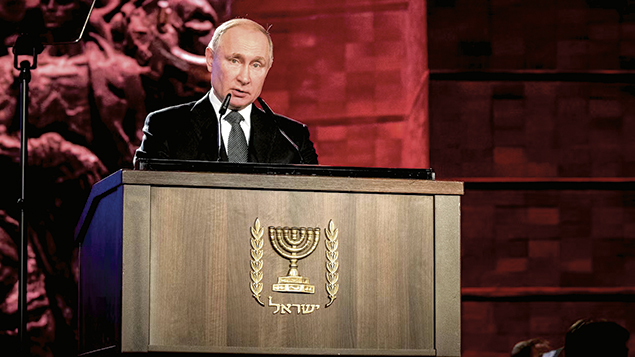
So at his annual press conference, called Direct Line, a multi-hour marathon talkathon featuring questions from reporters and vetted ordinary Russians, Putin disclaimed all responsibility for starting the war, made clear his disdain for Zelensky, and said that he was ready to stop bombing Ukraine on the election day that he hoped was imminent.
“This press conference was 4 1/2 hours long,” Mr. Smukler said. Putin said during the conference “that I told the Ukrainian government that they can have an election, but the Russians will see it as legitimate only if all the Ukrainians on Russian soil can participate in the election.
“‘They all have rights,’ Putin said. They have voices and they should be heard.”
But Russian commentators say that there are between 10 to 14 million people carrying Ukrainian passports in Russia, Mr. Smukler said, and that means that the two sides have reached total gridlock.
“In Direct Line, Putin said that he’d stop bombing and promise people a peaceful sky during the election, but he also promised and guaranteed that a fair election will be organized on Russian territory.
“Can you imagine that Zelensky and his government will accept the idea that Ukrainians will go to vote in Russia, or in the occupied territories that Ukrainians do not even accept as Russian? Russia occupies about 20 percent of Ukrainian territory.”
So imagine the election for the president of Ukraine. Imagine that one of the candidates for that office, the man who holds that position now, is someone whom Putin loathes (and also has consistently underestimated). Imagine that election being overseen by Putin.
Or, as Mr. Smukler put it, “Who would recognize election results if people have to walk by machine guns to get to vote?”
So what seemed as if it might possibly be a willingness to compromise for peace was a ruse.
Why?
“For Putin, the offer was to admit to a draw,” Mr. Smukler said. “To settle.
“He’s in a different position now than he was in 2022, when he started the war. Remember, he started by thinking that he could waltz into to the country; that Ukrainians were so depressed that they’d welcome him.
“But he was wrong, and then he was losing the war. And then he made a tragic mistake — he started to look for a way to get out of the corner that he’d imprisoned himself in.
“But now the situation has changed.”
Putin cannot settle, cannot accept a draw, because he’s lost too much. “He cannot accept it. In four years, he’s lost 1.5 million people who are either dead or wounded. He’s spent millions and trillions of rubles to afford a military campaign — now he’s not going to accept the idea that Zelensky could be reelected, or someone like General Valerii Zaluzhnyi, who’s now Ukraine’s ambassador to the U.K., could win it.
“For Putin, this would not be possible.” It would be an admission of weakness. It would acknowledge that although Ukraine is not winning, it is not losing either. “The Ukrainians are not able to occupy the territories, but the Russians cannot win the war as it is being fought now.
“That’s why the peace plan, now that it’s been modified by Western allies, would be a draw for Putin.”
And Putin cannot live with a draw. He has to win. As Mr. Smukler began to explain at the beginning of the war and has refined it in the many years since then, Putin is a street thug from a hardscrabble family, born in immediate postwar Saint Petersburg, who had to learn strategy because he was too small for brute force. The KGB taught him spycraft, and his two decades as Russia’s leader has shown him that ruthlessness and a cold disregard for anyone who is not him can pay off.
He also has seen comments on the situation that note that Mr. Kushner is Trump’s son-in-law and Mr. Witkoff is his business buddy. Kirill Dmitriev’s wife is married to Putin’s daughter’s best friend. They may come from different backgrounds but seemingly from the same world.
“The question that they are negotiating is difficult,” Mr. Smukler said. “They are trying — or pretending — to negotiate an end to the bloodiest conflict in Europe since the end of the Second World War. It’s a conflict that could result in World War III. And these people are nobodies. They have no political or governmental positions.
“Many commentators are saying that it’s good to have them as negotiators because it’s so easy to disclaim responsibility because it is so easy for Trump or the government to say, ‘By the way, these negotiators? They’re nobody.’”
And why does Trump care about any of this? Because he wants his Nobel peace prize. And, Mr. Smukler says, because he still longs to be one of the triumvirate at Yalta 2, dividing the whole world with Putin and China’s Xi Jinping, and being thanked for it.
So there will be no peace deal that will come out of the meeting in Miami, Mr. Smukler says. The world will have to wait for the next move in the intense chess game that is the Global Game of Thrones.