

The links between the lies
Writer Yardena Schwartz delves into the massacres of 1929 and 2023
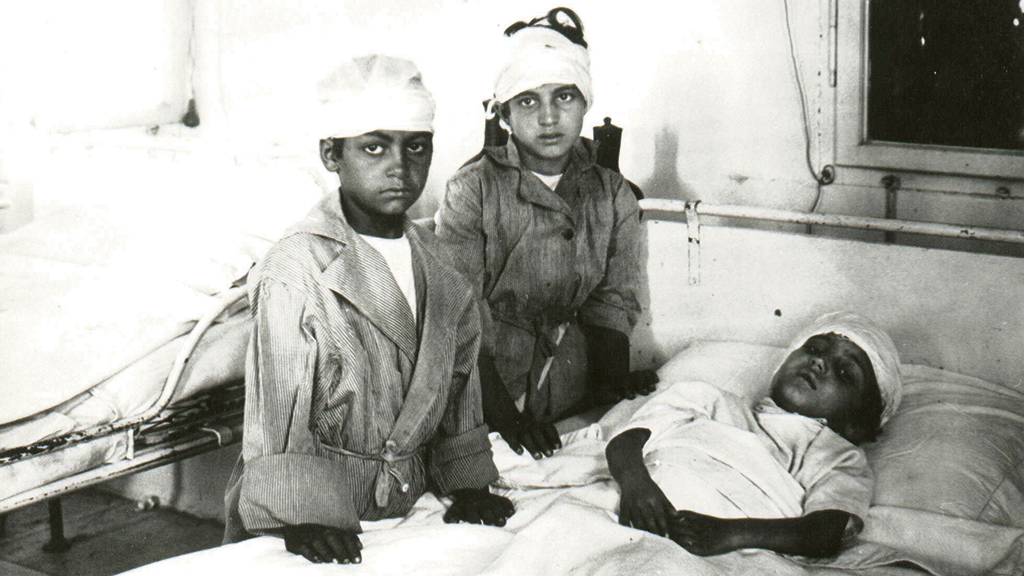
We’re told that history doesn’t repeat itself, but it rhymes.
You can make of that bit of canned wisdom whatever you want, but it seems that sometimes history does repeat. And when it does, it’s rarely the good parts.
The massacre on October 7, 2023, was not the first of its kind, author and journalist Yardena Schwartz says in her new book, “Ghosts of a Holy War.” She’s specific when she says that. She doesn’t mean that it’s not the first time that a group of armed men broke into an enclave of people defined as the enemy, to torture, rape, kidnap, and kill them. She means that it’s not the first time that a group of Arab terrorists inflamed by a combination of religion and hatred massacred Jews in Israel or Palestine, or that the Jews who were murdered had chosen to live close to Muslims and often develop two-way bonds of genuine friendship.
The first time was on August 24, 1929, when 67 Jews were killed in what had been the happily multicultural city of Hebron, on a day that came to be called the Black Sabbath, and another 133 Jews were killed in the week-long riots that followed.
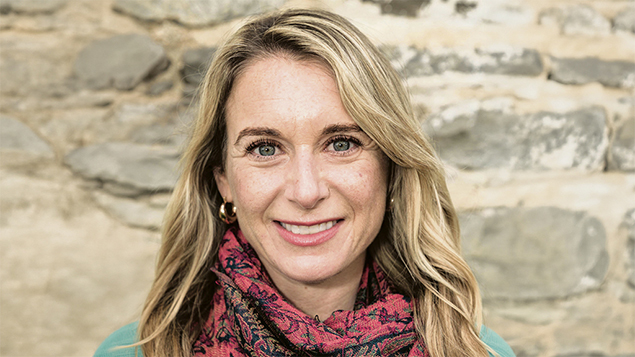
Ms. Schwartz, who grew up in Parsippany, made aliyah in 2013 and lived in Israel for 10 years — she lives in the Hudson Valley with her family today — talked about how she came to research the Hebron massacre, and how the October 7 massacre both changed her understanding of what happened in Hebron and deepened her desire to tell that story.
She will discuss her book on Wednesday, September 30, at the Bildner Center at Rutgers in New Brunswick. (See below.)
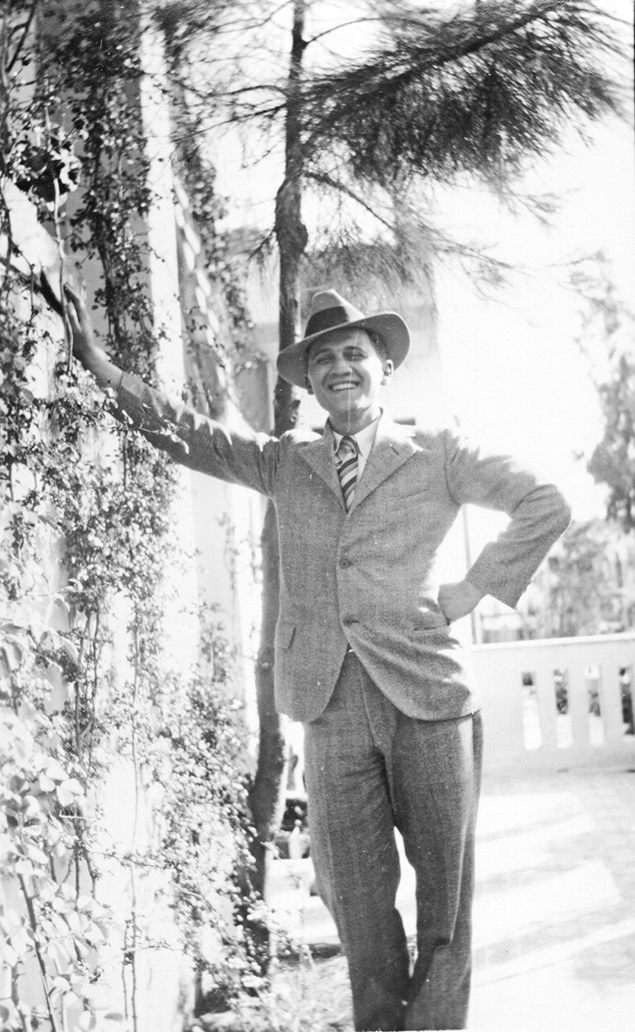
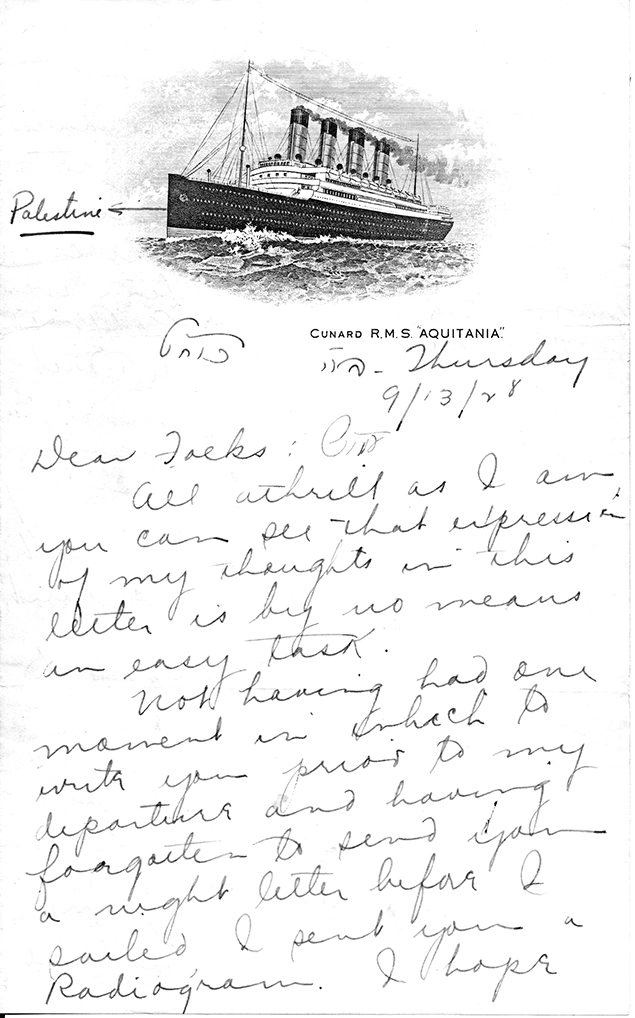
Ms. Schwartz, a Columbia Journalism School graduate who has worked in television news as a reporter and a producer, and whose written work has been in such prestigious outlets as the New York Times, the Wall Street Journal, and the New York Review of Books, began to work on “Ghosts of a Holy War” when she got an email from Yossi Klein Halevi, the writer and journalist who “is my role model as an author and as a human being,” telling her “that he had met a family from Memphis, Tennessee, who had discovered a box of letters in the attic.” It was hundreds of pages of letters, it turned out, written by their uncle, David Shainberg, “who had moved to Palestine in 1928 to study in Hebron, in the Hebron Yeshivam which was then the most prestigious yeshiva in the country.” It was an offshoot of the Slobodka Yeshiva, in Lithuania, which gave it astounding yichus. “Over the course of the year, he wrote these heartfelt, captivating letters,” Ms. Schwartz continued.
“He was 22 when he moved to Hebron, and these letters opened a window not only into his life — his epic journey from Memphis to British Mandatory Palestine — but also into a place that ceased to exist after August 24, 1929.” David Shainberg was 23 when he was murdered in Hebron.
“Until that day, Hebron was considered to be a beacon of coexistence,” Ms. Schwartz said. “Today, it is the microcosm of the military occupation in the West Bank. It is one of the most volatile epicenters of the conflict. It’s where some of the most radical Jews and some of the most radical Palestinians live.
“But then, it was considered to be the safest place to be a Jew in Palestine. A place where Muslims and Jews lived side by side in peace together for centuries. Jews and Arabs owned businesses together. They attended each other’s weddings and holiday celebrations. Many of the Jews in Hebron rented their homes from Arab landlords. They were friends.
“And then, in 1929, 67 Jews were slaughtered by their Arab neighbors. And other neighbors rescued at least 200 Jews. During the riots of 1929, 133 Jews were killed across Palestine, and hundreds more were wounded. Half of those who were killed were killed in Hebron, the haven of coexistence.”
On October 7, 2023, Hamas invaded Israel, killed about 1,200 people, and kidnapped another 251 and held them hostage.
“I was half through my manuscript on October 7, and it changed everything,” Ms. Schwartz said. “It really illuminated the chilling echoes between 1929 and 2023, and there are so many not just in the violence and the massacre itself, and the reasons behind the massacre, but also the response.
“In the last three years, two things have become very apparent,” she continued. “There has been a very successful campaign of both delegitimizing Israel and Jewish history in the land of Israel, and a campaign to rewrite our history. Much of that comes from academia.” The result of that second campaign, to rewrite history, has been that disinformation and misinformation have taken the place of truth and fact-based history. Even young Jews, who were not yet born during such historical events as the second intifada or the peace process, or were too young to pay attention to them, do not know what really happened. Disinformation flourishes; truth does not.
And in a world so crowded with happenings, some just get forgotten.
Ms. Schwartz does not lecture about disinformation. Instead, “my goal was to write a book of narrative nonfiction that transports people into a time and place that has been lost to history, and to bring to life a chapter of history that few people know about,” she said.
Writing engrossing narrative nonfiction demands a huge amount of work as well as arguably inherent skill at storytelling.
“I spent five years working on this book, spending hundreds of hours reporting on the ground in Hebron, interviewing dozens of Israelis and Palestinians, and reading archival newspaper articles from the 1920s, archival material from the British Mandate period in Jerusalem, Tel Aviv, and London; reading testimony collected by the survivors of the riots, and books written by them; reading transcripts of the trials and hearings the British conducted after the riots; and poring over the hundreds of pages of transcripts from the hearings of the Shaw Commission, along with the report that commission produced in 1930,” Ms. Schwartz said.
“But in the course of writing this book, about a century-old massacre, a massacre very much like it occurred on October 7. And suddenly we heard people saying, ‘Oh, you know, there’s context to this — 1948 and 1967 and the siege of Gaza.’ But really, the context began two decades before the state of Israel was born.
“It was a haunting similar massacre of peaceful, innocent, unarmed Jews, who were slaughtered by their neighbors because of a lie. And we see how this same lie is still being used to today to inflict violence upon Jews, to delegitimize and dehumanize Jews, to justify violence against Jews all over the world, not just on October 7.”
The first lie was spread by the grand mufti of Palestine, just as today’s lies are propagated by certain Muslim leaders. There were other similarities as well.
There were many Arabs who saved their Jewish neighbors in Hebron, by guarding their homes, by bringing them into their own homes, risking their own lives to save their friends, and just as many Arab Israelis fought to save their Jewish friends and neighbors. The Jews in Hebron were charedi, so they were not Zionist; many of the Israelis in the kibbutzim Hamas decimated supported their Palestinian neighbors, both in theory and in fact, often helping them go from Gaza to get health care in Israel.
But that didn’t stop the murderous attack in 1929, and it didn’t stop the one in 2023. The lie was too strong.
There’s a clue to the lie in the name Hamas gave its attack. They called it the Al-Aqsa Flood.”
The Al-Aqsa mosque is on the Temple Mount in Jerusalem; it’s Islam’s third holiest site, and it’s on Judaism’s holiest site, where the First and Second temples once stood. It’s also at the heart of the lie that was created 98 years ago and has caused extraordinary harm, mainly to Jews but to Muslims and the rest of the world as well, Ms. Schwartz said.
“In 1928, the Jewish community in Palestine was about 20 percent of the population of British Mandate Palestine,” she said. “The Muslim leaders of Palestine claimed that the Jews of Palestine were plotting to destroy Al-Aqsa Mosque to rebuild the ancient Jewish temple on the Temple Mount.”
The reason for that lie was basically politics as usual. “It was to deflect criticism away from the leader of the Muslims in Palestine at the time, the Grand Mufti Amin al-Husseini,” Ms. Schwartz said. “He had been a very unpopular leader. He was accused — justifiably — of corruption and nepotism and misuse of funds.
“He was the one who created the lie. He was the one who created this campaign of propaganda to deflect criticism, because once this was a far more menacing threat to Islam — the Jews’ threat against Al-Aqsa — the criticism of him disappeared. Who cares about corruption when there is a threat against the holiest Islamic site in Palestine?
“So attacks on Jews at the Western Wall increased, tensions surrounding the Temple Mount increased, and it all culminated just one year later, in the riots of 1929.”
Even in that time, before social media, even before television, it took just one year.
“That’s because he wasn’t just the grand mufti of Jerusalem,” Ms. Schwartz said. “He was also the president of the Supreme Muslim Council of Palestine, and so he was in charge of all appointments to mosques and to shariah courts, and he was in charge of all the funds. The Supreme Muslim Council had authority over the Temple Mount, which at the time was completely off limits to non-Muslims.
“Today only Muslims can pray at the Temple Mount. Non-Muslims can visit there at certain hours, but they cannot pray there.” Then, though, if you weren’t a Muslim you could not go there at all. “The only place Jews could go was to the Western Wall.”
The place called the Western Wall then wasn’t what we think of now, Ms. Schwartz continued. “It was just a tiny little alleyway, because there was an entire Arab neighborhood abutting the wall. And the mufti had a house right next to the wall, so he had a close view of Jewish worshippers.
“So he claimed that the Jewish worshippers who were gathered at the Western Wall were plotting to turn it into a synagogue, and then they planned to conquer and destroy Al-Aqsa and rebuild their temple there.”
There’s an irony in that untrue accusation. Now, one of the insults hurled at Israelis — that they’re colonists — is based on the lie that Jews have no connection to the land. The grand mufti acknowledged the connection, even as he used it as one of the building blocks of his deadly lie.
There’s an important historical truth that this false accusation displays. “So much of the discourse around the conflict just completely ignores one of the most central — if not the most central— underlying drivers of this conflict.”
It’s about religion.
“The reason that my book is called ‘Ghosts of Holy Wars’ is because this has always been a holy war. It’s still a holy war. But the way we talk about it in the West, you would never know that. You would think that it’s just like any other conflict, over land and rights. But from the beginning, it’s been about competing religious claims. It’s been a war overwhelmingly waged by corrupt religious leaders who weaponize religion to galvanize violence by religious people who believe that they’re defending their religion.
“There’s a reason why on August 24, 1929, and on October 7, 2023, the people who were killing unarmed Jews were not shouting ‘Free Palestine’ or ‘End the occupation.’ They were shouting ‘Allahu Akbar.’ They were shouting ‘God is great’ as they slaughtered men, women, and children because they believed that they were acting in defense of their God and doing what was right, righteous, and noble.
“The fact that we don’t talk about it, we don’t teach about it, is making people think that they understand a problem that they don’t understand. And you can’t solve a problem that you don’t understand.
“The whole world thinks that this is a conflict over land rights, and yes, that is part of the problem. But the role of religion cannot be ignored. And the fact that it has been ignored, I believe, is the reason why this conflict still has not been solved.
“I think that is the only way peace will ever come to Israel-Palestine, to the homeland of the Jewish people and the Palestinian people. Because neither of us are going anywhere. So the only way there ever will be peace will be if there is some kind of solution that addresses and resolves and ends this disinformation and incitement by corrupt leaders.”
“Ghosts of a Holy War” is being adapted into a feature film. A paperback edition will come out in early October; it includes a postscript about what’s happened since the hardcover was published in 2024.
Who: Yardena Schwartz
What: Will talk about her book “Ghosts of a Holy War”
When: On Wednesday, September 30, at 7:30 p.m.
Where: At the Douglass Student Center in New Brunswick
Why: It’s the Ruth and Alvin Rockoff annual lecture, sponsored by the Allen and Joan Bildner Center for the Study of Jewish Life at Rutgers University.
How much: It’s free, and so is parking
How: It’s necessary to register in advance, at BildnerCenter.Rutgers.edu