

Every life is remarkable, so read the obituaries
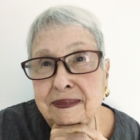
Her hyphens: born 1926 in Galati, Romania. Died peacefully five days after her one hundredth birthday, 2026, in Scarsdale, New York. Facing seemingly insurmountable difficulties when she was young, she went on to live a lifetime of achievement, courage, dignity and challenge.
At age 15, in 1941, she and her parents fled the Nazis, and walked to Kyrgyzstan, yes, walked!, a distance of almost 3,000 miles. It is unimaginable how they accomplished this incredible feat, struggling in rough mountainous terrain with often frigid temperatures, with no resources, fearful of betrayal. Many months later, they safely reached their destination, the small but growing Jewish community of Bishek, in a remote part of Russia, with its other refugees and native Bukharian Jews. The arduous walk finally led to freedom, which was followed by a love story with Moshe, a young man released from a Siberian gulag in 1943, who became her husband. This story, a tale of a Jewish life, begun in terror and escape and ending peacefully in affluent Scarsdale, is a miracle of our times.
She went on to become a sophisticated and educated New Yorker, speaking nine languages fluently and raising a family of Americans, while continuing to be engaged in politics, culture, and active Jewish life.
This is not a tale from my imagination. This is not a tale of someone I knew. This is a tale, a true story, gleaned from a paid obituary in the New York Times, a place where incredible lives are routinely featured in tiny print, almost always in the back pages of the first or business sections. These appear daily and are profound testaments to the fantastic and inspiring lives of our fellow human beings, many of whom are Jewish. These are the narratives of the recently dead and they are the reason that I read, and am fascinated by, obituaries.
Get New Jersey Jewish News's Newsletter by email and never miss our top stories Free Sign Up
Death notices come in several categories, from the famous, to the newly but less prominent recently dead. Some deaths are never publicly acknowledged at all. The well-known are called, in newspaper parlance, the pre-dead. You might think that this is a generic — and genetic! — category that applies to all humans. That would be incorrect. Newspapers like the Times don’t collect the life stories of the merely mortal. Just imagine the volume if they did! They do, however, record advance information about those deemed most interesting, important, famous, or prominent. Thus, they are ready to be on top of the reports of those deaths when they inevitably occur.
One irony is that the articles announcing those deaths may be written by a staff reporter with a byline. Sometimes that reporter will die before the subject of the obituary, an intervention of life and fate, when an obituary is published that is written by a dead person about another dead person.
In this universe, where everyone eventually dies, it would be impractical for papers to do the mammoth research required to document every death in detail. Many local newspapers report deaths, usually pretty much unedited, in the language of the friends or family who have submitted the notification. Sometimes these are printed for free and sometimes they are paid obituaries. They are often homespun and usually provide solid insight into the life lost. They can make for fascinating reading.
I know! I’ve been reading obituaries for a good part of my life. I believe that every life is exceptional, and I’m sure that many great novels stem from reading a snippet of a death notice and being inspired to expand on them and create a memorable character. This is not morbid. It is riveting. Our lives are all remarkable. I believe that no human life is boring or mundane. Every life is unique.
A prestigious newspaper like the New York Times, where even the most routine death notice will be expensive, oftentimes reaches an average cost of over $4,000, and frequently soaring higher depending on whether pictures are included, or there is greater volume of text. A simple one-liner will be significantly less but many are very comprehensive. To the reader, the cost is included in the cost of the paper, and the stories they portray of the lives that were lived can be nothing short of enlightening, entertaining, emotional, profound, dramatic, and moving. These are windows into lives that no fiction writer could conjure, like fleeing the Nazis on a 3,000-mile escape route.
I don’t read the obits to remind me of our universal fate. I read them to be inspired by lives lived. Certainly there are some who proclaim “born to shop” where perhaps survivors should seek something more substantial to say of the deceased, but there are many lives of resounding impact that can be meaningful to all of us. For example, a smiling photo of a beautiful woman who was recently eulogized as someone who traveled with juggling balls and magic dust, with a destination of happiness. Nice, huh?
Rosanne Skopp of West Orange is a wife, mother of four, grandmother of 14, and great-grandmother of nine. She is a graduate of Rutgers University and a dual citizen of the United States and Israel. She is a lifelong blogger, writing blogs before anyone knew what a blog was! She welcomes email at rosanne.skopp@gmail.com