

Starlink in the fight against dragons
Surprises in Ukraine and Abu Dhabi, from the kill zone to the peace talks

Let’s start with the unrelentingly soul-crushing situation in Ukraine, our analyst, the Soviet Jew-turned-American entrepreneur Alexander Smukler of Montclair, suggests. But, he noted, there are some surprises ahead.
It’s been almost exactly four years since Russia’s strongman, President Vladimir Putin, invaded Ukraine on February 24, 2022. To be unsophisticated but clear, Putin invaded because he wanted to, and he could. Ukrainians basically were Russians, Ukraine basically was Russian, and when his army entered Ukraine, it would be welcomed with flowers as it cakewalked into Kyiv.
As we all know, it didn’t happen that way. Ukraine fought back.
Now, four years later, the situation in Ukraine’s main cities is grim. As he predicted, Mr. Smukler said, the winter there has been harder and colder than it has been for a long time; it’s not unlike the winter we face here. “Right now, as we talk, it was minus-14 Fahrenheit in Kyiv,” he said.
The Russians have attacked the Ukrainian infrastructure, he explained. Most of the country’s electricity comes from nuclear power plants. “The Russians purposely destroyed the high-voltage lines that transport electricity from the power plants,” he said. That means, to oversimplify, that the plants have no way to send the energy they produce. If they can’t get the electricity out, the plant will explode. Imagine many Chernobyls.
“In the last few months, the Russian government almost completely destroyed Ukraine’s high-voltage transformers, and because of that several Ukrainian nuclear power stations had to be shut down to avoid nuclear catastrophe,” Mr. Smukler said.
Put that together with the extraordinarily cold winter, and you end up with human catastrophe.
“Before the war, Kyiv had almost 3.5 million residents,” Mr. Smukler said. “Right now, probably 70 percent of them have left the city. It’s almost impossible to survive there.
“Most of the people live in apartment buildings built during the Soviet times. They’re nine to 12 stories, and they are heated by central heating systems to pump hot water into the radiators. But right now there is no electricity, no heat, no plumbing” — the toilets don’t work — “and no elevators.”
The cities that are close to the borders are getting some power from Poland, Romania, and Moldova, Mr. Smukler said. Some buildings have huge industrial generators that run on oil. There’s no gas; Putin destroyed the gas pipeline.
“Yesterday Kyiv had power for one and a half hours,” he continued. Then other major cities — Kharkiv, Odesa, Dnipro — got their own tiny ration. “Imagine a day like the ones we’ve been having. Imagine the Bronx having power for an hour and a half. Then Brooklyn gets its hour and a half, and then Staten Island. That’s not enough electricity to warm people.
“People are dying. They’re being frozen. Especially the elderly, who were not able to be evacuated.

“The mayor has organized hundreds of so-called survival points, where people can go and warm up in special tents, or they can go underground to the subway, which is not running. It is much warmer there. The city is developing hot water, and some primitive food is coming in as humanitarian aid.”
The Russians are doing this to wear down the Ukrainians, to make them plead for peace and become willing to accept any terms to get their suffering to stop, Mr. Smukler said.
This is a siege, and it reminds him of the siege of Leningrad during World War II, he continued. “The Germans surrounded Leningrad for two and a half years, and more than a million residents died of starvation and cold.”
There’s another analogy, he said passionately. “Think about Israel and Gaza. Think, for example, about the huge demonstration in Sydney against Israel’s president going there to speak in the Australian parliament. They demonstrated to support Gaza and Hamas, and to blame Israel for genocide.
“Do you see any demonstration, anywhere in the world, supporting Ukraine, whose people now are being frozen to death?
“We live in a world with double standards. There is no Qatari foundation or NGO supporting demonstrations against Putin, the way they are against Israel. Nobody invests much in a movement that will support Ukraine. Thousands of people are freezing, and nobody knows how many of them will die by the end of the winter.” All because Vladimir Putin decided to invade his neighbor four years ago.
“I’ve been saying that the Russians are advancing, slowly, slowly, but that the Ukrainians are exhausted,” Mr. Smukler said. “There’s a shortage of manpower, a shortage of missiles, a shortage of morale.” Eventually, he thought as recently as last month, they’d have to give up. They were valiant, they were right, but they would have been overwhelmed.
But there’s a surprise here, though. The Russians’ attack doesn’t seem to be working.
“Amazingly, just a few days ago a published poll by an independent European organization that was taken on Ukrainian non-occupied territory — that’s 80 percent of Ukraine — even after suffering so much, many still are strictly against giving up the occupied territory. And it showed that 62 percent of the population are willing to continue to suffer to continue the war against the Russians. They still are eager to fight the Russians, not just for the territories but for their pride. For their country.
“This is shocking. Nobody expected this. It showed that instead of the Russians breaking the Ukrainian resistance and trying to receive support from the population to stop the war, instead they are getting the opposite result. The Ukrainians are getting stronger and stronger in this icy winter.
Back on the war’s approximately 650-mile-long frontline, there is a kill zone — “a huge area, approximately 20 to 30 kilometers along the frontline, completely controlled by dragons,” Mr. Smuckler said.
Dragons, in the Global Game of Thrones that Mr. Smukler has been describing for four years now, are drones. “It is almost impossible to survive in the kill zone,” he said. “Almost every square centimeter is completely controlled by drones, and everything that moves can be exterminated.
“That’s completely changed the military action, because there are no people on the front lines. Just maybe small groups, two to four people, living in basements, or holes they make. They can go out only at night or in bad weather, and it’s almost impossible to deliver them food and water. That has to be delivered by drones, but the survival rates are so minimal that as soon as anyone moves, the drones see them and exterminate them.
“But what is very important is that the military offensive actions are slowing down, for several reasons.”
One reason is the cold, he said. But there is another reason, and it is huge and so far underreported.
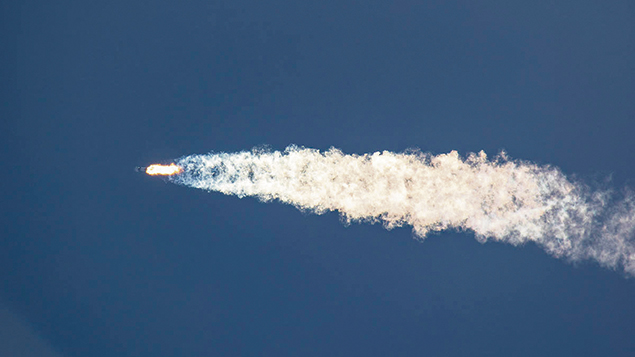
The Russians had been using Starlink illicitly; they finally were caught, and they’ve been stopped. (Starlink provides global mobile broadband around the world; it’s been invaluable in allowing Ukrainians to communicate with each other. The company is part of Elon Musk’s SpaceX; the Ukrainians use it legally. Sanctions kept the Russians from using it, at least in theory.)
What?
“The Russians have been smuggling Starlink units, avoiding the sanctions, and implementing them into their drones,” Mr. Smukler said. “They were able to find software that allowed them to use the units without registering them. Just recently, Ukraine’s new minister of defense, Mykhailo Fedorov, who is an engineer by training, discovered it, and immediately raised the issue that the effectiveness of the Russian drones could be diminished immediately if Starlink would block all nonregistered units. They’re easy to find in the territory of the war.
“Ukraine discovered that there were 550,000 unregistered Starlink units that the Russian military was using. A week ago, Starlink and Musk announced that they’d blocked all unregistered units.” When the question of how this happened, and who did it, is explored, “it will be a huge scandal. How did U.S. and European intelligence miss this over the last four years?”
The Russians have been working on developing their own communications system, called Sunrise, but it’s nowhere near ready yet, Mr. Smukler added.
There are other surprising changes going on, he said.
The first comes from a look at some horrifying statistics. “The Center for Strategic and International Studies just published a report about what it calls the bloodiest military conflict in Europe since the Second World War to mark its fourth anniversary,” Mr. Smukler said.
“That report shows that two million people have lost their lives during that conflict, on both sides. That number includes soldiers and civilians.” It also counts the disappeared. “Based on that report, Russia lost 1.2 million people, and Ukraine lost 800,000.” Ukraine’s losses are proportionately greater that Russia’s.”
The Ukrainians released another statistic. The commander-in-chief of the Armed Forces of Ukraine, General Oleksandr Syrskyi, reported that “in January 2026, Russians lost 30,000 soldiers just in that one month, and they were able to recruit only 22,000. This was the first time that Russians were not able to replace their cannon fodder.
“It is mind-blowing that during four years of war, Russia lost that many people and gained such a limited amount of land. The CSIS called this war the slowest in the history of mankind. The Russians achieve no more than 100 meters a day. To move the frontline 100 meters a day they are giving up 1,000 soldiers’ lives.
“And what they get is called moon terrain. It is totally 100 percent destroyed. It is covered with land mines. It is simply insane to sacrifice so many lives to achieve nothing. And Russia was spending $250 billion a year, directly or indirectly, to conduct that war. In four years, that’s almost a trillion dollars for a war that is gaining them nothing. When the war is over, it will take billions of dollars to demine and rebuild.
“And what is the big picture? During these four years, the Russians have lost everything in terms of their global strategic interests and their influence in the world, which had been maintained and built up in the Soviet era. It has lost its influence in the Middle East and in Central Asia, which had been under its control for centuries. It lost control of a major military ally, Venezuela, and it’s losing Cuba. Cuba is under siege. On Monday, Cuba told the Russian government that it is not able to send the 4,200 Russian tourists who are in Cuba back home to Russia because they can’t refuel the planes. They don’t have any gas. Russia has to send military planes to refuel civilian planes to get Russian tourists out of Cuba.
“Today, there are few Russian allies left. Iran, North Korea, and Russia’s biggest supporter today, China. Russia has become a vassal state of China.”
To recap, “when Putin started the war, he announced three major goals — demilitarization, denazification, and no NATO extension in Europe.” Instead, what he got was two more European countries, Sweden and Finland, joining NATO.
And then there are the sanctions that the United States and the European Union imposed on Russia. For years, they seemed to make very little difference. “But now the sanctions are working, and they are effectively destroying the Russian economy.
“A few months ago, I was saying that Ukraine was losing the war because the Russians were slowly advancing and Ukraine had a deficit in manpower. Now, miraculously, Ukraine is sustaining and defending itself, because suddenly there is a huge crack in the Russian economy, it’s happening everywhere, and everyone is feeling it.”
Mr. Smukler credits the Trump administration for preventing Russia from selling its oil to India. “Just last week, India announced that it is not going to buy any more Russian oil,” he said. “In previous years, India bought 25 percent of Russia’s oil, and the money was spent on military operations. It’s a big hit for India to stop buying that oil.”
In this case, he said, the tariffs worked. “The Indian government realized that it was cheaper for them to pay a lower tariff and sign a trade agreement with the United States instead of buying and reselling Russian oil. Now, Russia rerouted all of its oil to China, which is the only buyer of Russian oil. It was buying it at $25 per barrel, and in some Russian oil fields it costs more than that to produce.it. So Russia is selling some oil to China at below cost.
“Economists are predicting that this year, Russia will lose 50 percent of its income from the oil trade. That will bring Russia into severe recession.
“And all that will affect negotiations that are taking place now in Abu Dhabi.” The United States has been brokering negotiations between Russia and Ukraine there.
The United States has been represented by Steve Witkoff, Trump’s friend, and by Jared Kushner, his son-in-law. “The Trump administration has been putting tremendous pressure on Zelensky to accept all Russian conditions before May 15,” the date the president has said is the deadline.
Neither Mr. Witkoff nor Mr. Kushner has any training in negotiations; Mr. Smukler says said that he respects Mr. Kushner, who grew up in Livingston, and he’s struck by their both being Jewish, as is President Volodymyr Zelensky, but “it’s ironic. These two Jews negotiate peace in Gaza. They negotiate with Iran. They negotiate with Ukraine. They are everywhere. I don’t know how these two guys can handle such pressure, dealing with the most painful, important issues in world politics, in the global game of thrones.”
Russians find the duo a big joke, he added. “When you read Russian sources and Telegram channels and bloggers, you see zillions of jokes. The Russians are laughing at them.”
He finds it hard to believe that the duo could possibly know enough about the history and culture and assumptions and politics of the very different people with whom they negotiate. “I don’t see how they can be capable of all that, and they physically can’t maintain that pace, and deal with a whole spectrum of issues that are so dangerous, when the world is balanced on a knife’s edge,” he said. “It is a reflection of the insanity of our time.”
But to go back to the war in Ukraine, “Putin lost everything,” Mr. Smukler said. “He sacrificed everything that the Soviet Union tried to protect.”
So here’s the big surprise.
“Putin wants to stop the war now,” Mr. Smukler said. “Because of the casualties. Because of the political situation inside Russia. Because more and more people are standing up against the war, especially because more and more caskets are coming home, and more and more Russian parents are burying their children.”
It’s the opposite of what Ukrainians are feeling. “The Russian population understands that the war is not giving them anything.
“So Putin desperately has to end the war, but he has to be able to say that he won it. He has to be able to tell the Russians that they won it. That is the major obstacle in the negotiations now. Not the territories. Not the security guarantees for Ukraine. Not the postwar Russian/Ukrainian relationship.” Those were the major points just a few weeks ago, but they have receded in significance to the point where they barely matter.
“No, today it is who won the war? Who will be able to say ‘I won the war’? Putin needs to find a reason to be able say that for four years, we sacrificed so much, but we won the war.
“How can he say that?”
He knows that he can’t have all the territories he said he had to have, but what about Donbas? He already has 75 percent of it. But it will cost so many lives and take so much time to get the other 25 percent. “Right now, his external situation is declining so quickly that he doesn’t have that much time.”
So the only answer would be for Zelensky and the Ukrainians to give up that territory for peace. “But Zelensky suddenly has started to feel that Ukraine is not losing the war.”
Look at Putin’s original demands. “Zelensky can say that the country is not demilitarized; instead, it now has the most effective army in the world,” Mr. Smukler said. “It knows how to build its own drones. It will get security guarantees. And now Zelensky understands that Ukraine will survive as an independent state, and possibly it will join the European Union.”
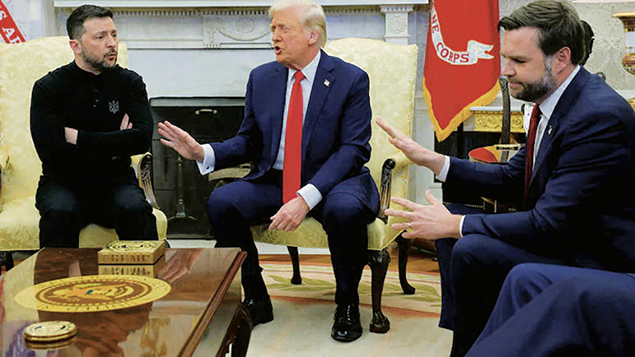
Remember that awful meeting that Zelensky had with Trump and JD Vance in the Oval Office, with Trump telling him that he had no cards to play? “Suddenly he has cards,” Mr. Smukler said. “Suddenly, in Abu Dhabi, the Ukrainian delegation had more cards than the Russians.
“That’s why I can’t see a reason for both sides to sign a peace agreement before the deadline Trump gave them.” (And of course Trump is far better known for threatening deadlines than enforcing them. They tend to change.)
“What will happen? I don’t know, but I am ready to predict that the war will be over in 2026, because both sides are extremely exhausted. But I don’t know when — or how.”
There is no clear path forward for anyone here. But the world never stands still. We certainly are living in interesting times.